Get Insurance Contract 2020-2026
How it works
-

Open form follow the instructions
-

Easily sign the form with your finger
-

Send filled & signed form or save
How to fill out the Insurance Contract online
Filling out an insurance contract online can seem daunting, but with a clear guide, the process becomes straightforward. This document serves as a comprehensive step-by-step guide to assist you in completing the Insurance Contract efficiently and accurately.
Follow the steps to successfully complete the Insurance Contract online.
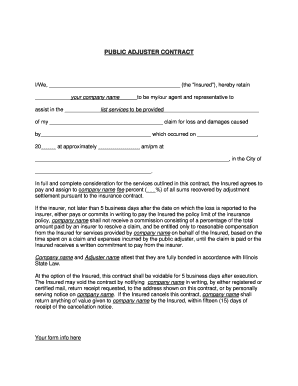
- To begin, locate and click the ‘Get Form’ button to access the Insurance Contract form. The form will open in your online editor for editing.
- In the first section, provide the name of the insured party by filling in your full name in the designated space.
- Next, enter the name of the company that you are retaining as your agent and representative.
- Specify the services to be provided by the company you are hiring by listing them clearly.
- Fill in details regarding your claim for loss and damages, including the specific incident or cause of loss.
- Indicate the date of the occurrence and the approximate time it took place.
- Input the location of the incident, including address, city, and state.
- In the compensation section, document the percentage fee that you agree to pay to the appointed company based on the sums recovered.
- Read carefully the terms regarding payment from the insurer and any conditions that apply to commission payments.
- If applicable, review the clause detailing the option to void the contract and how to exercise that option.
- Complete the acknowledgment section where both parties—Insured and Adjuster—provide signatures, name prints, and contact information.
- Finally, ensure all information is accurate and saved. You can download, print, or share the completed form as needed.
Take the first step in securing your insurance arrangement by completing your Insurance Contract online today.
The seven basic principles of an insurance contract include utmost good faith, insurable interest, indemnity, contribution, subrogation, proximate cause, and loss minimization. Each principle plays a vital role in ensuring fair practices within insurance agreements. For instance, the principle of utmost good faith requires both parties to act honestly, while insurable interest ensures policyholders have a legitimate interest in the subject of the insurance. Understanding these principles can enhance your experience in managing insurance contracts.