Loading

Open form follow the instructions

Easily sign the form with your finger

Send filled & signed form or save
How to fill out the Monthly Expenses List online
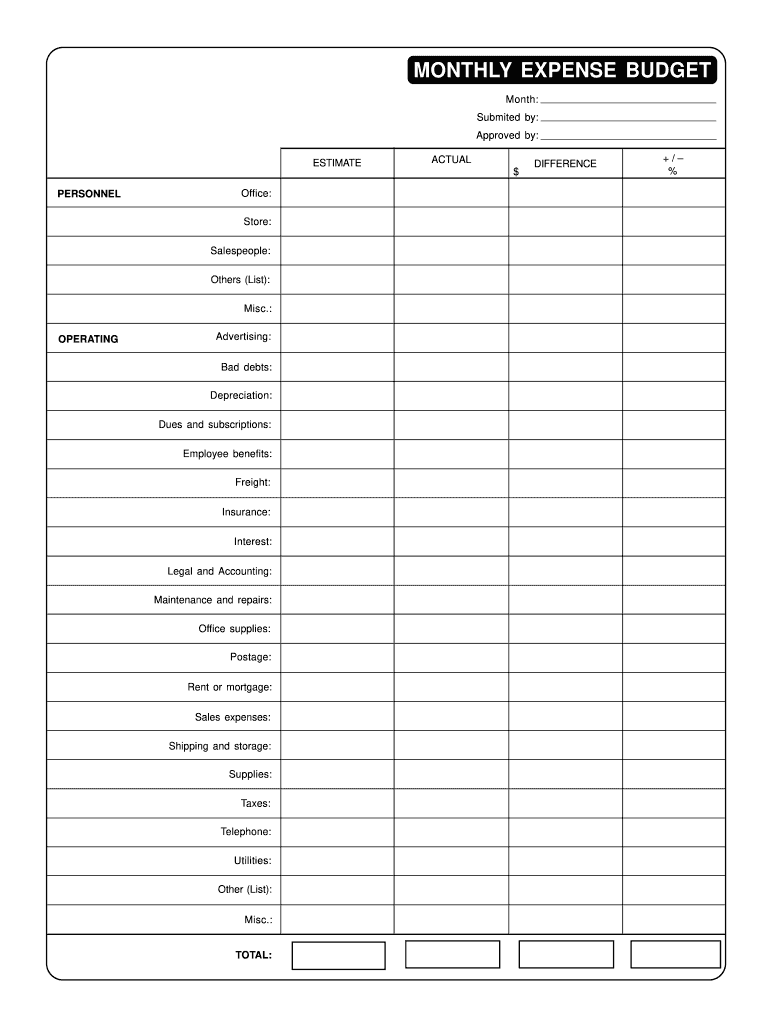
The Monthly Expenses List is an essential tool for tracking and managing your financial expenditures each month. This guide will provide you with clear, step-by-step instructions to fill out this form online effectively and accurately.
Follow the steps to complete your Monthly Expenses List online.
- Click ‘Get Form’ button to obtain the form and open it in the editing interface.
- Begin by entering the month for which you are reporting expenses in the designated section.
- Fill in the name of the person submitting the form in the 'Submitted by' section.
- Indicate who approved the expenses in the 'Approved by' space.
- In the 'Estimate' section, list all personnel expenses under their respective categories such as 'Office', 'Store', 'Salespeople', 'Others', and 'Misc.' as applicable.
- Proceed to the 'Operating' section and input the estimated costs for various categories including advertising, bad debts, depreciation, employee benefits, and others. Ensure each field has a corresponding value.
- Calculate the total of all estimated operating expenses and input this number in the 'TOTAL' field.
- In the 'ACTUAL' section, record the real expenses incurred during the month.
- Determine the difference between your estimated and actual expenses and input this value in the 'DIFFERENCE' field, including any applicable calculations of percentage change.
- Once you have completed the form, review the entries for accuracy. You can then save your changes, download the form, print it, or share it as needed.
Complete your Monthly Expenses List online today for effective financial management!
Experience a faster way to fill out and sign forms on the web. Access the most extensive library of templates available.
Related content
Some bills are monthly and some come less often. If you have an expense that does not...
EXPENSES. MONTHLY AMOUNT. Housing [rent + utilities]. Credit Card(s). Other Loans. Medical...
Jan 3, 2018 — Publication 521 explains the deduction of moving expenses for a new home...
Get answers to your most pressing questions about US Legal Forms API.
What is the 70-10-10-10 budget rule?
The 70-10-10-10 budget rule involves allocating 70% of your income for expenses, 10% for savings, 10% for investments, and 10% for giving. This structure encourages flexibility while still promoting responsible financial growth. A well-organized Monthly Expenses List helps you manage these allocations and keeps your financial goals on track.
What should my monthly expenses be?
Your monthly expenses should align with your income and financial goals. To determine this, review your expenses and categorize them according to needs and wants. By maintaining a comprehensive Monthly Expenses List, you can establish a sustainable budget that reflects your lifestyle without infringing on your savings objectives.
What is the 50/30/20 rule budget?
The 50/30/20 rule budget is a financial guideline that helps individuals allocate their income effectively across three main areas: needs, wants, and savings. This approach provides clarity on your financial situation, allowing you to focus on what truly matters. A tailored Monthly Expenses List can assist you in applying this budget to your unique financial goals.
What is the 50/30/20 rule with examples?
The 50/30/20 rule suggests allocating 50% of your income to needs, 30% to wants, and 20% to savings. For example, if your monthly income is $3,000, you would spend $1,500 on essential living costs, $900 on lifestyle choices, and $600 on savings or debt repayment. Keeping a clear Monthly Expenses List will help you adhere to this breakdown.
What is the best chart for monthly expenses?
A pie chart is often considered the best representation for visualizing monthly expenses because it clearly illustrates how your income is divided among different categories. Each slice of the pie corresponds to a portion of your Monthly Expenses List, helping you identify areas for potential savings. Using tools or apps can enhance your experience by generating these charts effortlessly.
Is the 50/30/20 rule good for budgeting?
The 50/30/20 rule is an effective budgeting strategy for many people, especially those new to managing their finances. It provides a simple structure, allowing you to allocate your income efficiently while encouraging savings. By incorporating this rule into your Monthly Expenses List, you can better visualize your financial habits and adjust as needed.
What type of expense occurs every month?
Fixed expenses, such as rent or mortgage payments, occur every month without variation. These should be prioritized in your Monthly Expenses List to know your baseline expenditures. Variable expenses, like groceries or entertainment, can vary from month to month, so careful tracking is essential for a balanced budget.
What is a monthly expense called?
A monthly expense is often referred to as a recurring expense. This term covers regular payments you make each month, such as rent, mortgage payments, or subscription services. By maintaining a Monthly Expenses List, you can clearly identify and manage these expenses, ensuring you stay within your budget.
How do you calculate the 50/30/20 rule?
To calculate the 50/30/20 rule, start by determining your after-tax income. Allocate 50% of your income to needs, which includes essentials like housing and utilities. Next, assign 30% to wants, covering discretionary spending such as entertainment and dining out. Finally, reserve the remaining 20% for savings or debt repayment, and keep a detailed Monthly Expenses List to track your budget effectively.
How do I create a list of monthly expenses in Excel?
Creating a list of monthly expenses in Excel involves opening a new spreadsheet and labeling your columns for each expense category. As you input your expenses into the list, use formulas to automatically calculate totals and track spending trends. This organized approach will enhance your understanding of your monthly expenses list and support better financial decision-making.
Use professional pre-built templates to fill in and sign documents online faster. Get access to thousands of forms.
If you believe that this page should be taken down, please follow our DMCA take down process here.