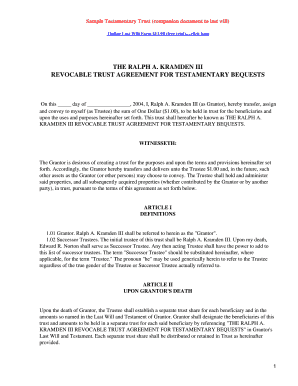
Open form follow the instructions
Easily sign the form with your finger
Send filled & signed form or save
How to fill out the Testamentary Trust Form online
Filling out the Testamentary Trust Form online can be a straightforward process when approached step by step. This guide aims to provide clear instructions to assist you in completing the form efficiently and accurately.
Follow the steps to complete the form effectively.
- Click the ‘Get Form’ button to obtain the Testamentary Trust Form and open it for editing.
- Begin by entering your personal information in the designated fields. This includes your full name, address, and contact details. Ensure that all information is accurate and current.
- Next, specify the details of the trust, including the name of the trust and the date it will take effect. Clearly outline the purpose of the trust and how assets will be managed.
- Identify the trustee or trustees responsible for managing the trust. Provide their names and contact information, ensuring they understand the responsibilities involved.
- Designate the beneficiaries of the trust by listing their names and relationships to you. Be clear and precise to avoid any confusion in the future.
- Review all entries for accuracy, making sure all required fields are completed. This is important for the validity of the trust.
- Once you have filled in all sections, you can save your changes, download the completed form, print it for your records, or share it with others as needed.
Complete your Testamentary Trust Form online today for a simpler experience.
Experience a faster way to fill out and sign forms on the web. Access the most extensive library of templates available.
Related content
In the case of a testamentary trust, for example, the trust instrument is the decedent's...
Testamentary Trust. Testamentary trusts are trusts that take effect at your death...
Form 1041 (Estates and Trusts Tax Returns). Administrator. Executor. Trustee...
Get answers to your most pressing questions about US Legal Forms API.
Which document can have a testamentary trust?
A testamentary trust is typically included within a will, serving as a legal document that activates upon the testator's death. This integration ensures that the trust operates in accordance with the wishes set out in the will. To streamline this process, many opt for a testamentary trust form, which provides a clear structure for establishing such trusts.
Should a testamentary trust have a trust deed?
Yes, a testamentary trust should ideally have a trust deed to outline the rules and provisions governing the trust. This document provides clarity on the management of the trust and defines the duties of the trustee. By utilizing a testamentary trust form, you can create a comprehensive trust deed that ensures all parties understand their rights and responsibilities.
What assets go into a testamentary trust?
Various assets can be included in a testamentary trust, from financial accounts and real estate to valuable personal belongings. The selection of assets is often guided by the individual’s intentions expressed in their will and testamentary trust form. It’s crucial to itemize assets clearly to ensure they are appropriately managed and distributed to beneficiaries.
What is the purpose of a testamentary trust?
The primary purpose of a testamentary trust is to manage and protect an individual's assets on behalf of beneficiaries after their death. This can help ensure that funds are distributed according to specific wishes or conditions, thereby providing financial security to loved ones. By using a testamentary trust form, individuals can take control of their estate planning strategy efficiently.
What is testamentary documentation?
Testamentary documentation refers to any legal documents that outline a person's wishes after death. This commonly includes a will and can also encompass a testamentary trust form. Such documentation is essential for clearly articulating how assets will be managed and distributed upon passing, ensuring that your wishes are honored.
What are the disadvantages of a testamentary trust?
While a testamentary trust can offer many benefits, it is important to consider some disadvantages. One major downside is that it does not take effect until the benefactor passes away. This delay can lead to potential funding issues, as the trust may not be available for immediate needs. Additionally, testamentary trusts are subject to probate, which can be a lengthy and costly process.
What are the pitfalls of a testamentary trust?
While testamentary trusts offer many benefits, they also have potential pitfalls. They can be subject to probate, which may delay asset distribution. Additionally, if poorly drafted, the Testamentary Trust Form can lead to confusion or disputes among beneficiaries, making it crucial to ensure clarity and detail in your estate planning.
What is the difference between a trust and a testamentary trust?
A trust operates during the creator's lifetime, whereas a testamentary trust is established through a will and takes effect after the individual's death. This means that a testamentary trust is specifically created to manage assets according to the terms laid out in your will. Understanding this distinction can help in planning your estate more effectively with the right Testamentary Trust Form.
What is the biggest mistake parents make when setting up a trust fund?
A common mistake parents make is not clearly defining the terms and conditions of the trust. Without precise instructions, there may be confusion or disputes among beneficiaries. It is important to use a Testamentary Trust Form to spell out how funds will be distributed and managed. This clarity can prevent misunderstandings and ensure your wishes are upheld.
How do I set up a testamentary trust?
To set up a testamentary trust, you will need to draft a will that includes specific provisions for the trust. Begin by choosing a trustee who will manage the trust on behalf of your beneficiaries. Using a Testamentary Trust Form ensures all necessary details are captured accurately, making the process smoother. Consulting with a legal professional can also help ensure your will and trust function as intended.
Use professional pre-built templates to fill in and sign documents online faster. Get access to thousands of forms.
If you believe that this page should be taken down, please follow our DMCA take down process here.