Loading
Form preview
  • US Legal Forms
  • Other Templates
  • More Forms
  • More Multi-State Forms
  • Right First Refusal Real Estate 2020

Get Right First Refusal Real Estate 2020-2026

How it works

  1. Open form

    Open form follow the instructions

  2. Easily sign form

    Easily sign the form with your finger

  3. Share form

    Send filled & signed form or save

How to fill out the Right First Refusal Real Estate online

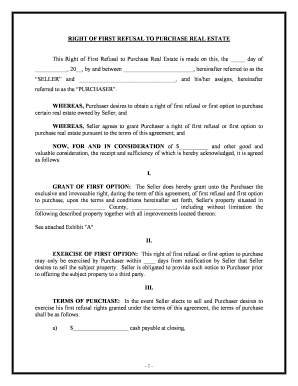
Filling out the Right of First Refusal to Purchase Real Estate can seem daunting, but with this guide, you will have a clear framework to ensure you complete the process accurately and effectively. Each section of the form will be broken down step-by-step for your convenience.

Follow the steps to successfully complete the form

  1. Press the ‘Get Form’ button to obtain the document and access it in your digital editor.
  2. Fill in the date at the top of the form. This should include the day, month, and year when the agreement is made.
  3. Identify the parties involved. Enter the names of the Seller and Purchaser clearly in the designated fields.
  4. Specify the consideration amount in the designated section. This is the sum agreed as consideration for the rights granted.
  5. In the section titled ‘Grant of First Option,’ provide the details of the property. This helps in identifying the exact real estate in question.
  6. Outline the exercise period for the first option. Indicate the number of days the Purchaser has from notification by the Seller to make their decision.
  7. In ‘Terms of Purchase,’ choose either the cash offer or the option to match a bona fide third-party offer. Fill in the respective amounts as needed.
  8. Complete the section on Title, noting that the Seller must provide a Certificate of Title within the specified timeframe after exercising the right.
  9. Specify the ‘First Refusal or Option Money’ that Purchaser has paid to the Seller.
  10. Set the agreement's term and any options for extension, ensuring to fill in both the period and the additional amount if applicable.
  11. Detail expenses related to the sale and confirm that these will be covered by the Purchaser.
  12. Indicate arrangements for possession of the property upon closing and provide any required signature blocks.
  13. Complete the notary sections as necessary, ensuring both parties acknowledge the agreement.
  14. Once all fields are filled out, save your changes, and choose to download, print, or share the document as needed.

Complete your documents easily and efficiently online today!

Get form

Experience a faster way to fill out and sign forms on the web. Access the most extensive library of templates available.
Get form

Related content

12 CFR Part 617 Subpart G -- Right of First...
The right of first refusal applies only to borrowers who did not have the financial...
Learn more
What is the Right of First Refusal? - PON
Mar 25, 2025 — One type of first-refusal right gives the former owner the ability to...
Learn more
Right of first refusal-What About
Right of first refusal (ROFR or RFR) is a contractual right that gives its holder the...
Learn more

Related links form

TX Judson Independent School District Density Column Practice 2014 WI PI-1716 2014 CA Crossroads Christian Schools Homeschool Report Card 2014 VA Long & Foster Real Estate LF184 2002

Questions & Answers

Get answers to your most pressing questions about US Legal Forms API.

Contact support

The right of first offer can sometimes hinder the seller's ability to reach the best deal. Since the seller must notify the holder before considering any outside offers, they may miss out on competitive bids. Additionally, it can complicate negotiations, especially if the holder is not serious about making an offer.

Whether the right of first offer (ROFO) or the right of first refusal (ROFR) is better depends on your specific needs in real estate. ROFO is often preferred for prospective buyers who want a proactive chance to make an offer without competing after a sale is imminent. On the other hand, ROFR offers security for buyers, ensuring they have the opportunity to match an existing offer before the sale.

Alternatives to the right of first refusal include the right of first offer and open market listings. A right of first offer typically allows a potential buyer to make the first bid before the seller approaches other buyers. Alternatively, sellers can choose to list their property on the open market, giving them a broader range of interested parties.

One significant downside of the right of first refusal is its potential to delay the sale process. This delay can frustrate sellers who may want to sell quickly. They may also feel constrained by the obligations to negotiate favorably with the party holding the ROFR, which can limit their options.

Having a right of first refusal can be a good idea if you're interested in a property and want to secure a purchasing opportunity. It provides an advantage in competitive real estate markets, as it allows you to make the first offer. Evaluating your unique situation will help you determine if incorporating this feature is beneficial for you in right first refusal real estate dealings.

Simply put, a right of first refusal means one party has the first choice to buy or refuse a property before anyone else can. It establishes a priority in purchasing that property, often providing leverage and security for the interested buyer. This concept is especially important in the right first refusal real estate markets where competition is high.

Exceptions to the right of first refusal in real estate can vary based on the agreement specifics. Common exceptions may include sales to family members or transfers in certain scenarios, like foreclosure. Understand any exclusions included in your agreement to avoid surprises. Consulting a legal expert or utilizing services like US Legal Forms can ensure you navigate these complexities effectively.

Typically, the right of first refusal is triggered when the property owner decides to sell the property. The owner must inform you of their intention, formally providing the terms of the sale. With this information, you can decide whether to exercise your right or decline the offer. Clearly outlined processes in the agreement can help avoid confusion over these triggers.

To obtain the right of first refusal, you should negotiate this right with the current property owner. Start discussions early, stating clearly why you are interested in the right. A well-drafted agreement can protect your interests, so consider utilizing platforms like US Legal Forms to ensure your documents are accurate and legally binding.

For example, a commercial tenant may prefer to lease a location; however, he may buy the premises if it meant that he would be evicted if the property sold to a new owner. In such a case, the tenant would negotiate to have a right of first refusal clause incorporated into his lease.

Get This Form Now!

Use professional pre-built templates to fill in and sign documents online faster. Get access to thousands of forms.
Get form
If you believe that this page should be taken down, please follow our DMCA take down processhere.
Get Right First Refusal Real Estate
Get form
  • Adoption
  • Bankruptcy
  • Contractors
  • Divorce
  • Home Sales
  • Employment
  • Identity Theft
  • Incorporation
  • Landlord Tenant
  • Living Trust
  • Name Change
  • Personal Planning
  • Small Business
  • Wills & Estates
  • Packages A-Z
  • Affidavits
  • Bankruptcy
  • Bill of Sale
  • Corporate - LLC
  • Divorce
  • Employment
  • Identity Theft
  • Internet Technology
  • Landlord Tenant
  • Living Wills
  • Name Change
  • Power of Attorney
  • Real Estate
  • Small Estates
  • Wills
  • All Forms
  • Forms A-Z
  • Other Templates
  • Legal Hub
  • About Us
  • Help Portal
  • Legal Resources
  • Blog
  • Affiliates
  • Contact Us
  • Delete My Account
  • Site Map
  • Industries
  • Forms in Spanish
  • Localized Forms
  • State-specific Forms
  • Forms Kit
  • Real Estate Handbook
  • All Guides
  • Notarize
  • Incorporation services
  • For Consumers
  • For Small Business
  • For Attorneys
  • USLegal
  • FormsPass
  • pdfFiller
  • signNow
  • altaFlow
  • DocHub
  • Instapage
Form Packages
  • Adoption
  • Bankruptcy
  • Contractors
  • Divorce
  • Home Sales
  • Employment
  • Identity Theft
  • Incorporation
  • Landlord Tenant
  • Living Trust
  • Name Change
  • Personal Planning
  • Small Business
  • Wills & Estates
  • Packages A-Z
Form Categories
  • Affidavits
  • Bankruptcy
  • Bill of Sale
  • Corporate - LLC
  • Divorce
  • Employment
  • Identity Theft
  • Internet Technology
  • Landlord Tenant
  • Living Wills
  • Name Change
  • Power of Attorney
  • Real Estate
  • Small Estates
  • Wills
  • All Forms
  • Forms A-Z
  • Other Templates
Customer Service
  • Legal Hub
  • About Us
  • Help Portal
  • Legal Resources
  • Blog
  • Affiliates
  • Contact Us
  • Delete My Account
  • Site Map
  • Industries
  • Forms in Spanish
  • Localized Forms
  • State-specific Forms
  • Forms Kit
Legal Guides
  • Real Estate Handbook
  • All Guides
Prepared for you
  • Notarize
  • Incorporation services
Our Customers
  • For Consumers
  • For Small Business
  • For Attorneys
Our Sites
  • USLegal
  • FormsPass
  • pdfFiller
  • signNow
  • altaFlow
  • DocHub
  • Instapage
Social Media
Call us now toll free:
+1 833 426 79 33
As seen in:
© Copyright 1999-2026 airSlate Legal Forms, Inc. 17 Station Street, Suite 303, Brookline, MA 02445
  • Your Privacy Choices
  • Terms of Service
  • Privacy Notice
  • Content Takedown Policy
  • Bug Bounty Program