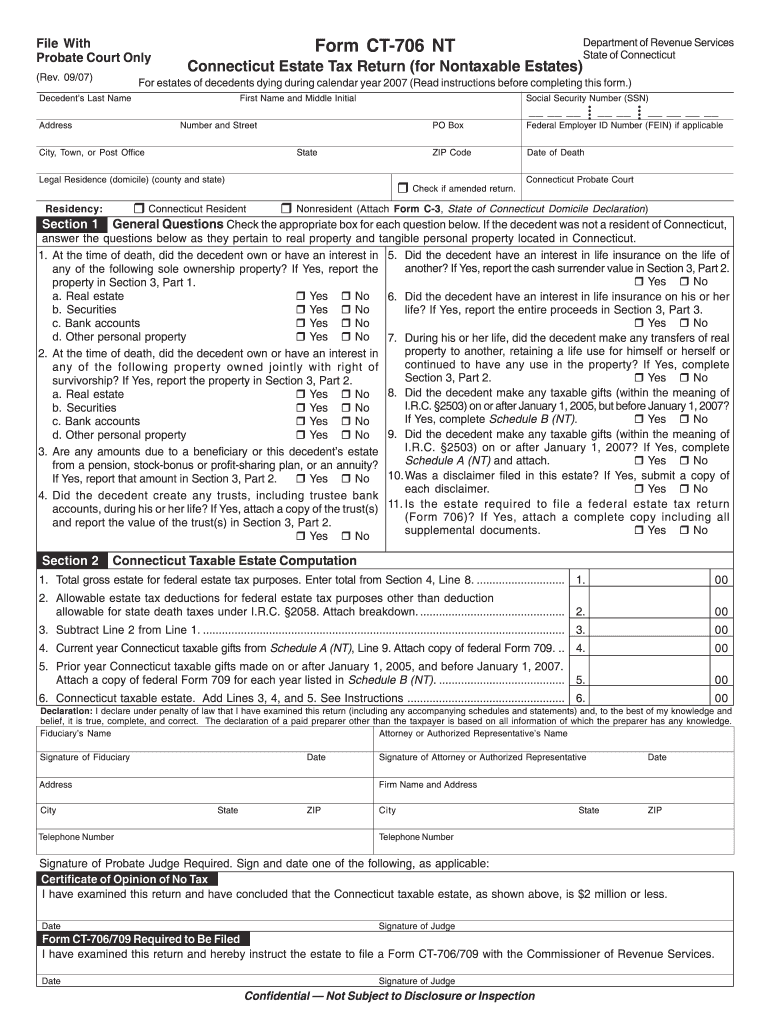
Estate Computation 1. Total gross estate for federal estate tax purposes. Enter total from Section 4, Line 8. ............................ 1. 00 2. Allowable estate tax deductions for federal estate tax purposes other than deduction allowable for state death taxes under I.R.C. 2058. Attach breakdown. .............................................. 2. 00 3. Subtract Line 2 from Line 1. .

Open form follow the instructions

Easily sign the form with your finger

Send filled & signed form or save
How to fill out the CT DRS CT-706 NT online
Filling out the CT DRS CT-706 NT form online is an essential step for managing Connecticut estate tax returns for nontaxable estates. This guide provides clear, step-by-step instructions for each section of the form, ensuring that all users can accurately complete the necessary fields.
Follow the steps to fill out the CT DRS CT-706 NT form successfully
- Click ‘Get Form’ button to obtain the CT DRS CT-706 NT form and open it in your preferred online format.
- Begin by entering the decedent's personal information. Fill in the fields for their last name, first name, middle initial, address, date of death, Social Security number, and Federal Employer ID Number if applicable. Ensure all information is accurate as it will be referenced throughout the form.
- Indicate the decedent's residency status by selecting the appropriate box. If the decedent was a Connecticut resident, check the 'Connecticut Resident' box. If they were a nonresident, ensure to attach Form C-3.
- Proceed to Section 1 where you will answer various general questions regarding the decedent's assets. Carefully check the appropriate boxes for each question regarding property ownership, life insurance interests, and any taxable gifts made.
- Move on to Section 2, where you will compute the Connecticut taxable estate. Input the total gross estate, allowable deductions, and taxable gifts as required. Be sure to attach any necessary breakdowns or additional forms referenced in this section.
- In Section 3, report all property and proceeds related to the estate. Categorize your entries based on solely-owned property, jointly-owned property, and life insurance proceeds. Be thorough in describing each item and include the fair market value at the date of death.
- Complete Schedule A (NT) for any current year Connecticut taxable gifts the decedent made. Ensure you provide detailed descriptions of each gift, its value, and deduce the applicable exclusions.
- Review the entire form for accuracy, ensuring that all fields are complete and all necessary attachments are included. Once verified, you can save changes, download, print, or share the form as needed.
Ensure your estate tax documents are filed correctly by completing the CT DRS CT-706 NT form online.
Experience a faster way to fill out and sign forms on the web. Access the most extensive library of templates available.
Related content
Form CT-706 NT (Rev. 06/22). Page 2 of 5. Part 1 - Solely-Owned Property. A. Item. No. B...
2021 Form CT-706 NT Instructions: Connecticut Estate Tax Return (for Nontaxable Estates)...
KEY PART NUMBER. U/M DESCRIPTION. 135420-09-000. EA RADIO-AM/FM/CASS/CD COMBO-AUX/CD...
Get answers to your most pressing questions about US Legal Forms API.
How much can you inherit in CT without paying taxes?
In Connecticut, an individual can inherit up to a certain threshold without incurring estate taxes, depending on the total value of the estate. This threshold is subject to change, so it is best to check the latest updates on the CT DRS website. Understanding these limits empowers beneficiaries to plan their inheritances wisely and optimize tax implications.
Where to file CT 706?
You should file the CT 706 form with the Connecticut Department of Revenue Services (CT DRS) either through traditional mail or by using their online filing options. The filing direction is specific, so be sure to check the CT DRS website for precise mail addresses and electronic filing capabilities. Proper submission ensures timely processing of your estate's tax responsibilities.
What is CT 706 709 Connecticut estate and gift tax return?
The CT 706 and CT 709 forms are used for reporting estate and gift taxes in Connecticut. These forms allow taxpayers to detail their estate's assets and any gifts made that might impact tax liabilities. Familiarizing yourself with these forms can simplify your estate planning, and seeking assistance from USLegalForms can provide clarity on the process.
Who must file CT 706?
Individuals must file CT 706 if their estate exceeds Connecticut's estate tax threshold. Additionally, executors or administrators of estates may need to file even if taxes are not due in certain cases. The guidance from the CT DRS is invaluable in ensuring the correct forms are filed, and timelines are met.
What is a CT-706 NT?
The CT-706 NT is a form used to report the estate and gift taxes in Connecticut for estates that do not exceed the state's minimum taxable threshold. By filing this form with the CT DRS, you ensure compliance with state tax laws regarding estates. To understand its nuances better, visit the CT DRS website, or consult with a tax professional.
Where do I mail my CT income tax return?
You should mail your CT income tax return to the address specified by the Connecticut Department of Revenue Services (CT DRS) for individual tax returns. This varies based on whether you are including payment or not, so always confirm the correct mailing address on the official CT DRS website. Ensuring you use the right address will help expedite your tax filing process.
Where do I file my CT amended return?
To file your CT amended return, you must submit the appropriate forms to the CT DRS either by mail or electronically. Make sure to include a copy of your original return along with any supporting documents for clarity. Using the online services provided by the CT DRS can make this process simpler and more efficient.
Where to file CT 706 NT?
You can file your CT 706 NT with the Connecticut Department of Revenue Services (CT DRS) either by mailing it to the appropriate address or filing electronically through their online platforms. It's important to ensure that you send it to the correct office to avoid any delays in processing. Check the CT DRS website for the most updated filing instructions and address.
Who needs to file form 706?
Form 706 is required for estates that exceed the federal estate tax threshold, which currently stands at $12.92 million. If the decedent's estate meets this requirement, it's important to file both federal and Connecticut forms. Understanding the nuances of estate tax filing helps you avoid costly mistakes.
Who must file a Connecticut income tax return?
You must file a Connecticut income tax return if your income exceeds certain thresholds based on your filing status. This includes residents and non-residents earning income within the state. Filing accurately ensures you meet your tax obligations and keeps you compliant with Connecticut law.
Use professional pre-built templates to fill in and sign documents online faster. Get access to thousands of forms.
If you believe that this page should be taken down, please follow our DMCA take down process here.
This form is available in several versions. Select the version you need from the drop-down list below.