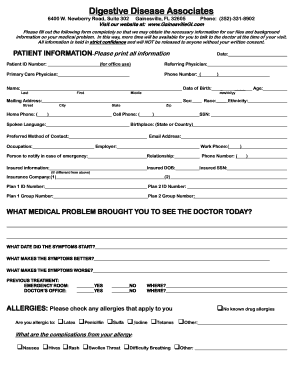
Tely so that we may obtain the necessary information for our files and background information on your medical problem. In this way, more time will be available for you to talk to the doctor at the time of your visit. All information is held in strict confidence and will NOT be released to anyone without your written consent. PATIENT INFORMATION-Please print all information Patient ID Number: (for office use) Date: Referring Physician: Primary Care Physician: Phone Number: ( Name: ) Date.
Loading
Open form follow the instructions
Easily sign the form with your finger
Send filled & signed form or save
How to fill out the Digestive Disease Association Patient History online
Filling out the Digestive Disease Association Patient History form is an essential step in ensuring that your medical provider has the necessary information to aid in your care. This guide will walk you through each section of the form, helping you to provide complete and accurate details.
Follow the steps to complete your Patient History form effectively.
- Press the ‘Get Form’ button to obtain the Patient History form and open it in your preferred document editor.
- Begin with the 'Patient Information' section. Here, you will need to print your information clearly. This includes your Patient ID number (for office use), date, referring physician, primary care physician, and their phone numbers. Make sure to also fill in your full name, date of birth, age, and address. Providing accurate contact details, including email and phone numbers, is crucial.
- In the 'Medical Problem' section, describe the issue that brought you to the doctor, along with the date your symptoms started. Include details about what alleviates or exacerbates your symptoms.
- Complete the 'Allergies' section by indicating any allergies you have. Select from the listed options and detail any complications caused by those allergies.
- Fill out the family medical history section by checking any diseases that have occurred in your family and indicating the family member affected, such as mother or father.
- In the 'Past Medical History' section, check any illnesses you currently have or have had in the past, from the extensive list provided.
- Document any surgeries and procedures you have undergone, specifying the type and date of the surgeries.
- Provide information about your social history, including living situation, religion, marital status, and tobacco and alcohol use.
- Complete the review of systems by checking any symptoms or diseases diagnosed in the last two months. Leave blank items that do not apply to you.
- Lastly, list your medications, including over-the-counter and PRN medications, noting the name, strength, dosage frequency, and reason for taking each.
- Once you have filled in all sections, review your answers for accuracy. You can then save your changes, download, print, or share the form as needed.
Start completing your Digestive Disease Association Patient History online today for a smoother appointment experience.
Experience a faster way to fill out and sign forms on the web. Access the most extensive library of templates available.
Related content
This table shows all the versions of this study record arranged in order by submitted...
Jul 11, 2023 — The Yale Liver Center is one of the premier research centers for...
Jan 25, 2019 — We acknowledge that it is difficult to clearly record patients'...
Get answers to your most pressing questions about US Legal Forms API.
What digestive disorder was most prevalent in 2004?
The most prevalent digestive disorder in 2004 was irritable bowel syndrome (IBS). Many individuals reported symptoms such as abdominal pain and bloating, impacting daily activities. The Digestive Disease Association Patient History highlights the importance of recognizing these conditions early. With proper management and support, patients can improve their quality of life and effectively manage their symptoms.
What is a digestive diseases unit?
A digestive diseases unit is a specialized healthcare section focused on diagnosing and treating conditions of the digestive system. These units often employ a multidisciplinary approach, bringing together gastroenterologists, nutritionists, and support staff. By leveraging the Digestive Disease Association Patient History, healthcare professionals can tailor treatment plans to improve patient outcomes. Such units offer resources and expertise for those dealing with digestive disorders.
Which digestive disorder caused the most healthcare and hospital visits in 2004?
In 2004, gastroesophageal reflux disease (GERD) caused the most healthcare and hospital visits. Many individuals sought treatment for symptoms like heartburn and regurgitation. The Digestive Disease Association Patient History records show that GERD significantly impacted patient quality of life. Understanding these trends helps healthcare providers address the needs of patients effectively.
How to obtain a medical history?
To obtain a Digestive Disease Association Patient History, you should reach out to your healthcare provider or clinic. Often, these offices can provide you with a copy of your medical history, either digitally or in print. Additionally, if you're navigating this process for someone else, tools from the US Legal Forms platform can help ensure you have the necessary documents and permissions in place.
How to get patient history?
You can get Digestive Disease Association Patient History by requesting a copy from your healthcare provider. Most practices have a protocol for sharing medical records, which may involve filling out a request form or providing identification. If you need assistance, the US Legal Forms platform offers resources to guide you through the process of obtaining your medical history.
How to find patient history?
To find Digestive Disease Association Patient History, you can consult your healthcare provider or access online medical portals. Many hospitals and clinics maintain digital records, allowing patients to view their history easily. Remember, always ensure you have the necessary permissions if accessing someone else's medical information.
How do you collect patient history?
Collecting Digestive Disease Association Patient History typically involves gathering information through patient interviews, medical records, and questionnaires. Healthcare providers actively engage with patients to record symptoms, past treatments, and family health history. This comprehensive approach ensures that all relevant details are captured, facilitating better diagnosis and treatment planning.
Use professional pre-built templates to fill in and sign documents online faster. Get access to thousands of forms.
If you believe that this page should be taken down, please follow our DMCA take down process here.