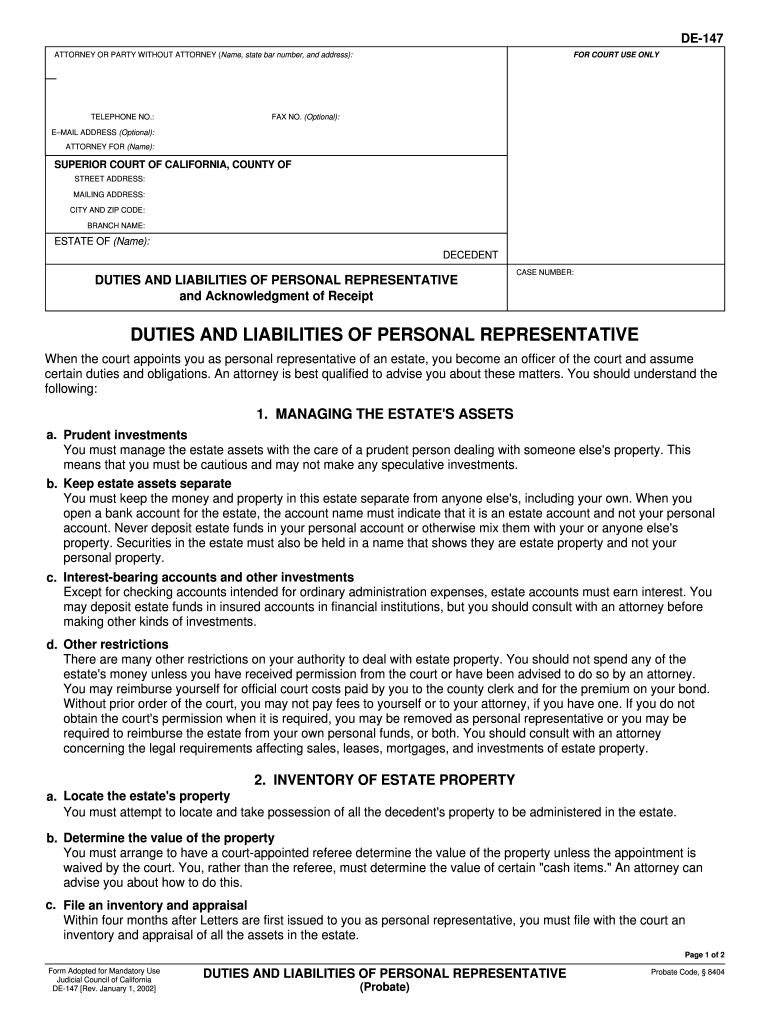
Ppraisal Within four months after Letters are first issued to you as personal representative, you must file with the court an inventory and appraisal of all the assets in the estate. Page 1 of 2 Form Adopted for Mandatory Use Judicial Council of California DE-147 Rev. January 1, 2002 DUTIES AND LIABILITIES OF PERSONAL REPRESENTATIVE (Probate) Probate Code, 8404 /03 CASE NUMBER: ESTATE OF (Name): DECEDENT d. File a change of ownership At the time you file the inventory and appraisal,.
Loading

Open form follow the instructions

Easily sign the form with your finger

Send filled & signed form or save
How to fill out the CA DE-147 online
The CA DE-147 form is an essential document for individuals appointed as personal representatives in probate cases. This guide provides a step-by-step approach to help users complete the form accurately and effectively online.
Follow the steps to successfully complete the CA DE-147 form.
- Click ‘Get Form’ button to obtain the form and open it in your preferred online editor.
- Fill in your name, state bar number (if applicable), and address in the designated fields for the attorney or party without attorney. If you do not have an attorney, simply leave the section for attorney information blank.
- Provide your telephone number, e-mail address (optional), and fax number (optional) if you wish. These details are for court use only and will help maintain communication.
- Indicate the name of the estate and the decedent in the specified fields. Ensure the decedent’s name is spelled correctly and matches legal documents.
- Enter the case number assigned by the court. This information is critical for tracking and processing your form.
- Review the duties and liabilities of the personal representative listed in the form. Make sure you understand your responsibilities as outlined. If necessary, consult with an attorney for clarification.
- Acknowledge your receipt of the duties and liabilities statement by typing or printing your name, signing the document, and dating it.
- If required by local court rule, complete the supplemental Form DE-147S to provide your date of birth and driver’s license number.
- Once all fields are complete and you have reviewed your entries for accuracy, save your changes, then proceed to download, print, or share the document as needed.
Complete your CA DE-147 form online today to ensure smooth processing of the estate.
Experience a faster way to fill out and sign forms on the web. Access the most extensive library of templates available.
Related content
You must attempt to locate and take possession of all the decedent's property to be...
by F Colella · 2025 · Cited by 1 — The best-known function of CD147 relevant to...
Utilize exclusivamente uma bateria de íon de lítio recarregável EN-EL-5. (fornecida)...
Get answers to your most pressing questions about US Legal Forms API.
What is the minimum estate value for probate in California?
In California, the minimum estate value requiring probate is generally $166,250 as of 2023. If an estate's value falls below this threshold, it may qualify for a simplified estate administration process. However, if probate is necessary, the CA DE-147 form is essential for filing. It’s important to evaluate your estate’s value accurately to determine the right course of action.
How to obtain letters of administration in California?
Obtaining letters of administration in California requires you to submit a petition to the probate court. You will complete the necessary documents and present relevant information about the estate, including its assets. The CA DE-147 form plays a crucial role in this process, ensuring you have the proper permissions to manage the estate. Accessing resources like USLegalForms can simplify this journey.
Do all wills in California have to go through probate?
Not all wills in California are required to go through probate. Some smaller estates may qualify for simplified procedures, and certain assets can pass outside of probate. However, when a will is involved, the CA DE-147 form can be essential for initiating the probate process. Considering the specific circumstances surrounding each estate is vital.
How long does an executor have to settle an estate in California?
In California, an executor typically has around 12 months to settle an estate; however, this period may vary based on estate complexity. If complications arise, such as disputes among heirs or delays in liquidating assets, the process can take longer. It’s essential to keep track of deadlines and utilize the CA DE-147 form to maintain proper documentation. This awareness can help you avoid any pitfalls during the settlement process.
How long does an executor have to sell a house in California?
An executor in California has a reasonable time frame to sell a house, usually within the probate process that can last anywhere from several months to over a year. The timeline may vary depending on the estate's complexity and any legal requirements, such as obtaining court approval for the sale. Using the CA DE-147 form can assist in documenting the sale process. It’s beneficial to consult with a real estate professional to navigate any challenges.
How long does an executor have to settle a living trust in California?
In California, an executor generally has about 12 months to settle a living trust after the death of the trustor. However, if the situation is more complex or there are disputes, this timeline can extend. It’s vital to follow the guidelines outlined in the CA DE-147 form and ensure that all debts and taxes are settled before distributing assets. By knowing this timeframe, you can better manage the expectations of beneficiaries.
What to bring to the first probate hearing?
At the first probate hearing, you should bring the completed CA DE-147 form, the will if one exists, any relevant identification, and an inventory of the estate's assets. Additionally, prepare to present your case and answer any questions from the judge. It's essential to document everything clearly to establish your role and intentions regarding the estate. This organization can help streamline your probate experience.
How to file to be an administrator of estate after a death?
To file to be an administrator of the estate after a death, you need to complete the necessary paperwork, including the CA DE-147 form. This form helps you formally request the court to appoint you as the administrator. You will submit this form along with other required documents to the probate court in the county where the deceased lived. It’s important to ensure that your application is complete to avoid delays in the process.
What happens if there is no executor or administrator?
If there is no executor or administrator appointed, the court will step in to appoint one based on state law. This appointed individual will then manage the estate and distribute assets according to California probate laws. It is crucial to file necessary forms like CA DE-147 to establish authority and begin the probate process.
How much power does an administrator have?
An administrator in California has significant authority to manage the estate, but this power is not unlimited. They must adhere to legal obligations and ensure fair dealings with all beneficiaries. The administrator uses forms like CA DE-147 to report their actions, ensuring they operate within their designated powers.
Use professional pre-built templates to fill in and sign documents online faster. Get access to thousands of forms.
If you believe that this page should be taken down, please follow our DMCA take down process here.