Loading
Form preview
  • US Legal Forms
  • Other Templates
  • Legal Forms
  • New York Legal Forms
  • Ny Executors Deed

Get Ny Executors Deed

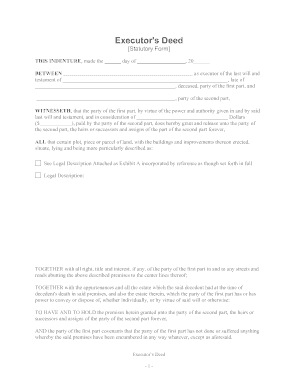
Ent of , party of the second part, WITNESSETH, that the party of the first part, by virtue of the power and authority given in and by said Dollars last will and testament, and in consideration of ($ ), paid by the party of the second part, does hereby grant and release unto the party of the second part, the heirs or successors and assigns of the part of the second part forever, ALL that certain plot, piece or parcel of land, with the buildings and improvements thereon erected, situat.

How it works

  1. Open form

    Open form follow the instructions

  2. Easily sign form

    Easily sign the form with your finger

  3. Share form

    Send filled & signed form or save

How to fill out the NY Executors Deed online

Completing the NY Executors Deed online can seem daunting, but this guide will provide you with clear instructions to navigate each step with confidence. Whether you are familiar with legal documents or new to the process, our comprehensive approach ensures clarity and support.

Follow the steps to accurately fill out the NY Executors Deed online.

  1. Press the ‘Get Form’ button to access the NY Executors Deed and open it in your preferred online editor.
  2. Fill in the date in the first blank space, indicating the day of execution for the deed. Ensure this reflects the correct date when the deed is signed.
  3. In the designated field, enter the name of the deceased individual as stated in their will, which serves as the basis for this deed.
  4. Specify the location of the deceased by filling in their last residence details in the corresponding section.
  5. Detail the consideration amount in the blank space, representing the monetary value for the property being transferred.
  6. In the provided space, describe the property being conveyed. Attach a legal description of the property as Exhibit A, being sure it is referenced correctly.
  7. Indicate any rights, titles, and interests being conveyed along with the property, ensuring clarity on what is included in the transaction.
  8. Before signing, review the document to confirm that all information is accurate and complete. Check for any encumbrances that might affect the property.
  9. Sign the deed as the executor of the estate, labeling your title appropriately, in the space provided at the bottom.
  10. Once all sections are complete and signed, save your changes. You can then download, print, or share the completed NY Executors Deed as needed.

Complete your documents online to ensure a smooth and efficient process.

Get form

Experience a faster way to fill out and sign forms on the web. Access the most extensive library of templates available.
Get form

Related content

Fiduciary of an Estate | NY CourtHelp
Nov 6, 2014 — Fiduciaries are responsible for protecting the property until all debts...
Learn more
Department of Executors Administrators Wills
by HONWN ASHMAN — New Hampshire and New York have considered mortgages mere personalty...
Learn more
DELAWARE 77-0201147 (STATE OF INCORPORATION) ( ...
The terms of the Plan and this Option Agreement shall be binding upon the executors...
Learn more

Related links form

KS K-BEN 3110 2018 LA LDOL 77 MD DBM Employment Application MI WHD-9404 2009

Questions & Answers

Get answers to your most pressing questions about US Legal Forms API.

Contact support

The primary difference between an administrator's deed and an executor's deed lies in how the authority is granted. An executor’s deed comes from a will, while an administrator’s deed is used when the court appoints an administrator in the absence of a will. Understanding these differences can help clarify the procedures when handling NY Executors Deed.

In New York, executing a deed requires the signatures of the executor and a notary public. Additionally, the deed must identify the parties involved and provide a description of the property. It’s important to follow these requirements closely to ensure that the NY Executors Deed is valid and enforceable.

An executor's deed is primarily used to transfer real estate following the death of an individual. This deed allows the executor to convey property to rightful owners or buyers as part of settling the estate. Utilizing NY Executors Deed streamlines the process and ensures all legalities are met.

In New York, an executor's deed is a legal document executed by the appointed executor of an estate. It facilitates the transfer of real property from the estate to the heirs or buyers. If you’re navigating estate transfers, knowing about NY Executors Deed is crucial for ensuring compliance with state laws.

An administrator's deed and an executor's deed serve similar purposes, but they are not the same. An administrator's deed is used when the deceased had no will, while an executor's deed applies when there's a will in place. Understanding which deed to use is essential for properly managing any NY Executors Deed.

An executor's deed is a document used to transfer property from a deceased person's estate to the beneficiaries. This deed grants authority to the executor to legally sell or transfer the decedent's real estate. In the context of estate administration, NY Executors Deed is a key instrument for fulfilling the executor's responsibilities.

The best deed to transfer property often depends on the situation. In many cases, an executor’s deed is most suitable when transferring real estate in probate. Utilizing NY Executors Deed ensures a clear and legal transfer of ownership following the necessary probate processes.

An administrator and an executor both manage the estate of a deceased person, but they have different roles. An executor is named in a will, while an administrator is appointed by the court when there is no will. Understanding the distinction is important, especially when dealing with NY Executors Deed.

The executor's deed in New York is a specific legal instrument that allows an executor to transfer real property out of an estate. This deed is particularly important as it outlines the executor's authority and protects the interests of new property owners. When dealing with estates, using an NY Executors Deed is an effective way to facilitate property transactions smoothly.

The executor of a property is the person appointed to manage and distribute the deceased's assets according to the will or state law. This role includes responsibilities such as paying debts, filing taxes, and transferring property using documents like the NY Executors Deed. Understanding this role clarifies the executor’s authority and duties in estate administration.

Get This Form Now!

Use professional pre-built templates to fill in and sign documents online faster. Get access to thousands of forms.
Get form
If you believe that this page should be taken down, please follow our DMCA take down processhere.
Get NY Executors Deed
Get form
  • Adoption
  • Bankruptcy
  • Contractors
  • Divorce
  • Home Sales
  • Employment
  • Identity Theft
  • Incorporation
  • Landlord Tenant
  • Living Trust
  • Name Change
  • Personal Planning
  • Small Business
  • Wills & Estates
  • Packages A-Z
  • Affidavits
  • Bankruptcy
  • Bill of Sale
  • Corporate - LLC
  • Divorce
  • Employment
  • Identity Theft
  • Internet Technology
  • Landlord Tenant
  • Living Wills
  • Name Change
  • Power of Attorney
  • Real Estate
  • Small Estates
  • Wills
  • All Forms
  • Forms A-Z
  • Other Templates
  • Legal Hub
  • About Us
  • Help Portal
  • Legal Resources
  • Blog
  • Affiliates
  • Contact Us
  • Delete My Account
  • Site Map
  • Industries
  • Forms in Spanish
  • Localized Forms
  • State-specific Forms
  • Forms Kit
  • Real Estate Handbook
  • All Guides
  • Notarize
  • Incorporation services
  • For Consumers
  • For Small Business
  • For Attorneys
  • USLegal
  • FormsPass
  • pdfFiller
  • signNow
  • altaFlow
  • DocHub
  • Instapage
Form Packages
  • Adoption
  • Bankruptcy
  • Contractors
  • Divorce
  • Home Sales
  • Employment
  • Identity Theft
  • Incorporation
  • Landlord Tenant
  • Living Trust
  • Name Change
  • Personal Planning
  • Small Business
  • Wills & Estates
  • Packages A-Z
Form Categories
  • Affidavits
  • Bankruptcy
  • Bill of Sale
  • Corporate - LLC
  • Divorce
  • Employment
  • Identity Theft
  • Internet Technology
  • Landlord Tenant
  • Living Wills
  • Name Change
  • Power of Attorney
  • Real Estate
  • Small Estates
  • Wills
  • All Forms
  • Forms A-Z
  • Other Templates
Customer Service
  • Legal Hub
  • About Us
  • Help Portal
  • Legal Resources
  • Blog
  • Affiliates
  • Contact Us
  • Delete My Account
  • Site Map
  • Industries
  • Forms in Spanish
  • Localized Forms
  • State-specific Forms
  • Forms Kit
Legal Guides
  • Real Estate Handbook
  • All Guides
Prepared for you
  • Notarize
  • Incorporation services
Our Customers
  • For Consumers
  • For Small Business
  • For Attorneys
Our Sites
  • USLegal
  • FormsPass
  • pdfFiller
  • signNow
  • altaFlow
  • DocHub
  • Instapage
Social Media
Call us now toll free:
+1 833 426 79 33
As seen in:
© Copyright 1999-2026 airSlate Legal Forms, Inc. 17 Station Street, Ste. 203, Brookline, MA 02445
  • Your Privacy Choices
  • Terms of Service
  • Privacy Notice
  • Content Takedown Policy
  • Bug Bounty Program