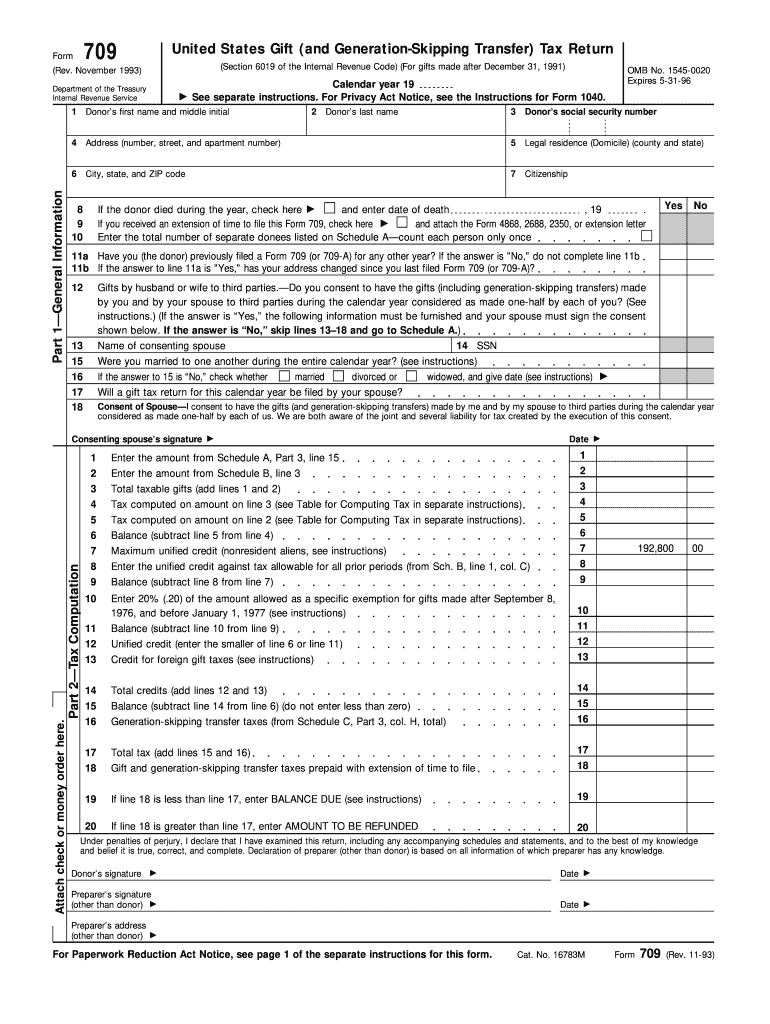
BALANCE DUE (see instructions) 19 20 If line 18 is greater than line 17, enter AMOUNT TO BE REFUNDED 1 2 20 7 Part 2 Tax Computation widowed, and give date (see instructions) Consent of Spouse I consent to have the gifts (and generation-skipping transfers) made by me and by my spouse to third parties during the calendar year considered as made one-half by each of us. We are both aware of the joint and several liability for tax created by the execution of this consent. C.

Open form follow the instructions

Easily sign the form with your finger

Send filled & signed form or save
How to fill out the IRS 709 online
The IRS 709 is the United States Gift (and Generation-Skipping Transfer) Tax Return, used to report transfers subject to federal gift tax. Filling out this form online can simplify the process, allowing users to navigate easily through each section and field.
Follow the steps to complete the IRS 709 online.
- Use the ‘Get Form’ button to access the IRS 709 document and open it for editing.
- Begin by entering the donor's first name, middle initial, last name, and Social Security number in the designated fields. Provide the legal residence (county and state) along with the complete address and citizenship status.
- Complete Part 1 by indicating if the donor has previously filed a Form 709. If applicable, mention any address changes or indicate whether gifts made by both spouses should be treated as made equally.
- Move to Part 2 to compute tax. Enter the amounts from Schedule A and B to determine total taxable gifts and compute the tax accordingly, based on the provided tables in the instructions.
- Complete Schedule A by listing each gift made during the year, specifying donee names, relationships, and detailed descriptions. Ensure correct values and dates are included for each gift.
- In Schedule B, summarize gifts from prior periods if necessary, providing the unified credit amount against gift tax reported in previous filings.
- Proceed to Schedule C to address generation-skipping transfers. Fill in the required data and calculations to determine applicable taxes.
- Review the entire document for accuracy. At the conclusion, save your changes, download a copy for your records, and prepare to print or share the completed form as needed.
Start filling out your IRS 709 form online today to ensure a smooth process!
Experience a faster way to fill out and sign forms on the web. Access the most extensive library of templates available.
Related content
Jan 30, 2025 — Use Form 709 to report: Transfers subject to the federal gift and certain...
No deduction shall be allowed under this chapter to the partnership or to any partner for...
If you are filing this form solely to elect allocation. See the instructions for Line 5...
Get answers to your most pressing questions about US Legal Forms API.
What happens if form 709 is not filed?
Failure to file IRS Form 709 when required can lead to penalties and interest on owed taxes. The IRS can impose fines for late or non-filing, impacting your overall tax situation. Moreover, not filing could lead to complications if you later need to prove gift exclusions. To avoid issues, it is vital to understand your filing requirements regarding gifts.
What is the tax rate for Form 709?
The tax rate applicable to IRS Form 709 varies based on the value of taxable gifts. The rates can range from 18% to 40%, depending on the total amount you exceed the lifetime gift exemption. Understanding these rates will help you prepare for possible tax liabilities. It is wise to consult with a tax professional when estimating your potential tax obligations.
What triggers a gift tax audit?
A gift tax audit may be triggered by various factors, including discrepancies in your IRS Form 709 and reported gifts. Large gifts, especially those exceeding the exclusion limit, can attract IRS scrutiny. Additionally, patterns of excessive gifting or inconsistencies with income may raise red flags. Being thorough in reporting your gifts can help minimize audit risks.
Do I really need to file Form 709?
Whether you need to file IRS Form 709 depends on your gifting activities. If you give gifts exceeding the annual exclusion limit, then filing is necessary. Additionally, certain situations, like transferring property or contributing to a trust, may also require completion of this form. It’s important to assess your circumstances to determine if filing is essential.
How to avoid Form 709?
To avoid filing IRS Form 709, you should stay within the annual gift exclusion limit. In 2023, this limit is $17,000 per recipient. If your gifts do not exceed this limit, you do not need to file. Understanding IRS regulations can help you plan your gifting strategy effectively.
Can you file form 709 electronically?
Yes, you can file IRS Form 709 electronically. The IRS allows electronic filing for certain tax forms, which simplifies the process. Using IRS-approved e-filing software can save you time and ensure accuracy. Consider exploring platforms like US Legal Forms for guidance on electronic submissions.
Which of the following situations would require the filing of Form 709?
You should file Form 709 if you have made gifts that exceed the annual exclusion amount, such as giving a substantial sum to a family member or transferring property. Situations involving the creation of trusts that benefit others may also require this filing. Utilizing platforms like uslegalforms can simplify understanding and completing IRS Form 709 to ensure you meet all legal requirements.
Do I have to report the sale of an inherited home to the IRS?
When you sell an inherited home, you do not typically report the sale to the IRS, unless you owe capital gains tax. The IRS allows you to use the home's fair market value at the time of inheritance as your basis. However, it is wise to consult with professionals if you're uncertain about your tax obligations in relation to the sale.
How does the IRS know if I give a gift?
The IRS may find out about your gifts through various means, such as other tax filings and information from financial institutions. When you file IRS Form 709, you formally report your gifts, ensuring the IRS has documented proof of your transactions. Keeping detailed records can also support your filings and help you avoid potential issues.
Who needs to file IRS Form 709?
You need to file IRS Form 709 if you have given gifts exceeding the annual exclusion limit set by the IRS. This includes situations where you make substantial gifts to individuals or charities. Understanding your filing requirements can help you navigate the complexities of taxation and ensure compliance.
Use professional pre-built templates to fill in and sign documents online faster. Get access to thousands of forms.
If you believe that this page should be taken down, please follow our DMCA take down process here.
This form is available in several versions. Select the version you need from the drop-down list below.