Loading
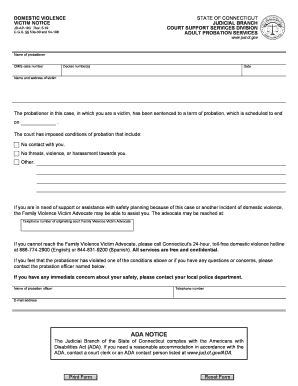
Get Ct Jd-ap-183 2019-2026
How it works
-

Open form follow the instructions
-

Easily sign the form with your finger
-

Send filled & signed form or save
How to fill out the CT JD-AP-183 online
The CT JD-AP-183 form is an important document for individuals involved in domestic violence cases, specifically for victims receiving information about probationers. This guide provides clear and supportive step-by-step instructions to help users navigate the online form efficiently.
Follow the steps to complete your CT JD-AP-183 online.
- Press the ‘Get Form’ button to obtain the CT JD-AP-183 form and open it in your online editor.
- Enter the name of the probationer in the designated field. Ensure this is accurate to avoid any complications.
- Input the CMIS case number in the appropriate section. This number is crucial for identifying the specific case.
- Fill in the docket number(s) related to the case in the provided space. This information helps the court track the case effectively.
- Enter the date when you are completing this form. Accurate dating is essential for record-keeping.
- Provide the name and address of the victim clearly in the designated area. This ensures that the victim's details are correctly recorded.
- Review the probation conditions listed on the form. Confirm that they include no contact with the victim, no threats, violence, or harassment. If there are additional conditions, note them as well.
- If you require assistance or support, you may note the contact details of the Family Violence Victim Advocate for future reference. This section provides resources for further help.
- Make sure to include the probation officer’s name, telephone number, and email address in the appropriate fields to ensure easy communication if necessary.
- Once all required fields have been filled out accurately, save your changes. You can choose to download, print, or share the form as needed.
Start completing your CT JD-AP-183 online today for a smoother process.
A dismissed case means that a lawsuit is closed with no finding of guilt and no conviction for the defendant in a criminal case by a court of law. Even though the defendant was not convicted, a dismissed case does not prove that the defendant is factually innocent for the crime for which he or she was arrested.