And its political subdivisions remain in effect until the judgment is satisfied. The garnishment of earnings of other employees will affect the debtor's earnings for all pay periods beginning within 13 weeks after you receive it, unless the debtor's earnings are already being garnished. If this earnings garnishment is delayed under paragraph 5, above, it will affect the debtor's earnings for all pay periods beginning within 13 weeks after the first day of the pay period that you put this earning.
Loading

Open form follow the instructions

Easily sign the form with your finger

Send filled & signed form or save
How to fill out the WI CV-422 online
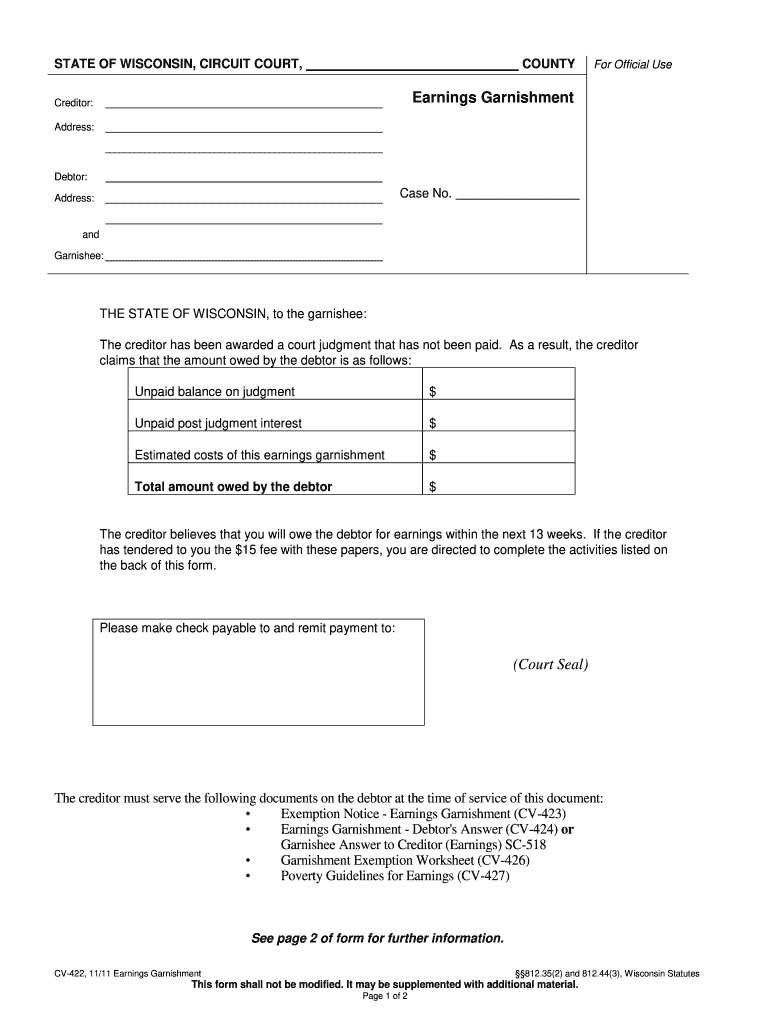
Filling out the WI CV-422 form is an essential step in the earnings garnishment process. This guide provides clear and detailed instructions for users who may be unfamiliar with the legal documentation required in this context.
Follow the steps to successfully complete the earnings garnishment form.
- Click ‘Get Form’ button to obtain the form and open it in the online editor.
- Fill in the creditor's name and address in the designated fields. Ensure that all contact information is accurate to facilitate communication.
- Enter the debtor's name and address. This information is vital in identifying the individual against whom the earnings garnishment is directed.
- In the case number field, provide the relevant case number associated with the court judgment.
- Record the unpaid balance on the judgment, unpaid post-judgment interest, and estimated costs of the earnings garnishment in the respective fields. Ensure these amounts are clearly indicated.
- Calculate and enter the total amount owed by the debtor, summing up the previous amounts you specified. This total is crucial for the garnishee's reference.
- Review the section that requires you to determine whether you will owe the debtor earnings within the next 13 weeks. This information impacts the garnishment's applicability.
- If applicable, mail a statement stating that you do not foresee owing the debtor within 7 business days of receiving the garnishment forms.
- If you receive a debtor's response form, be sure to send a copy to the creditor within 3 business days and include the date of receipt.
- If the debtor has other earnings garnishments, note that this new garnishment will not take effect until the previous ones are resolved.
- Finally, once all required fields are completed and reviewed, save your changes, and proceed to download, print, or share the completed form as needed.
Complete your earnings garnishment document online now and ensure accurate filing.
Experience a faster way to fill out and sign forms on the web. Access the most extensive library of templates available.
Related content
• Exemption Notice - Earnings Garnishment (CV-423). • Earnings Garnishment - Debtor's...
Bradley's Core Curriculum will feature the requirement of two Writing Intensive (WI)...
Jul 7, 2017 — Sensor de rotação adicional com interface TTL (RS-422),. U = 9 ... CV...
Get answers to your most pressing questions about US Legal Forms API.
What makes you exempt from garnishment in Wisconsin?
In Wisconsin, certain individuals may be exempt from garnishment due to various reasons, including government benefits or a total income below specified thresholds. For example, social security payments and unemployment benefits are generally protected. To understand your rights and exemptions thoroughly, referencing the WI CV-422 can offer necessary guidance.
How do I write a letter to stop wage garnishment?
Writing a letter to stop wage garnishment involves clearly stating your intent and providing necessary details like your account information. Include any applicable forms, such as the WI CV-422, to support your request. Be concise and direct, and ensure you send the letter to the appropriate creditor or court handling your case.
How to stop a wage garnishment in WI?
To stop a wage garnishment in Wisconsin, you can start by filing a motion in court. Utilizing resources like the WI CV-422 enables you to provide your argument and any supporting documents effectively. Additionally, communicating directly with the creditor or seeking legal assistance can further help navigate this process.
Can you stop a wage garnishment in Wisconsin?
Yes, you can stop a wage garnishment in Wisconsin through several means. Filing a motion to contest the garnishment using forms such as the WI CV-422 allows you to present your case before a court. This process can lead to a stop in garnishment under specific circumstances, making it essential to understand your rights.
What is the maximum garnishment in Wisconsin?
In Wisconsin, the maximum wage garnishment is typically limited to 25% of your disposable earnings or the amount by which your weekly earnings exceed 30 times the federal minimum wage, whichever is lower. This limitation helps protect your income while fulfilling your financial obligations. To ensure compliance with these limits, consider consulting with a legal expert or using resources like the WI CV-422.
What is the best way to stop wage garnishment?
The best way to stop wage garnishment involves understanding your rights and options. You can file for a motion to contest the garnishment using forms like the WI CV-422. By taking this action, you can potentially negotiate with creditors or establish a payment plan that reduces or halts deductions from your paycheck.
What does non-earnings garnishment mean?
Non-earnings garnishment refers to the legal process through which creditors can claim assets or property, rather than wages, to satisfy debts. This process can include bank accounts or other forms of personal property. Understanding the nuances of non-earnings garnishment, particularly in relation to WI CV-422, can better prepare you to handle debt-related issues effectively.
What is the maximum garnishment allowed?
The maximum amount a creditor can garnish depends on various factors, including the type of debt you owe. In most cases, Wisconsin law allows garnishments up to 20% of your disposable earnings, as stated in WI CV-422. It's essential to understand these limits so you can better manage your finances and debts.
How much of your wages can be garnished in Wisconsin?
According to Wisconsin law, creditors can garnish a maximum of 20% of your disposable earnings for debts. Disposable earnings are your earnings after legally required deductions, such as taxes. This means that if your income falls under the provisions outlined in WI CV-422, you can keep most of your earnings while still fulfilling your debt obligations.
What is the exemption for garnishment in Wisconsin?
In Wisconsin, certain exemptions protect your income from garnishment. Generally, the law allows you to keep a portion of your wages and other income, ensuring you can meet basic living expenses. The specific exemption may vary based on your circumstances, but understanding the WI CV-422 guidelines can help you determine what you can protect.
Use professional pre-built templates to fill in and sign documents online faster. Get access to thousands of forms.
If you believe that this page should be taken down, please follow our DMCA take down process here.