Get Fl 12.930(a) 2012-2026
How it works
-

Open form follow the instructions
-

Easily sign the form with your finger
-

Send filled & signed form or save
How to fill out the FL 12.930(a) online
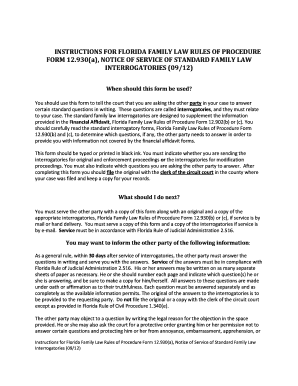
Filling out the FL 12.930(a) form, also known as the Notice of Service of Standard Family Law Interrogatories, is an essential step in the process of family law proceedings. This guide will provide you with clear instructions on how to complete this form online, ensuring that you meet all legal requirements.
Follow the steps to complete the FL 12.930(a) form effectively.
- Click ‘Get Form’ button to obtain the form and open it in the editor.
- Begin by entering your full legal name and the date at the top of the form. This identifies you as the petitioner.
- Next, provide the name of the individual you are serving this document to, as well as indicate whether this is for original/enforcement proceedings or modification proceedings.
- Place a checkmark next to each of the standard questions you are requesting be answered. These include sections such as background information, education, employment, assets, liabilities, miscellaneous, and long form affidavit questions.
- Indicate the method of service by checking the appropriate box—whether the document was e-mailed, mailed, faxed, or hand-delivered. Fill in the details of the person or attorney being served, including their name, address, city, state, zip code, fax number, and e-mail address, if applicable.
- Additionally, you must sign the document, providing your printed name, address, city, state, zip code, telephone number, fax number, e-mail address, and Florida Bar number if you are an attorney.
- If a nonlawyer assisted you, ensure their information is filled in at the end of the form, including their name, business name, address, and phone number.
- Once all fields are completed accurately, save your changes. You may then download, print, or share the completed form as needed.
Ensure that you complete and file the FL 12.930(a) form online today for a smooth legal process.
The sentence for a habitual felon in Florida varies widely based on the nature of the offenses. Generally, habitual felons can face significant prison time, ranging from several years to life, depending on their criminal history and the severity of the new charges. It is crucial to navigate these consequences carefully under FL 12.930(a). Obtaining sound legal advice can help you comprehend your potential outcomes and options.