Stay at least Granted as Follows: yards away from (check all that apply): (1) The employee (7) The employee s children s place of child care (2) Each other protected person listed in 4 (8) The employee s vehicle (3) The employee s workplace (9) Other (specify): (4) The employee s home (5) The employee s school (6) The employee s children s school b. This stay-away order does not prevent you from going to or from your home or place of employment. This is a C.
Loading

Open form follow the instructions

Easily sign the form with your finger

Send filled & signed form or save
How to fill out the CA WV-110 online
Filling out the CA WV-110 form can seem daunting, but with the right guidance, you can complete it successfully. This form is crucial for seeking a temporary restraining order relating to workplace violence and needs to be filled out accurately to ensure your protection and that of others.
Follow the steps to complete the CA WV-110 form online.
- Press the ‘Get Form’ button to access the CA WV-110 form and open it for editing.
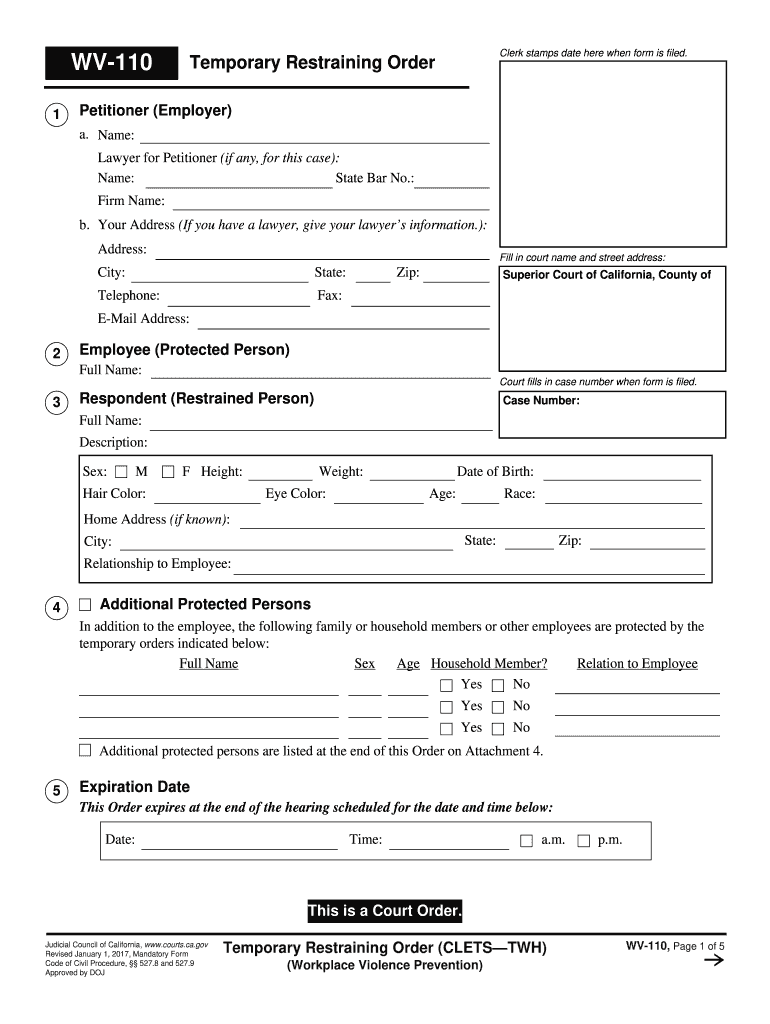
- Begin by filling in the petitioner’s information. This includes the name of the employer, and if applicable, the name, state bar number, and firm name of the lawyer representing the petitioner. Additionally, provide a complete address including city, state, and zip code.
- Move on to the employee section, and enter the full name of the protected person. The case number will be filled in by the court when the form is filed.
- In the respondent section, provide the full name of the restrained person along with their physical description including sex, height, hair color, weight, eye color, date of birth, age, race, and home address if known.
- If there are additional protected persons, list their names, sex, age, whether they are household members, and their relationship to the employee.
- Indicate the expiration date of the order by selecting the date and time of the hearing.
- Fill out the personal conduct orders section by checking the applicable boxes that describe the conduct the respondent must not engage in with regard to the employee and other protected persons.
- Complete the stay-away order section, specifying the required distance the respondent must maintain from the employee and other specified locations.
- If there are any additional orders, complete that section by specifying the orders as necessary.
- Finally, review all entries for accuracy. Once completed, users can save changes, download, print, or share the form as needed.
Complete and file your CA WV-110 form online for effective legal protection.
Experience a faster way to fill out and sign forms on the web. Access the most extensive library of templates available.
Related content
This stay-away order does not prevent you from going to or from your home or place of...
Proof of service of form WV-110, Temporary Restraining Order, was presented to the court...
The dome type network cameras WV-SFV130 / WV-SFV110 / WV-SFV130M / WV-SFV110M are designed...
Get answers to your most pressing questions about US Legal Forms API.
What does dissolving a protective order mean?
Dissolving a protective order means officially canceling the order that restricts interactions between the involved parties. This process can occur when the court finds that the reasons for the order are no longer valid, or if both parties agree that the conflict has been resolved. The CA WV-110 outlines the procedures to seek dissolution, making this process clearer and more accessible for those involved.
How do I fight a false restraining order in California?
To fight a false restraining order in California, you should gather evidence that counters the claims made against you. This may include witnesses, documentation, or any other relevant information that supports your case. It's essential to respond promptly to court notices and present your evidence during the hearing. Utilizing resources like CA WV-110 can provide guidance on effectively challenging unfounded claims.
What are the consequences of a restraining order in California?
The consequences of a restraining order in California can be significant. It can limit an individual's ability to contact or come near the protected person, potentially impacting personal and professional relationships. Additionally, violating a restraining order can lead to criminal charges, fines, or jail time. By reviewing CA WV-110, you can better grasp the implications and ensure you comply with all requirements.
What is the burden of proof for a civil harassment restraining order in California?
In California, the burden of proof for a civil harassment restraining order lies with the petitioner, who must demonstrate that harassment occurred. This requires clear evidence showing that the behavior was unwanted and caused significant distress. The CA WV-110 outlines these requirements in detail, helping you prepare your case for court effectively. Understanding this process can enhance your chances of a favorable outcome.
Why would a restraining order be dismissed in California?
In California, a restraining order may be dismissed for various reasons including lack of evidence, failure to comply with legal requirements, or if the victim decides not to pursue the case further. The judge assesses all presented information and may find that the claims do not warrant the restrictions imposed. Dismissal can also happen if both parties agree that the situation has improved. Familiarizing yourself with the CA WV-110 can prepare you for such scenarios.
Why would a judge dismiss a restraining order?
A judge may dismiss a restraining order if they determine there is insufficient evidence to support the claims made. In some cases, the judge might find that the alleged behavior does not meet the legal criteria established for a restraining order. Additionally, if the parties involved reach an agreement outside of court, this can also lead to dismissal. Understanding the CA WV-110 process can help you navigate these legal proceedings more effectively.
How do I file a writ of execution in California?
To file a writ of execution in California, start by gathering the required documentation, including the judgment details. Complete the corresponding forms, such as the CA WV-110, and file them with your local court. Ensure you include any applicable fees and follow all procedural requirements to facilitate a smooth execution process and to enforce the judgment you have obtained.
How long do you have to file a writ in California?
In California, the timeframe to file a writ generally depends on the type of writ and the nature of the case. For most situations, filing should occur within a reasonable period after a judgment is made. However, it is advisable to initiate this process promptly to ensure enforcement actions can begin, especially under guidelines outlined in CA WV-110.
What is the difference between a writ of garnishment and a writ of execution?
A writ of garnishment allows a creditor to collect payment directly from a debtor's wages or bank account, while a writ of execution permits the seizure of the debtor's property to satisfy a judgment. Understanding this difference is essential in determining the best course of action for recovering debts. If your situation requires clarity, the CA WV-110 provides useful guidance for these legal processes.
How to file a writ of execution in California?
Filing a writ of execution in California requires completing specific legal documents. You start by obtaining the necessary forms from the court, such as the CA WV-110. Once complete, you will submit these forms to the court along with any required fees. This process helps enforce a court judgment effectively and promptly.
Use professional pre-built templates to fill in and sign documents online faster. Get access to thousands of forms.
If you believe that this page should be taken down, please follow our DMCA take down process here.