Loading

Open form follow the instructions

Easily sign the form with your finger

Send filled & signed form or save
How to fill out the Fire Hydrant Checklist online
The Fire Hydrant Checklist is an essential document used for the commissioning and periodic testing of fire systems as per regulatory standards. Filling out this form online ensures compliance with safety requirements while streamlining the testing process.
Follow the steps to complete the Fire Hydrant Checklist online effectively.
- Click the ‘Get Form’ button to access the Fire Hydrant Checklist and open it in your preferred online editor.
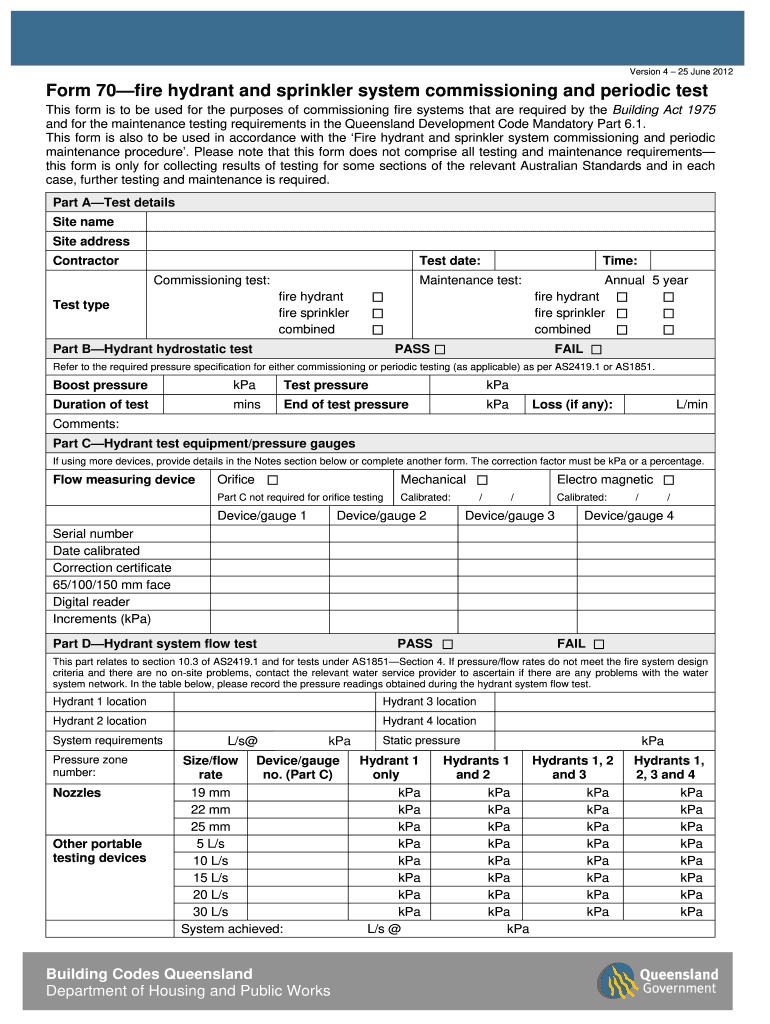
- Begin with Part A, which includes details such as the site name, site address, and contractor information. Ensure that you enter the date and time of the test, along with specifying whether it is a maintenance or commissioning test for fire hydrants, fire sprinklers, or both.
- Proceed to Part B to complete the hydrant hydrostatic test. Indicate whether the test passed or failed, and input necessary details like boost pressure, test pressure, duration of the test, and end of test pressure. Note any loss during the test and add relevant comments.
- In Part C, provide information about the hydrant test equipment used and pressure gauges. Record calibration status for each device and ensure the correction factor is specified in kPa or as a percentage.
- Move on to Part D, where you will document the findings from the hydrant system flow test. Note the pressure readings obtained during the test and assess if the system met design criteria.
- Complete Part E by recording data from the pump appliance booster test, including static pressures and calculations related to the performance of the booster pumps.
- In Part F, input results from the sprinkler hydrostatic test and confirm if it passed or failed based on required specifications.
- For Part G, analyze the sprinkler system flow test. Document test points, required flow rates, and outcomes for each test conducted.
- In Part H, acknowledge any critical defects found during testing and provide necessary remarks regarding repairs or corrective actions taken.
- Finally, complete Part I by signing the form. Confirm the accuracy of the provided information and include your license details along with the report number.
- Once you have filled out the entire form, you can save your changes, download, print, or share the completed Fire Hydrant Checklist as needed.
Get started with completing the Fire Hydrant Checklist online today!
Experience a faster way to fill out and sign forms on the web. Access the most extensive library of templates available.
Related content
6 days ago — A fire hydrant inspection checklist is a detailed list of items and...
How to do a Fire Hydrant Inspection (with Checklist!) - How to do a Fire Hydrant...
Jul 15, 2020 — Before replacing the hose cap and/or steamer cap, check the inside of the...
Get answers to your most pressing questions about US Legal Forms API.
What is the guideline for a fire hydrant?
Guidelines for fire hydrants generally include installation requirements, accessibility for emergency services, and maintenance protocols. Municipalities often provide specific regulations to ensure hydrants function efficiently when needed. Familiarizing yourself with these guidelines helps in updating your Fire Hydrant Checklist, ensuring no detail is overlooked.
How to do a hydrant inspection?
To perform a hydrant inspection, inspect both the exterior and interior components of the hydrant. Check for rust, leaks, and proper function of the opening mechanism. Additionally, note any environmental factors that may affect access. A thorough review should be part of your Fire Hydrant Checklist to keep your hydrant in top shape.
What is the standard for fire hydrant testing?
Standards for fire hydrant testing typically include testing flow rates and pressure in accordance with local fire codes. These tests ensure the hydrant can deliver adequate water supply during emergencies. Using a standardized Fire Hydrant Checklist helps you stay compliant and ensures your hydrant operates effectively.
How to do a fire hydrant inspection?
To conduct a fire hydrant inspection, start by visually checking for any physical damage or obstructions around the hydrant. Next, ensure the valve operates smoothly and does not leak. Finally, document your findings. Incorporating this process into your Fire Hydrant Checklist helps maintain safety and reliability.
What is the maintenance checklist for a fire hydrant?
A maintenance checklist for a fire hydrant includes regular inspections, checking for obstructions, and confirming that the hydrant can be opened easily. You should also look for leaks and inspect the paint for fading or damage. Regular maintenance ensures that your fire hydrants are ready in case of an emergency and is an essential part of any Fire Hydrant Checklist.
Who owns the fire hydrant on my property?
Typically, fire hydrants are owned by the local municipality or water authority, not private property owners. However, if a hydrant is installed on your property, you should clarify ownership with your local government. Knowing ownership can help you in managing the Fire Hydrant Checklist and ensuring the hydrant remains accessible and functioning.
How do you test a fire hydrant system?
To test a fire hydrant system, you need to gather the right tools, such as a pressure gauge and a wrench. First, locate the hydrant and ensure the area is clear. Open the hydrant slowly, measure the water pressure, and check for leaks. This procedure is vital for your Fire Hydrant Checklist, as it confirms that the hydrant is functioning correctly.
What is the maintenance of a fire hydrant?
The maintenance of a fire hydrant includes routine inspections, testing, and repairs necessary to keep the hydrant operational. Regular checks for leaks, corrosion, and functionality ensure that hydrants are ready when needed. Creating a detailed Fire Hydrant Checklist can greatly streamline your maintenance efforts.
What is the preventive maintenance checklist for a fire hydrant?
A preventive maintenance checklist for a fire hydrant aims to prevent issues before they arise. It usually encompasses regular functionality tests, ensuring the hydrant is accessible, and lubricating moving parts. Frequent use of your Fire Hydrant Checklist helps maintain a proactive approach to fire safety.
Which tasks are part of general inspection and maintenance procedures for fire hydrants?
General inspection and maintenance procedures for fire hydrants involve several key tasks. You should examine the hydrant for rust, test the flow rate, and confirm that the operating mechanism is functional. Including these tasks in your Fire Hydrant Checklist will enhance the overall reliability of your hydrants.
Use professional pre-built templates to fill in and sign documents online faster. Get access to thousands of forms.
If you believe that this page should be taken down, please follow our DMCA take down process here.