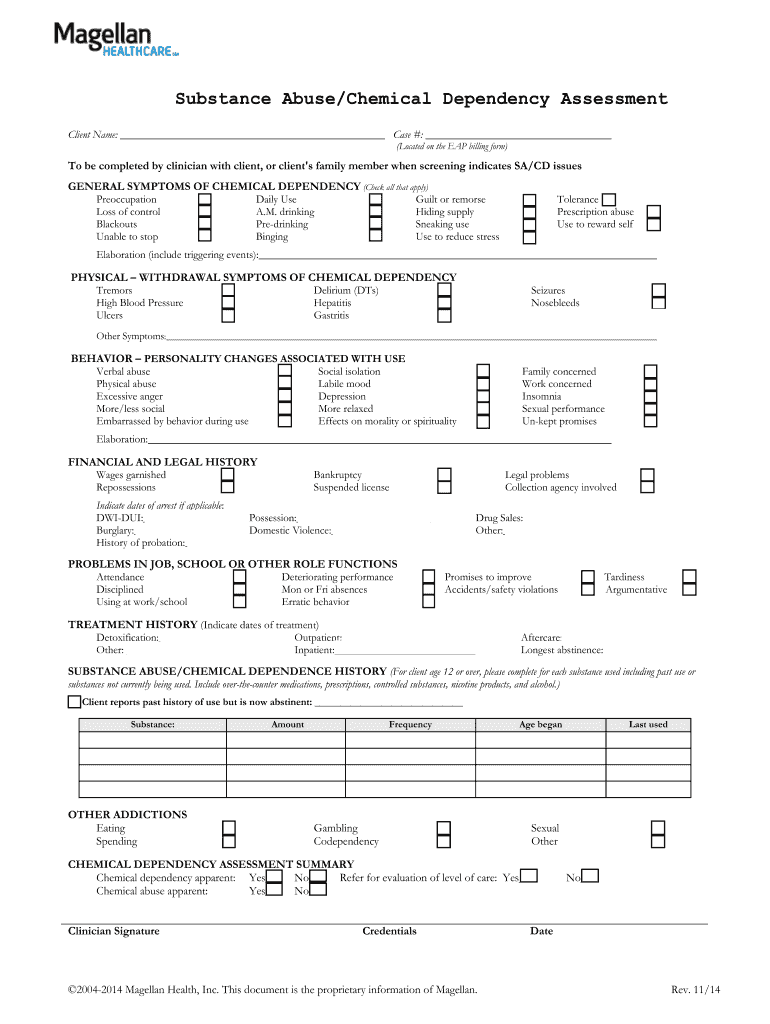
CD issues GENERAL SYMPTOMS OF CHEMICAL DEPENDENCY (Check all that apply) Preoccupation Loss of control Blackouts Unable to stop Daily Use A.M. drinking Pre-drinking Binging Guilt or remorse Hiding supply Sneaking use Use to reduce stress Tolerance Prescription abuse Use to reward self Elaboration (include triggering events): PHYSICAL WITHDRAWAL SYMPTOMS OF CHEMICAL DEPENDENCY Tremors High Blood Pressure Ulcers Delirium (DTs) Hepatitis Gastritis Seizures Nosebleeds Other Symptoms: BE.
Loading

Open form follow the instructions

Easily sign the form with your finger

Send filled & signed form or save
How to fill out the Chemical Dependency Assessment Form online
Filling out the Chemical Dependency Assessment Form is an important step in evaluating chemical dependency issues. This guide provides clear instructions on how to complete the form online, ensuring a thorough assessment for the individual in need.
Follow the steps to complete the Chemical Dependency Assessment Form online.
- Click ‘Get Form’ button to access the Chemical Dependency Assessment Form and open it in your preferred editor.
- Begin by filling out the client name and case number, which can be found on the EAP billing form. Ensure all information is accurate.
- Review the section titled 'General symptoms of chemical dependency.' Check all symptoms that apply to the individual, and elaborate on triggering events if necessary.
- Proceed to the 'Physical – Withdrawal symptoms of chemical dependency' section. Mark symptoms that are present, and note any additional symptoms in the provided space.
- Next, fill out the 'Behavior – Personality changes associated with use' section. Again, check all behaviors that relate to the individual's experience and provide elaboration where appropriate.
- Complete the 'Financial and legal history' section, detailing any relevant financial issues, legal problems, or arrests, including dates where applicable.
- In the 'Problems in job, school or other role functions' section, describe any impacts that substance use has had on attendance, performance, or behavior at work or school.
- Document treatment history by indicating dates and types of previous treatment the individual has undergone, including detoxification and outpatient programs.
- Fill out the 'Substance abuse/chemical dependence history' section, detailing each substance the individual has used, their history, and current status.
- Explore the section on 'Other addictions' and provide information about any other addictive behaviors the individual experiences.
- Finally, in the 'Chemical Dependency Assessment Summary,' mark whether chemical dependency or abuse is apparent, and provide the clinician’s signature and credentials.
- Once completed, save changes to the form. You can also download, print, or share the form as needed.
Start filling out the Chemical Dependency Assessment Form online today to ensure a comprehensive evaluation.
Experience a faster way to fill out and sign forms on the web. Access the most extensive library of templates available.
Related content
Jan 6, 2023 — Drug Abuse Screen Test (DAST-10)* For use of this tool - please ... NIDA...
Cynthia Glidden-Tracey Assessment Template. ContinuingEdCourses.Net. Page 2. Category of...
by D GUIDANCE · 2015 — 41 a drug for commercial purposes (i.e., seeking market approval...
Get answers to your most pressing questions about US Legal Forms API.
What happens in a chemical assessment?
During a chemical assessment, a trained professional conducts an interview to ask detailed questions about substance use and its effects on the individual's life. This process may also include standardized questionnaires to quantify the level of dependency. After collecting all relevant information, the assessor interprets the data to recommend appropriate next steps, whether it be treatment or support resources. Leveraging a Chemical Dependency Assessment Form aids in organizing this information effectively.
What is a dependency assessment?
A dependency assessment is a comprehensive review of an individual's substance use patterns and related behaviors. It involves gathering information about the length of use, types of substances, and any impact on daily life. This assessment aims to provide a complete picture of the individual's situation. The Chemical Dependency Assessment Form is a valuable tool in this process, ensuring that all relevant details are documented.
What are the 4 C's of substance abuse?
The 4 C's of substance abuse represent four key characteristics: craving, loss of control, compulsive use, and consequences. Recognizing these signs can help individuals and professionals understand the severity of a dependency issue. Assessing these factors is essential for creating a personalized treatment plan. A Chemical Dependency Assessment Form often highlights these characteristics, aiding in clear communication between the client and the assessor.
Who is qualified to do an ASAM assessment?
An ASAM assessment is conducted by professionals trained in addiction treatment, such as certified addiction counselors, psychologists, or licensed therapists. These experts understand the complexities of substance use disorders and can provide a valid assessment. Their qualifications typically include specialized training and certification in addiction services. Using a Chemical Dependency Assessment Form allows these professionals to efficiently gather necessary data.
What is an example of a chemical dependency?
An example of a chemical dependency is alcohol dependency, where individuals find it challenging to control their drinking habits despite negative consequences. This situation can lead to various health issues, including mental health challenges. Understanding these dependencies is crucial for effective treatment. A Chemical Dependency Assessment Form can help identify such problems early on.
What is the DAST 10 assessment tool?
The DAST 10, or Drug Abuse Screening Test, is a tool used to measure the presence of drug abuse in individuals. It consists of a series of questions aimed at identifying behavioral indicators associated with substance misuse. Results from the DAST 10 can inform the need for further evaluation or intervention. Incorporating this tool within a Chemical Dependency Assessment Form enhances the assessment's effectiveness.
What is a chemical risk assessment?
A chemical risk assessment evaluates the potential risks associated with substance use. It looks at factors such as the type of chemical used, frequency of use, and any history of dependency. This process helps professionals determine an individual's risk of developing more severe health issues. Completing a comprehensive Chemical Dependency Assessment Form often includes a component focusing on these risks, ensuring thorough evaluation.
What is a chemical dependency assessment?
A chemical dependency assessment is a structured evaluation that helps identify an individual's substance use problems. It typically involves a questionnaire, along with an interview to gather detailed information. The goal of this assessment is to understand the severity of the dependency and guide the next steps for treatment. Utilizing a Chemical Dependency Assessment Form can simplify this process, making it easier for both clients and professionals.
How do you assess drug abuse?
Assessing drug abuse involves examining patterns of use, physical health, and psychological factors. Professionals typically use structured interviews, questionnaires, and observed behaviors to gather information. Tools like the Chemical Dependency Assessment Form facilitate this process, allowing for an organized collection of crucial data needed for accurate assessment and intervention planning.
How to do a substance abuse assessment?
Conducting a substance abuse assessment requires asking specific questions about an individual's substance use history, behaviors, and health. It often begins with a comprehensive interview and may be supplemented with standardized tools like the Chemical Dependency Assessment Form. This structured approach ensures that vital information is captured accurately, leading to effective treatment planning.
Use professional pre-built templates to fill in and sign documents online faster. Get access to thousands of forms.
If you believe that this page should be taken down, please follow our DMCA take down process here.