Oregon Probate
Probate in Oregon involves managing a deceased person's estate. Attorney-drafted templates simplify the process, making it quick and user-friendly.

Similar documents: key differences
- Will vs. Trust — A will directs asset distribution after death; a trust can manage assets during life.
- Executor vs. Administrator — An executor manages an estate per a will; an administrator does so without one.
- Intestate vs. Testate — Intestate means dying without a will; testate means dying with one.
- Letters of Administration vs. Letters Testamentary — Letters of Administration appoints an administrator; Letters Testamentary appoints an executor.
- Small Estate Affidavit vs. Petition for Probate — A Small Estate Affidavit allows simpler asset transfer; a Petition for Probate is more formal.
- Probate vs. Non-Probate Assets — Probate assets go through court; non-probate assets transfer directly to beneficiaries.
Search for more forms
Types of Probate forms
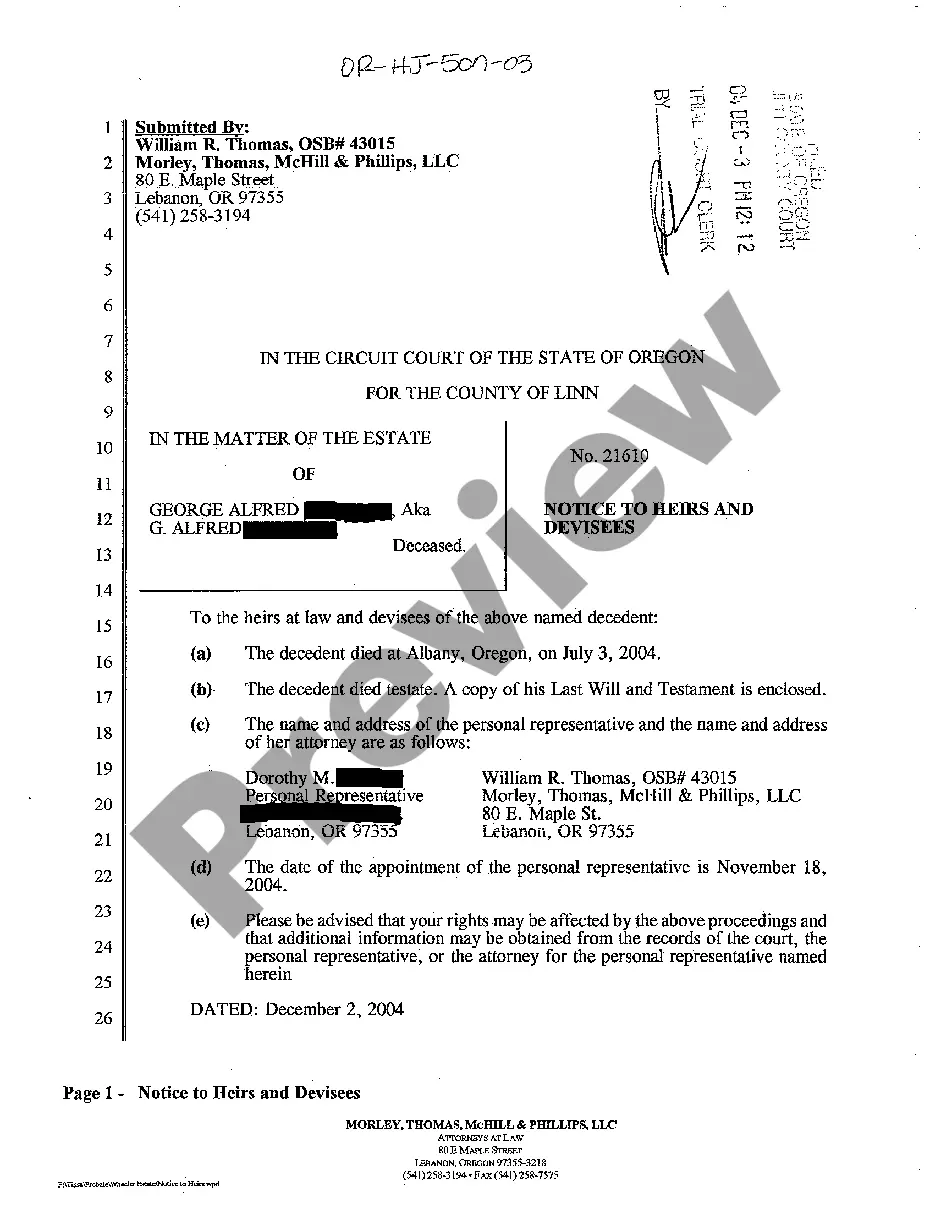
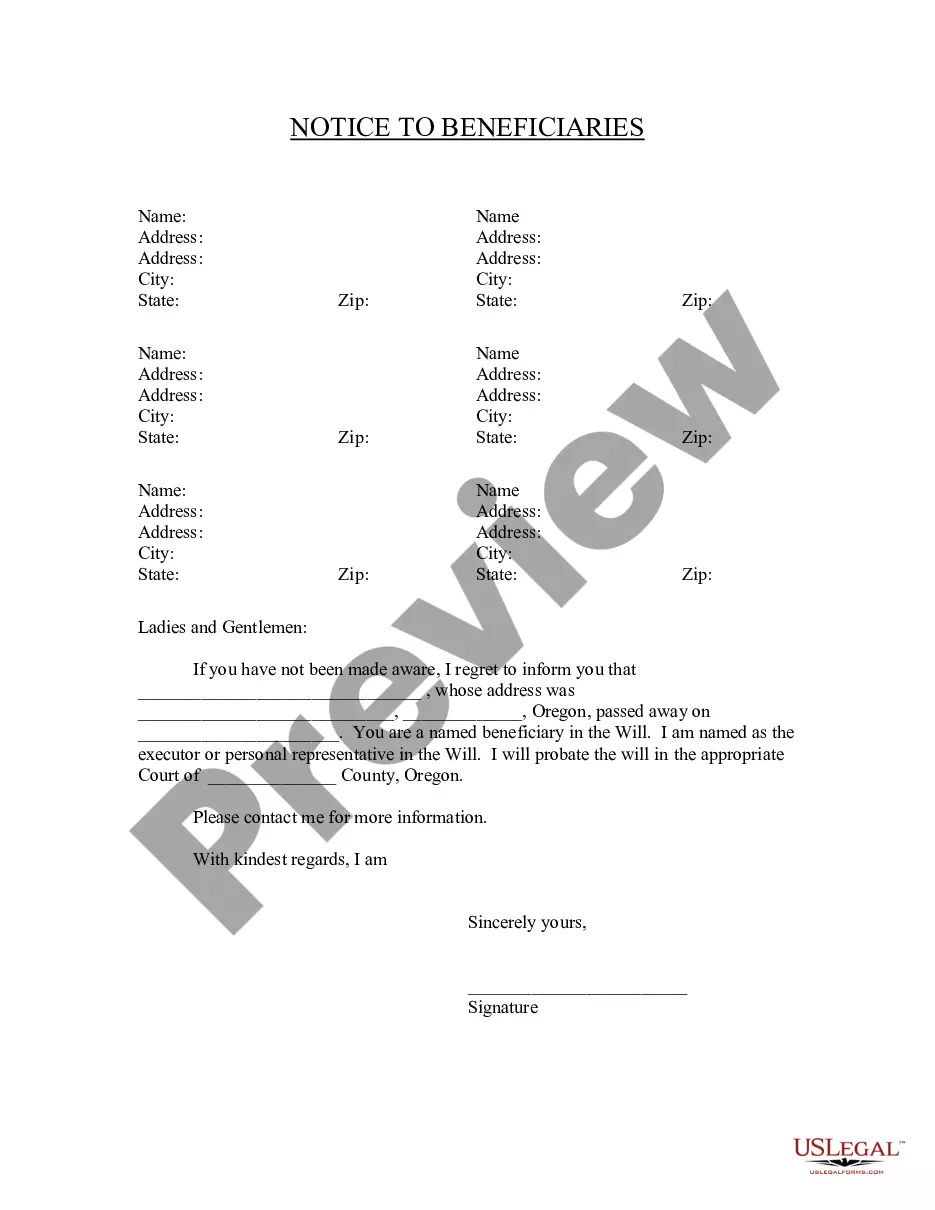
Notice to Beneficiaries of Being Named in Will
Notify beneficiaries about their status under a Will, ensuring they know their entitlements.
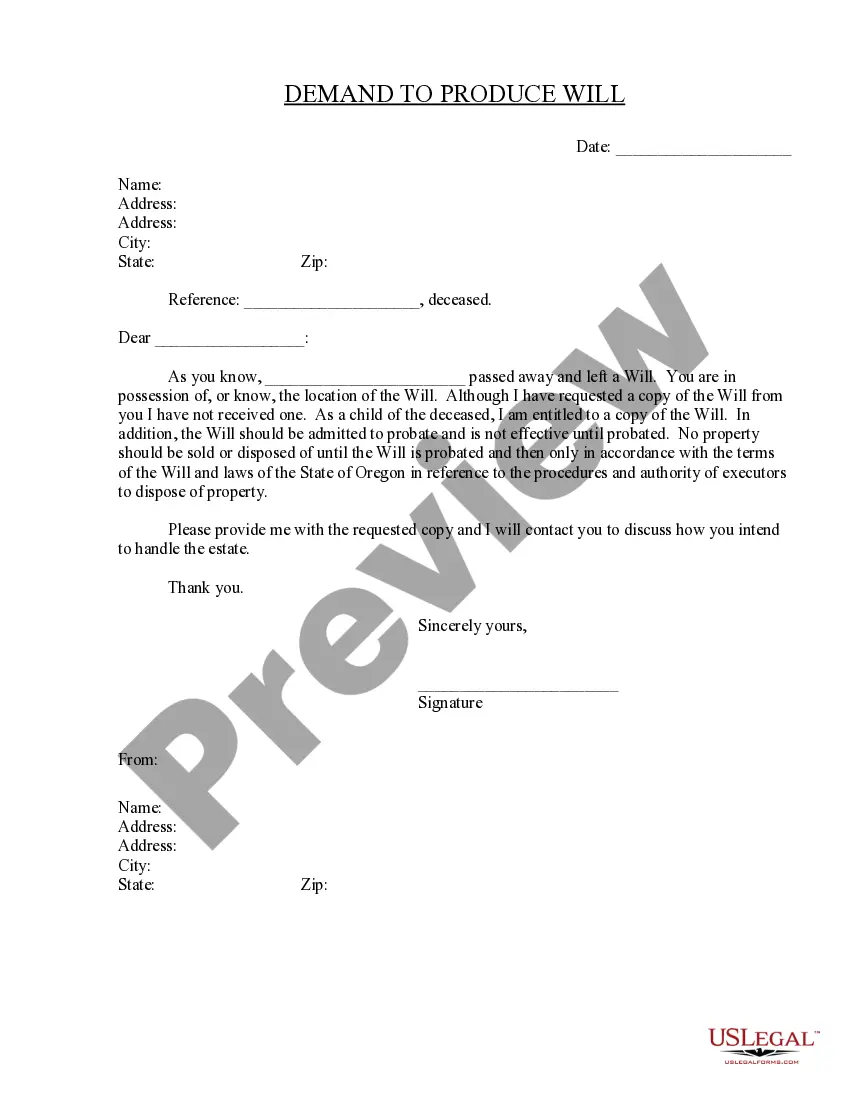
Demand to Produce Copy of Will from Heir
Request a copy of a deceased person's will from the executor or another person holding it, ensuring your rights as an heir are respected.
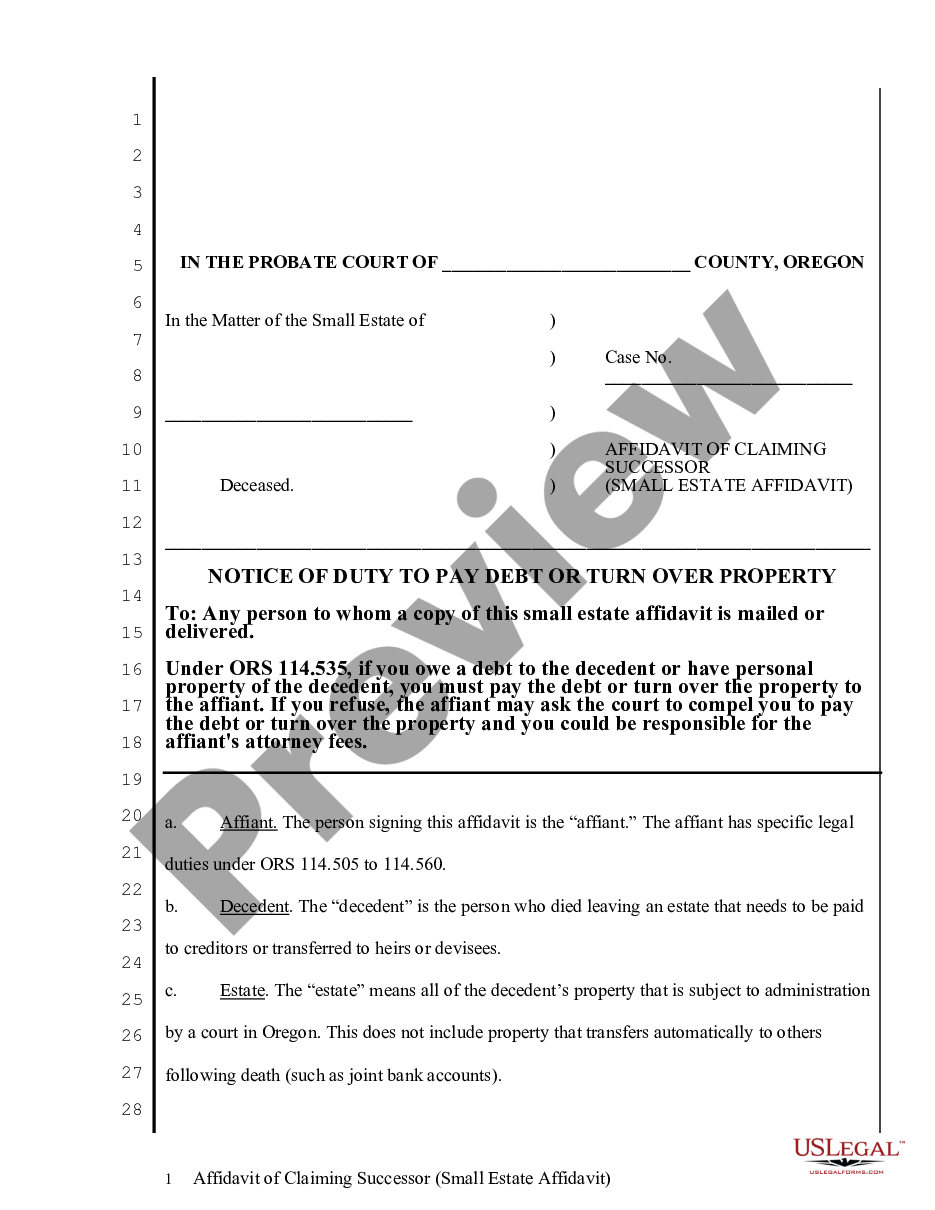
Small Estate Affidavit — Under $75K Personal / $200K Real
Use this affidavit to claim a small estate without going through probate, simplifying asset transfer for estates valued under $75,000 in personal property or $200,000 in real property.
Heirship Affidavit - Descent
Provide proof of heirship for a deceased person to facilitate estate matters and inheritance claims.
Affidavit: Attorney-In-Fact Acting as Executor
Use this document to affirm your role as an executor and validate a will after the deceased's passing.
Petition: Creditor Claim for Remaining Estate Assets
Use this petition to request the distribution of remaining estate assets among creditors after a decedent's passing.
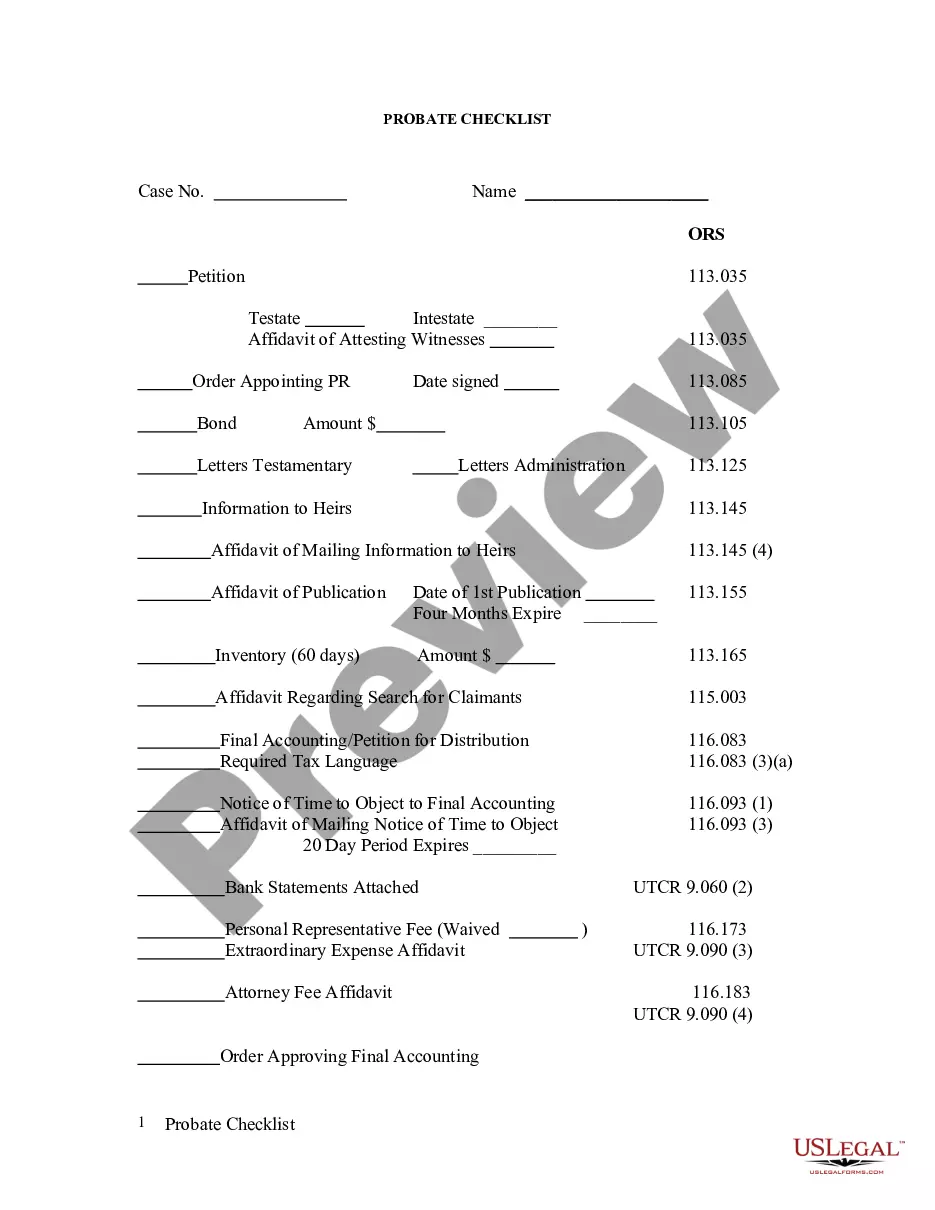
Probate Checklist
Organize the necessary steps and documents for managing an estate, whether through a will or without one.
Common Oregon Probate documents
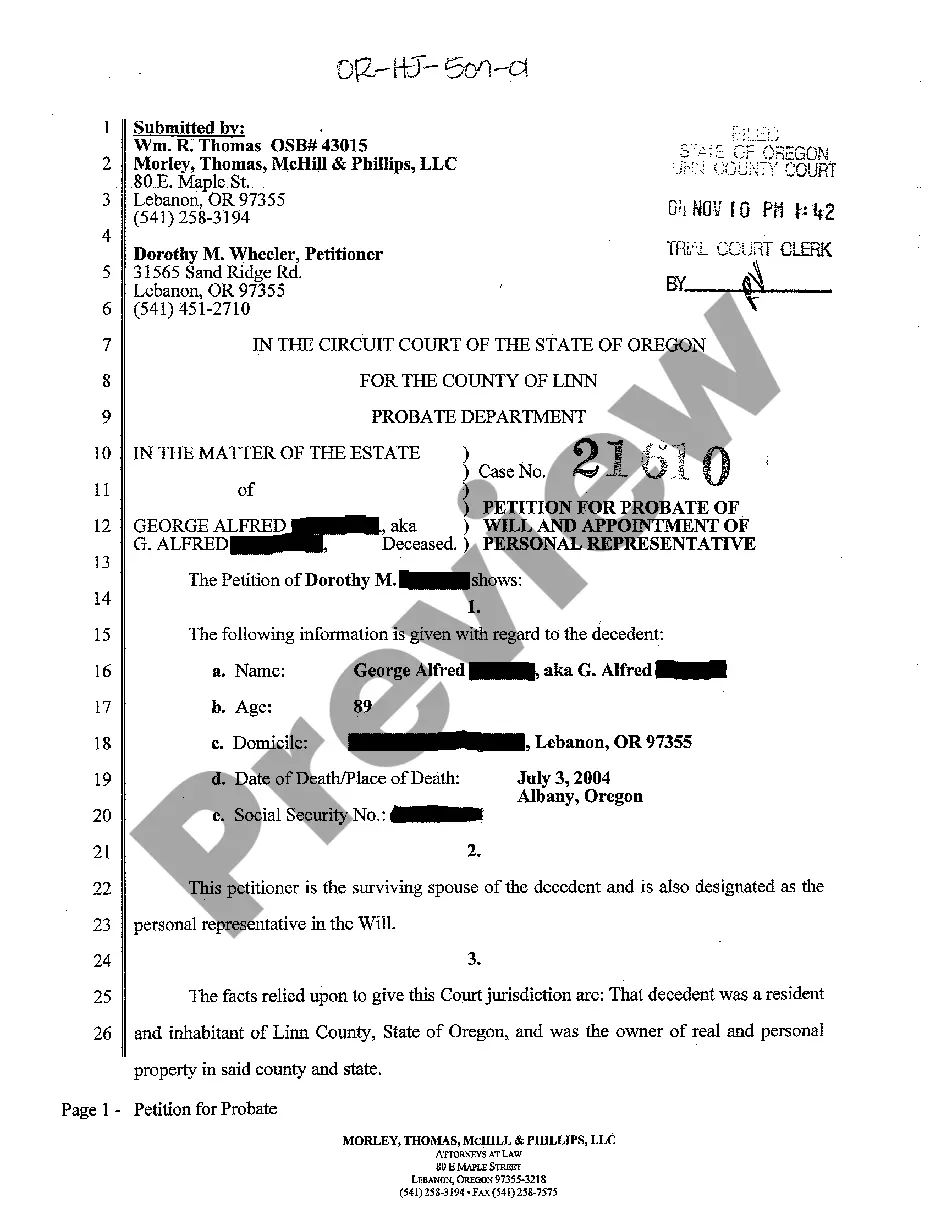
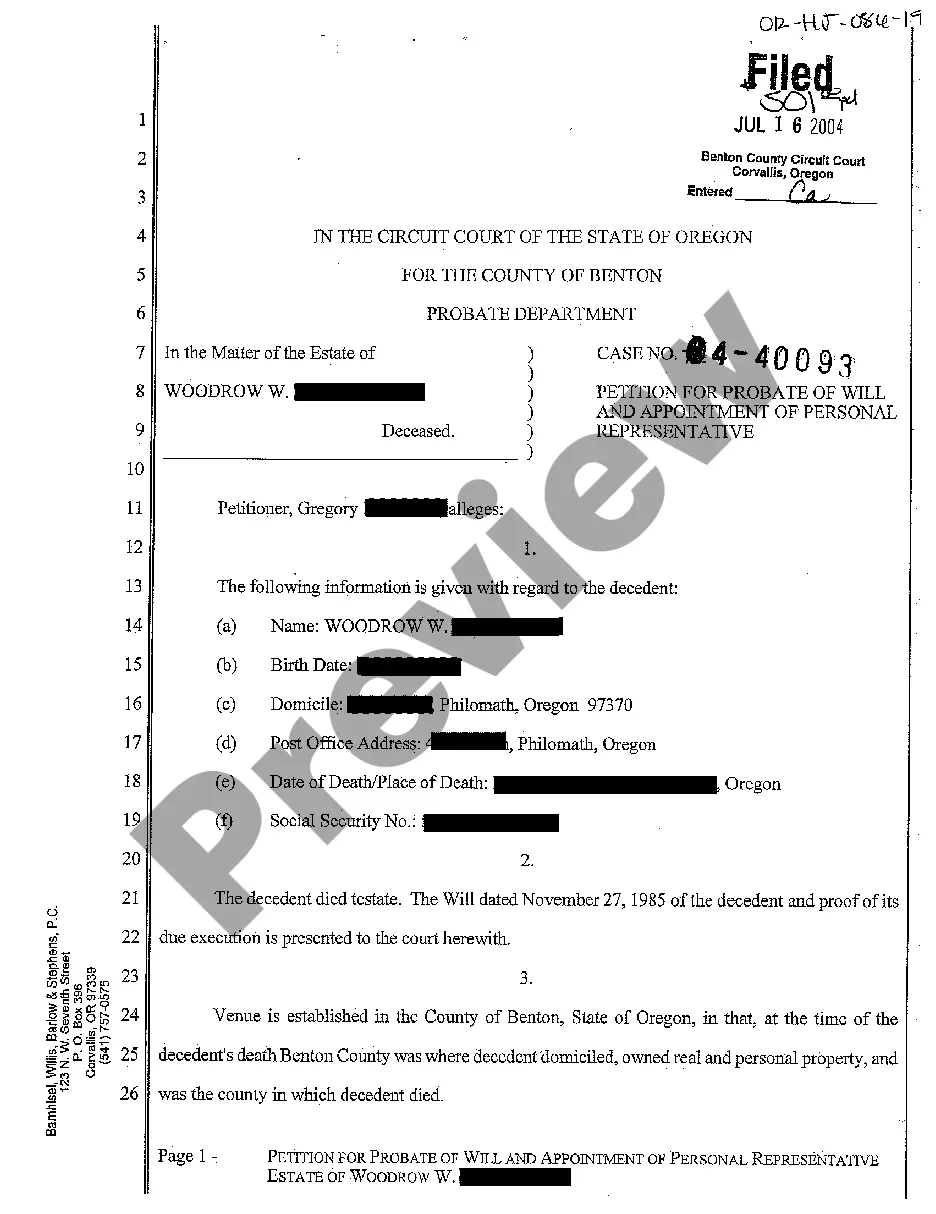
- Petition for Probate — Initiates the probate process in court.
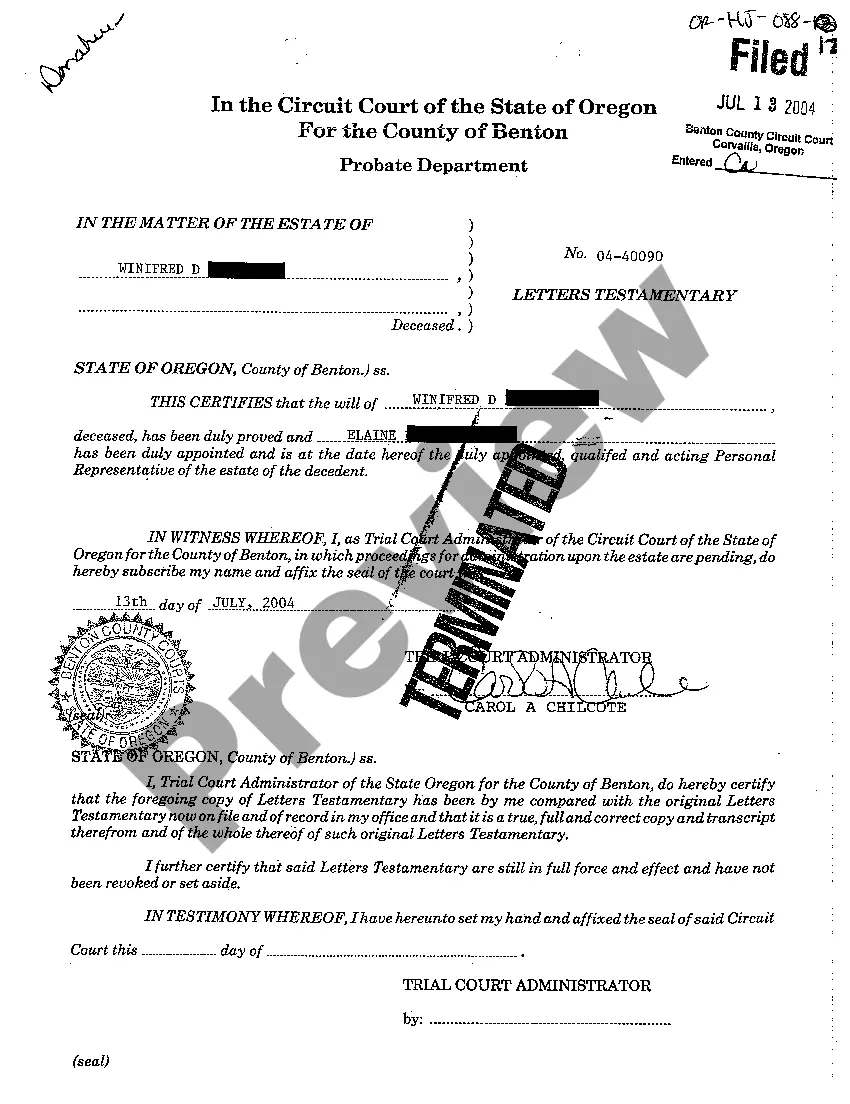
- Letters Testamentary — Authorizes the executor to manage estate affairs.
- Letters of Administration — Appoints an administrator when there's no will.
- Notice of Probate — Informs interested parties about the probate proceedings.
- Inventory and Appraisement Forms — Lists and values the deceased's assets.
- Final Accounting Forms — Summarizes the estate's financial activities before closure.
- Estate Distribution Forms — Distributes assets according to the will or state law.
FAQs
Do I need a trust if I have a will?
What happens if I do nothing?
How often should I update my plan?
How do beneficiary designations interact with my plan?
Can different people handle finances and health decisions?
Key legal points
- Probate is necessary for settling a deceased person's estate.
- Wills generally require probate; trusts often avoid this process.
- Executor or administrator must manage debts and distribute assets.
- Probate can take several months to complete.
- Court supervision may be required throughout the probate process.
- Many documents in Oregon need notarization or witnesses.
- Beneficiaries may contest a will during probate.
How to get started
Begin your probate process efficiently with these simple steps.
- Find a template or package that suits your probate situation.
- Review the description, preview, and any signing requirements.
- Gain full access with a subscription for additional features.
- Fill out the form using the online editor provided.
- Export or send the completed document via download, email, or mail.
Practical tip
Understanding whether to use a will or trust can simplify estate planning significantly.