Nebraska Annulment
Annulment documents help legally declare a marriage null and void. Attorney-drafted templates are quick and straightforward to complete.

Similar documents: key differences
- Annulment vs. Divorce — Annulment declares a marriage void, while divorce ends a valid marriage.
- Petition for Annulment vs. Complaint for Annulment — Both seek annulment, but may have different procedural uses.
- Decree of Annulment vs. Judgment of Nullity — Often interchangeable, both result in legal nullification of marriage.
- Annulment Agreement vs. Divorce Settlement — Annulment agreements address issues arising from a void marriage, unlike divorce settlements.
Search for more forms
Types of Annulment forms
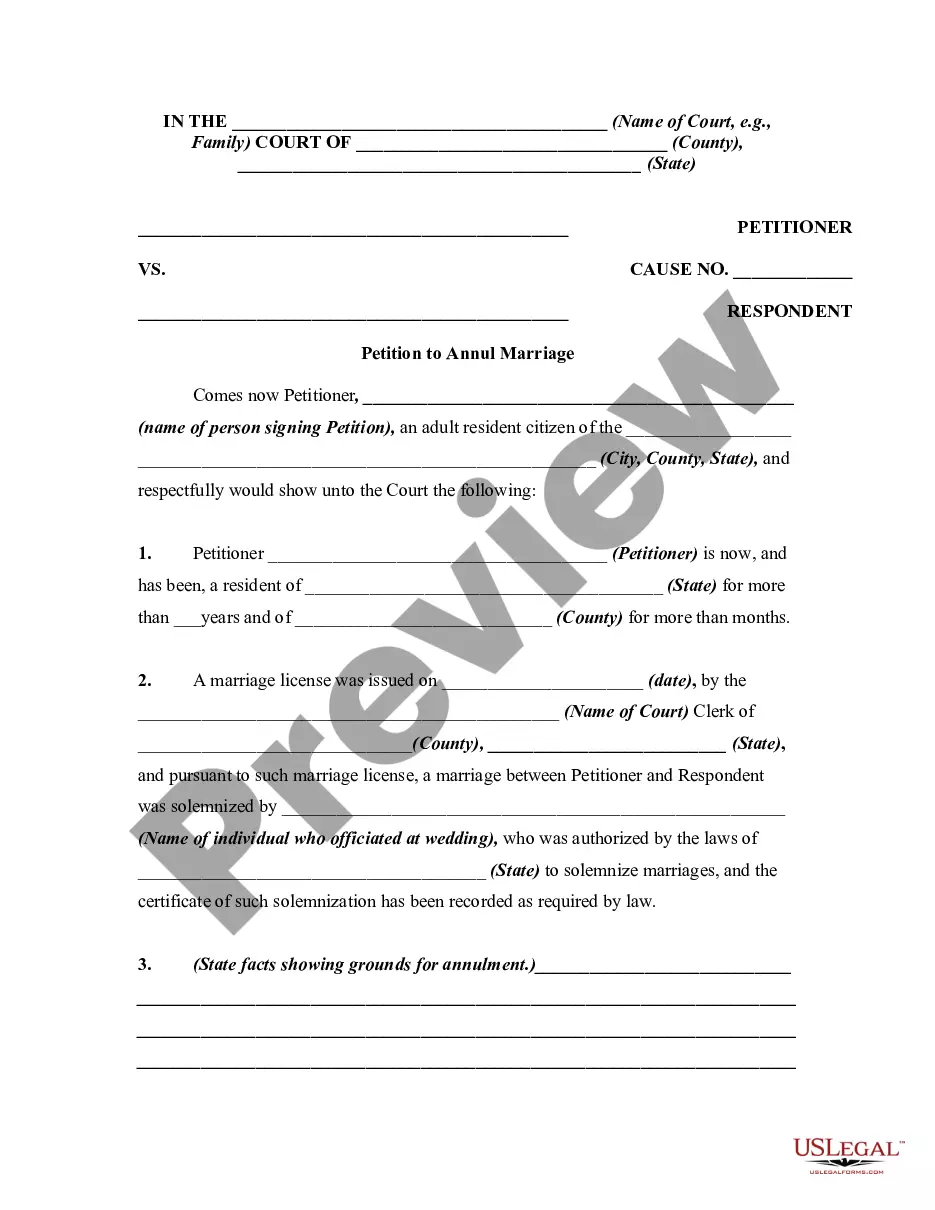
Petition to Annul Marriage
File for an annulment when your marriage has no children or shared property, addressing specific legal grounds for cancellation.
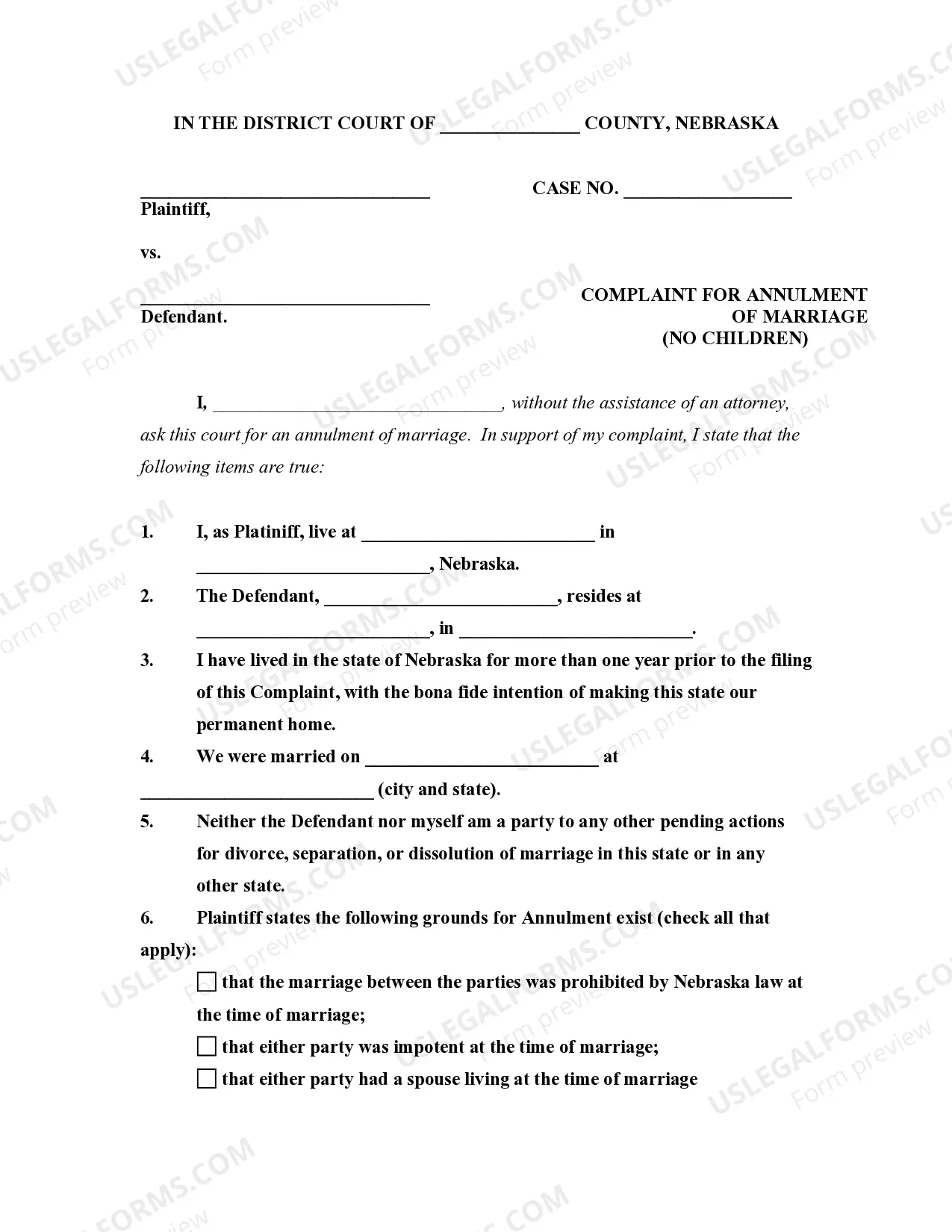
Complaint for Annulment of Marriage
Request an annulment of marriage when legal grounds exist, such as fraud or prior marital status.
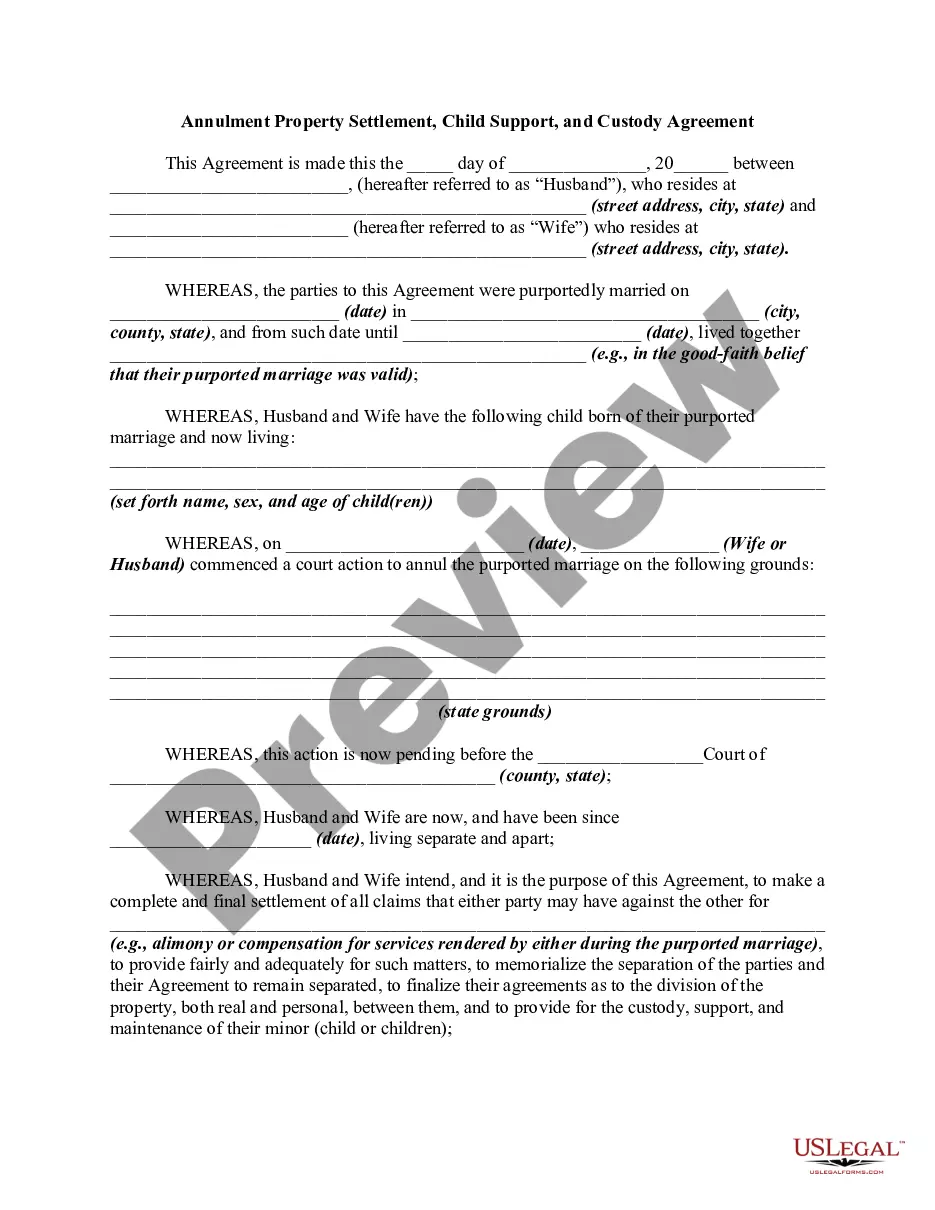
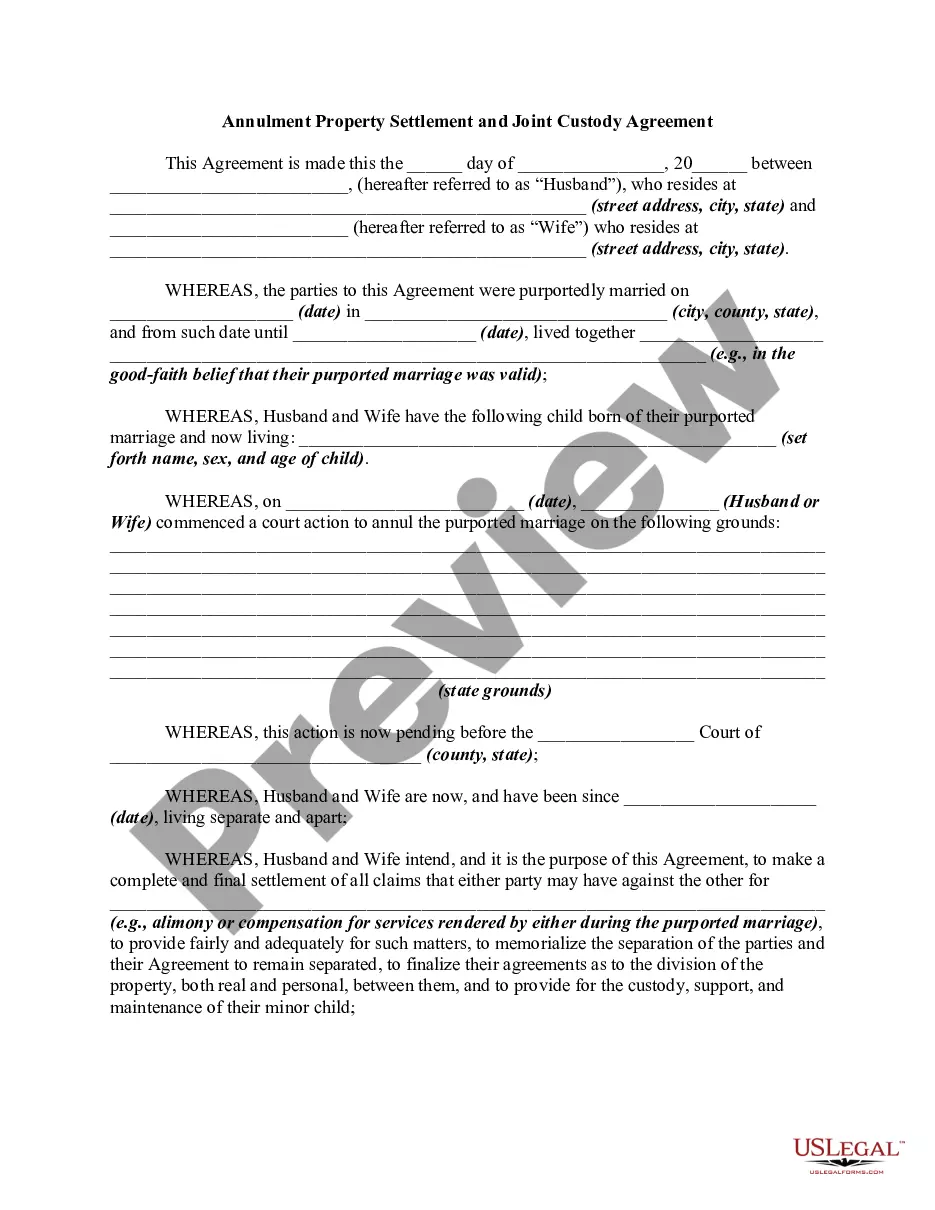
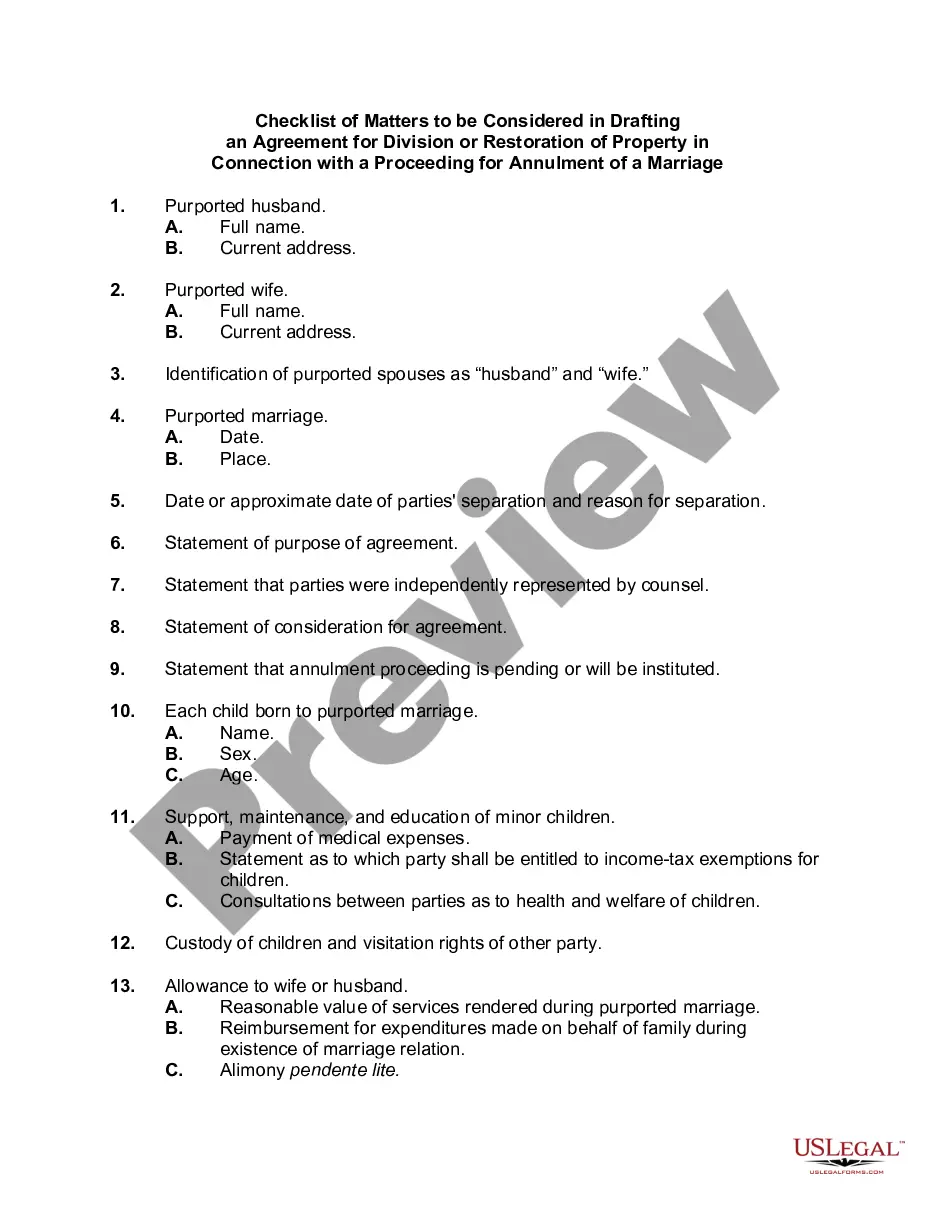
Annulment Property Settlement — Custody and Support
Finalize agreements for property division, child support, and custody after annulment proceedings.
Petition for a Formal Marriage Case
Request a declaration of nullity for your marriage due to defective consent. Essential for pursuing a future marriage within the Catholic Church.
Application for Declaration of Nullity — Catholic Church
Begin the annulment process with this digital application to assess your eligibility for remarriage in the Catholic Church.
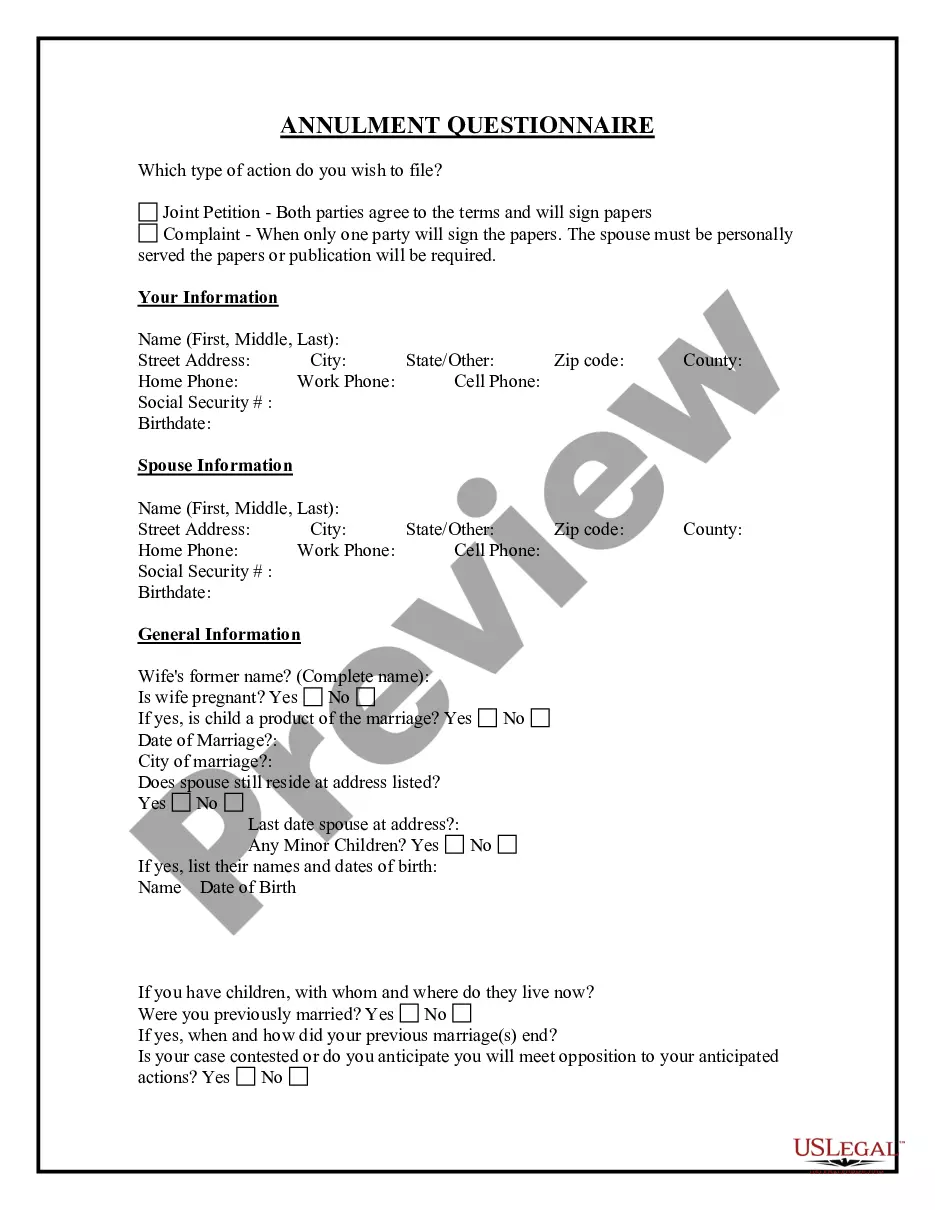
Annulment Questionnaire
Use this questionnaire to determine grounds for annulment and whether both partners agree to the filing process.
Common Nebraska Annulment documents
- Petition for Annulment — Initiates the annulment process with the court.
- Decree of Annulment — Official court order declaring the marriage invalid.
- Annulment Agreement — Outlines terms agreed upon by both parties.
- Complaint for Annulment — Formal request to the court for annulment.
- Annulment Filing Forms — Required documents to begin the annulment process.
FAQs
Annulment nullifies a marriage, while divorce ends a valid marriage.
Annulment can still be pursued, but custody and support must be addressed.
The duration varies by case complexity and court schedules.
Yes, annulments are recognized, but the grounds and processes may differ.
Key legal points
- Annulment can be sought for various reasons including fraud or coercion.
- A decree of annulment restores parties to their pre-marriage status.
- Annulment does not require a lengthy legal process like divorce.
- Not all marriages can be annulled; specific grounds must be established.
- Annulment affects property division and custody differently than divorce.
How to get started
Begin easily with these steps.
- Find a template or package that fits your situation.
- Review the description, preview, and signing requirements.
- Get full access with a subscription.
- Complete it in the online editor.
- Export or send: download, email, USPS mail, notarize online, or send for e-signature (Premium).
Practical tip
Clarify your grounds for annulment early to streamline the process.