What Is a Petition for Formal Adjudication of Intestacy?
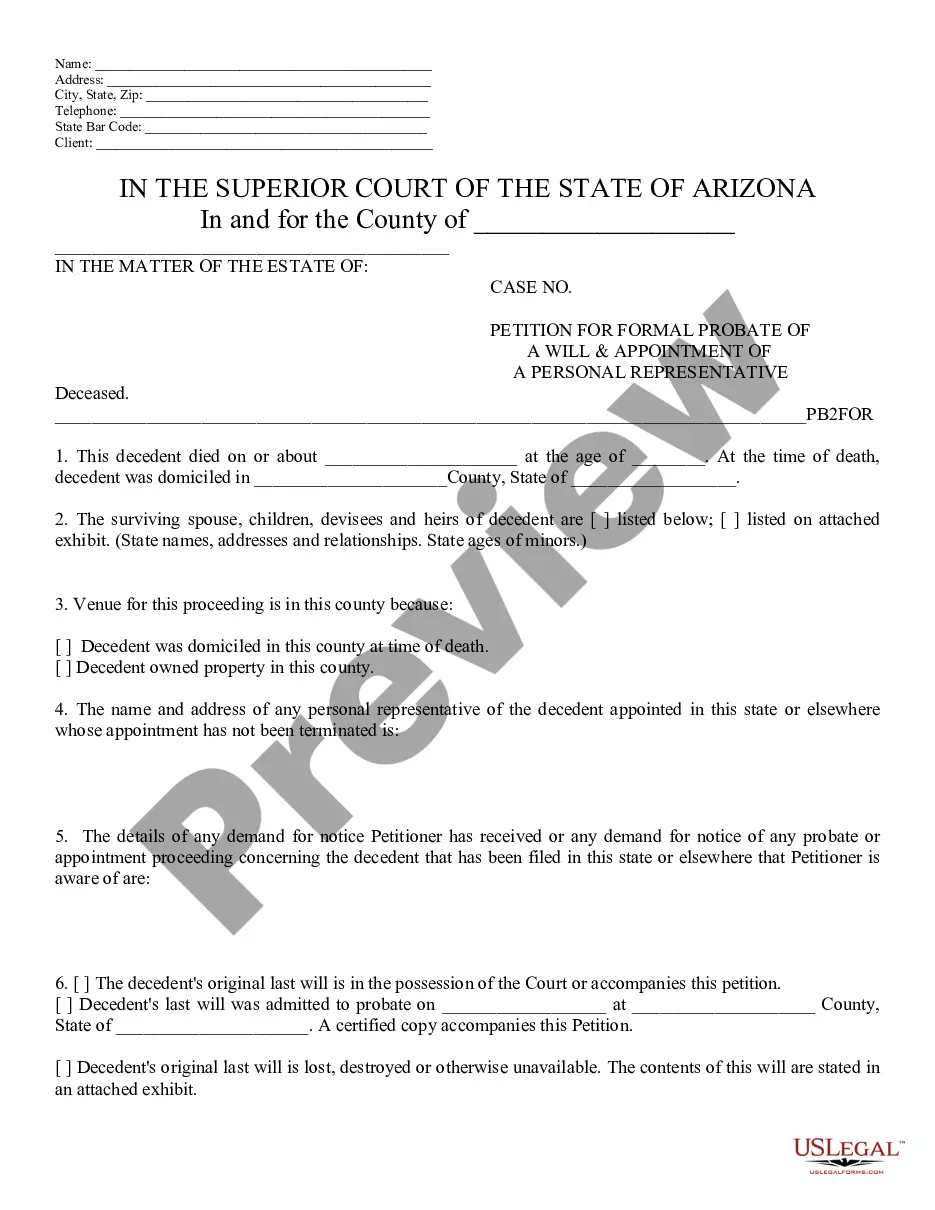
A petition for formal adjudication of intestacy is a legal document filed in court to establish the validity of a decedent's estate when they pass away without a valid will. This petition seeks a court's declaration that the deceased individual died intestate, meaning without a will, and requests a ruling on the rightful heirs of the estate. This process is essential for determining how the decedent's assets will be distributed among their heirs according to state intestacy laws.
Who should use this form
This form is appropriate for individuals or parties who believe they have a claim to the estate of a person who died without a will. Typically, this includes surviving spouses, children, parents, or other relatives of the deceased. If you are involved in settling the estate or need to clarify heirship for the purposes of distribution, this petition is likely necessary.
Key components of the form
The petition contains several critical components, including:
- Information about the decedent: Name, date of death, and domicile at the time of death.
- List of heirs: Identification of the surviving spouse, children, and other potential heirs, along with their relationships and addresses.
- Venue justification: Explanation of why the court in the specified county has jurisdiction.
- Petitioner's interest: Statement of the petitioner's legal interest in the estate.
These components ensure the court has all necessary information to make informed decisions regarding the estate.
How to complete a form
To complete the petition for formal adjudication of intestacy, follow these steps:
- Provide the decedent's full name, date of death, and the county where they lived.
- List all potential heirs, along with their relationships to the decedent and appropriate addresses.
- Justify the choice of venue based on the decedent's domicile or property ownership.
- Include any relevant details regarding previous personal representatives or other notices received.
- Sign and date the petition, ensuring all information is accurate and truthful.
Be sure to review state-specific requirements as they can vary.
Common mistakes to avoid when using this form
When filing a petition for formal adjudication of intestacy, be mindful of these common mistakes:
- Failure to provide complete information about the decedent and heirs.
- Inaccurate or incomplete venue justification.
- Not listing all potential heirs, which could lead to disputes later.
- Incorrectly filing the form in the wrong jurisdiction.
- Omitting signatures or dates, which could result in rejection.
By avoiding these pitfalls, you can ensure a smoother filing process.
What to expect during notarization or witnessing
When preparing to file the petition, it may require notarization. During this process, you can expect the following:
- Present the completed form to a licensed notary public.
- Sign the document in the presence of the notary.
- The notary will validate your signature by affixing their seal on the petition.
This step is crucial, as a notarized document is often required for it to be accepted by the court.