Affidavit of Heirship for Mineral Rights
About this form
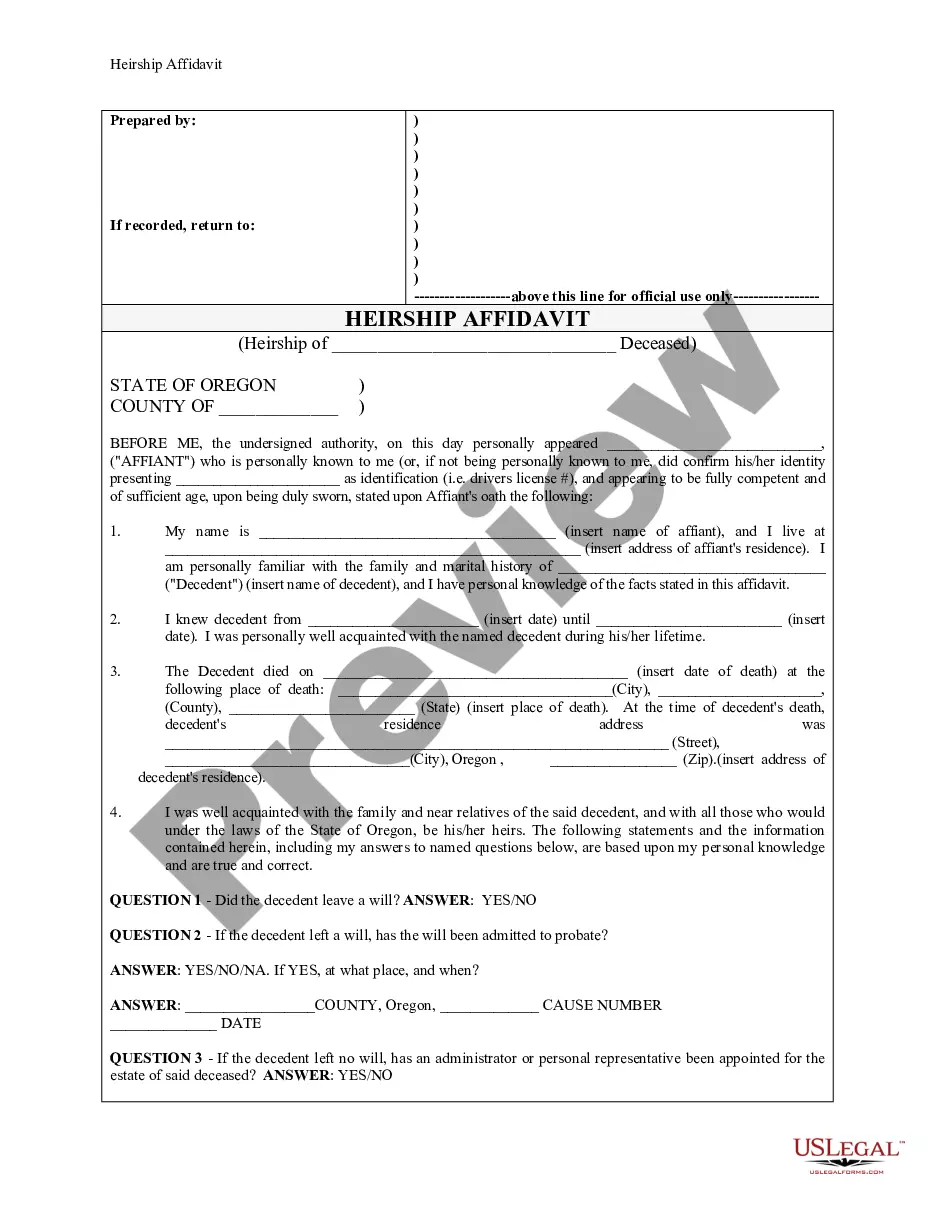
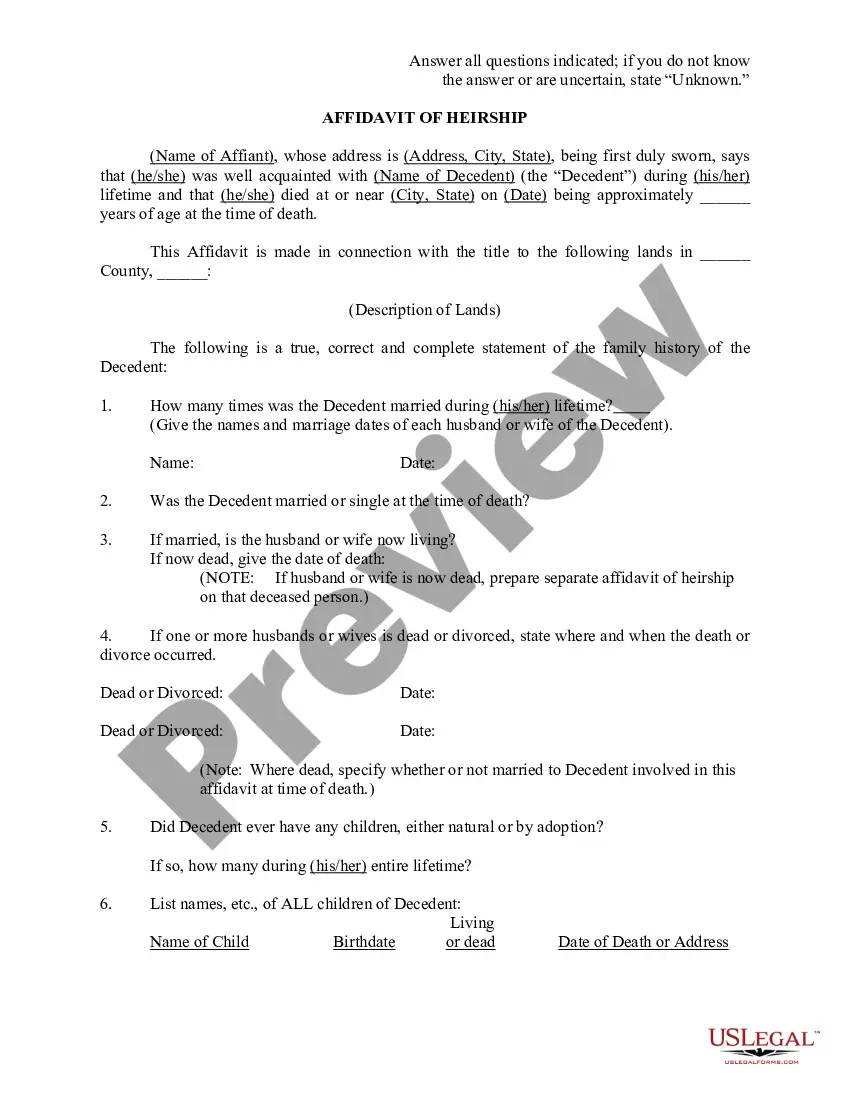
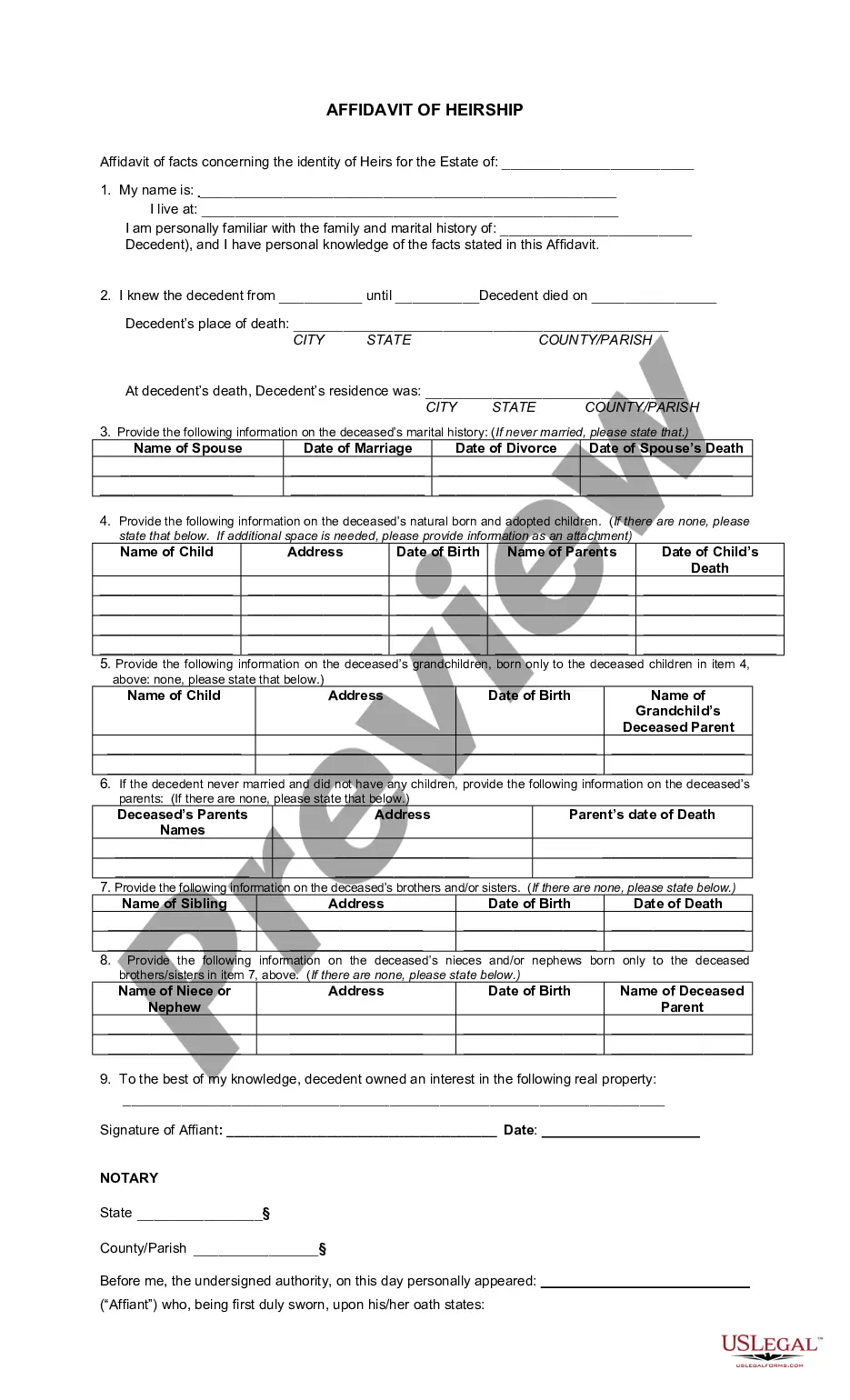
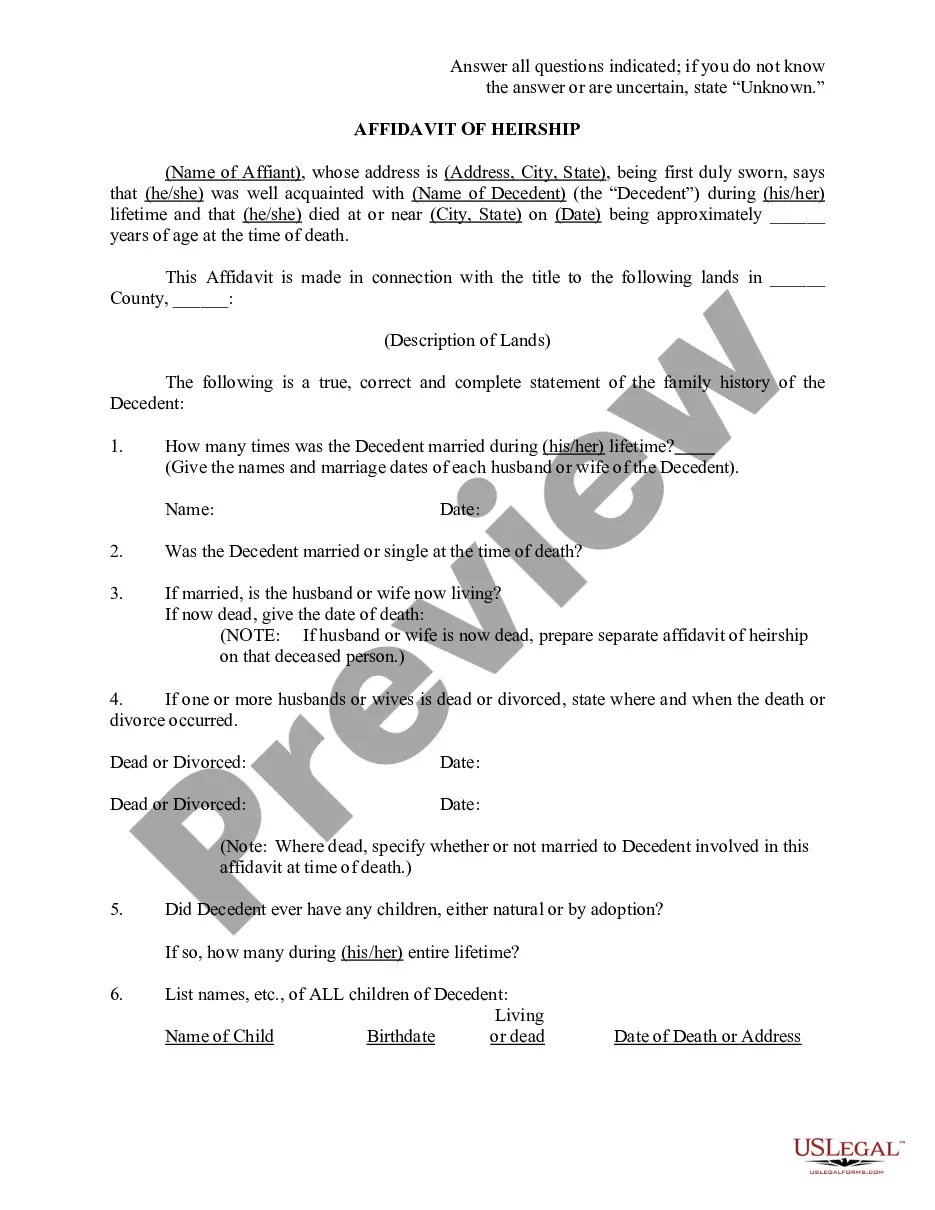
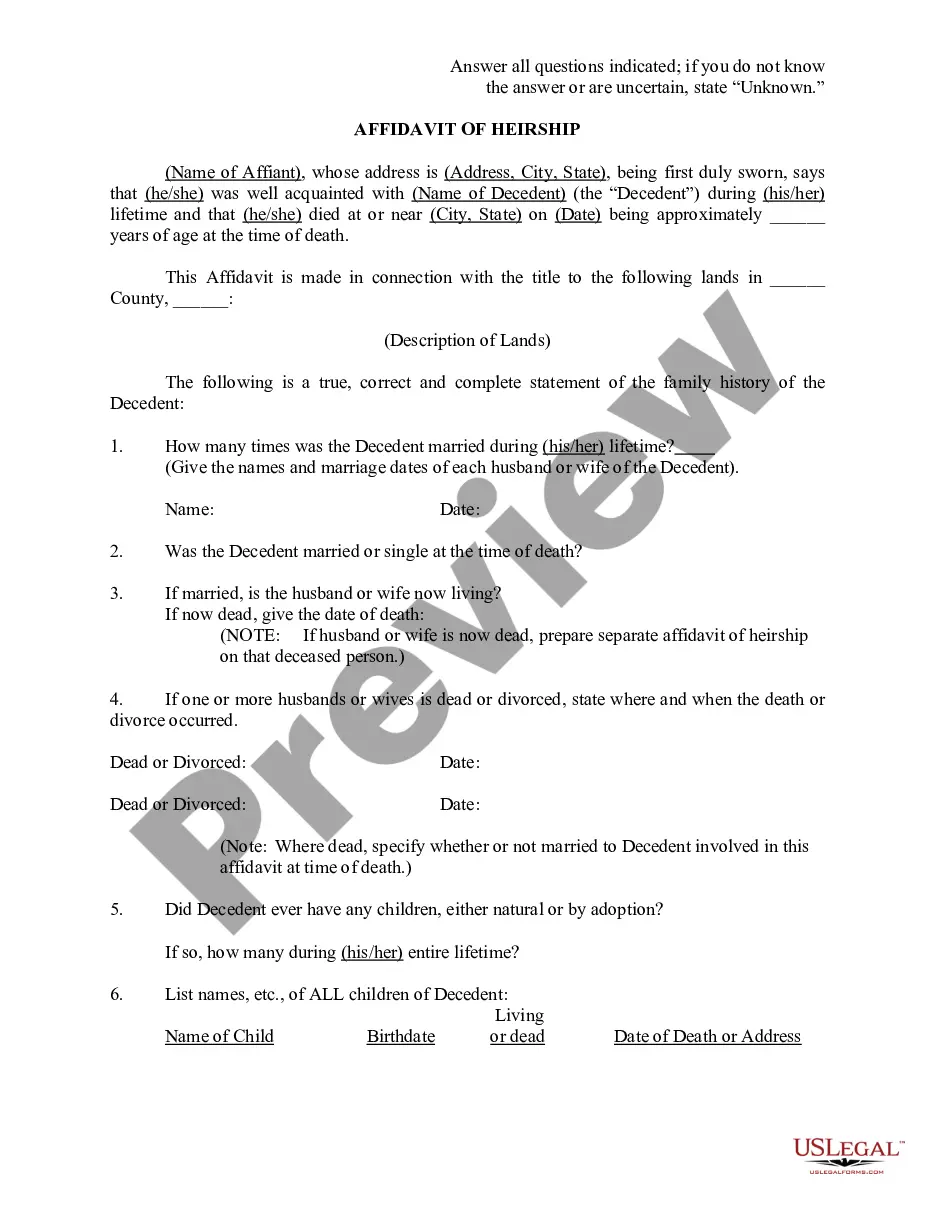
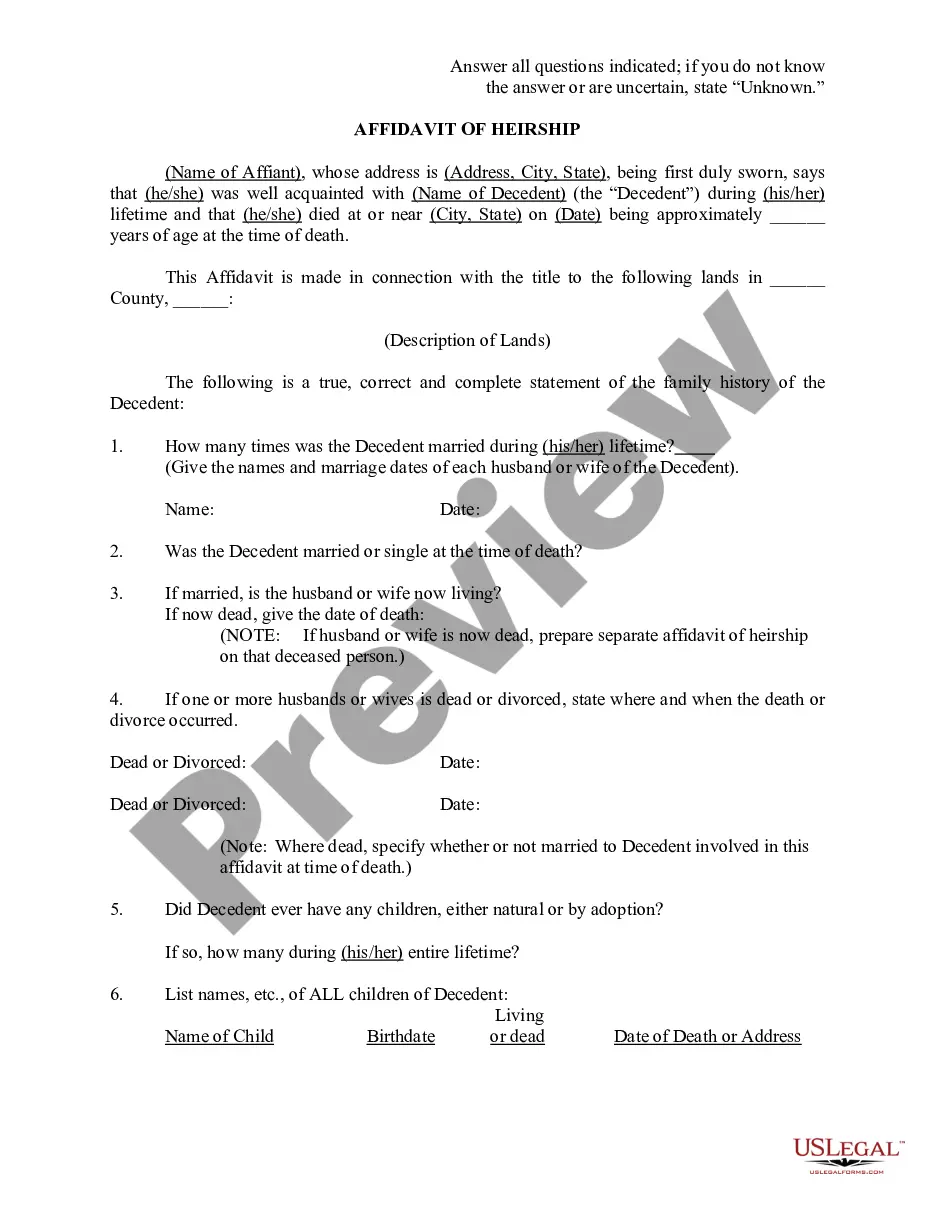
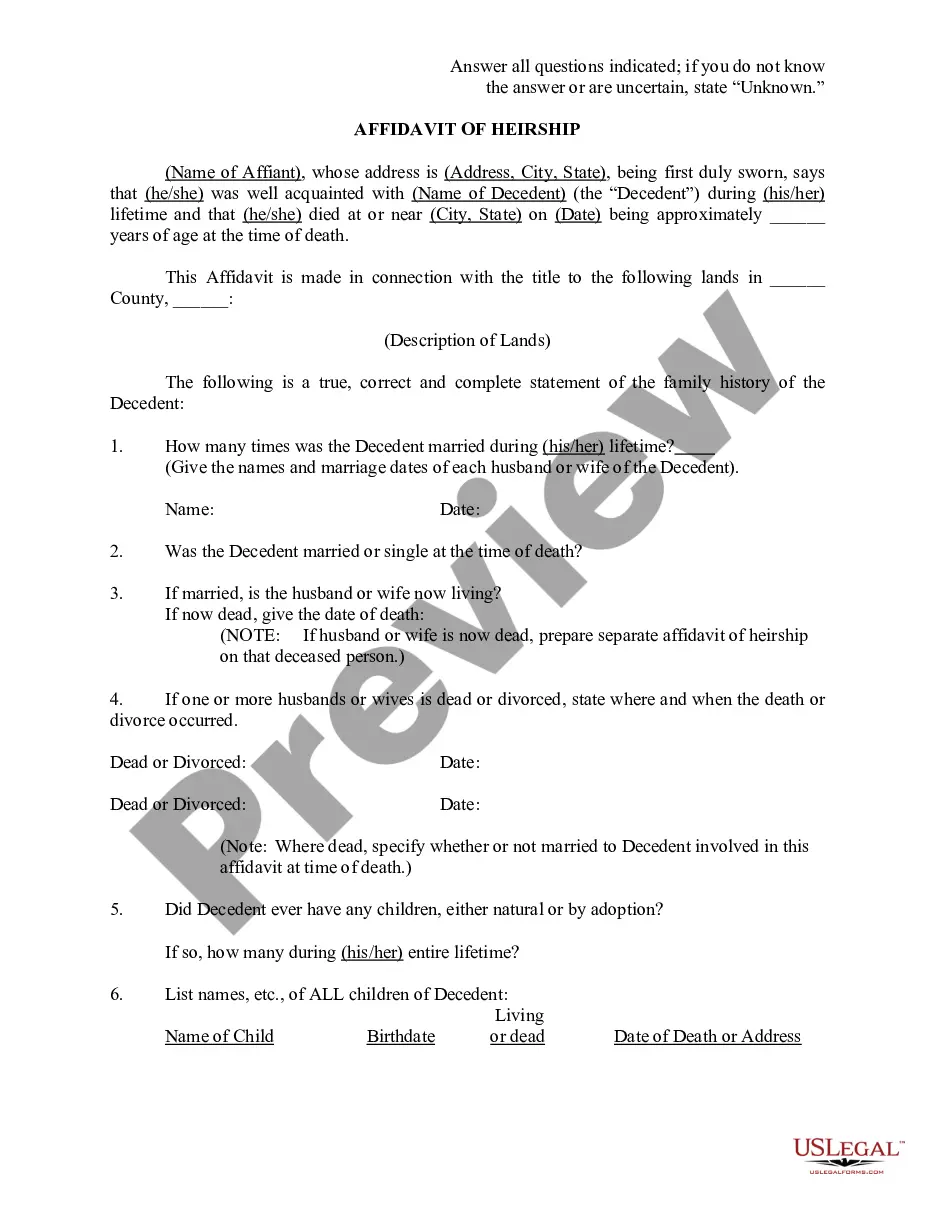
The Affidavit of Heirship for Mineral Rights is a legal document used to establish the heirs of a deceased individual, particularly in relation to mineral rights associated with property. This affidavit serves as a sworn statement confirming the family history of the deceased and is distinct from a probate process, which can be more complex and lengthy. It is often necessary when mineral rights need to be transferred or managed following the death of the rights holder.
Key components of this form
- Name and address of the affiant.
- Name and details of the decedent and their date of death.
- Information about the decedent's marital history.
- Details regarding any children the decedent had, including their names and any deceased children's affidavits.
- Information about the decedent's parents if there are no surviving spouses or children.
- Any existing wills or estate administration records.

When this form is needed
This affidavit is utilized in situations where it is necessary to establish the rightful heirs to mineral rights after the death of the mineral rights holder. It is especially useful when there is no will or letters of administration have not been obtained, allowing the heirs to access and manage the mineral interests appropriately.
Who this form is for
- Individuals who are heirs or potential heirs of a decedent with mineral rights.
- Family members of a deceased individual seeking to affirm their inheritance of mineral properties.
- Heirs who need to clarify ownership for legal or administrative purposes related to property rights.
Instructions for completing this form
- Identify yourself as the affiant, providing your name and address.
- Provide the name of the decedent and confirm the date and place of death.
- Outline the decedentâs marital history and list any spouses, including their current status.
- Detail any children of the decedent, specifying living and deceased children, and provide relevant information or separate affidavits for any deceased children.
- Include parents' information if relevant and state whether the decedent left behind a will.
- Sign and date the affidavit in front of a notary if required.
Notarization requirements for this form
Yes, this form must be notarized to be legally valid. Notarization verifies the identity of the affiant and ensures that the statement is provided voluntarily. US Legal Forms offers an integrated online notarization service that is secure, accessible 24/7, and eliminates the need for travel to a physical location.
Get your form ready online
Our built-in tools help you complete, sign, share, and store your documents in one place.
Make edits, fill in missing information, and update formatting in US Legal Forms—just like you would in MS Word.
Download a copy, print it, send it by email, or mail it via USPS—whatever works best for your next step.
Sign and collect signatures with our SignNow integration. Send to multiple recipients, set reminders, and more. Go Premium to unlock E-Sign.
If this form requires notarization, complete it online through a secure video call—no need to meet a notary in person or wait for an appointment.
We protect your documents and personal data by following strict security and privacy standards.

Make edits, fill in missing information, and update formatting in US Legal Forms—just like you would in MS Word.

Download a copy, print it, send it by email, or mail it via USPS—whatever works best for your next step.

Sign and collect signatures with our SignNow integration. Send to multiple recipients, set reminders, and more. Go Premium to unlock E-Sign.

If this form requires notarization, complete it online through a secure video call—no need to meet a notary in person or wait for an appointment.

We protect your documents and personal data by following strict security and privacy standards.
Common mistakes
- Failing to provide complete and accurate information about the decedent's marital history.
- Omitting to list all children or not clarifying the status of any deceased children.
- Not having the affidavit notarized when required.
- Using unclear or ambiguous language when describing relationships or property rights.
Why complete this form online
- Convenience of downloading the form instantly from a secure website.
- Editability allows customization to fit specific family circumstances.
- Peace of mind knowing the document is drafted following legal standards by licensed attorneys.
Looking for another form?
Form popularity
FAQ
You have no idea how troublesome it is to probate wills decades after the person died so that the oil company will pay royalties to the heirs. But if you push they will pay per the state statutes. So, if you had no siblings, your state statute probably says that you inherit from your mother.
If you want to sell the mineral rights to another person, you can transfer them by deed. You will need to create a mineral deed and have it recorded. You should check with the county Recorder of Deeds in the county where the land is located and ask if a printed mineral deed form is available to use.
Not owning the mineral rights to a parcel of land doesn't mean your property is worthless. If someone else owns the mineral rights and they sell those rights to an individual or corporation, you can still make a profit as the surface rights owner.
Even if mineral rights have been previously sold on your property, they could be expired. There is no one answer to how long mineral rights may last. Each mineral rights agreement will have different terms.
Oklahoma law allows for certain mineral interests to be transferred by filing an affidavit in the county real estate records.
Mineral rights must be transferred to heirs before any transactions related to them can take place. Unlike a home, which can be sold by an estate, mineral rights must be transferred before any sale. Mineral rights can be transferred to rightful heir(s) or to a trust through a mineral deed.
Mineral rights are automatically included as a part of the land in a property conveyance, unless and until the ownership gets separated at some point by an owner/seller.Conveying (selling or otherwise transferring) the land but retaining the mineral rights.
Call the county where the minerals are located and ask how to transfer mineral ownership after death. They will probably advise you to submit a copy of the death certificate, probate documents (if any), and a copy of the will (or affidavit of heirship if there is no will).
The price of the Affidavit of Heirship is $500. This price includes the attorneys' fees to prepare the Affidavit of Heirship and the cost to record in the real property records. You can save $75 if you record the Affidavit of Heirship yourself.