Antenuptial Agreement with Waiver of Right to Elective Share
Understanding this form
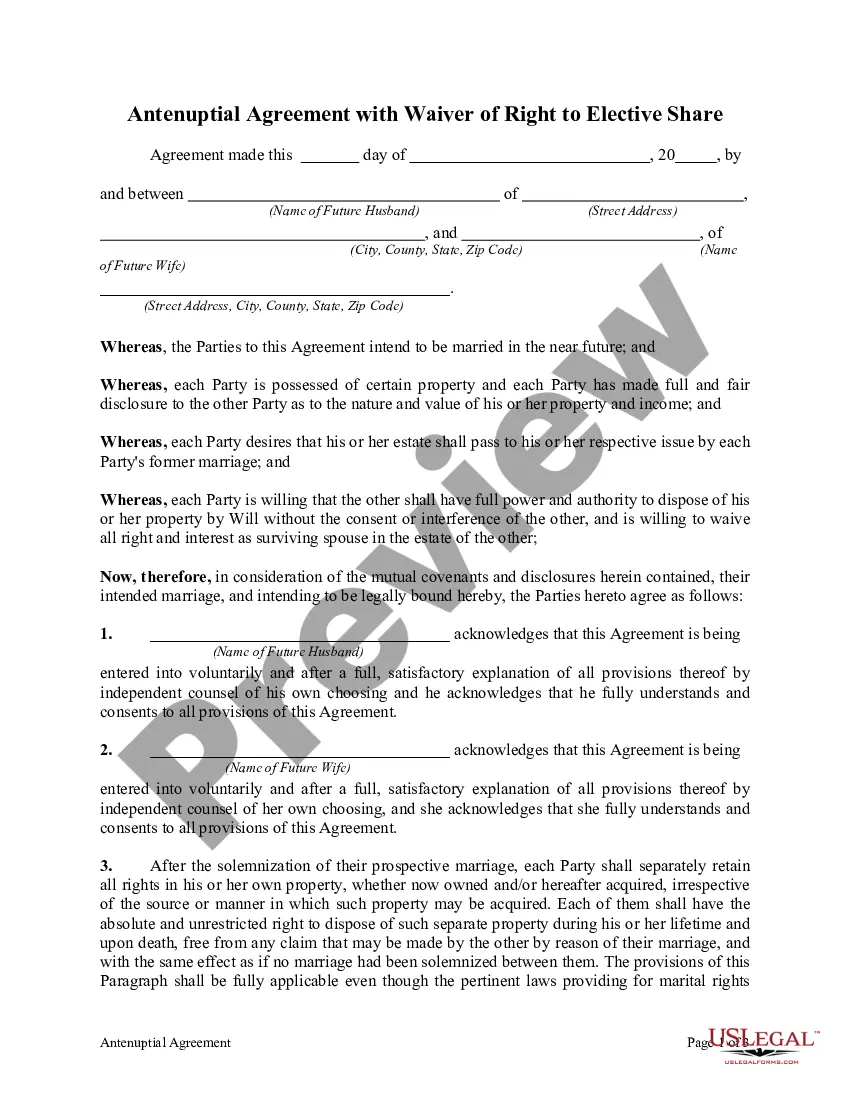
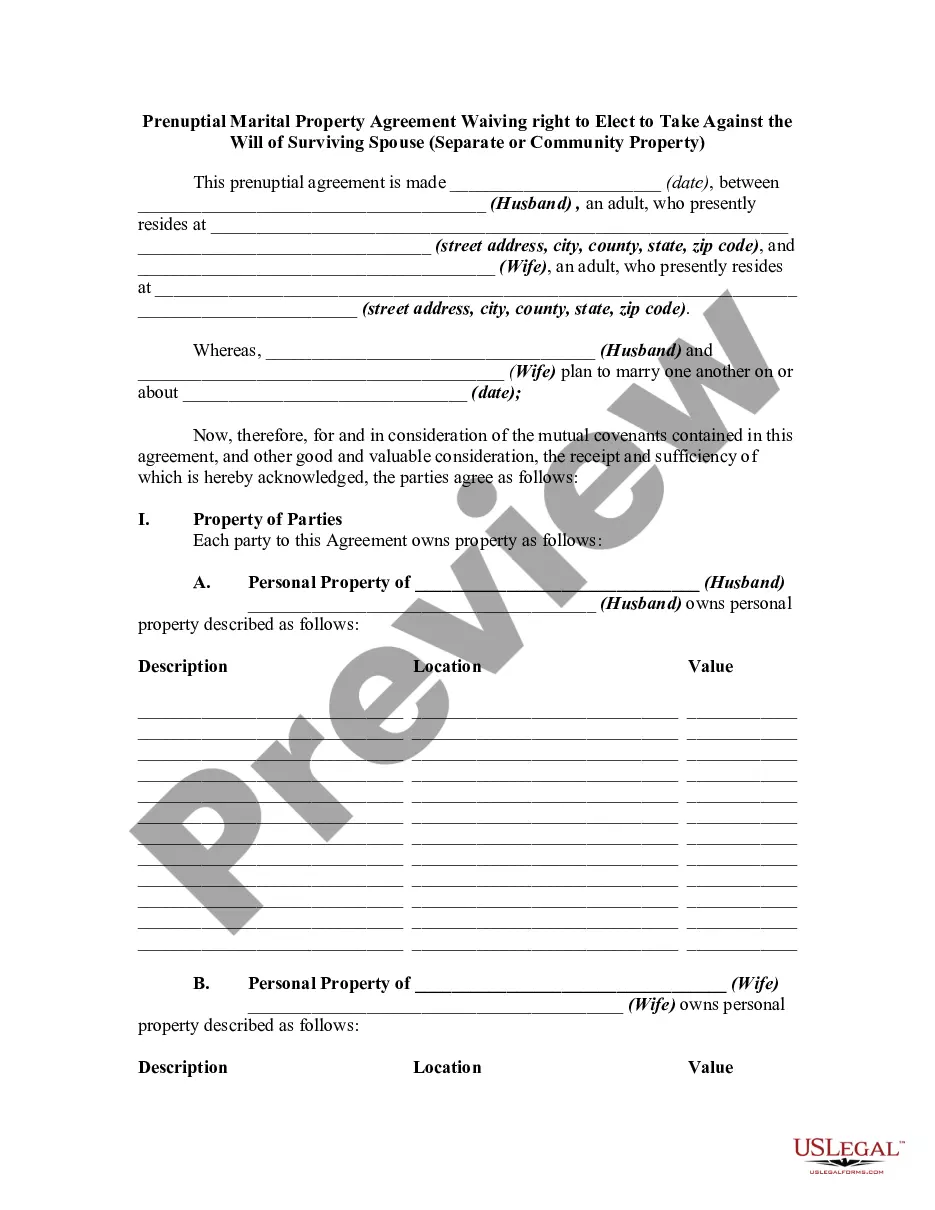
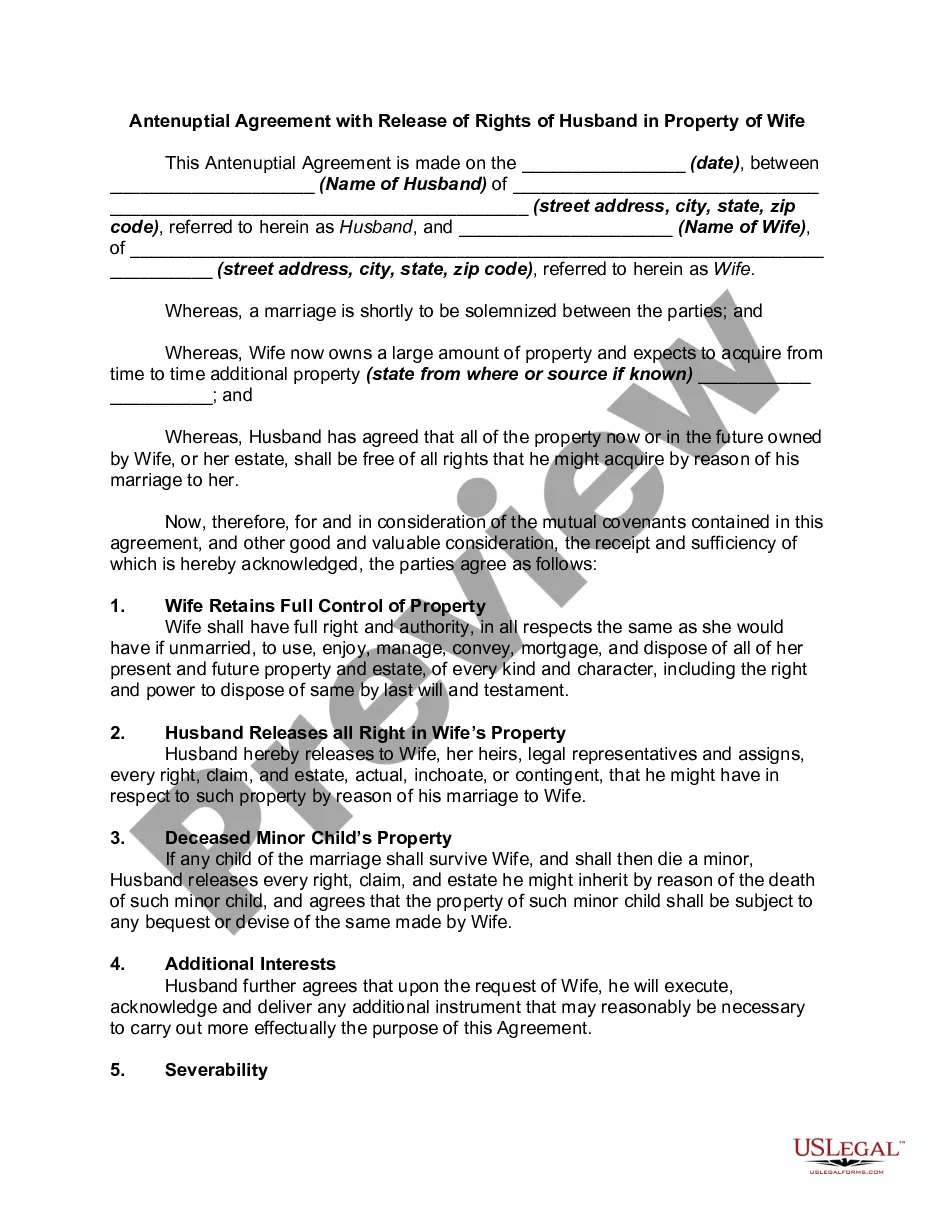
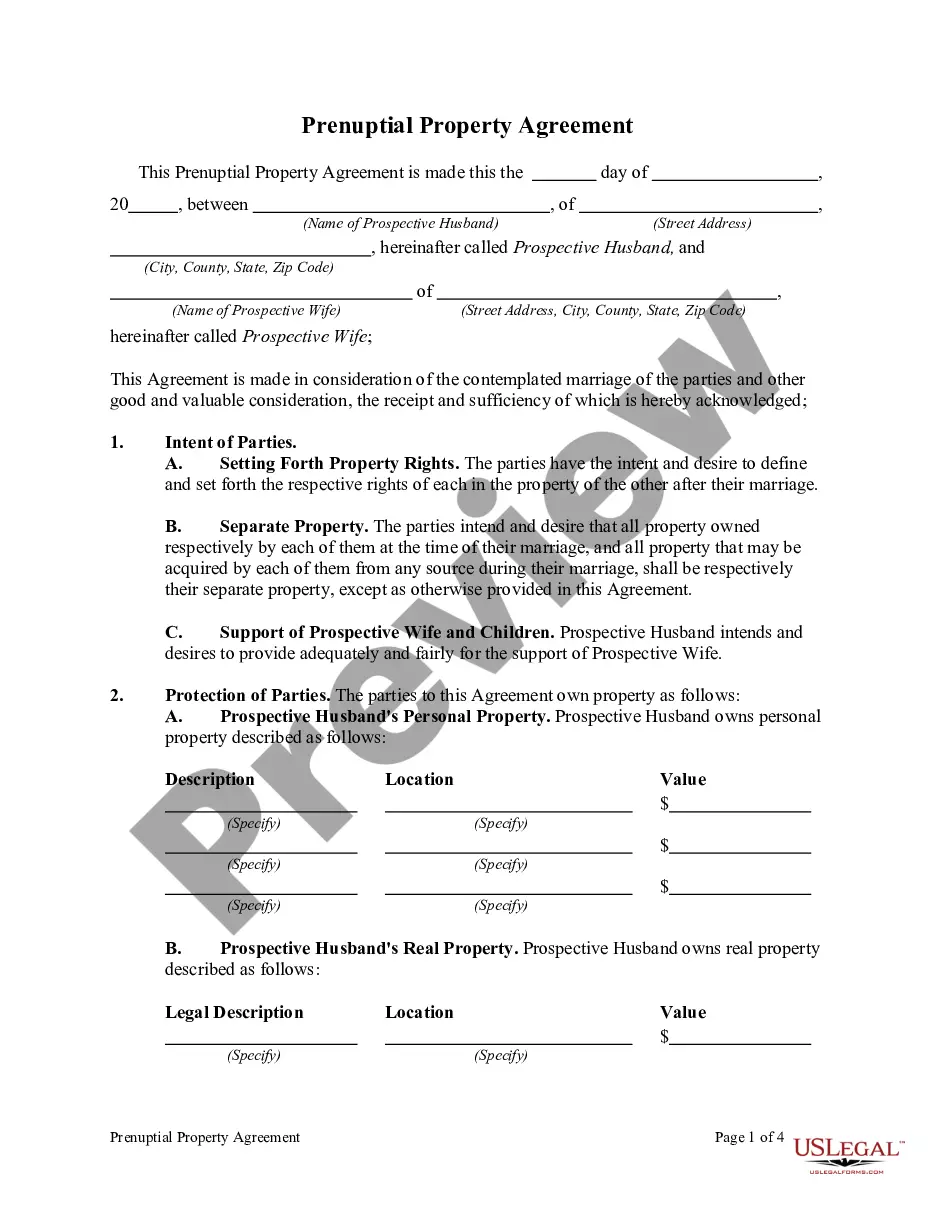
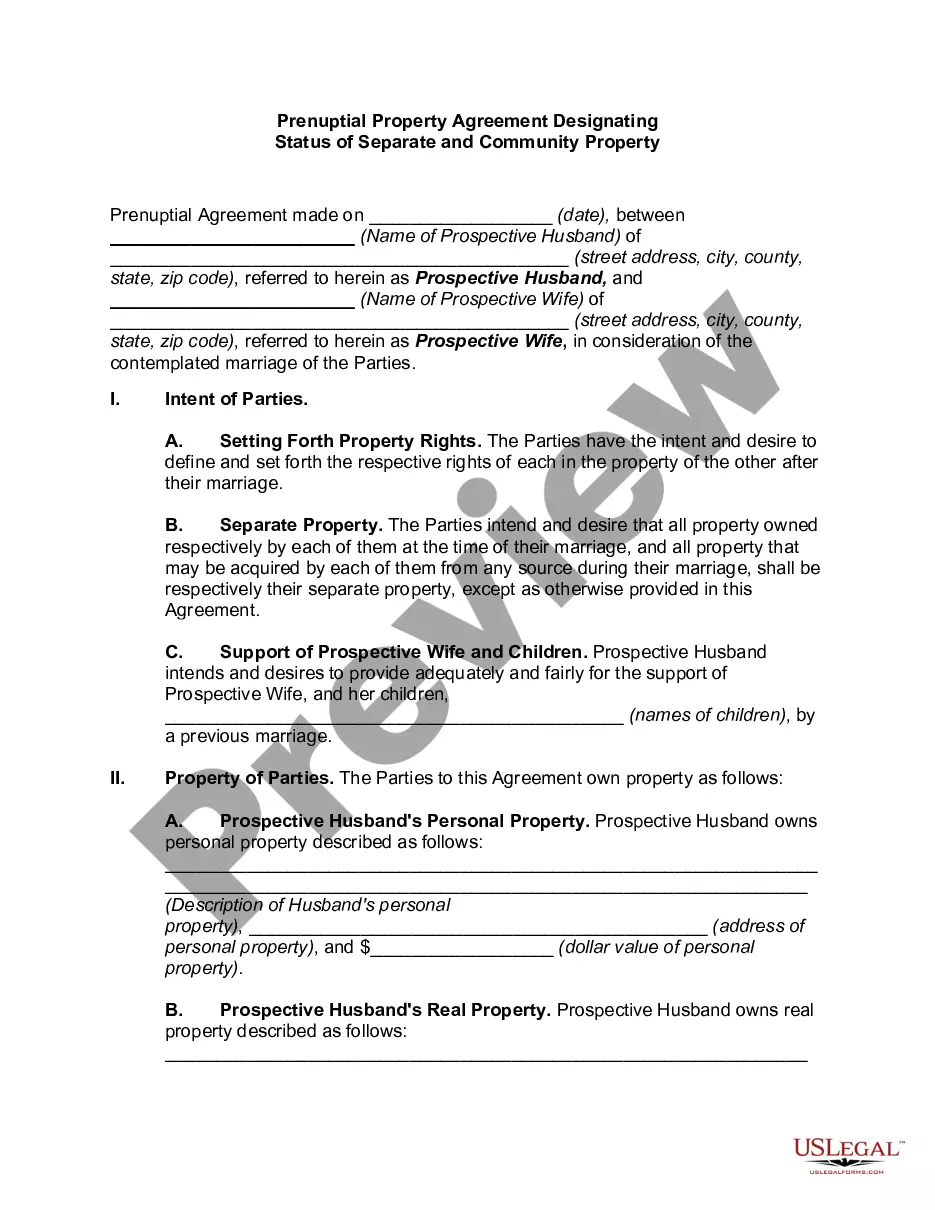
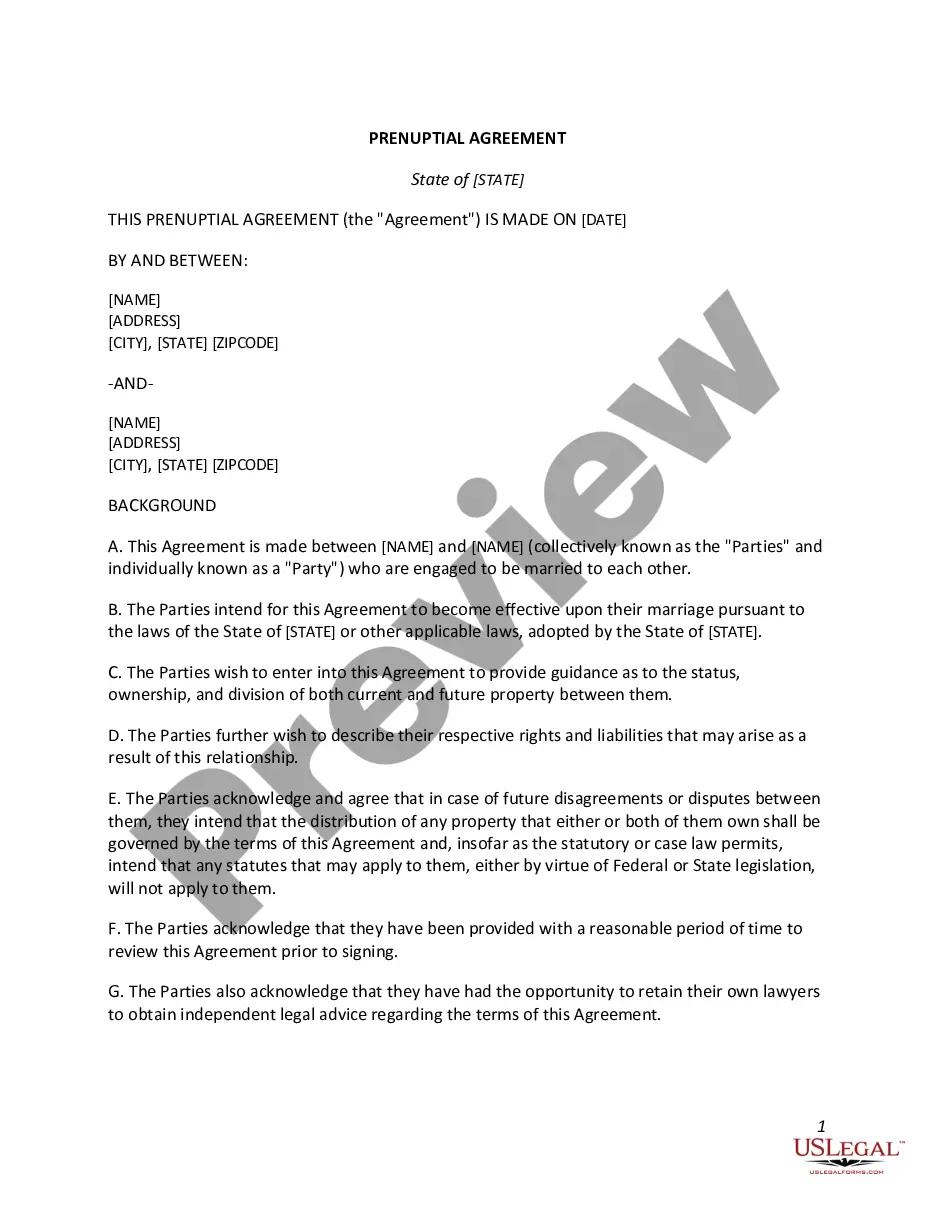
An Antenuptial Agreement with Waiver of Right to Elective Share is a legal document drafted by individuals planning to marry. This agreement outlines the property ownership and financial rights of each party, clearly defining how assets and debts will be managed before and after marriage. It differs from a prenuptial agreement primarily in its emphasis on waiving the right to an elective share, meaning that each party agrees not to claim a share of the other's estate upon death unless specified otherwise. This form helps protect individual assets and provides clarity regarding property division, should a divorce occur.
Key components of this form
- Definition of separate property and waiver of spousal rights
- Disclosure of each party's assets and debts
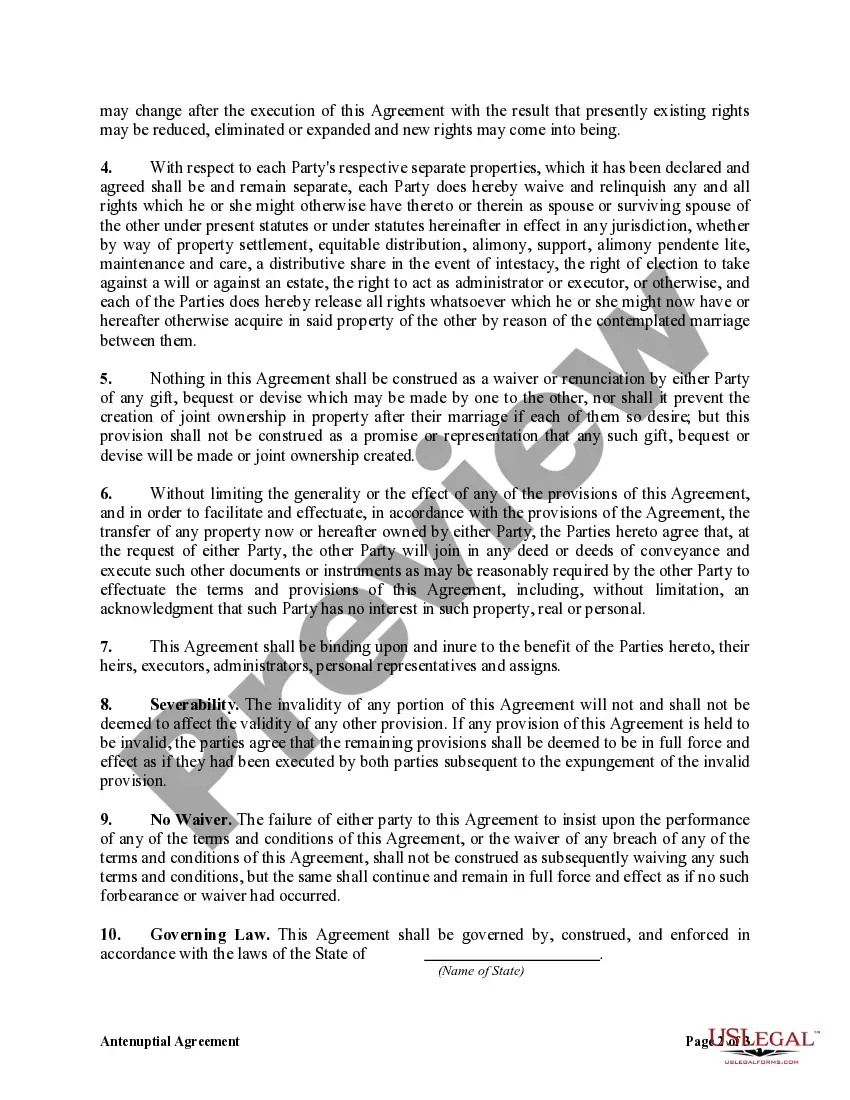
- Provisions for property transfer and management
- Terms addressing the waiver of elective share rights
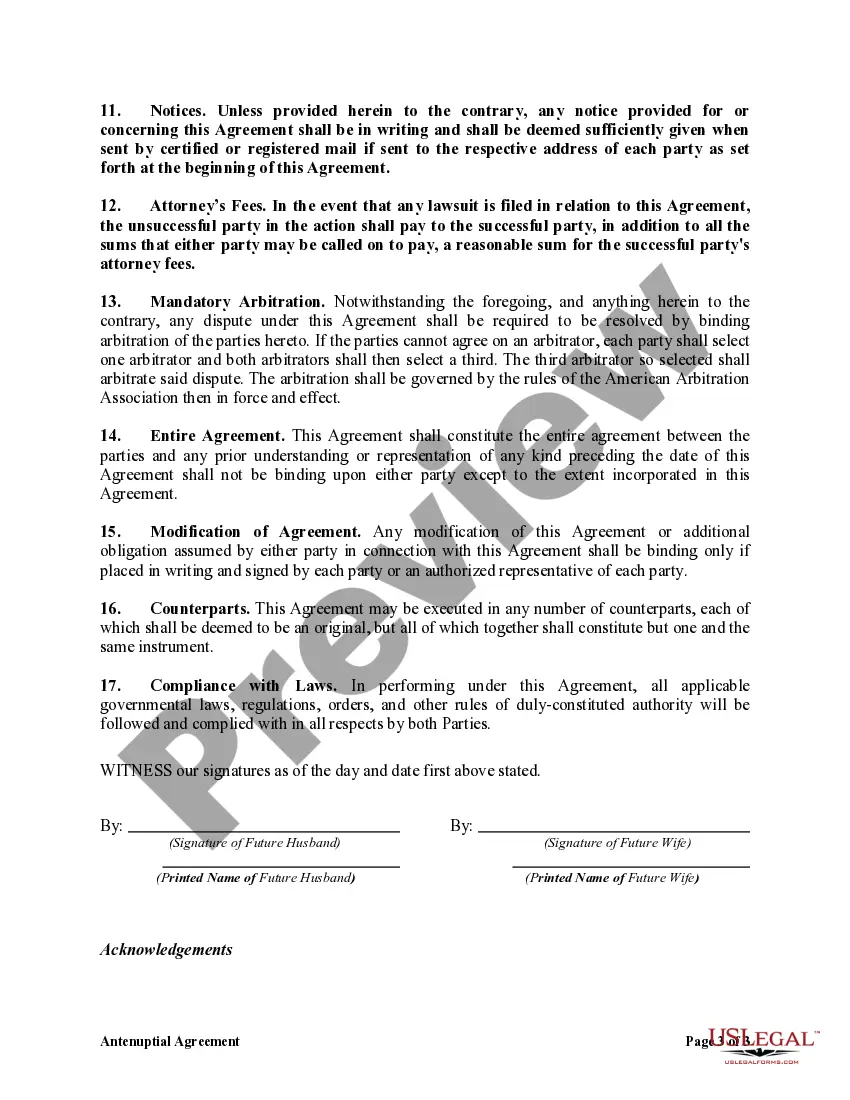
- Guidelines for dispute resolution through arbitration
Situations where this form applies
This form should be used when two individuals are engaged to be married and want to delineate their financial responsibilities and rights. It is especially important for those bringing significant assets into the marriage or those who have children from previous relationships and wish to ensure that their estate passes directly to their heirs. Additionally, it is useful in scenarios where one or both parties have considerable debt or specific financial arrangements that need to be preserved after the marriage.
Intended users of this form
This antenuptial agreement is suitable for:
- Engaged couples looking to protect their individual assets
- Individuals with children from prior relationships wanting to safeguard their inheritances
- Couples with significant debts who want to clarify property rights
- Partners seeking legal clarity on financial arrangements before marriage
Steps to complete this form
- Identify both parties and provide their full names and contact information.
- List all individual assets and debts each party owns, including property, bank accounts, and any other financial obligations.
- Clearly state the provisions regarding waiving the right to an elective share.
- Include terms for property management during the marriage and in the event of a divorce or death.
- Both parties should review the document for clarity, finalize the agreement, and sign it in the presence of a notary if required.
Does this form need to be notarized?
This form usually doesn’t need to be notarized. However, local laws or specific transactions may require it. Our online notarization service, powered by Notarize, lets you complete it remotely through a secure video session, available 24/7.
Get your form ready online
Our built-in tools help you complete, sign, share, and store your documents in one place.
Make edits, fill in missing information, and update formatting in US Legal Forms—just like you would in MS Word.
Download a copy, print it, send it by email, or mail it via USPS—whatever works best for your next step.
Sign and collect signatures with our SignNow integration. Send to multiple recipients, set reminders, and more. Go Premium to unlock E-Sign.
If this form requires notarization, complete it online through a secure video call—no need to meet a notary in person or wait for an appointment.
We protect your documents and personal data by following strict security and privacy standards.

Make edits, fill in missing information, and update formatting in US Legal Forms—just like you would in MS Word.

Download a copy, print it, send it by email, or mail it via USPS—whatever works best for your next step.

Sign and collect signatures with our SignNow integration. Send to multiple recipients, set reminders, and more. Go Premium to unlock E-Sign.

If this form requires notarization, complete it online through a secure video call—no need to meet a notary in person or wait for an appointment.

We protect your documents and personal data by following strict security and privacy standards.
Common mistakes
- Failing to fully disclose all assets and debts can lead to legal disputes.
- Not having the document reviewed by a legal professional, which may result in unenforceable clauses.
- Omitting important details about property management or inheritance rights.
- Not considering potential changes in the law or personal circumstances after the agreement is signed.
Benefits of completing this form online
- Convenience of accessing the form anytime and anywhere.
- Editability allows customization to fit personal circumstances without legal jargon.
- Reliability of professionally drafted documents ensures legal compliance.
Legal use & context
- This antenuptial agreement is enforceable in court if properly executed, with both parties having a clear understanding of the terms.
- It is vital to review local laws to ensure the agreement complies with specific jurisdictional requirements.
- Legal counsel is recommended to avoid future contests over property rights or interpretations of the agreement.
Main things to remember
- An antenuptial agreement helps clarify financial rights before marriage.
- Waiving the elective share can protect individual assets from being claimed by a spouse after death.
- Both parties should fully disclose their financial situations for the agreement to be valid and enforceable.
- Consultation with legal professionals ensures compliance and protects both parties involved.
Looking for another form?
Form popularity
FAQ
When a prenuptial agreement and a last will and testament are in conflict, the prenuptial agreement often takes precedence, but the decision is in the hands of a probate court.A last will and testament states a deceased person's wishes for their estate after their death.
Below is an example of a state elective share statute: The state law defines elective share as following; a) Elective share is the value of estate of deceased subtracts the value of estate owned separately by the surviving spouse. b) It is fixed one-third portion of the estate.
An alimony waiver means that you and/or your spouse agree that no award of support, maintenance or alimony will be made by the Court at the time of the divorce. If you waive alimony at the time of your divorce, you are also waiving any claim for past or future alimony.
A prenuptial agreement is a legally binding contract that dictates the division of premarital assets, but it can also include other agreements between the parties. A will, on the other hand, dictates the distribution of an individual's assets to their heirs when they pass away.
The answer is yes. You can waive alimony in a prenuptial agreement; however, it must be done with the significant caveats and disclosures and there is never a 100% guarantee.However, if the waiver of alimony would leave the spouse needing government assistance, the court can and will set aside the waiver of alimony.
Waiving Spousal Support If it is agreed that neither party is entitled to spousal support than both parties can agree to waive the support or not claim it at all.
2. Prenups make you think less of your spouse. And at their root, prenups show a lack of commitment to the marriage and a lack of faith in the partnership.Ironically, the marriage becomes more concerned with money after a prenup than it would have been without the prenup.
The three most common grounds for nullifying a prenup are unconscionability, failure to disclose, or duress and coercion.Duress and coercion can also invalidate a prenup. If the prenup was signed the day before your wedding, it may appear that the parties didn't have much time to fully review the agreement.
It needs to be in writing. An oral contract is often difficult to enforce legally in any case. It needs to be signed and notarized. It needs to be fair and reasonable. There must be full disclosure of assets by both spouses. Both parties agree to the terms of the postnuptial agreement.