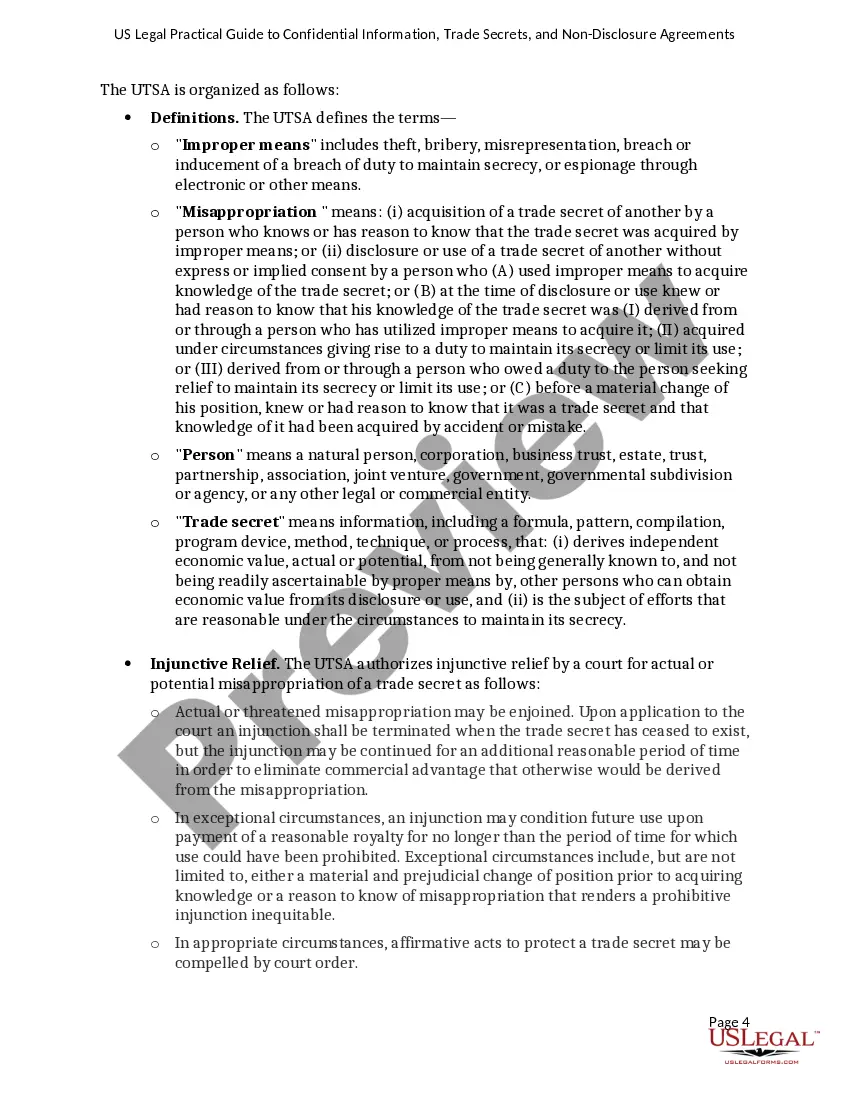
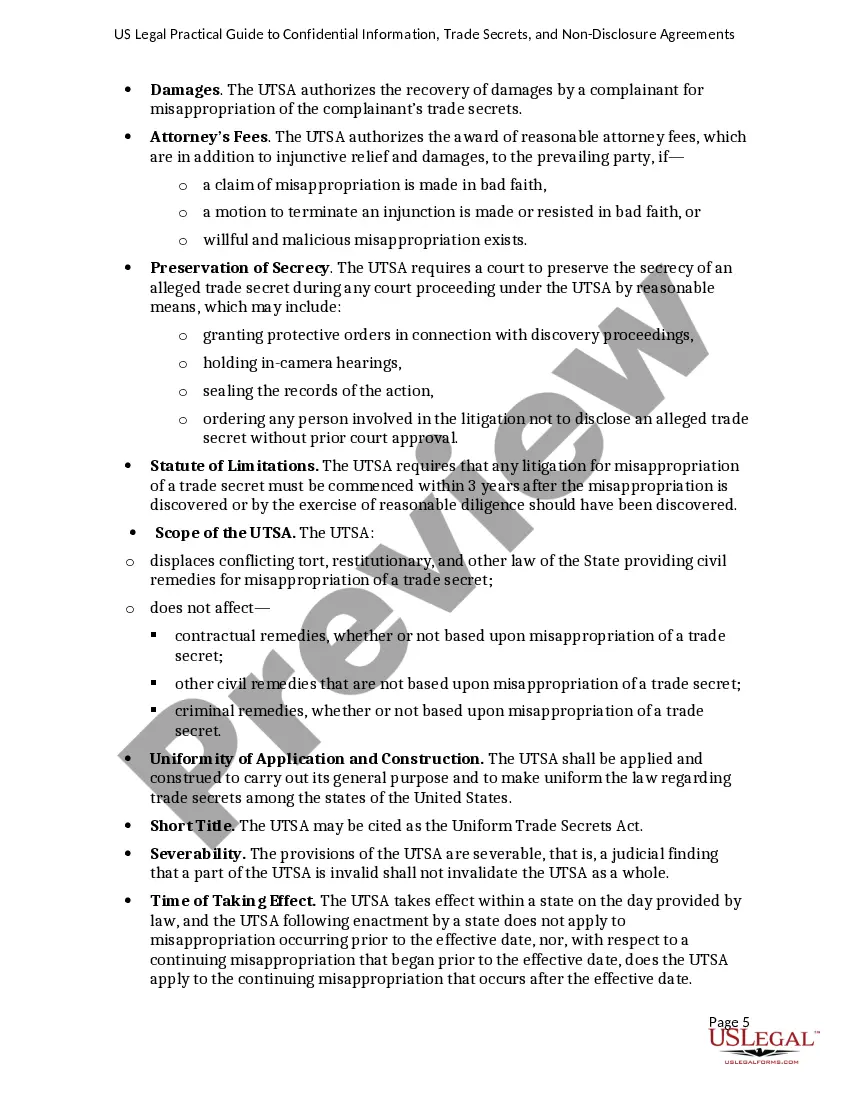
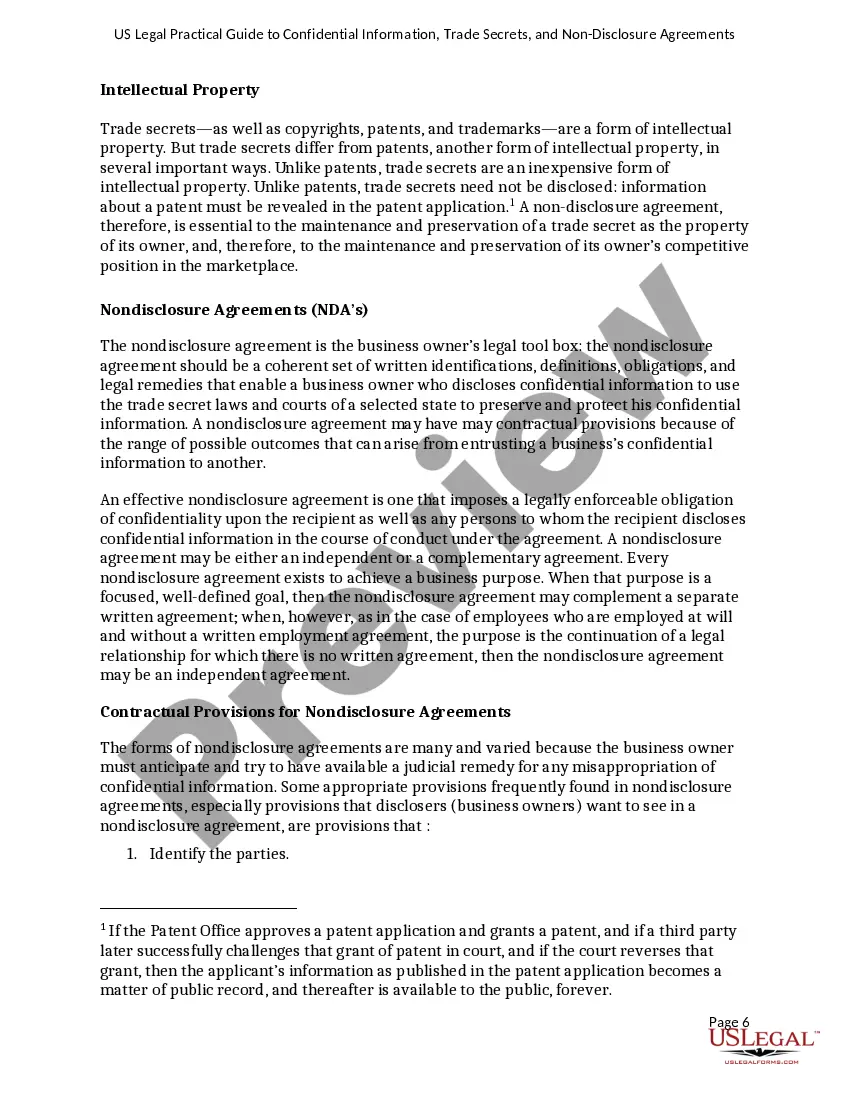
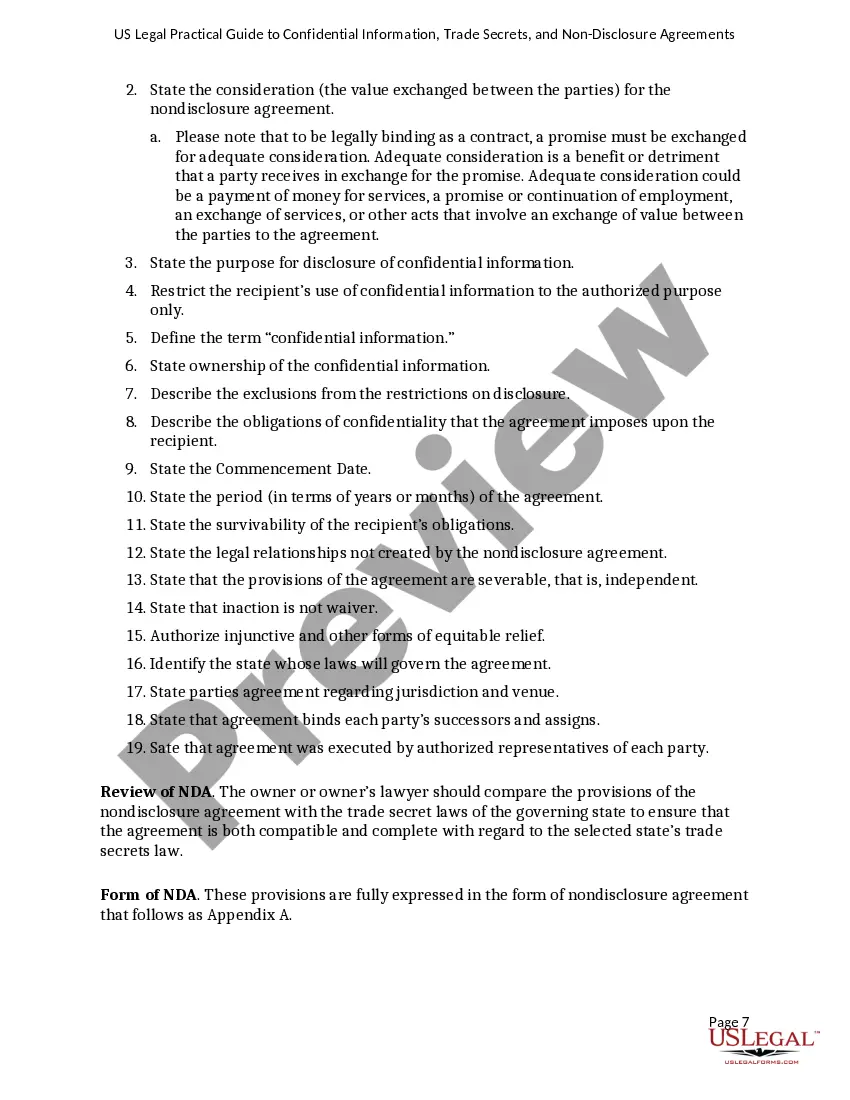
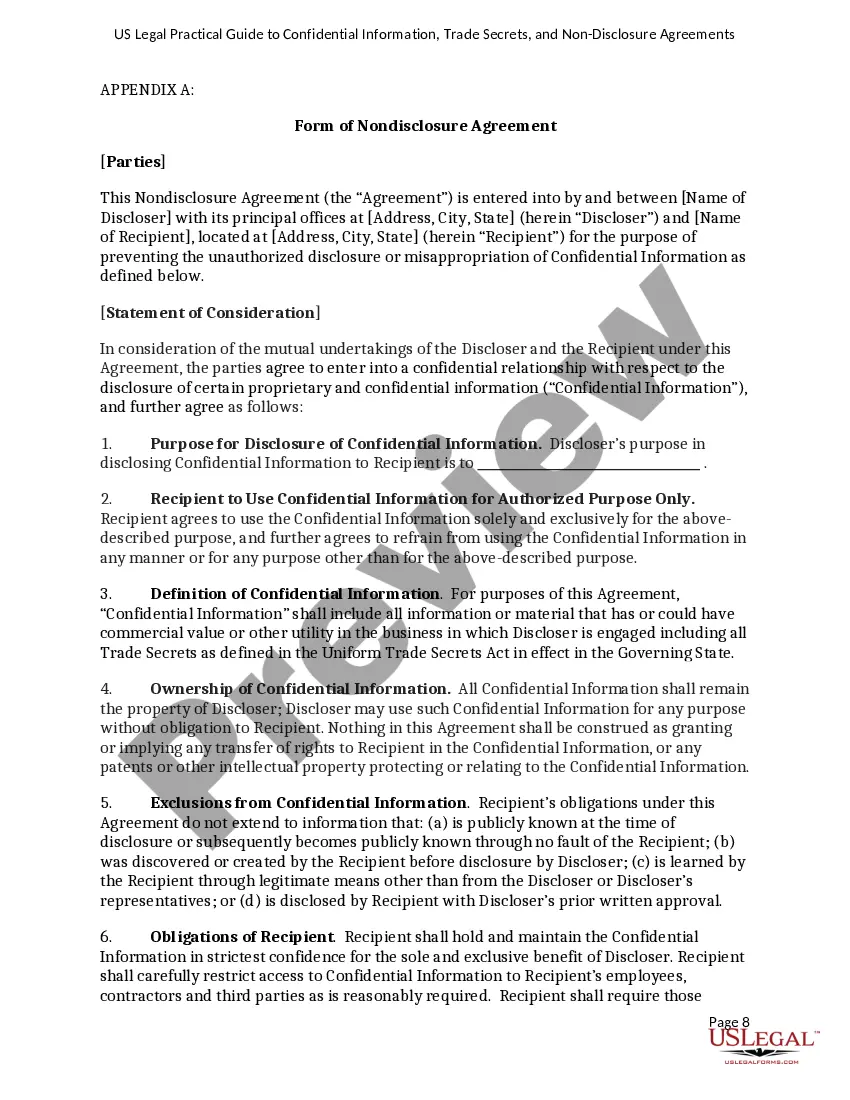
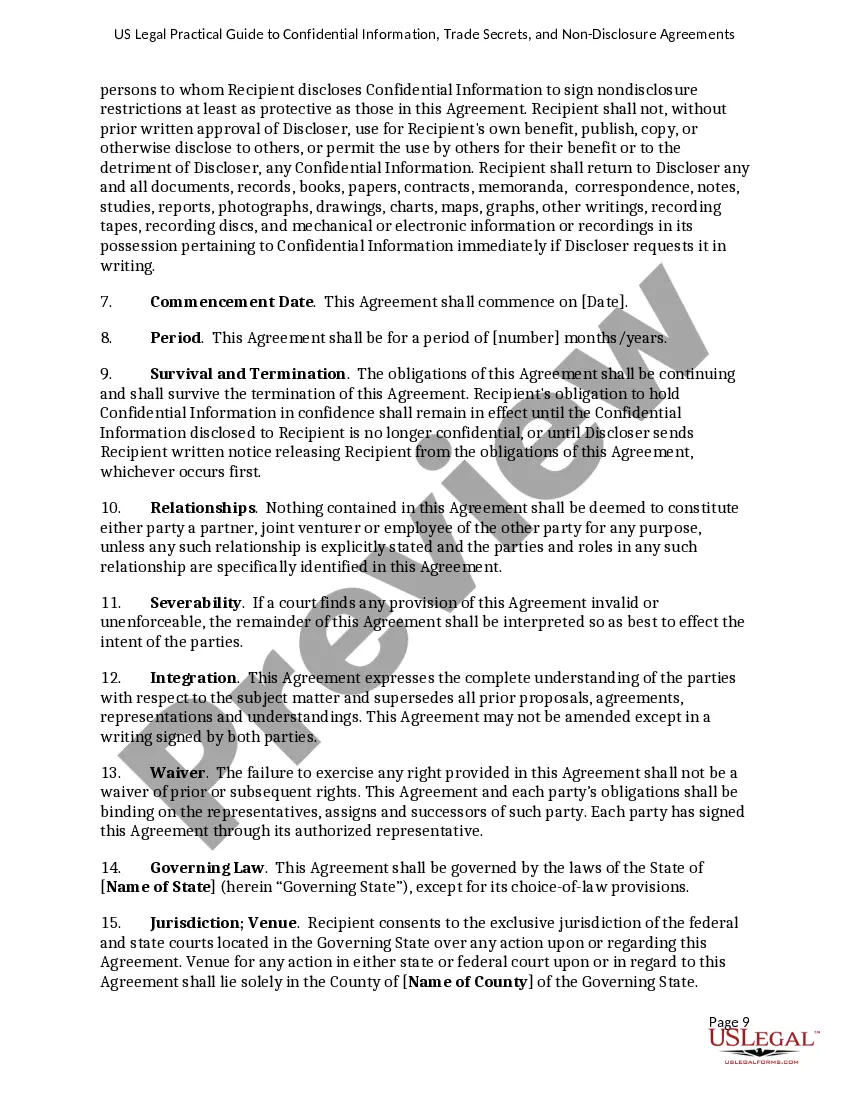
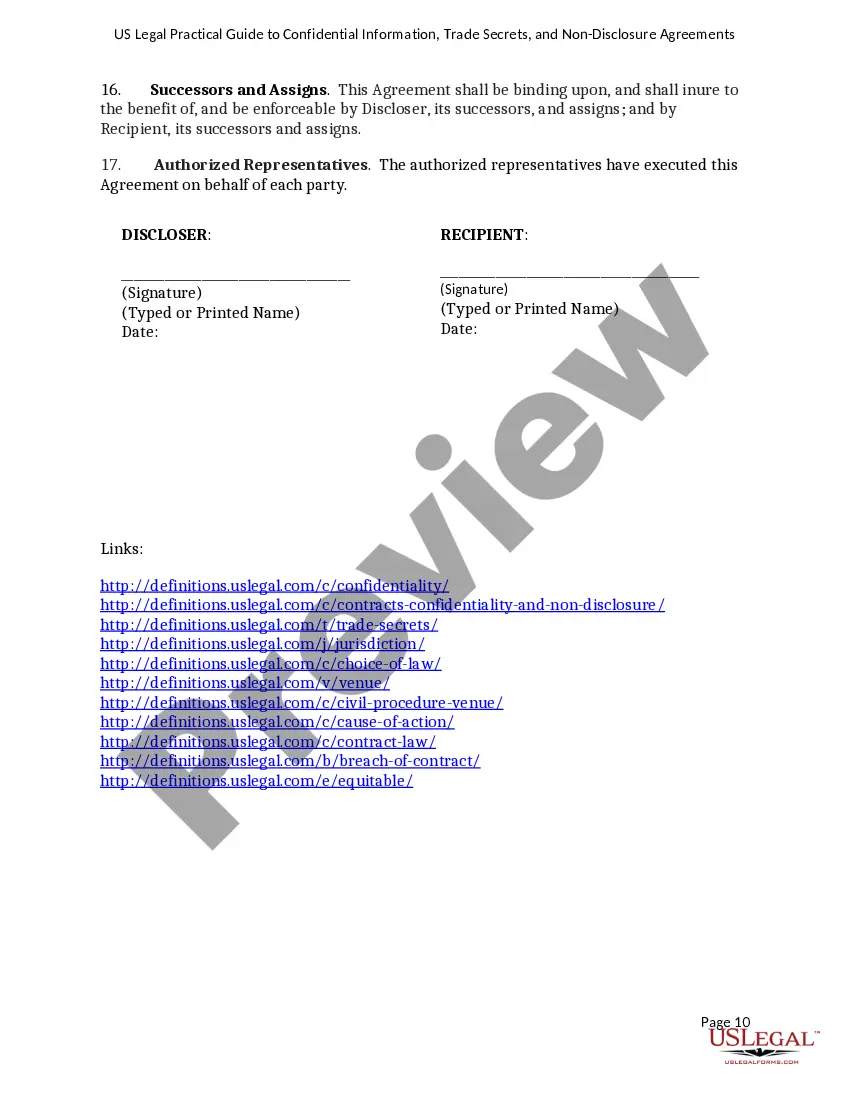
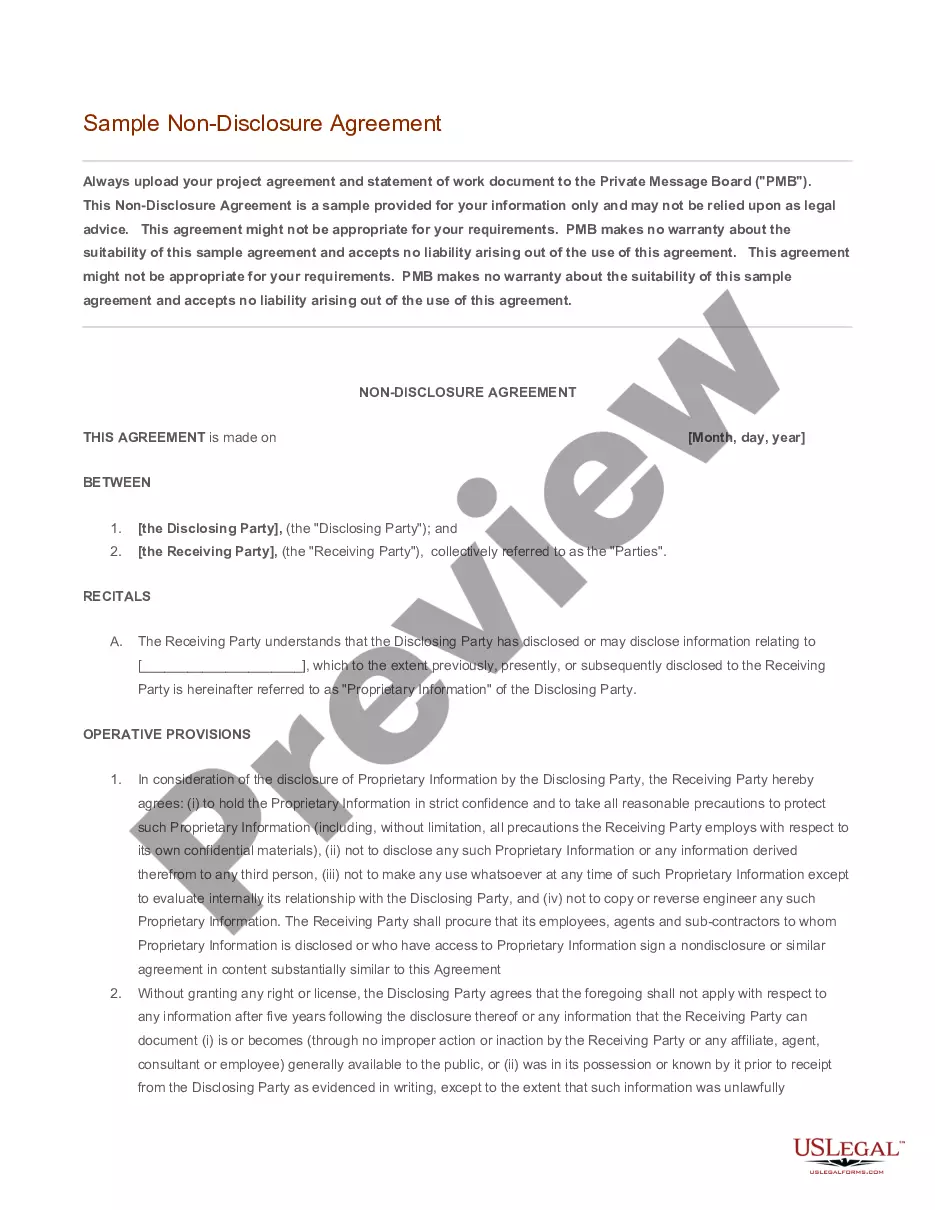
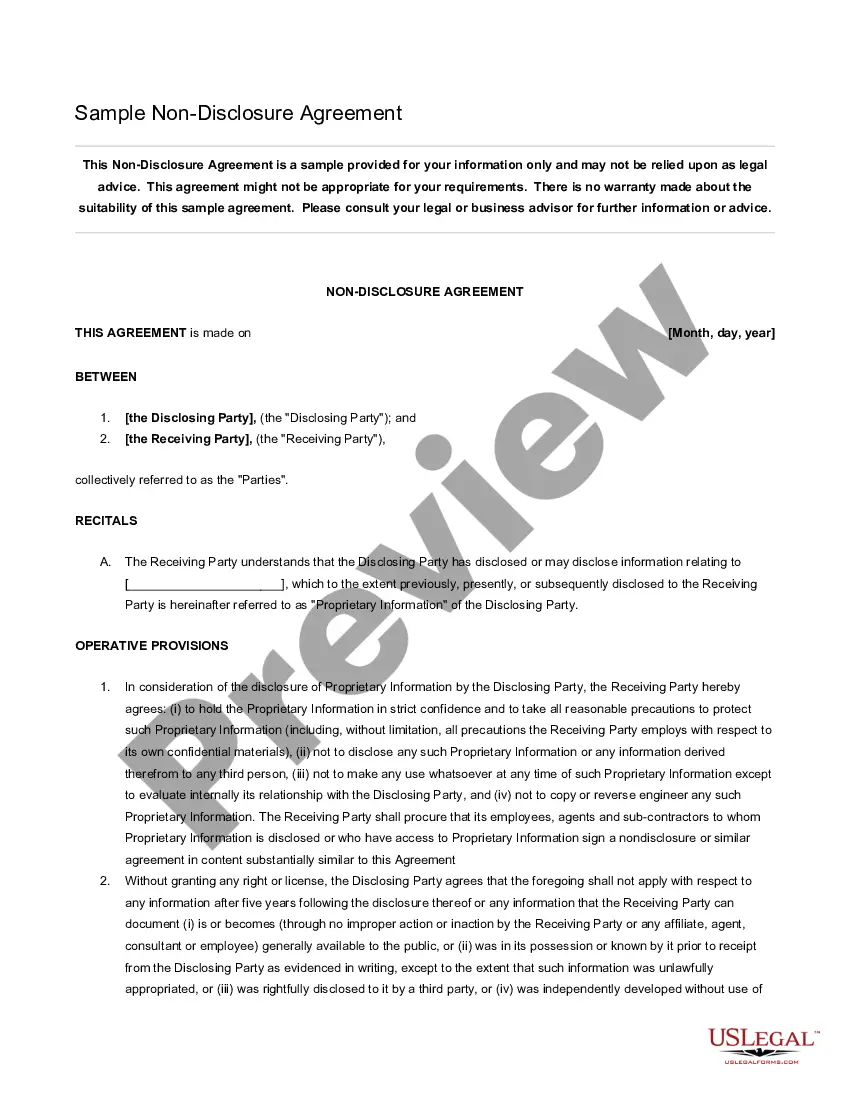
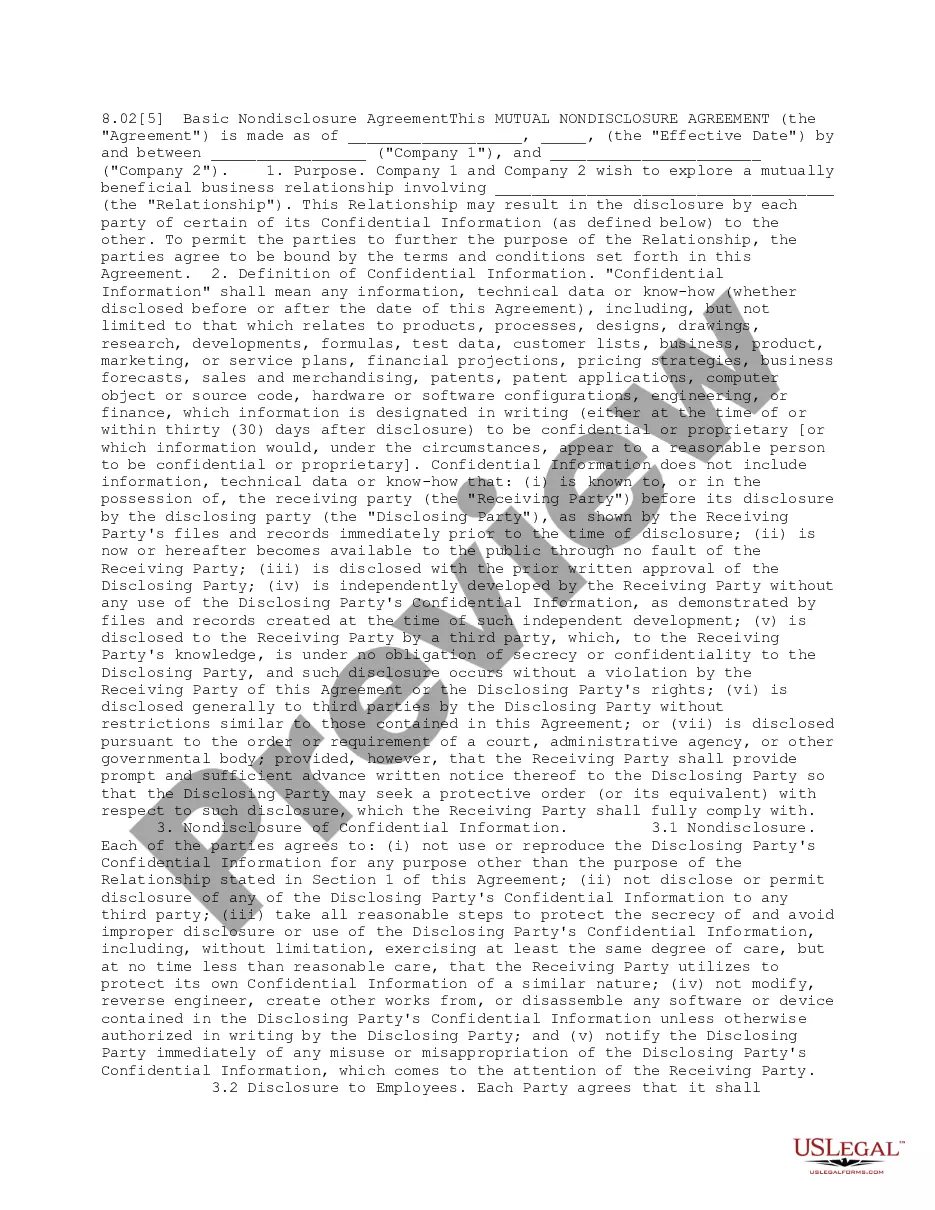
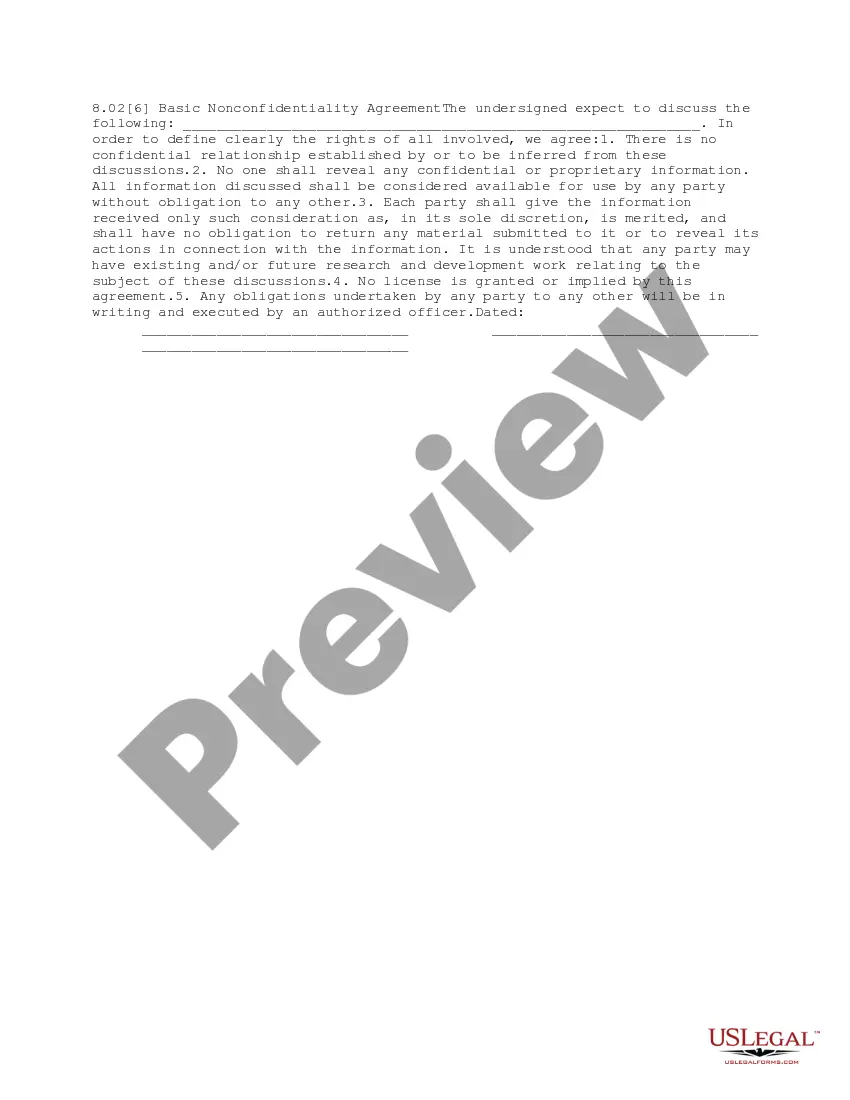
A Non-Disclosure Agreement is used by business owners, computer code writers, inventors, and others desirous of preserving the secrecy of confidential information through the use of a contractual agreement keyed to the Uniform Trade Secrets Act and that requires persons to whom confidential information is disclosed to use the information solely for a specific purpose business purpose and otherwise to keep it secret.
Tennessee USLegal Practical Guide to Confidential Information, Trade Secrets and NonDisclosure Agreements
State:
Multi-State
Control #:
US-007HB
Format:
Word
Instant download
Description
Free preview
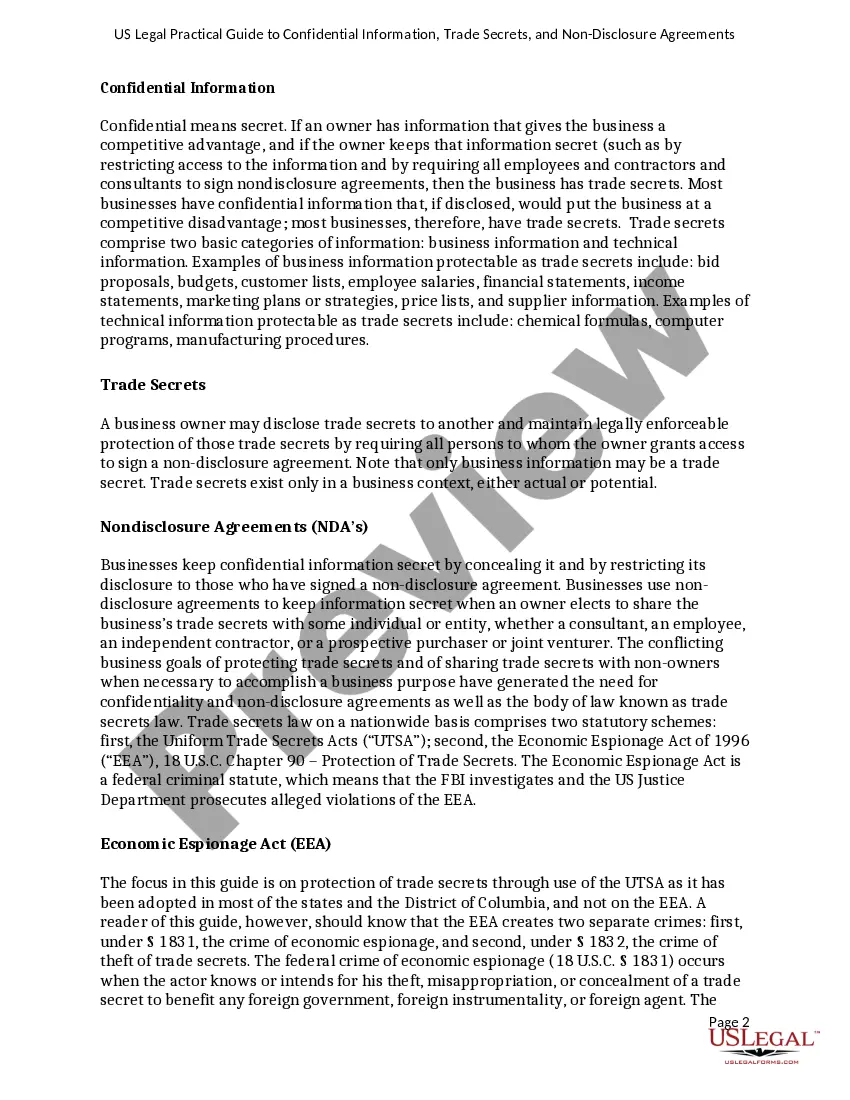
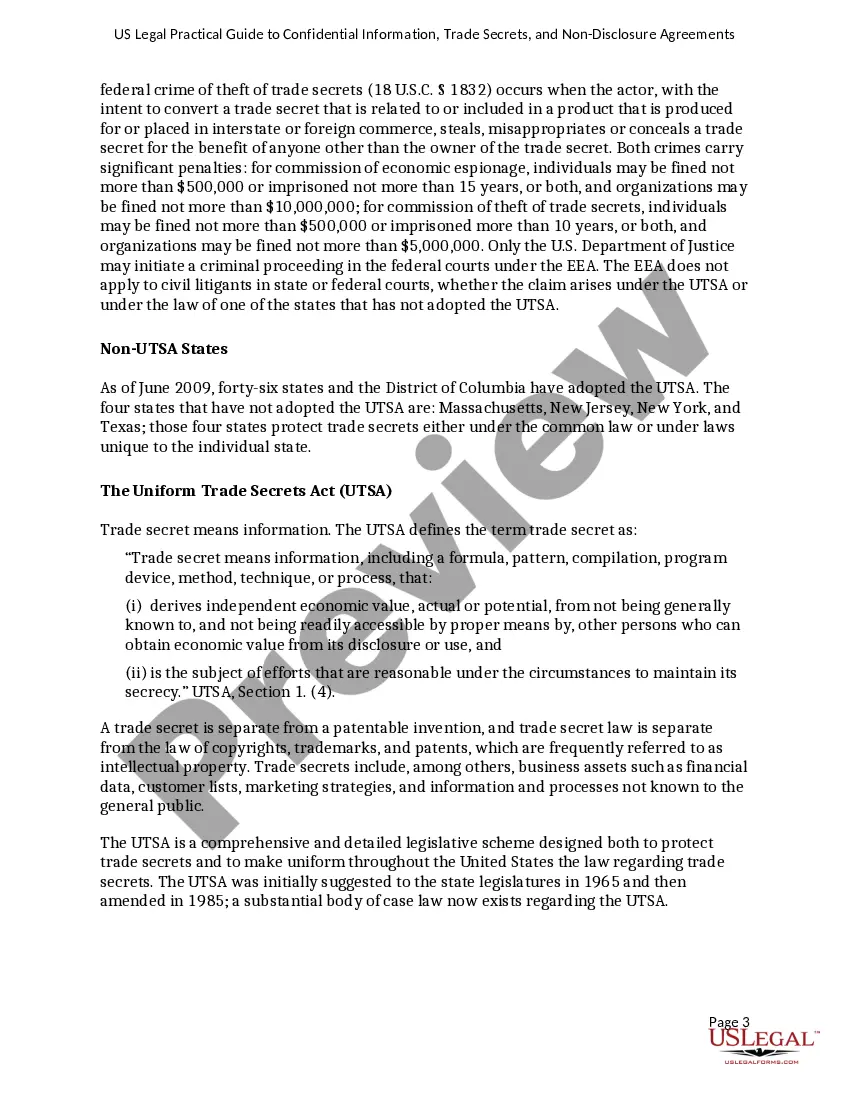

How to fill out USLegal Practical Guide To Confidential Information, Trade Secrets And NonDisclosure Agreements?
Selecting the appropriate official document format can be challenging. Clearly, there are numerous templates accessible online, but how will you acquire the official form you need? Utilize the US Legal Forms site. The platform offers thousands of templates, such as the Tennessee USLegal Practical Guide to Confidential Information, Trade Secrets and Non-Disclosure Agreements, which you can leverage for business and personal purposes. All of the forms are verified by experts and comply with state and federal requirements.
If you are currently registered, sign in to your account and click the Acquire button to access the Tennessee USLegal Practical Guide to Confidential Information, Trade Secrets and Non-Disclosure Agreements. Use your account to search through the official forms you have previously purchased. Visit the My documents section of your account and obtain an additional copy of the documents you need.
If you are a new user of US Legal Forms, here are simple steps for you to follow: Firstly, ensure you have selected the correct form for your city/region. You can preview the form using the Review button and read the form details to confirm this is the right one for you. If the form does not satisfy your needs, utilize the Search field to find the appropriate form. Once you are convinced that the form is suitable, click the Acquire now button to obtain the form. Choose the pricing plan you prefer and enter the necessary information. Create your account and fund your order using your PayPal account or Visa or MasterCard. Select the document format and download the official document template to your device. Complete, edit, print, and sign the acquired Tennessee USLegal Practical Guide to Confidential Information, Trade Secrets and Non-Disclosure Agreements.
US Legal Forms is the premier collection of official templates where you can find a variety of document forms. Take advantage of the service to obtain expertly crafted documents that adhere to state regulations.
- Ensure you are signed up for US Legal Forms.
- Browse available templates and select the appropriate one.
- Confirm the form details match your requirements.
- Create your account for processing orders.
- Download the necessary document format.
- Complete and sign the document.
Form popularity
FAQ
To identify trade secrets, assess the value of the information to your business and ensure it is not commonly known or easily accessible. Consider processes, technical data, or client lists that provide competitive advantages. The Tennessee USLegal Practical Guide to Confidential Information, Trade Secrets and NonDisclosure Agreements offers helpful criteria to determine what constitutes a trade secret.
Completing trade secrets involves identifying, documenting, and regularly reviewing sensitive information within your organization. Regular training for employees on the importance of trade secret protection is crucial. For further insight on maintaining trade secrets effectively, the Tennessee USLegal Practical Guide to Confidential Information, Trade Secrets and NonDisclosure Agreements is an excellent resource.
Tennessee's trade secret law, governed by the Uniform Trade Secrets Act, protects any information that derives economic value from not being generally known. This includes formulas, programs, methods, or processes that provide a business advantage. The Tennessee USLegal Practical Guide to Confidential Information, Trade Secrets and NonDisclosure Agreements details the legal protections available to businesses regarding their trade secrets.
Filling out a confidentiality agreement requires you to clearly define the parties involved, outline the confidential information being protected, and specify the duration of the agreement. It’s important to use clear, concise language that accurately reflects the intentions of both parties. For additional guidance, consult the Tennessee USLegal Practical Guide to Confidential Information, Trade Secrets and NonDisclosure Agreements to ensure that you cover all essential components.
Yes, NonDisclosure Agreements (NDAs) are enforceable in Tennessee, provided they meet specific legal criteria. An NDA must be clear in its terms, not overly broad, and protect legitimate business interests. To navigate the specifics of enforceability, refer to the Tennessee USLegal Practical Guide to Confidential Information, Trade Secrets and NonDisclosure Agreements for best practices.
The status of a trade secret is determined by its secrecy and economic value. To qualify as a trade secret, the information must not be generally known and must provide a competitive advantage. The Tennessee USLegal Practical Guide to Confidential Information, Trade Secrets and NonDisclosure Agreements outlines the criteria for establishing and maintaining the status of trade secrets.
Documenting trade secrets involves recording the specific details that constitute the secret, such as processes, formulas, or proprietary information. It’s crucial to label these documents clearly and limit access to those who need to know. By following guidelines from the Tennessee USLegal Practical Guide to Confidential Information, Trade Secrets and NonDisclosure Agreements, you can effectively safeguard your trade secrets.
To document a trade, keep detailed records of all transactions, including contracts, terms, and conditions. It is essential to organize and store all relevant documents securely to ensure they are accessible when needed. A well-documented trade serves as a foundation for protecting your interests, particularly in regards to trade secrets, as outlined in the Tennessee USLegal Practical Guide to Confidential Information, Trade Secrets and NonDisclosure Agreements.
To protect your confidential information and trade secrets, implement strong security measures like encryption and access controls. Additionally, educating employees about the importance of confidentiality can safeguard your information from unintentional leaks. Utilizing the resources found in the Tennessee USLegal Practical Guide to Confidential Information, Trade Secrets and NonDisclosure Agreements can provide you with tailored strategies and best practices for securing your invaluable data.
A trade secret violation occurs when someone unlawfully discloses or uses confidential information that provides a business with a competitive edge. For instance, if an employee shares a company's proprietary customer list with a competitor, this action constitutes a trade secret violation. Understanding these scenarios is crucial, which is why the Tennessee USLegal Practical Guide to Confidential Information, Trade Secrets and NonDisclosure Agreements can help you navigate such issues effectively.