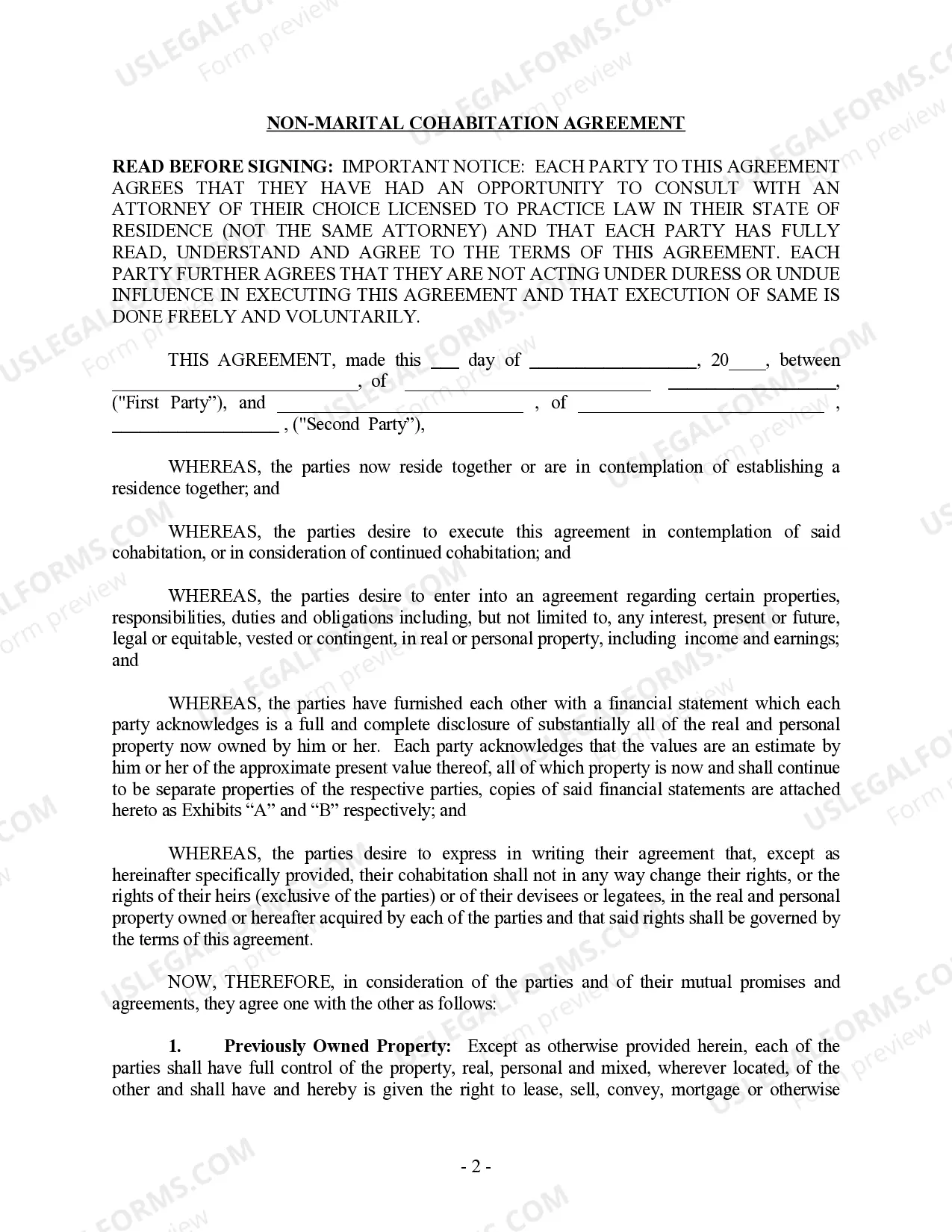
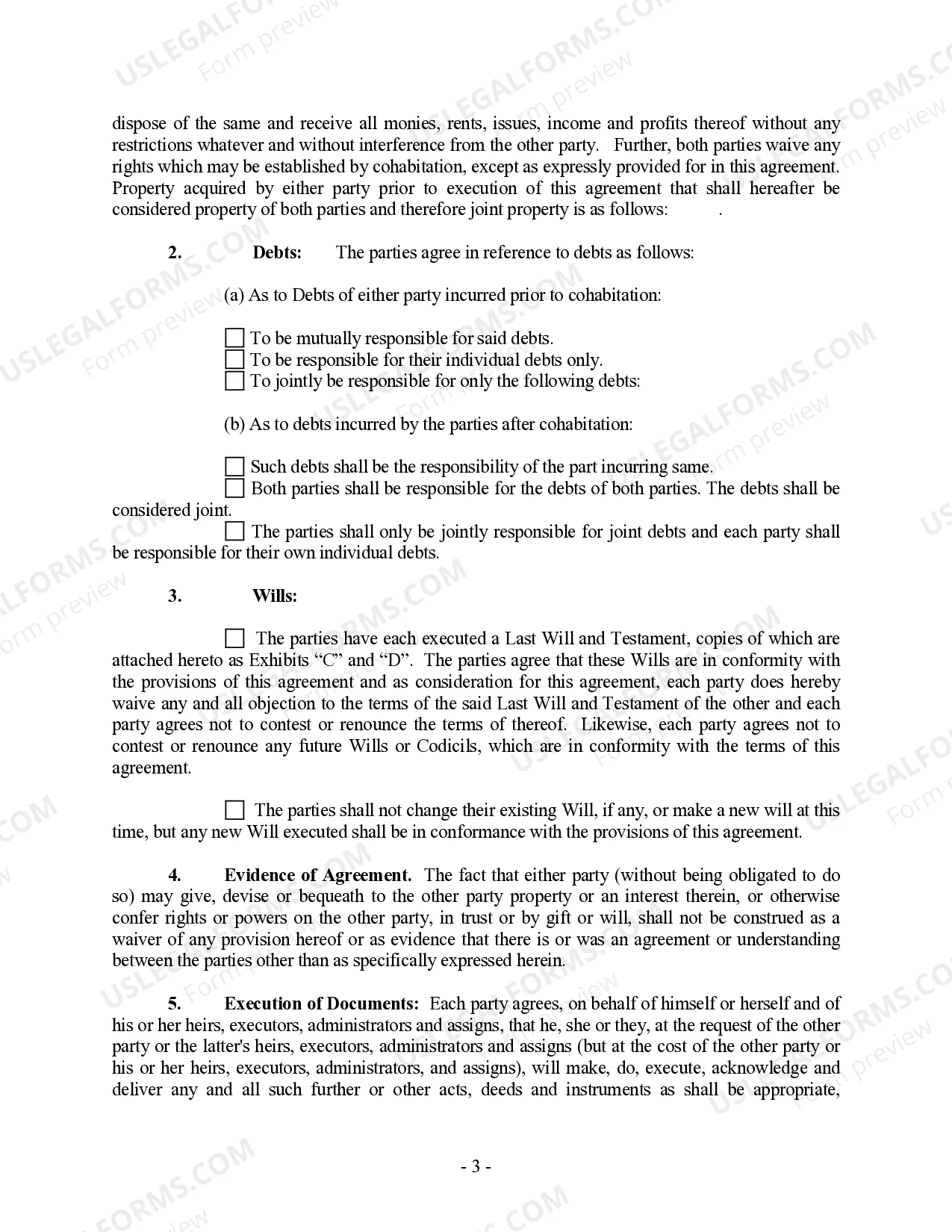
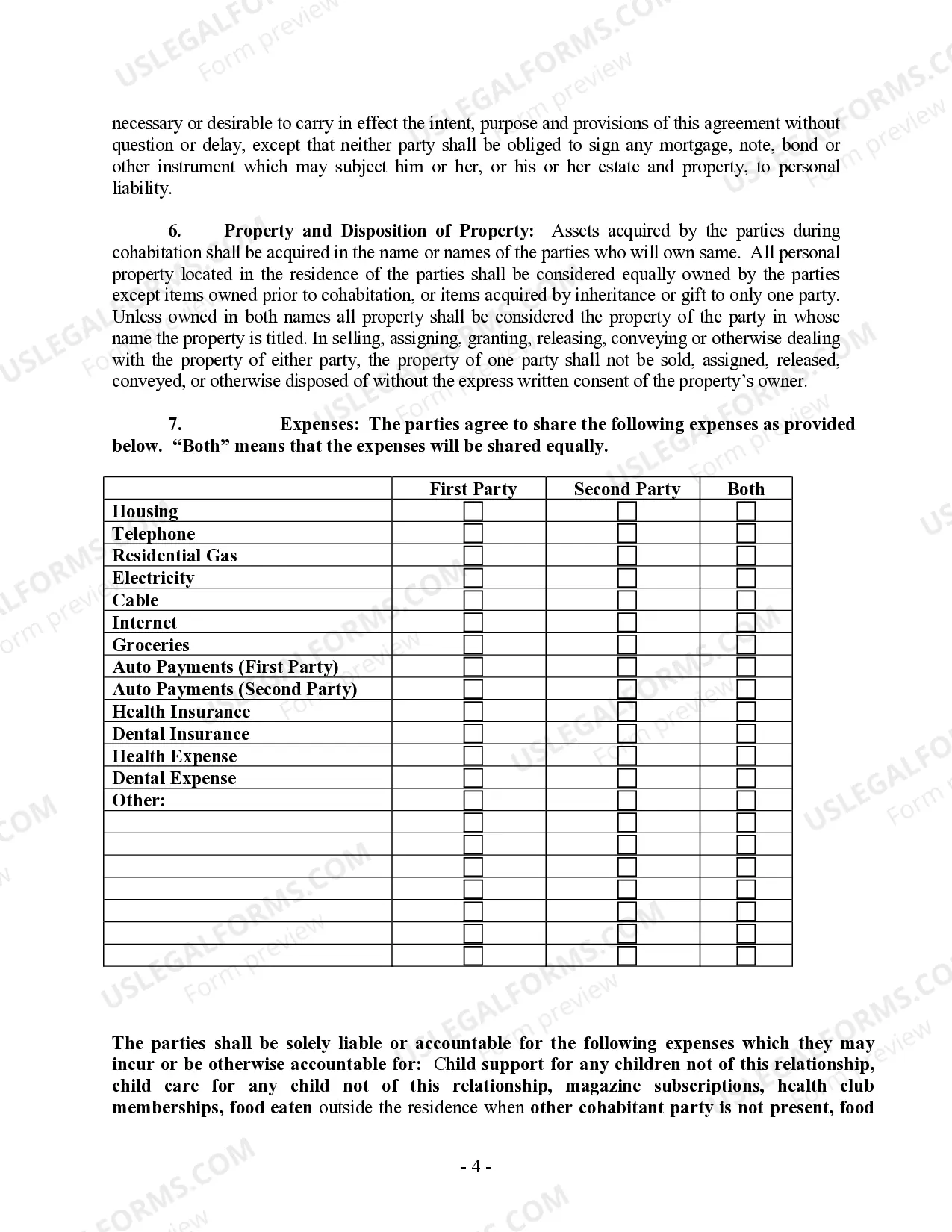
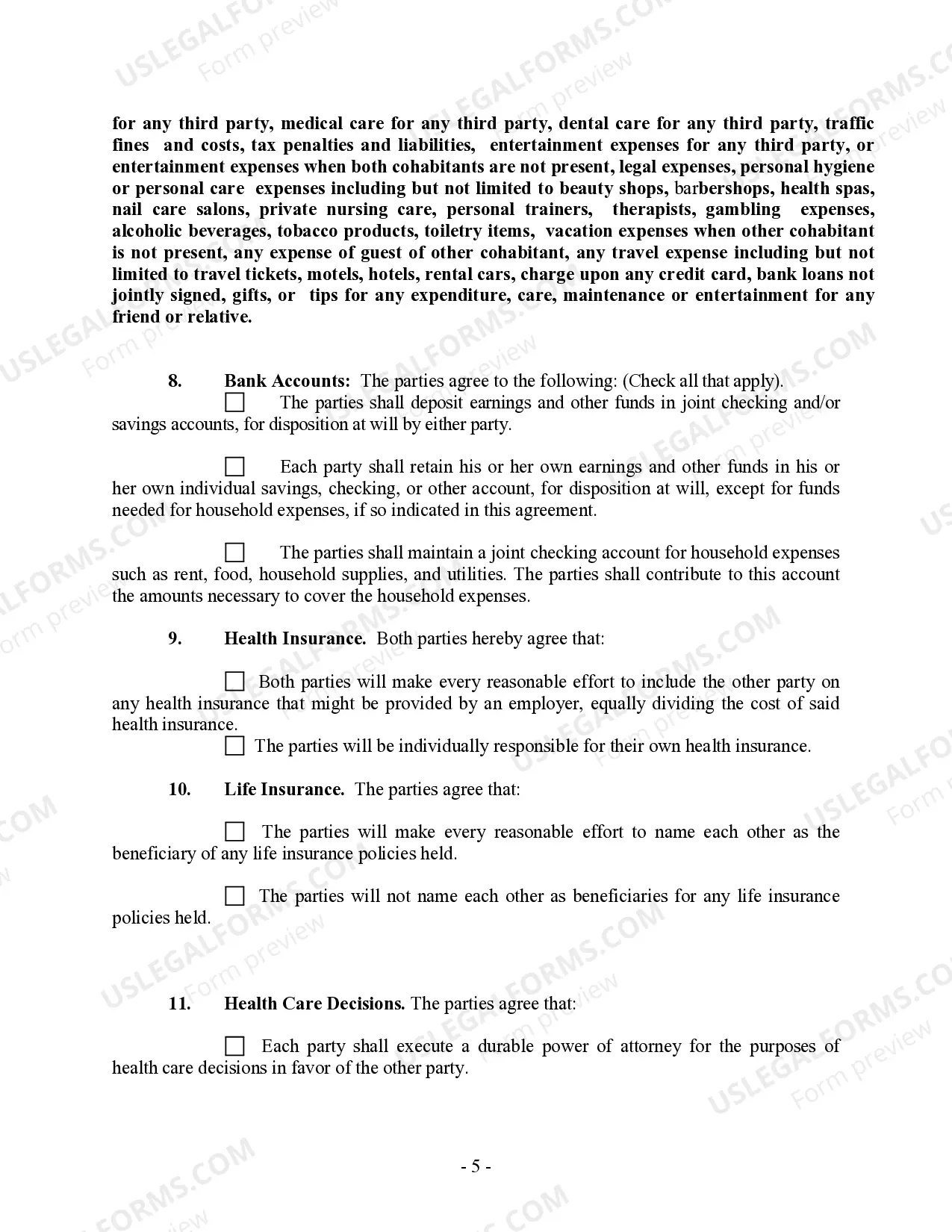
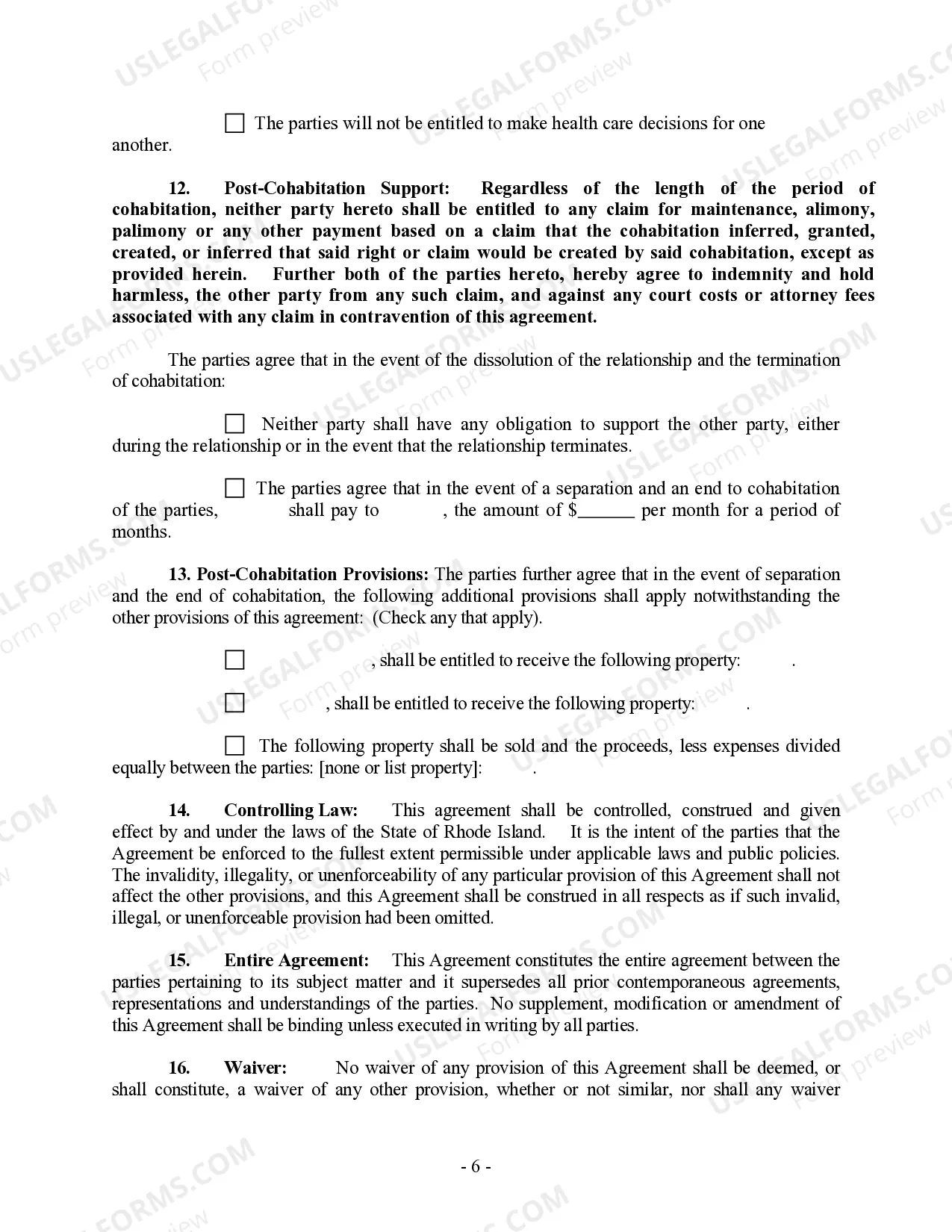
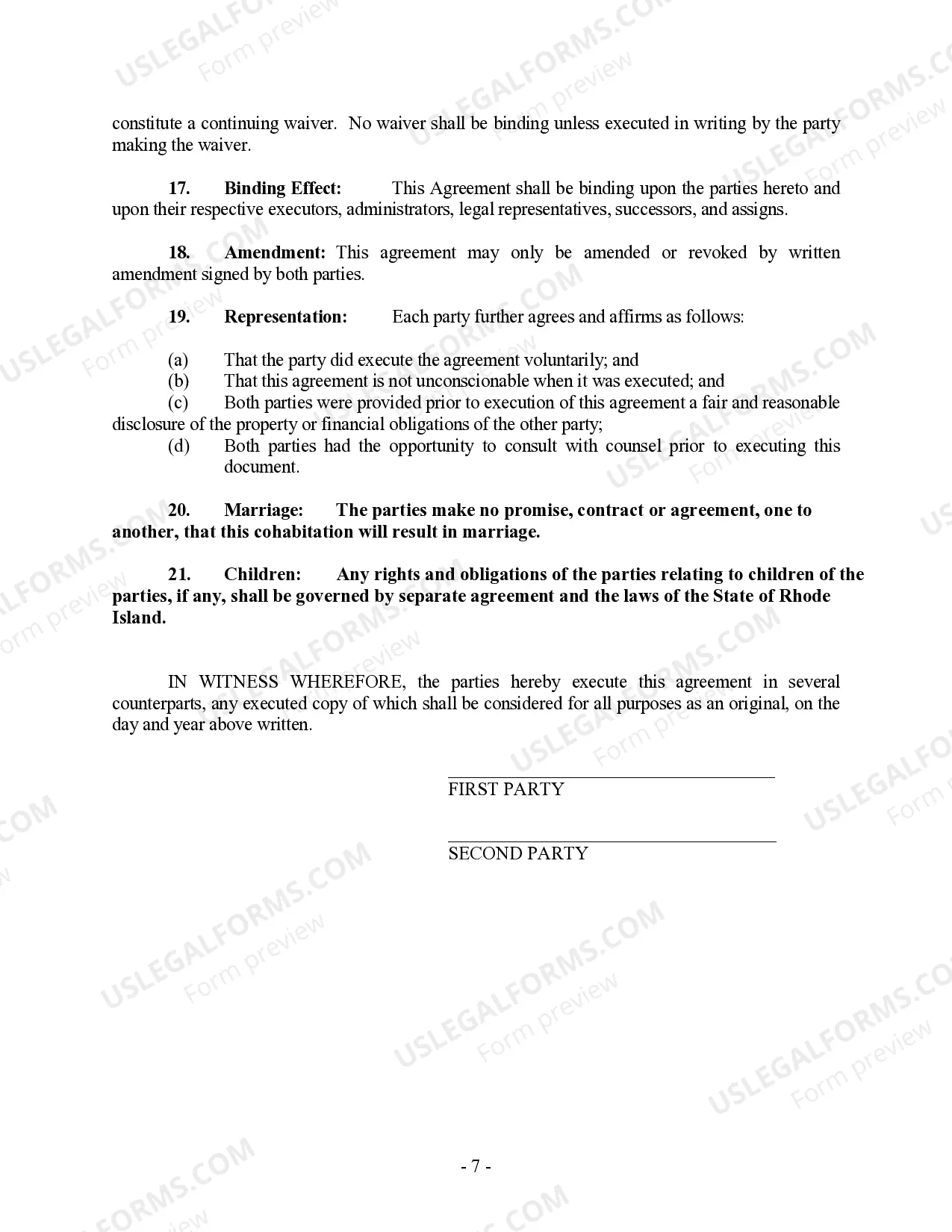
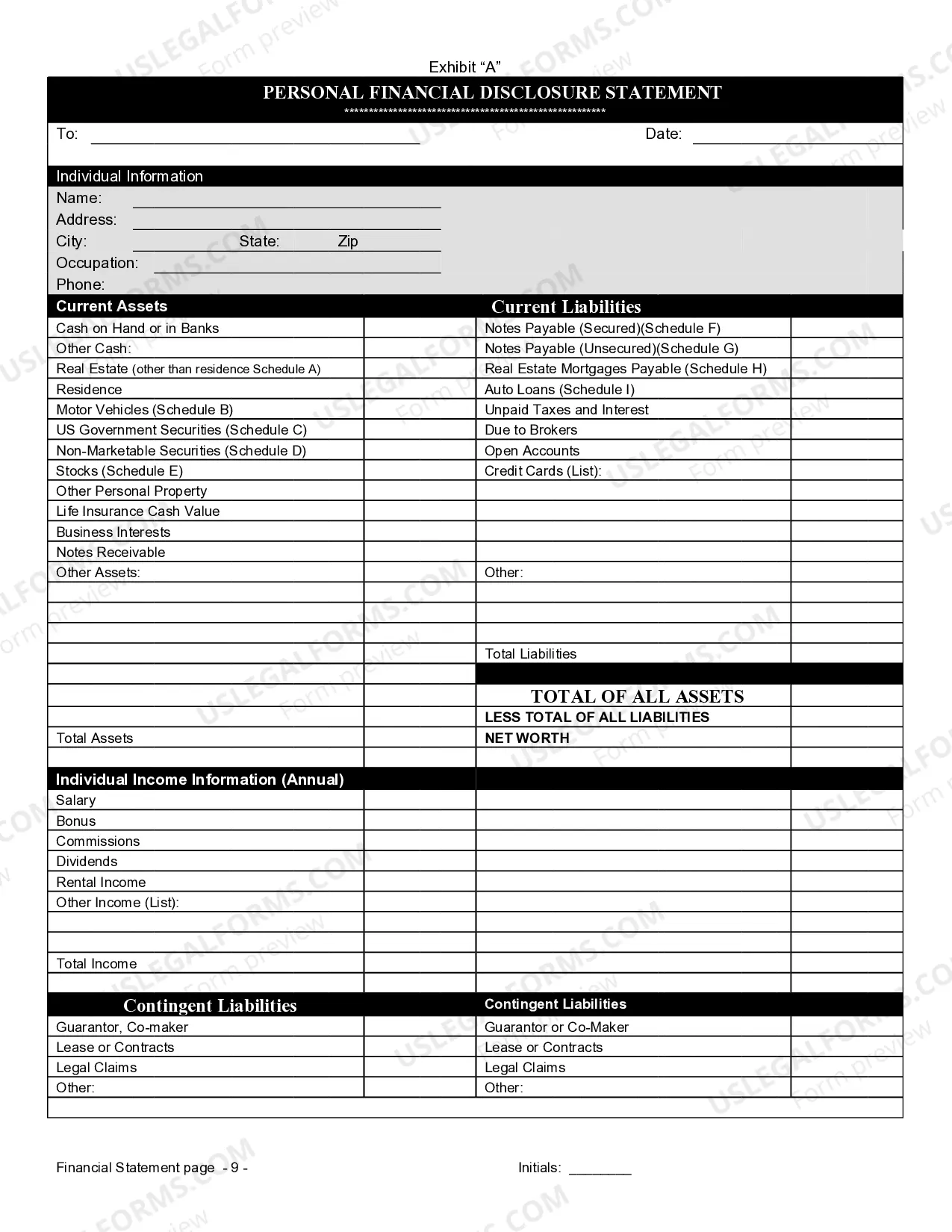
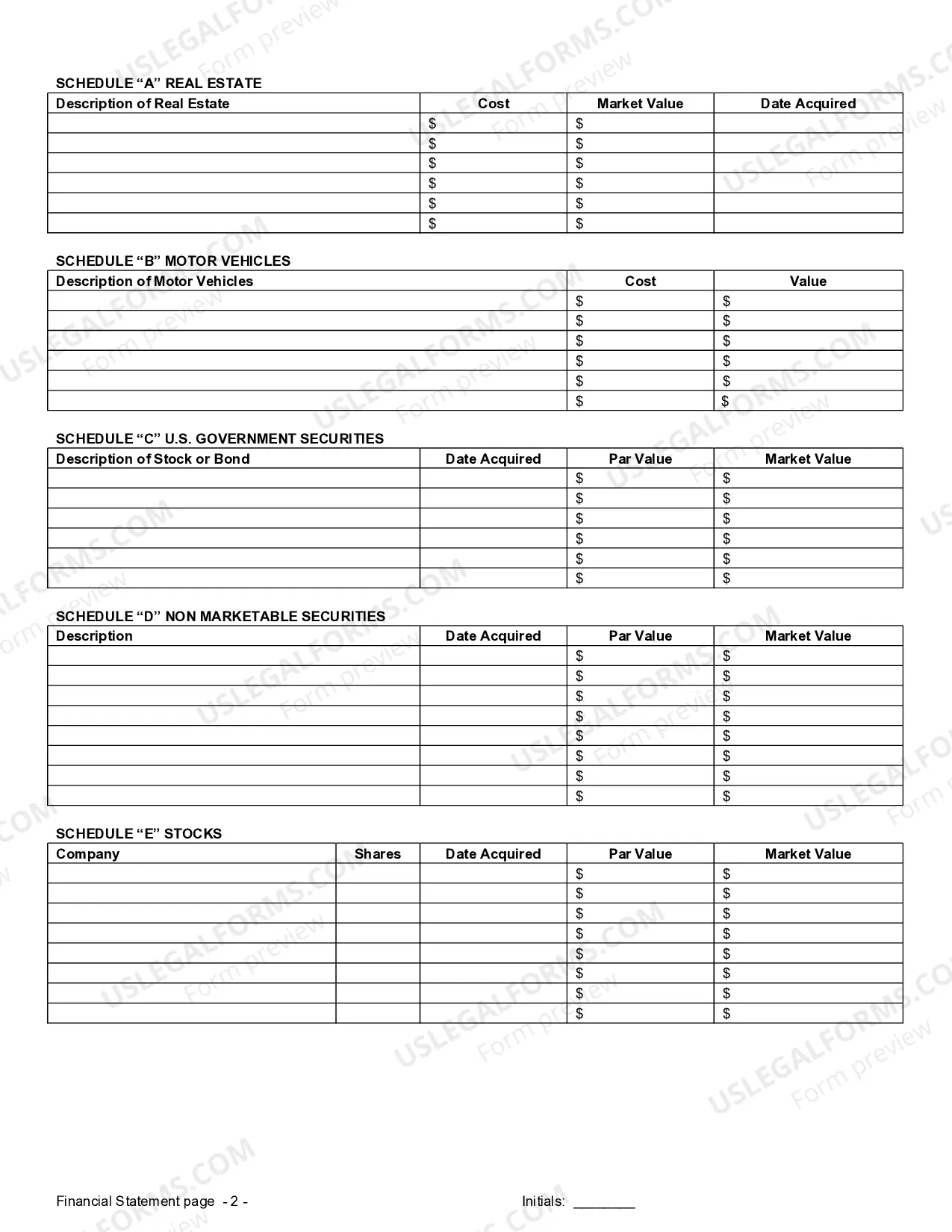
The Non-Marital Cohabitation Living Together Agreement is a legal document that outlines the rights and responsibilities of two individuals living together but not married. This agreement is distinct from marriage contracts and serves to clarify expectations regarding finances, property division, and other important matters related to the cohabitation arrangement. It helps prevent misunderstandings and potential disputes, providing a clear framework for both parties.
This form should be used when two individuals enter into a cohabitation arrangement without the intent to marry. It is beneficial for couples who want to set clear expectations about financial matters, property rights, and other logistical issues that may arise during their time living together. It is also useful for couples seeking to protect their individual interests in the event of a breakup.
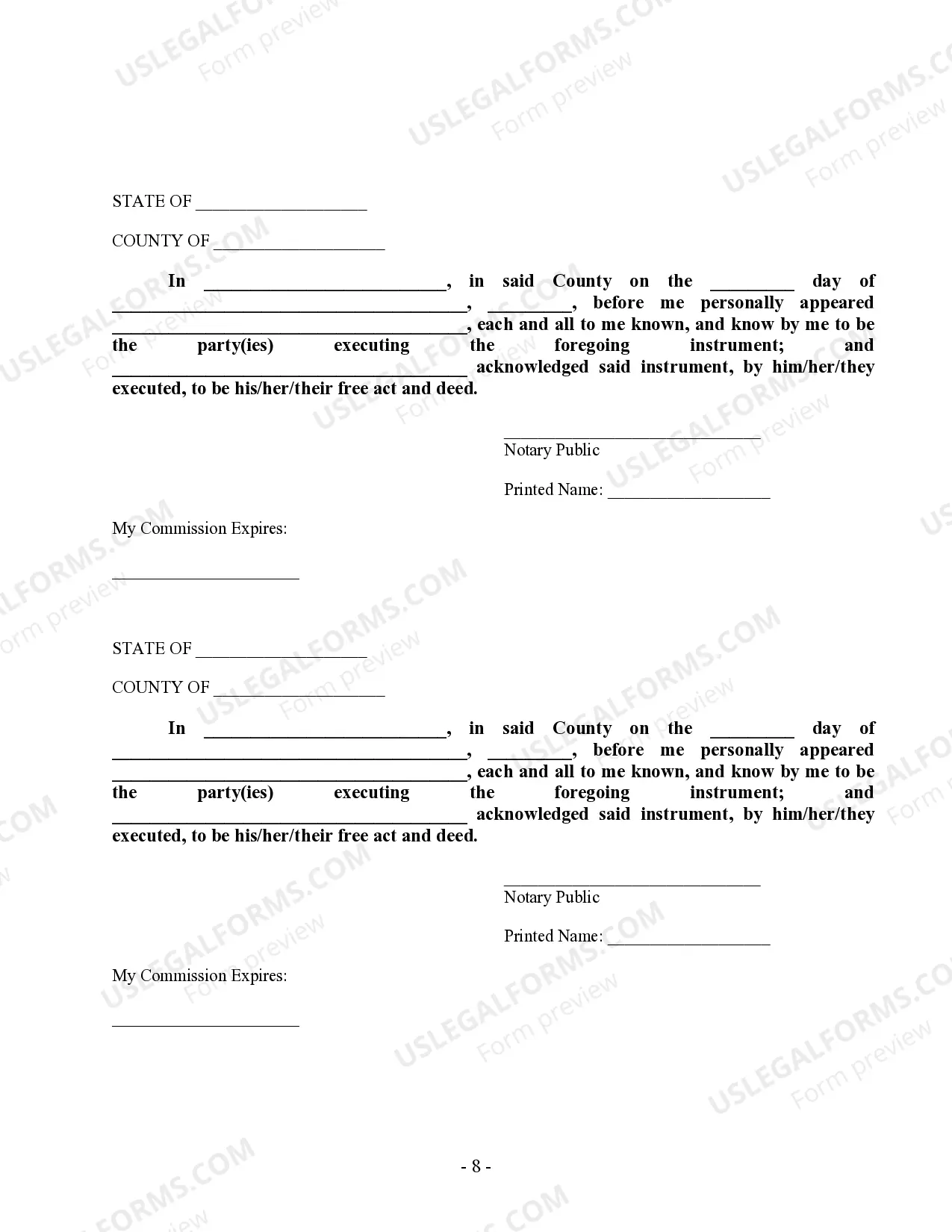
This form must be notarized to be legally valid. US Legal Forms provides secure online notarization powered by Notarize, allowing you to complete the process through a verified video call.
Our built-in tools help you complete, sign, share, and store your documents in one place.
Make edits, fill in missing information, and update formatting in US Legal Forms—just like you would in MS Word.
Download a copy, print it, send it by email, or mail it via USPS—whatever works best for your next step.
Sign and collect signatures with our SignNow integration. Send to multiple recipients, set reminders, and more. Go Premium to unlock E-Sign.
If this form requires notarization, complete it online through a secure video call—no need to meet a notary in person or wait for an appointment.
We protect your documents and personal data by following strict security and privacy standards.

Make edits, fill in missing information, and update formatting in US Legal Forms—just like you would in MS Word.

Download a copy, print it, send it by email, or mail it via USPS—whatever works best for your next step.

Sign and collect signatures with our SignNow integration. Send to multiple recipients, set reminders, and more. Go Premium to unlock E-Sign.

If this form requires notarization, complete it online through a secure video call—no need to meet a notary in person or wait for an appointment.

We protect your documents and personal data by following strict security and privacy standards.
Serious intent to enter into the husband-wife relationship. parties conduct also must be of such a character as to lead to a belief in the community that they were married. Neither party is married to another person.
If a cohabiting couple splits up, they do not have the same legal rights to property as a married couple. In general, unmarried couples can't claim ownership of each other's property in the event of a breakup. This applies to big investments (such as a house) and smaller items (such as furniture).
Where is common-law marriage allowed? Here are the places that recognize common-law marriage: Colorado, Iowa, Kansas, Montana, New Hampshire (for inheritance purposes only), Oklahoma, Rhode Island, South Carolina, Texas, Utah and the District of Columbia.
Alaska law is somewhat unsettled in the area of non-traditional marriages and marriage-type partnerships.However, in Alaska, cohabitation alone creates no property interests. An unmarried domestic partner of either sex may not have the same opportunity to a fair property settlement as a married person.
Cohabiting couples have no legal duty to support each other financially, either while you are living together or if you separate. Nor do you automatically share ownership of your possessions, savings, investments and so on. In general, ownership is unaffected by moving in together.
A domestic partnership is a legally-recognized relationship that offers non-married couples the same or similar benefits as those provided to married couples. Not all states recognize domestic partnerships within a legal context.
Rhode Island is one of the few states that still recognizes common law marriages, or marriages that are not officially registered or otherwise formally established.
Domestic Partner: The State of Rhode Island extends health benefits to same-sex and opposite-sex domestic partners of eligible employees. To qualify for coverage, employees must meet the requirements and provide the verification information listed on the Domestic Partner Affidavit.
Five states allow for civil unions: Colorado, Hawaii, Illinois, Vermont and New Jersey. California, District of Columbia, Maine, Nevada, Oregon, Washington and Wisconsin allow for domestic partnerships while Hawaii allows for a similar relationship known as reciprocal beneficiaries.