Tenant Causing Damage
Description Landlord Inform Premises
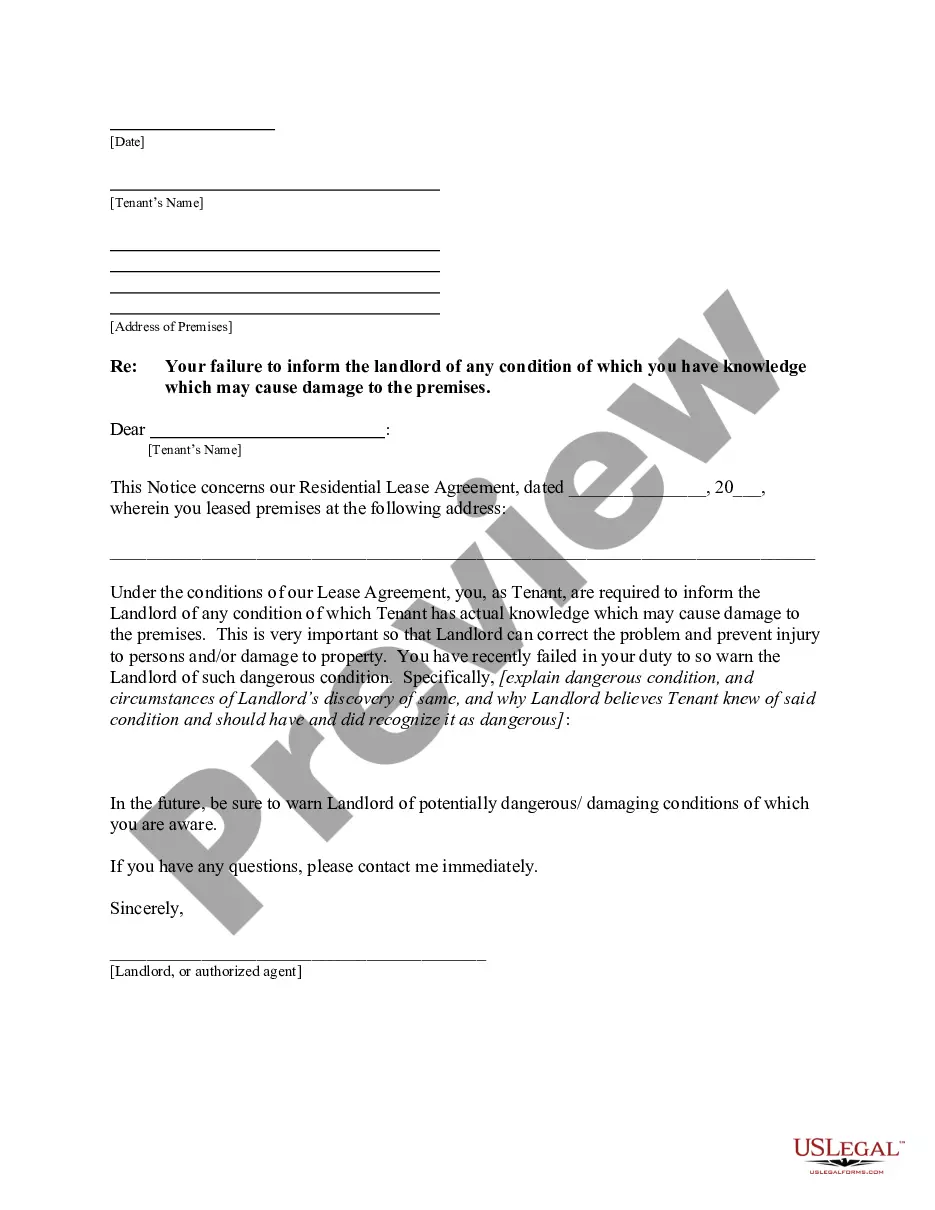

How to fill out Pennsylvania Landlord Damage?
Creating documents isn't the most uncomplicated process, especially for those who almost never work with legal paperwork. That's why we recommend utilizing accurate Pennsylvania Letter from Landlord to Tenant as Notice to tenant to inform landlord of tenant's knowledge of condition causing damage to premises templates made by professional attorneys. It gives you the ability to avoid troubles when in court or dealing with official organizations. Find the documents you want on our website for top-quality forms and exact information.
If you’re a user with a US Legal Forms subscription, just log in your account. When you are in, the Download button will automatically appear on the template page. After accessing the sample, it’ll be saved in the My Forms menu.
Users without an active subscription can quickly create an account. Look at this brief step-by-step guide to get the Pennsylvania Letter from Landlord to Tenant as Notice to tenant to inform landlord of tenant's knowledge of condition causing damage to premises:
- Make certain that the form you found is eligible for use in the state it’s required in.
- Confirm the file. Make use of the Preview feature or read its description (if offered).
- Buy Now if this sample is what you need or go back to the Search field to get a different one.
- Select a convenient subscription and create your account.
- Utilize your PayPal or credit card to pay for the service.
- Download your document in a wanted format.
Right after finishing these straightforward steps, you can complete the sample in your favorite editor. Check the completed data and consider requesting an attorney to review your Pennsylvania Letter from Landlord to Tenant as Notice to tenant to inform landlord of tenant's knowledge of condition causing damage to premises for correctness. With US Legal Forms, everything becomes easier. Give it a try now!