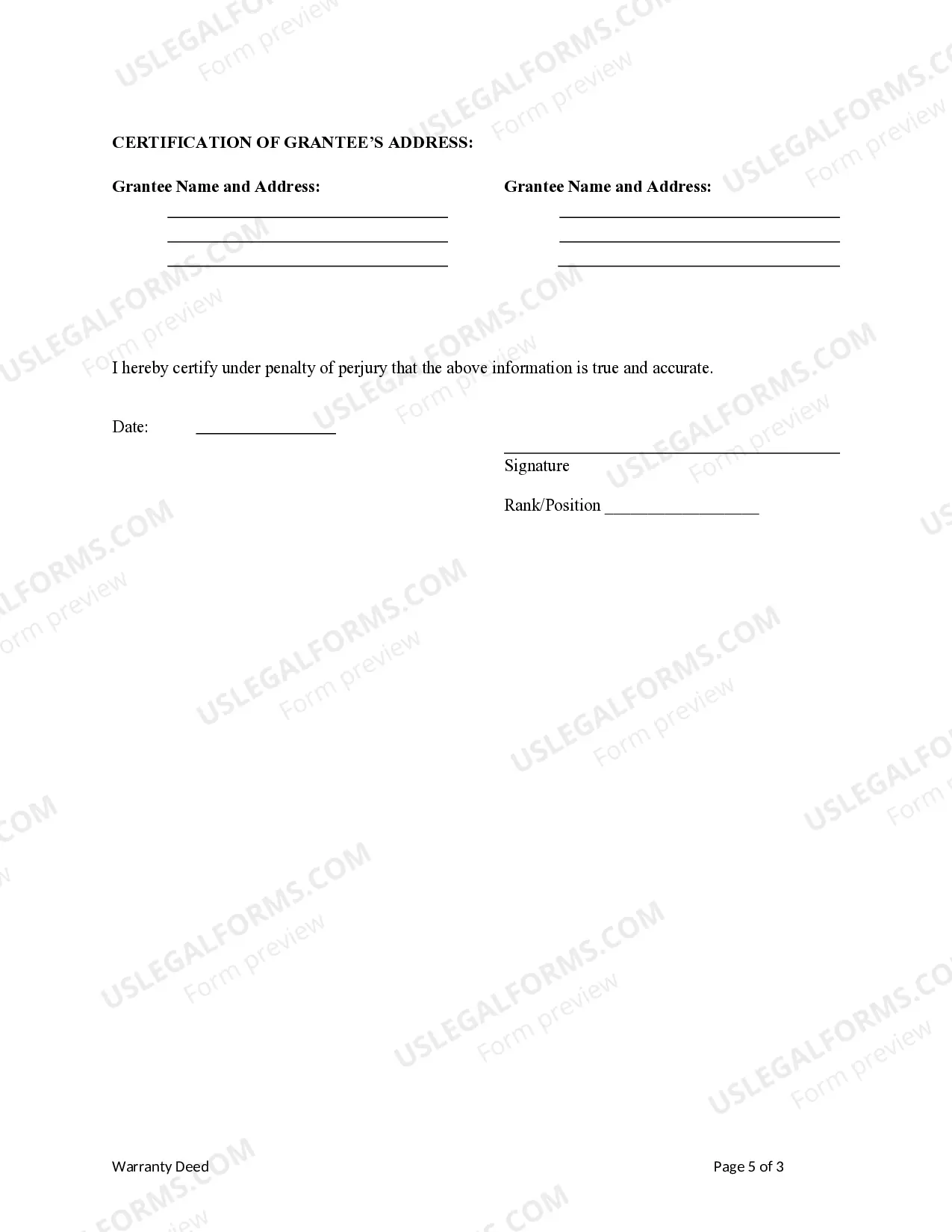
This form is a Warranty Deed where the grantor is an individual and the grantees are husband and Wife. Grantor conveys and warrants the described property to the grantees as tenants in common. This deed complies with all state statutory laws.
What Does A Deed Look Like
State:
Pennsylvania
Control #:
PA-021-78
Format:
Word;
Rich Text
Instant download
Description What Does A Deed Look Like In Pa
Free preview What Does A Home Deed Look Like
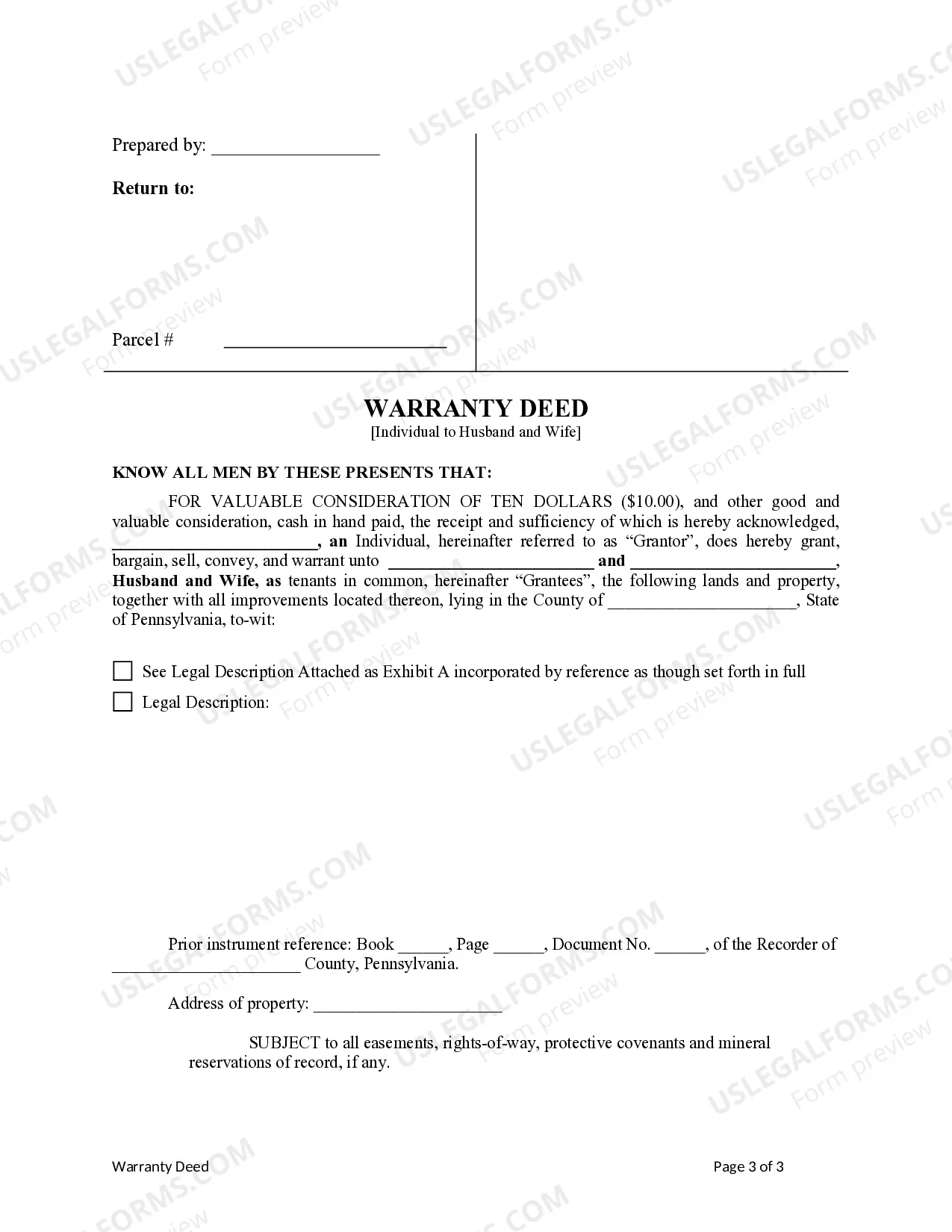
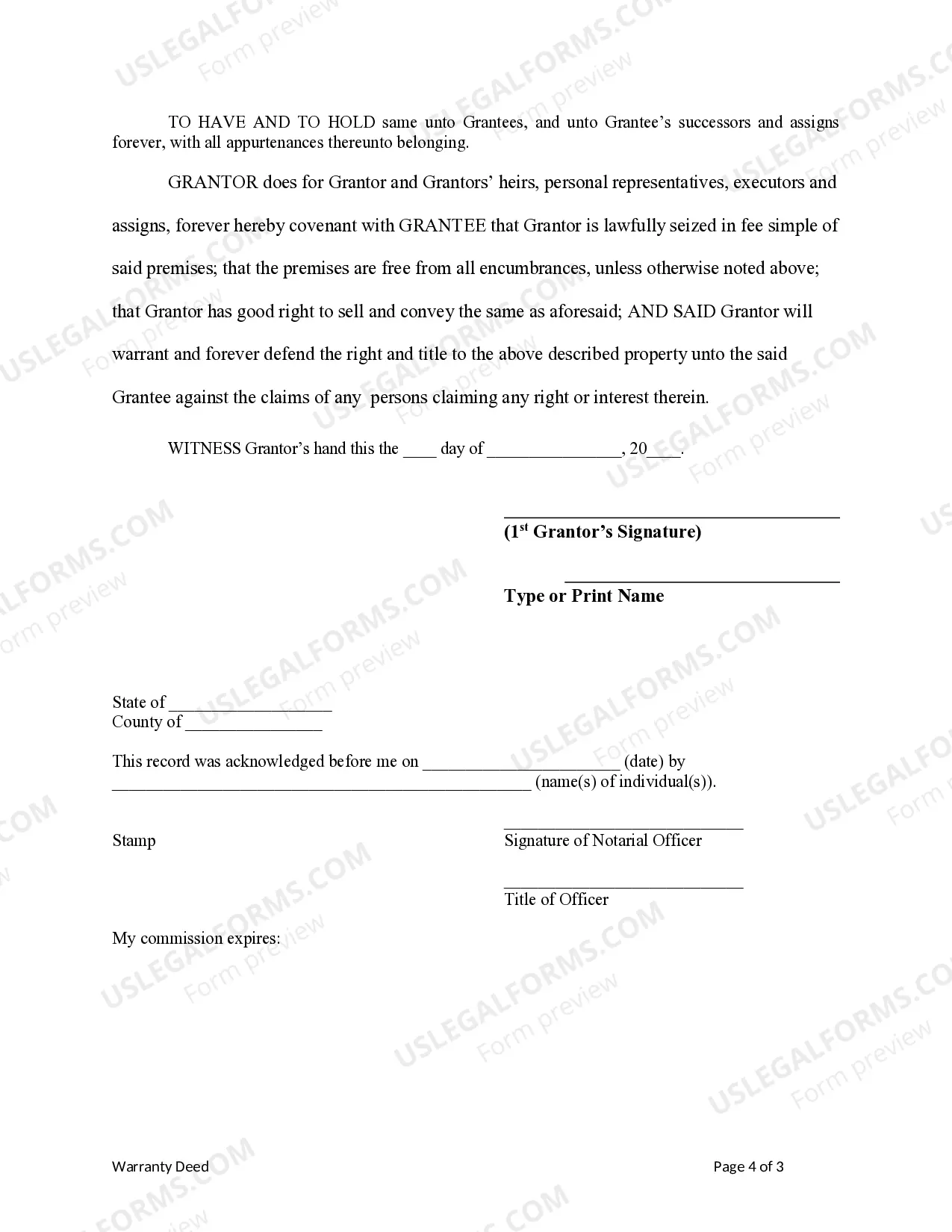

How to fill out What Does A House Deed Look Like In Ny?
Creating papers isn't the most simple process, especially for people who rarely deal with legal paperwork. That's why we advise making use of correct Pennsylvania Warranty Deed - Individual to Husband and Wife as Tenants in Common samples made by professional attorneys. It gives you the ability to prevent problems when in court or handling official institutions. Find the samples you need on our website for high-quality forms and correct explanations.
If you’re a user having a US Legal Forms subscription, just log in your account. Once you’re in, the Download button will immediately appear on the file webpage. After accessing the sample, it’ll be stored in the My Forms menu.
Users with no an active subscription can quickly create an account. Utilize this simple step-by-step help guide to get the Pennsylvania Warranty Deed - Individual to Husband and Wife as Tenants in Common:
- Make certain that the document you found is eligible for use in the state it is required in.
- Verify the document. Utilize the Preview option or read its description (if available).
- Click Buy Now if this template is what you need or utilize the Search field to get another one.
- Select a suitable subscription and create your account.
- Make use of your PayPal or credit card to pay for the service.
- Download your file in a preferred format.
Right after finishing these straightforward actions, it is possible to complete the form in an appropriate editor. Recheck filled in data and consider asking a legal representative to review your Pennsylvania Warranty Deed - Individual to Husband and Wife as Tenants in Common for correctness. With US Legal Forms, everything becomes much easier. Try it now!