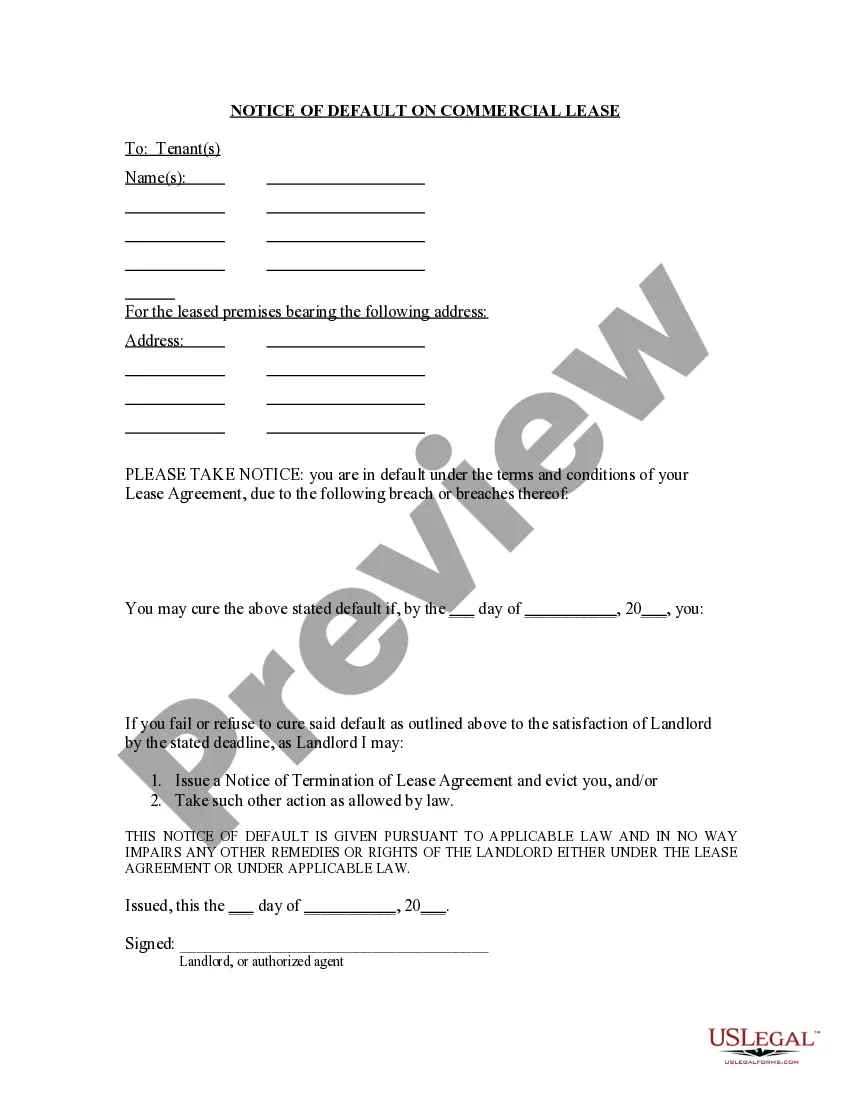
The Letter from Landlord to Tenant as Notice of Default on Commercial Lease is a legal document used by landlords to formally notify tenants of specific breaches in their lease agreement. This notice outlines the defaults, including the failure to pay rent, and sets a deadline for the tenant to remedy the situation. If the tenant does not comply, the landlord may pursue eviction or use the security deposit to cover the missed payments. This form serves to ensure that landlords are compliant with legal obligations to notify tenants before taking further action.
This form should be used when a tenant has defaulted on their commercial lease obligations, particularly in failing to pay rent or adhere to other terms of the lease. It is essential to issue this notice before proceeding with eviction, ensuring the tenant is aware of their default and given a chance to correct it. This notice sets a clear timeline and serves as an official record of the landlord's complaint.
This form usually doesn’t need to be notarized. However, local laws or specific transactions may require it. Our online notarization service, powered by Notarize, lets you complete it remotely through a secure video session, available 24/7.
Our built-in tools help you complete, sign, share, and store your documents in one place.
Make edits, fill in missing information, and update formatting in US Legal Forms—just like you would in MS Word.
Download a copy, print it, send it by email, or mail it via USPS—whatever works best for your next step.
Sign and collect signatures with our SignNow integration. Send to multiple recipients, set reminders, and more. Go Premium to unlock E-Sign.
If this form requires notarization, complete it online through a secure video call—no need to meet a notary in person or wait for an appointment.
We protect your documents and personal data by following strict security and privacy standards.

Make edits, fill in missing information, and update formatting in US Legal Forms—just like you would in MS Word.

Download a copy, print it, send it by email, or mail it via USPS—whatever works best for your next step.

Sign and collect signatures with our SignNow integration. Send to multiple recipients, set reminders, and more. Go Premium to unlock E-Sign.

If this form requires notarization, complete it online through a secure video call—no need to meet a notary in person or wait for an appointment.

We protect your documents and personal data by following strict security and privacy standards.
At-will tenancy is subject to the will of both the tenant and the landlord (hence the name). In other words, the tenant can choose to leave and stop paying rent at any time, and the landlord can choose to stop accepting rent and ask the tenant to leave at any time.
If the landlord accepts a surrender (whether impliedly or deliberately), the tenant will be released from liability for paying rent and performing lease covenants in the future. The tenant will still be liable for rent already due and any other existing breaches.
Surrender the Lease. One option for getting out of your commercial lease early is to approach your landlord and request to surrender the lease. Early Termination Clause. Some lease agreements will contain an early termination clause (commonly called a break clause). Assignment of Lease. Subletting the Premises. Licensing.
If you're an assured tenant or a protected tenant Your landlord will have to give you notice if they want you to leave. They have to give the reasons why they want to evict you - for example, if you have rent arrears or you've damaged the property. Your landlord will have to go to court and get a court order.
For example, the lease may provide that in case of default, the landlord can recover late fees and interest. If the lease is a net lease, it may provide for the landlord to recover such things as property taxes, insurance, utilities, maintenance and repairs.
A termination notice has to give the tenant 14 clear days before the tenant has to leave the residential premises. The day the notice is served on the tenant and the day the tenant moves out do not count as part of the 14 days.
Don't just walk away A lease is a binding contract.Under the law in some states (e.g., New York), there's acceleration of payments, meaning the landlord can immediate demand all the rent due under the remainder of the lease. In any state, a landlord can sue for damages (the unpaid rent, legal fees, etc.).
Unless your lease says otherwise simply breaking it is not an option. This is known as "unilateral breach" and typical penalties can include: Paying the rent - One way or another, if you walk away from your lease and no one else rents the apartment then you will owe the landlord this money.
Explain the Situation Tell your tenant in straightforward terms what the problem is, and explain that they cannot stay on the property any longer. Describe the Consequences Calmly explain that they will be evicted with necessary court orders if they remain on the property.