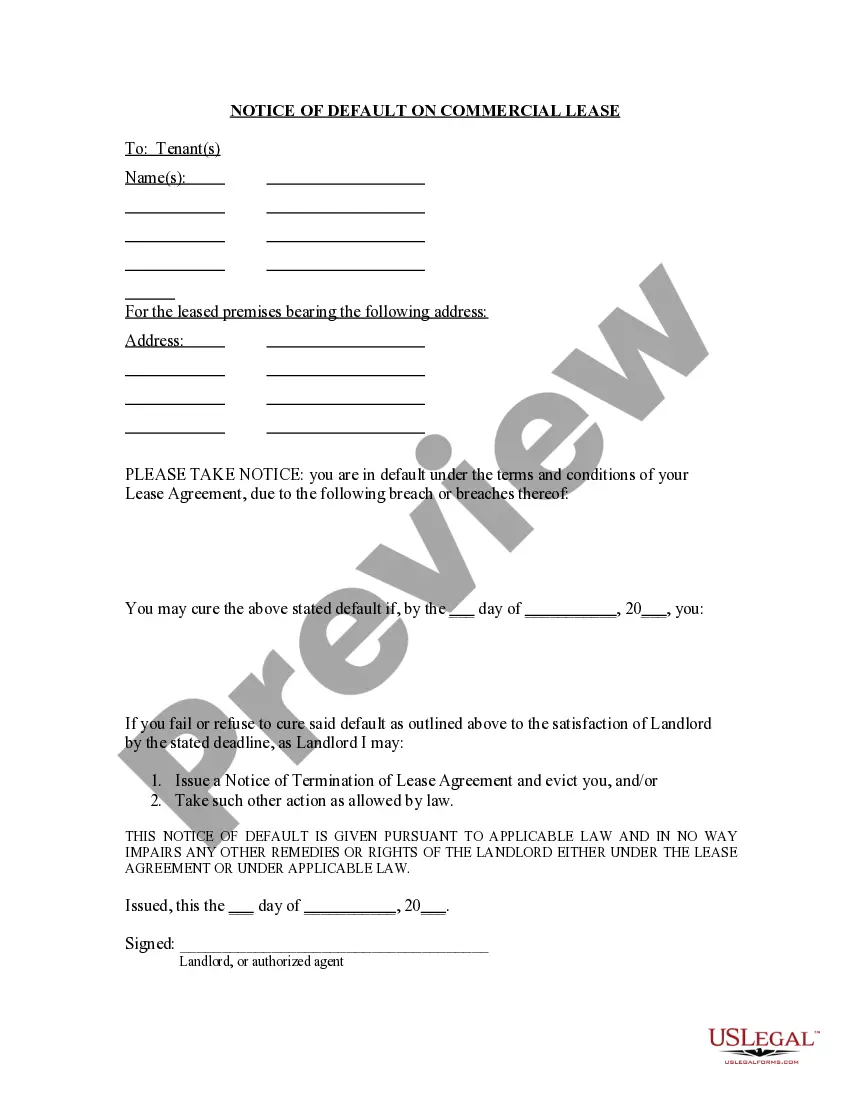
In landlord-tenant law, default refers to the failure of a tenant to timely pay rent due. In anticipation of such an occurence, landlords commonly require a new tenant to pay a security deposit, which may be used to remedy defaults in payment of rent and other monetary obligations under the rental agreement. In general, the landlord is required to give the tenant notice of the default before bringing eviction proceedings or applying security deposit proceeds to the payment in default. The fixing of a definite default date for payment of rent can be critical if it becomes necessary to evict a tenant for a default in the payment of rent. Landlords often require a background and/or reference check on prospective tenants in an attempt to minimize defaults in rent payments.
Landlord Tenant Lease
Description Tenant Default Lease
How to fill out Landlord Tenant Default?
US Legal Forms is really a unique system to find any legal or tax document for filling out, such as New Jersey Letter from Landlord to Tenant as Notice of Default on Commercial Lease. If you’re tired with wasting time searching for ideal samples and paying money on document preparation/legal professional charges, then US Legal Forms is exactly what you’re trying to find.
To enjoy all of the service’s benefits, you don't need to download any software but simply select a subscription plan and create your account. If you have one, just log in and look for the right sample, save it, and fill it out. Saved documents are kept in the My Forms folder.
If you don't have a subscription but need to have New Jersey Letter from Landlord to Tenant as Notice of Default on Commercial Lease, check out the recommendations listed below:
- make sure that the form you’re taking a look at applies in the state you want it in.
- Preview the form and look at its description.
- Click on Buy Now button to access the register page.
- Pick a pricing plan and carry on registering by entering some information.
- Decide on a payment method to finish the sign up.
- Download the document by selecting the preferred format (.docx or .pdf)
Now, fill out the document online or print out it. If you feel uncertain regarding your New Jersey Letter from Landlord to Tenant as Notice of Default on Commercial Lease template, contact a attorney to review it before you send or file it. Begin hassle-free!