New Hampshire Letter from Tenant to Landlord about Landlord using Unlawful Self-Help to Gain Possession
What this document covers
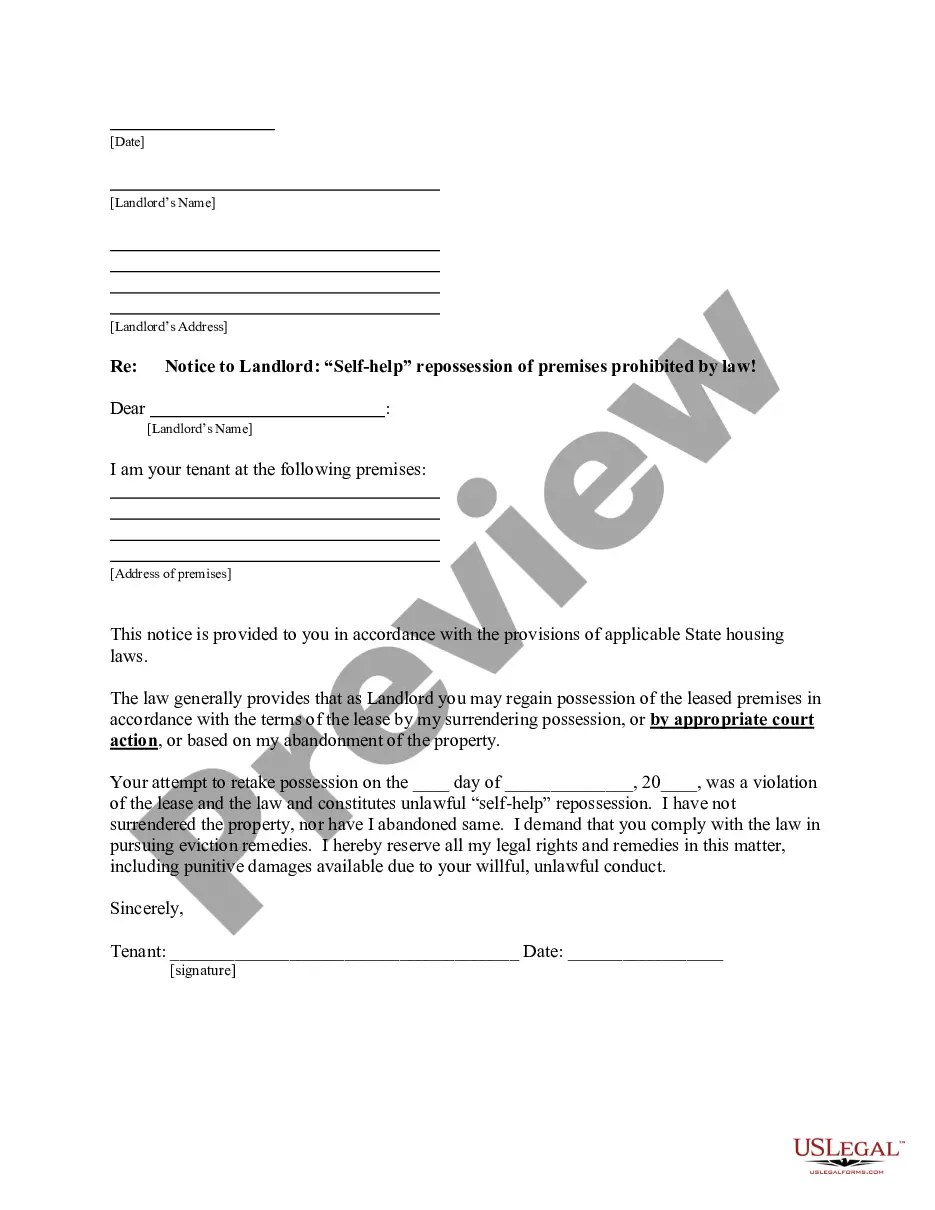
This letter from tenant to landlord about landlord using unlawful self-help to gain possession is designed to inform your landlord that they have violated the law by attempting to take possession of the rental property without following the proper legal procedures. This form clarifies that landlords must regain possession of leased premises through surrender, court action, or abandonment, rather than illegal means. By using this form, tenants can protect their rights and assert their legal standing in the face of unlawful actions by landlords.
Key parts of this document
- Identification of the tenant and landlord to ensure the correct parties are involved.
- Details about the unlawful attempt to retake possession, including the date and circumstances.
- A clear statement that the tenant has not abandoned the property.
- A demand for the landlord to comply with the law regarding eviction procedures.
- A reservation of the tenant's legal rights, including punitive damages, due to the landlord's unlawful conduct.
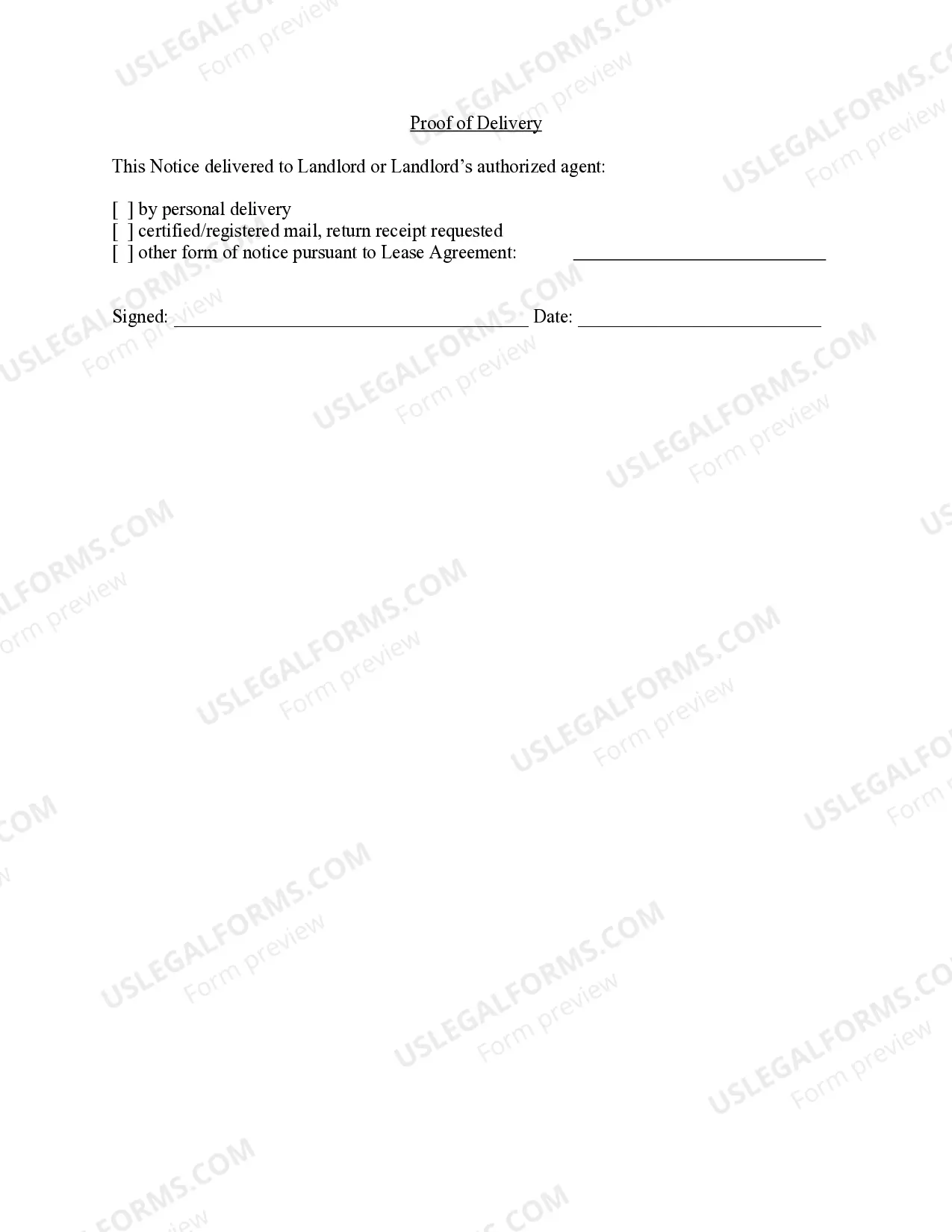
- Proof of delivery section to document how the notice was delivered to the landlord.
When this form is needed
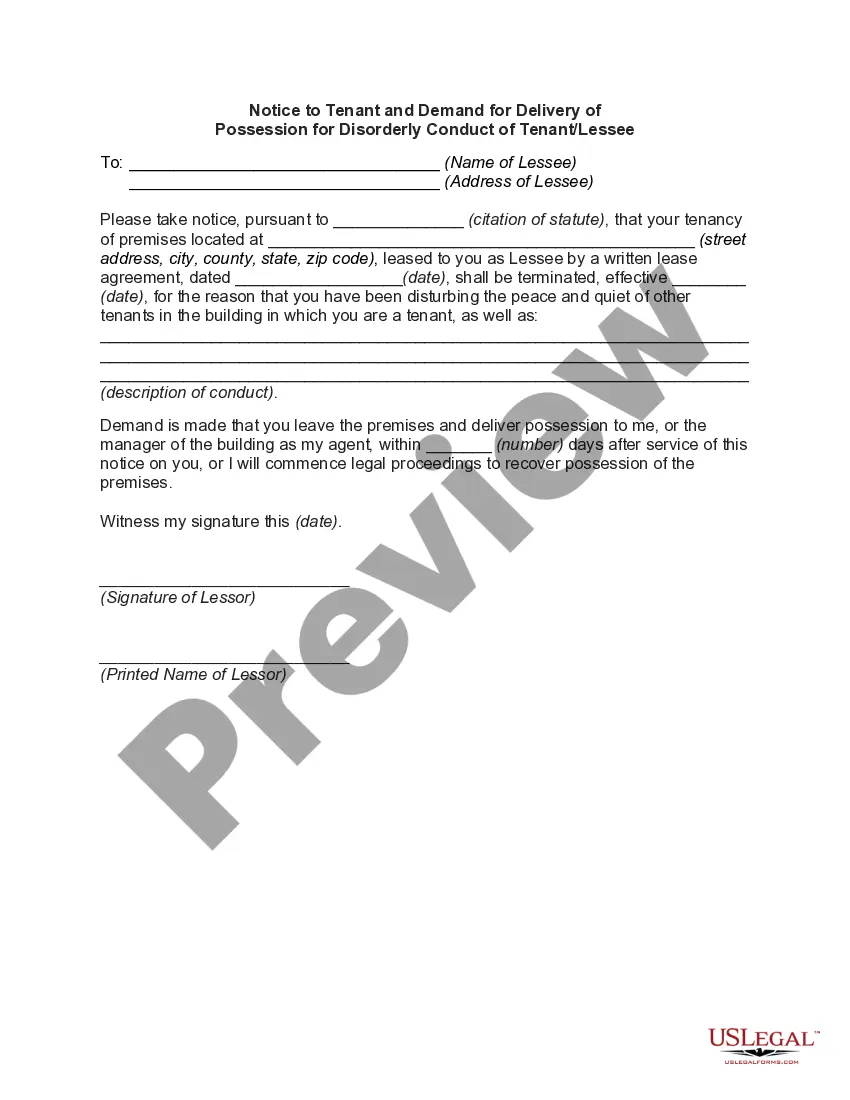
This form should be used when a tenant believes that their landlord is attempting to regain possession of the rental property through illegal means. Common scenarios include changes made to locks without tenant consent, eviction threats without legal grounding, or any other attempts that disregard proper legal eviction processes. Use this letter to formally notify the landlord of their unlawful actions, helping to establish your rights as a tenant and creating a record of communication.
Who this form is for
- Tenants who are facing unlawful eviction attempts by their landlord.
- Individuals who have not abandoned their rental property but are being pressured to vacate without proper legal process.
- Tenants who wish to formally notify their landlord of unlawful conduct and protect their legal rights.
Instructions for completing this form
- Identify and enter your name and the landlord's name at the top of the letter.
- Specify the date on which the unlawful self-help attempt occurred.
- Clearly state that you have not abandoned the property and outline your demand for legal compliance.
- Sign and date the letter to officially communicate your position.
- Deliver the letter to the landlord or their authorized agent, and keep a record of the delivery method for proof.
Notarization guidance
Notarization is generally not required for this form. However, certain states or situations might demand it. You can complete notarization online through US Legal Forms, powered by Notarize, using a verified video call available anytime.
Get your form ready online
Our built-in tools help you complete, sign, share, and store your documents in one place.
Make edits, fill in missing information, and update formatting in US Legal Forms—just like you would in MS Word.
Download a copy, print it, send it by email, or mail it via USPS—whatever works best for your next step.
Sign and collect signatures with our SignNow integration. Send to multiple recipients, set reminders, and more. Go Premium to unlock E-Sign.
If this form requires notarization, complete it online through a secure video call—no need to meet a notary in person or wait for an appointment.
We protect your documents and personal data by following strict security and privacy standards.
Make edits, fill in missing information, and update formatting in US Legal Forms—just like you would in MS Word.
Download a copy, print it, send it by email, or mail it via USPS—whatever works best for your next step.
Sign and collect signatures with our SignNow integration. Send to multiple recipients, set reminders, and more. Go Premium to unlock E-Sign.
If this form requires notarization, complete it online through a secure video call—no need to meet a notary in person or wait for an appointment.
We protect your documents and personal data by following strict security and privacy standards.
Typical mistakes to avoid
- Failing to provide the exact date of the landlord's unlawful actions.
- Not keeping a copy of the letter for your records.
- Omitting a clear statement of your demands regarding legal compliance.
- Delivering the letter without proof of delivery, which is crucial for legal records.
Why complete this form online
- Immediate access to a legally compliant template without the need for an attorney.
- Easy download and editing to customize the letter to fit your specific situation.
- Convenience of completing the form from home, saving time and effort.
- Reliability in following the proper legal framework for communication with landlords.
Legal use & context
- This letter serves as a formal notice that the landlord is violating tenant rights.
- It may be used in legal proceedings to demonstrate the tenant's awareness of their rights.
- Ensuring compliance with the letter can protect the tenant from retaliatory actions by the landlord.
Summary of main points
- This letter is crucial in asserting your rights against unlawful eviction attempts.
- It's important to keep a copy for your records after sending the letter to the landlord.
- Understanding your legal protections as a tenant is essential for effective communication with your landlord.
Glossary of terms
- Tenant: An individual who occupies rental property owned by another party.
- Landlord: A person or entity that leases or rents out property to tenants.
- Unlawful self-help: Actions taken by a landlord to regain possession of property without following legal eviction processes.
Looking for another form?
Form popularity
FAQ
Benefits of Suing Your Landlord Filing a lawsuit does have some potential advantages for tenants. Could Motivate a Landlord to Settle Outside of Court: Notifying your landlord of your intention to sue him or her could motivate your landlord to do everything in their power to avoid actually going to court.
Know your state's landlord/tenant laws. Read and respond to the court summons. Try to work out a settlement. Consider legal counsel. Show up for court. Look sharp and provide evidence.
It is against the law RSA 540-A for a landlord to:Enter your residence without permission, except to make emergency repairs. (You should not refuse your landlord's reasonable request to enter with enough notice); Take any other action to force you out of your home without going through the eviction process.
Can I sue in Small Claims Court for emotional distress or lost wages? No. There must be a specific section of landlord-tenant law or a written agreement that has been violated in order to use Small Claims Court, and you can only sue for money owed to you. You cannot sue to force the landlord to do something.
Your landlord discriminates against you. Your landlord takes your security deposit illegally. Your rental unit is inhabitable. The property owner interferes with your right to quiet enjoyment. Your landlord fails to make the necessary repairs.
The landlord had a duty to reasonably maintain the property; The landlord knew or should have known of the dangerous condition; The landlord breached their duty by failing to repair/fix the dangerous condition;
Review Your Lease Before You Sign. Research Local Laws. Keep Records. Pay Your Rent. Maintain Respectful Communication. Seek an Agreeable Solution. Request Repairs in Writing. What Do You Think?
If you think your landlord is violating the Fair Housing Act, you can get that landlord in trouble by filing a complaint at HUD.gov. Your remedy for breach of quiet enjoyment is to terminate the lease and move or sue in small claims court.
You can recover up to $250,000 in pain and suffering, or any non-economic damages.