Iowa Letter from Tenant to Landlord about Landlord using Unlawful Self-Help to Gain Possession
Overview of this form
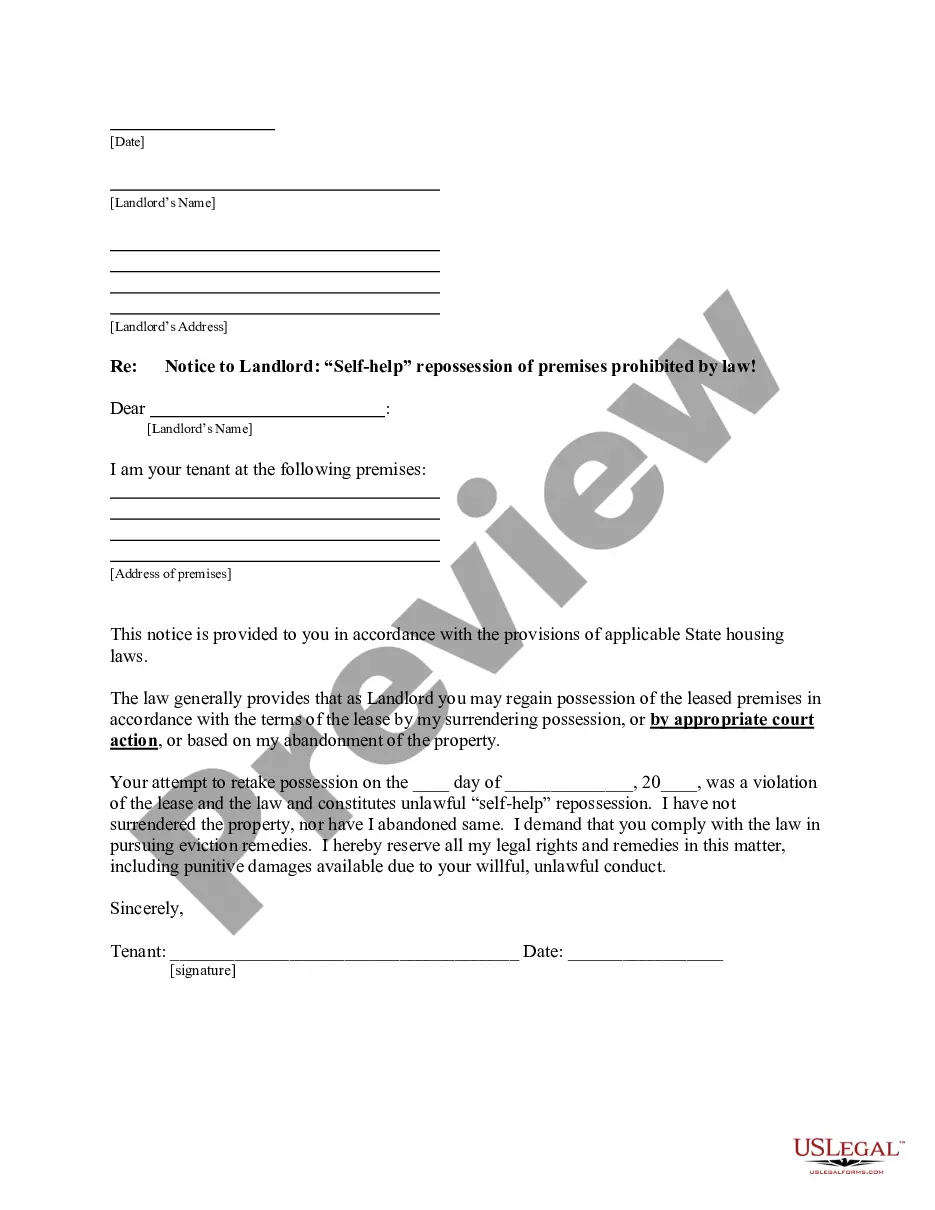
This form is a written notice from a tenant to a landlord regarding unlawful self-help eviction measures. It serves to inform the landlord that their actions to regain possession of the property must comply with legal requirements, which typically include court action or surrender by the tenant. This form differs from general eviction notices as it specifically addresses illegal attempts by the landlord to reclaim the leased premises without proper legal procedures.
Main sections of this form
- Identification of the landlord and tenant
- Date of the attempted self-help eviction
- Statement of non-surrender and non-abandonment of the property
- Demand for compliance with legal eviction procedures
- Reservation of legal rights, including the potential for punitive damages
- Signature and date of the tenant
Situations where this form applies
This form should be used when a tenant believes their landlord is attempting to unlawfully regain possession of the rental property. Common scenarios include situations where the landlord changes locks, enters the property without permission, or removes the tenant's belongings without following proper legal procedures. It serves as a formal notice to remind the landlord that such actions are illegal and reinforces the tenant's legal standing.
Who needs this form
- Tenants who are currently renting a residential property
- Tenants who have experienced or are at risk of unlawful eviction measures
- Individuals seeking to assert their rights under landlord-tenant laws
Steps to complete this form
- Identify the tenant's name and address at the top of the letter.
- Specify the landlord's name and address clearly.
- Fill in the date of the landlord's unlawful actions.
- Clearly state that you have not surrendered the property or abandoned it.
- Sign and date the letter, ensuring it reflects your intent.
Notarization guidance
This form does not typically require notarization unless specified by local law. It is advisable to check state-specific regulations regarding notarization requirements for such communications.
Get your form ready online
Our built-in tools help you complete, sign, share, and store your documents in one place.
Make edits, fill in missing information, and update formatting in US Legal Forms—just like you would in MS Word.
Download a copy, print it, send it by email, or mail it via USPS—whatever works best for your next step.
Sign and collect signatures with our SignNow integration. Send to multiple recipients, set reminders, and more. Go Premium to unlock E-Sign.
If this form requires notarization, complete it online through a secure video call—no need to meet a notary in person or wait for an appointment.
We protect your documents and personal data by following strict security and privacy standards.
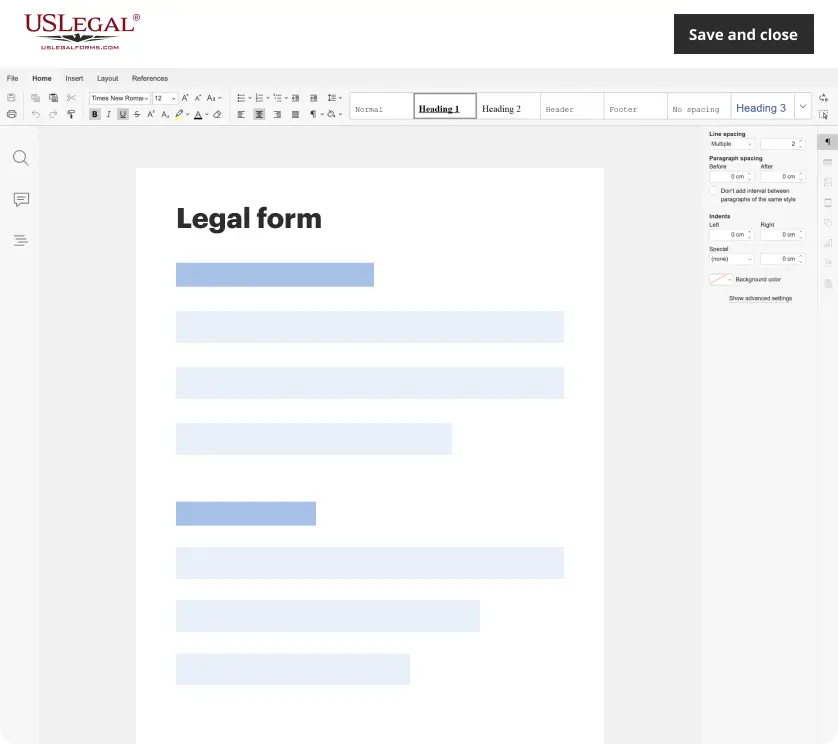
Make edits, fill in missing information, and update formatting in US Legal Forms—just like you would in MS Word.
Download a copy, print it, send it by email, or mail it via USPS—whatever works best for your next step.
Sign and collect signatures with our SignNow integration. Send to multiple recipients, set reminders, and more. Go Premium to unlock E-Sign.

If this form requires notarization, complete it online through a secure video call—no need to meet a notary in person or wait for an appointment.
We protect your documents and personal data by following strict security and privacy standards.
Mistakes to watch out for
- Failing to include the date of the unlawful self-help eviction.
- Not providing sufficient details regarding the property.
- Neglecting to sign the letter before delivery.
- Using ambiguous language that may weaken the notice's impact.
Benefits of using this form online
- Convenience of immediate access and downloading the form.
- Editability to customize the form according to specific needs.
- Reliability of a document drafted by licensed attorneys.
Legal use & context
- This form establishes the tenant's notification of unlawful eviction attempts.
- It protects the tenant's rights under state landlord-tenant law.
- Using this form can help tenants avoid illegal eviction actions and seek legal recourse if needed.
Looking for another form?
Form popularity
FAQ
help eviction occurs when a landlord attempts to remove a tenant from a rental property without going through the legal eviction process. This might include changing the locks, shutting off utilities, or removing a tenant's belongings. In Iowa, these actions are illegal and are considered unlawful selfhelp. Tenants facing such situations should utilize an Iowa Letter from Tenant to Landlord about Landlord using Unlawful SelfHelp to Gain Possession to formally address these issues and protect their rights.
To be self-evicted means a tenant voluntarily leaves the rental property without legal notice or formal eviction process. This may happen due to unsafe living conditions or severe landlord harassment, but it is essential to follow legal protocols to avoid losing your rights. If you are facing challenges related to self-eviction, consider utilizing an Iowa Letter from Tenant to Landlord about Landlord using Unlawful Self-Help to Gain Possession to ensure your concerns are well-documented.
help eviction notice is a communication from the landlord attempting to reclaim possession of the property without following legal procedures. This approach is generally illegal and can constitute unlawful selfhelp. Tenants who receive such notices should respond with an Iowa Letter from Tenant to Landlord about Landlord using Unlawful SelfHelp to Gain Possession to assert their rights and challenge the eviction.
In Iowa, landlord harassment includes actions that intentionally disrupt a tenant's ability to enjoy their rental unit peacefully. Examples include frequent, unnecessary visits, failure to provide essential services, or threats of eviction without legal grounds. If a tenant feels harassed, they can issue an Iowa Letter from Tenant to Landlord about Landlord using Unlawful Self-Help to Gain Possession, documenting the harassment for potential legal actions.
The self-help clause for a tenant outlines the tenant's rights and responsibilities regarding repairs or issues that affect their living conditions. It typically specifies whether tenants can make necessary repairs and deduct the costs from rent. In Iowa, if a landlord engages in unlawful self-help to regain possession, tenants can use an Iowa Letter from Tenant to Landlord about Landlord using Unlawful Self-Help to Gain Possession to document their concern and defend their rights.
Landlords are required to provide tenants with a certain amount of time to move out, typically 30 days. This timeframe is vital for tenants to prepare for relocation and seek legal advice if necessary. If you are dealing with a potential wrongful eviction or unlawful self-help, consider using an Iowa Letter from Tenant to Landlord about Landlord using Unlawful Self-Help to Gain Possession as a formal notification of your rights.
In Iowa, landlords generally cannot evict a tenant without just cause if the tenant has a lease agreement. However, landlords have more flexibility with month-to-month rentals, where they can terminate the rental agreement without a specific reason but must provide proper notice. If you find yourself in a situation involving wrongful eviction, crafting an Iowa Letter from Tenant to Landlord about Landlord using Unlawful Self-Help to Gain Possession can effectively communicate your rights.
Iowa has implemented several changes to its eviction laws aimed at streamlining the process and protecting tenant rights. These updates include changes to notice requirements and the timeline for giving a tenant a chance to respond to eviction filings. Stay informed about these laws as knowing your rights can empower you to take action, possibly involving an Iowa Letter from Tenant to Landlord about Landlord using Unlawful Self-Help to Gain Possession when facing unlawful eviction tactics.
Yes, after receiving an eviction notice in Iowa, tenants usually have 30 days to vacate the premises. This timeline is crucial as it gives tenants a chance to seek legal guidance or resolve issues, especially in wrongful eviction situations. If you believe your rights are being violated, an Iowa Letter from Tenant to Landlord about Landlord using Unlawful Self-Help to Gain Possession may be essential.
In Iowa, landlords must provide tenants with a written notice before they can move out. Typically, this notice period is at least 30 days. However, the exact timeframe can depend on the rental agreement and specific circumstances. If you are facing issues related to unlawful self-help, consider sending an Iowa Letter from Tenant to Landlord about Landlord using Unlawful Self-Help to Gain Possession.