Connecticut Agreement Between Parties Living Together but Remaining Unmarried
Description
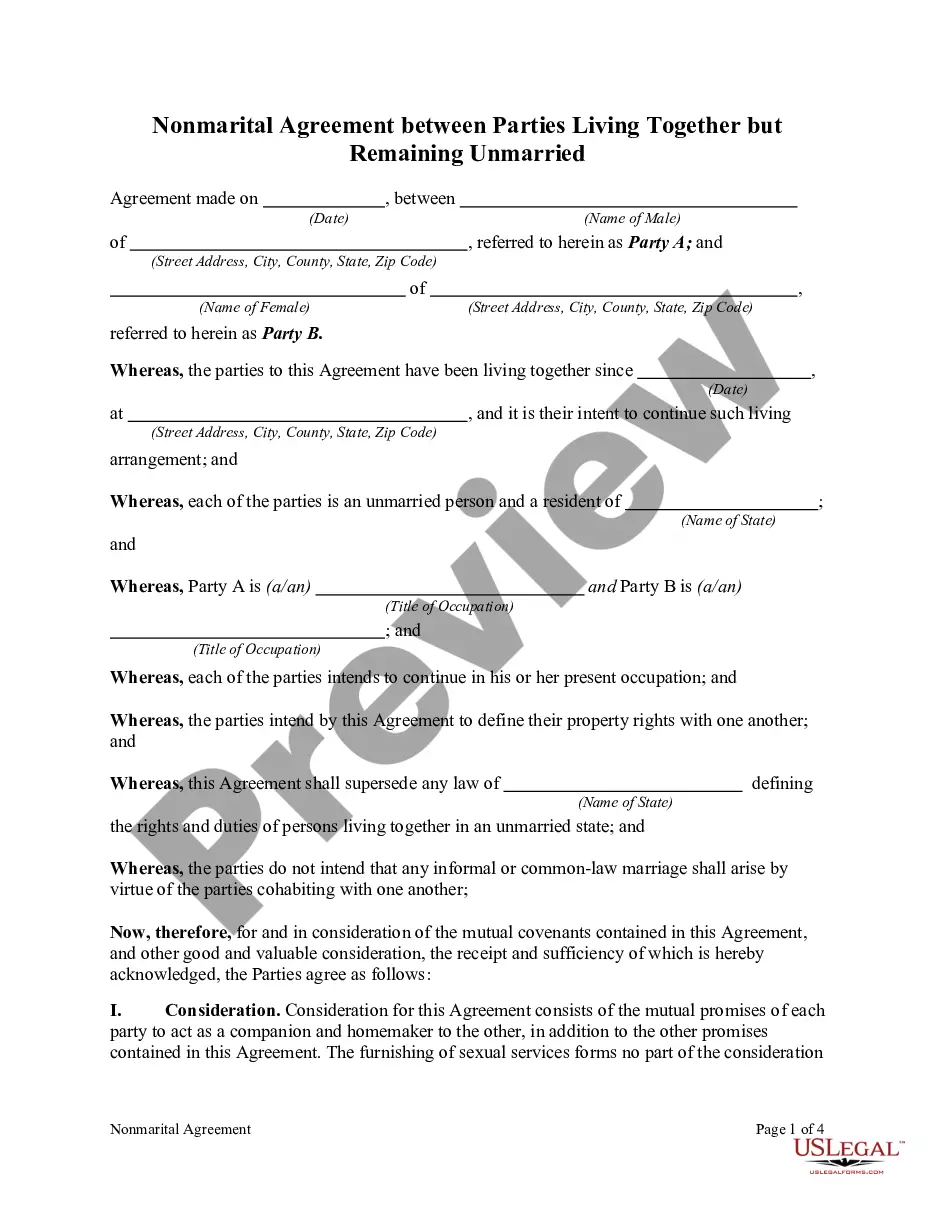
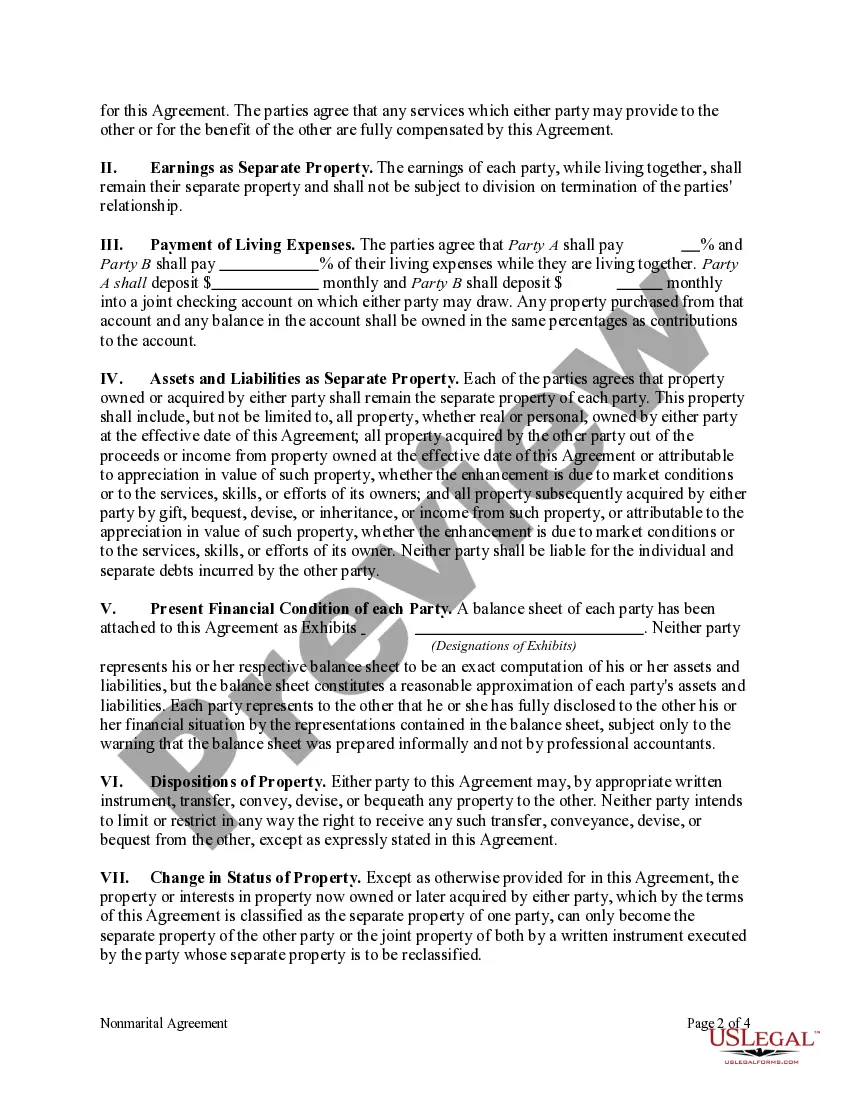
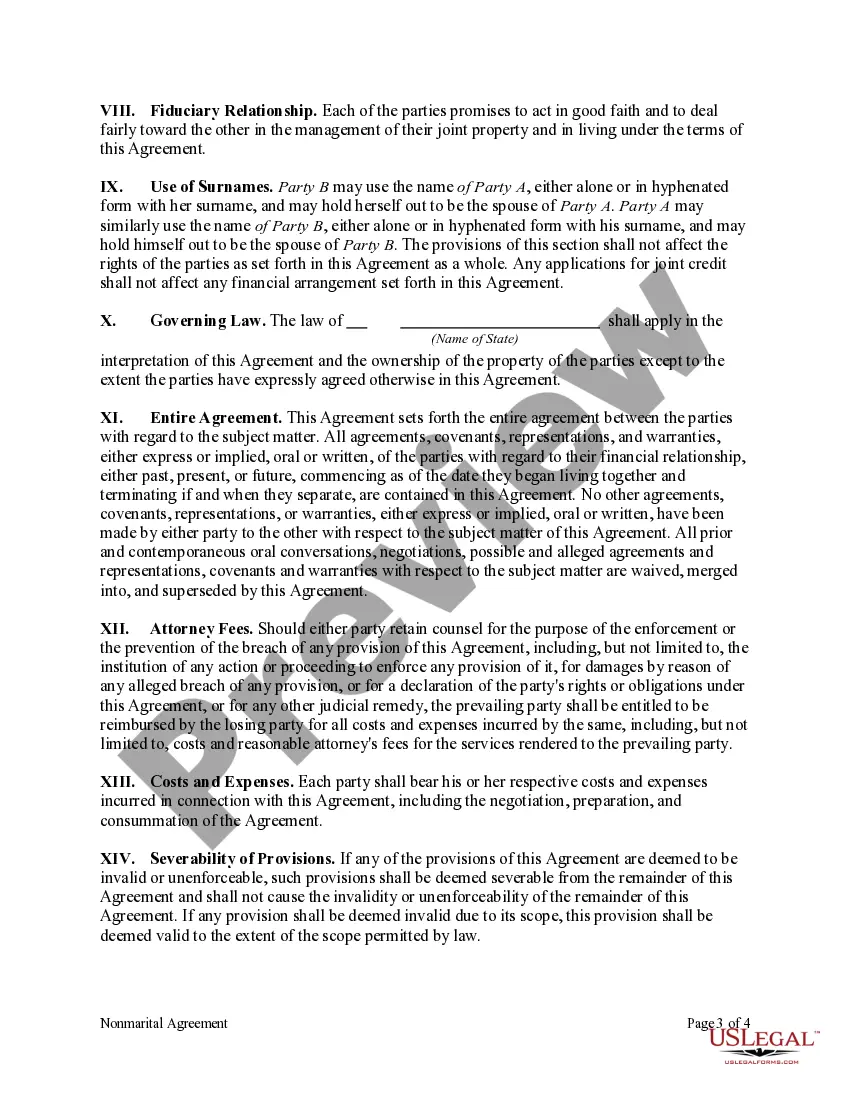
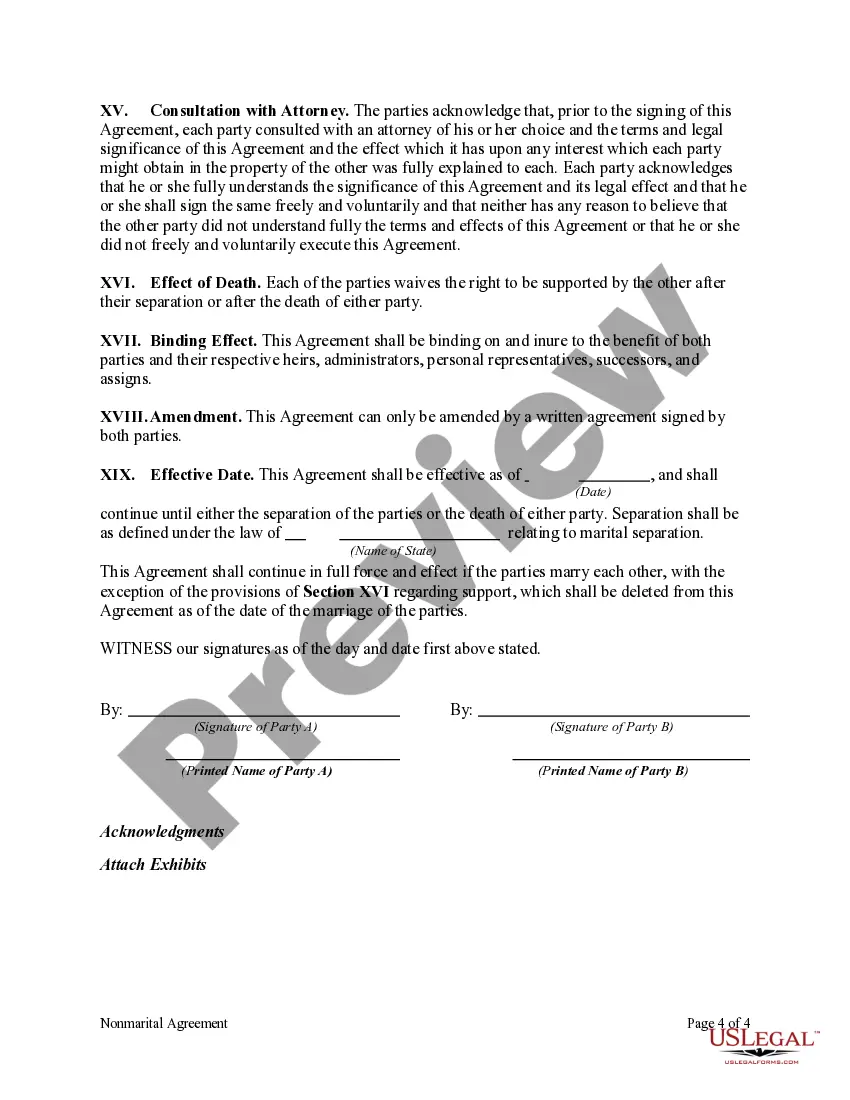
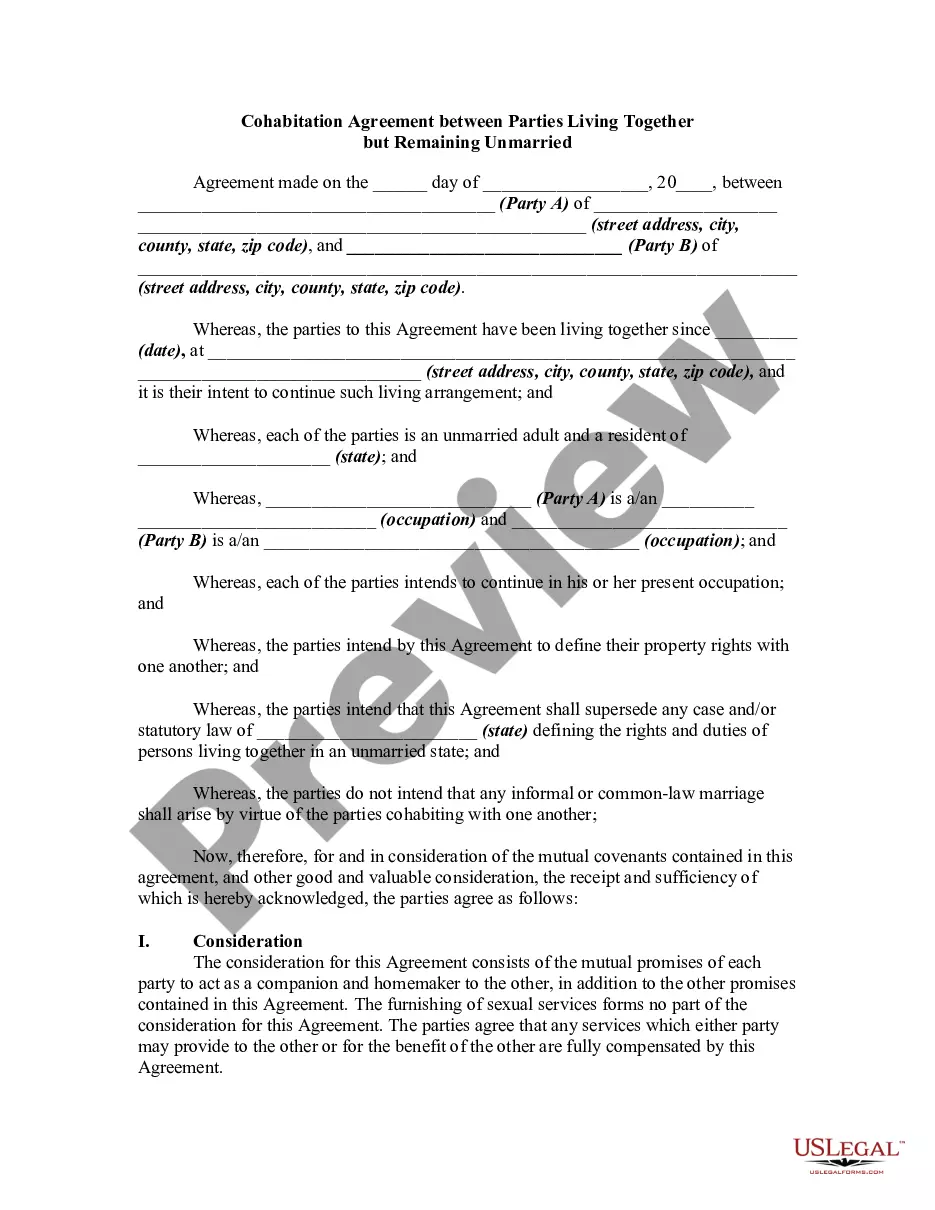
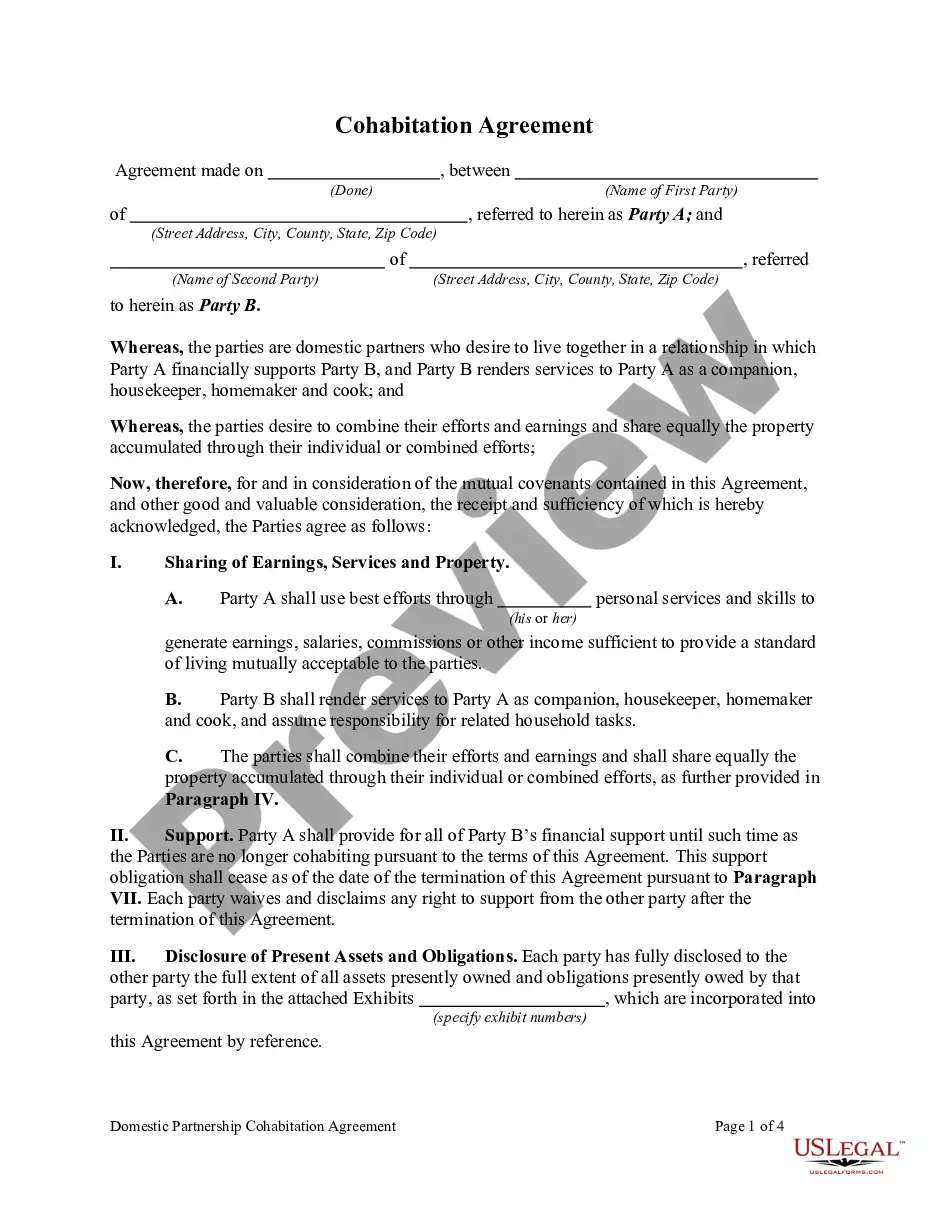
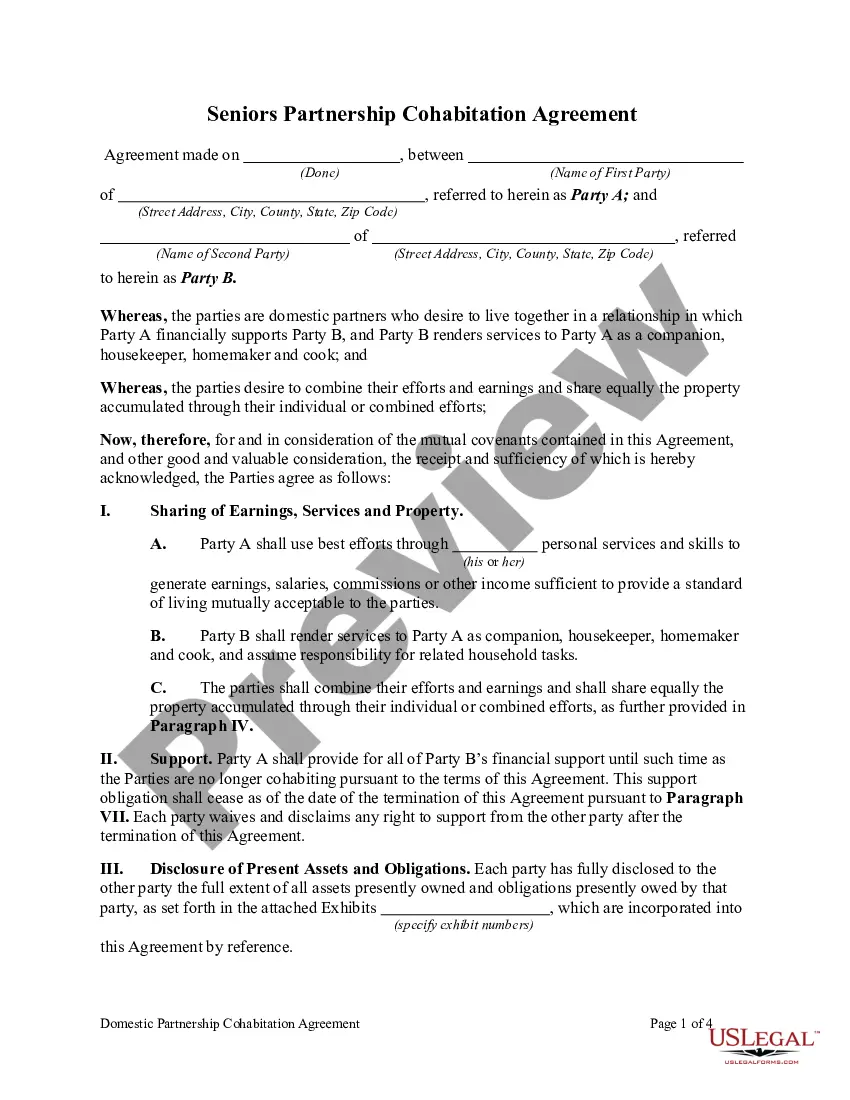
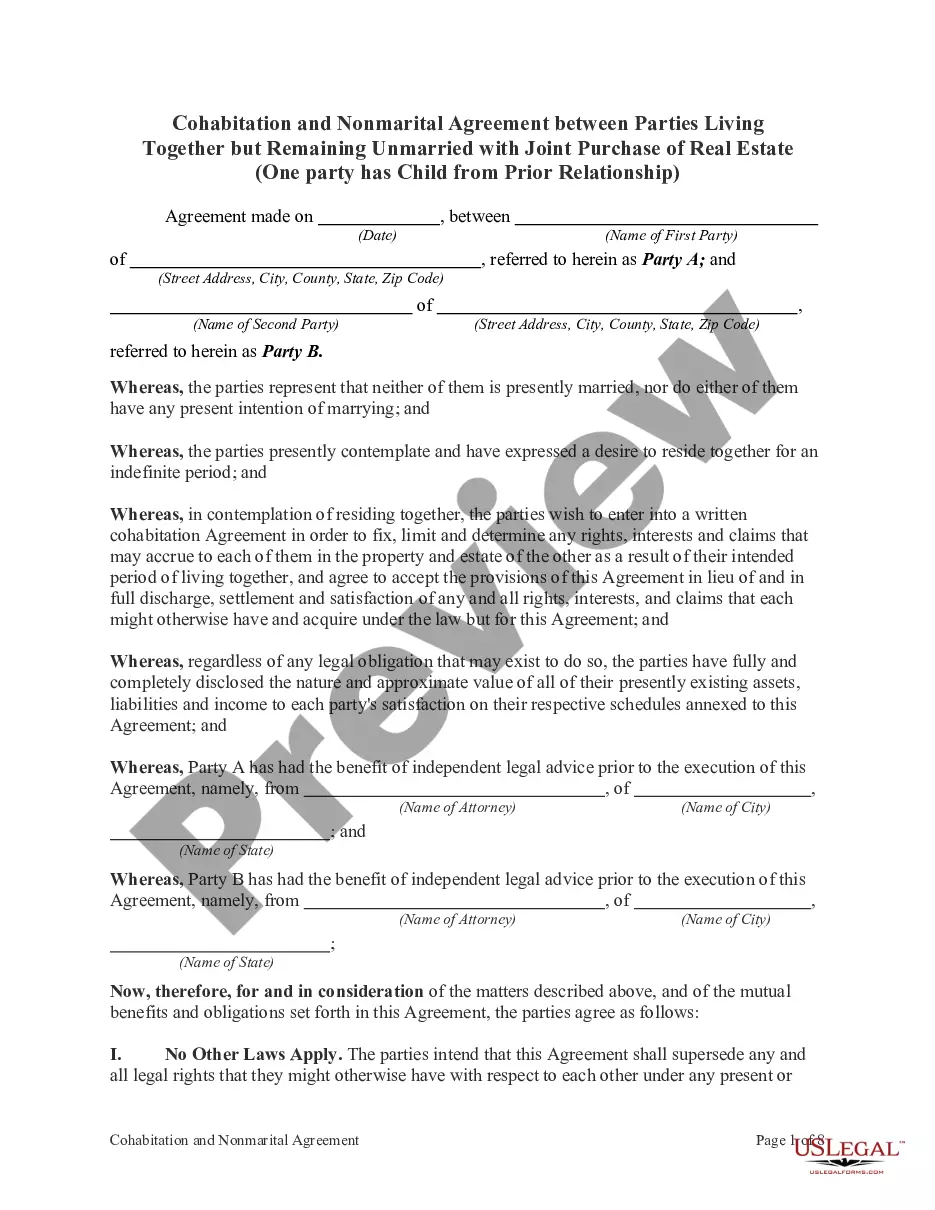
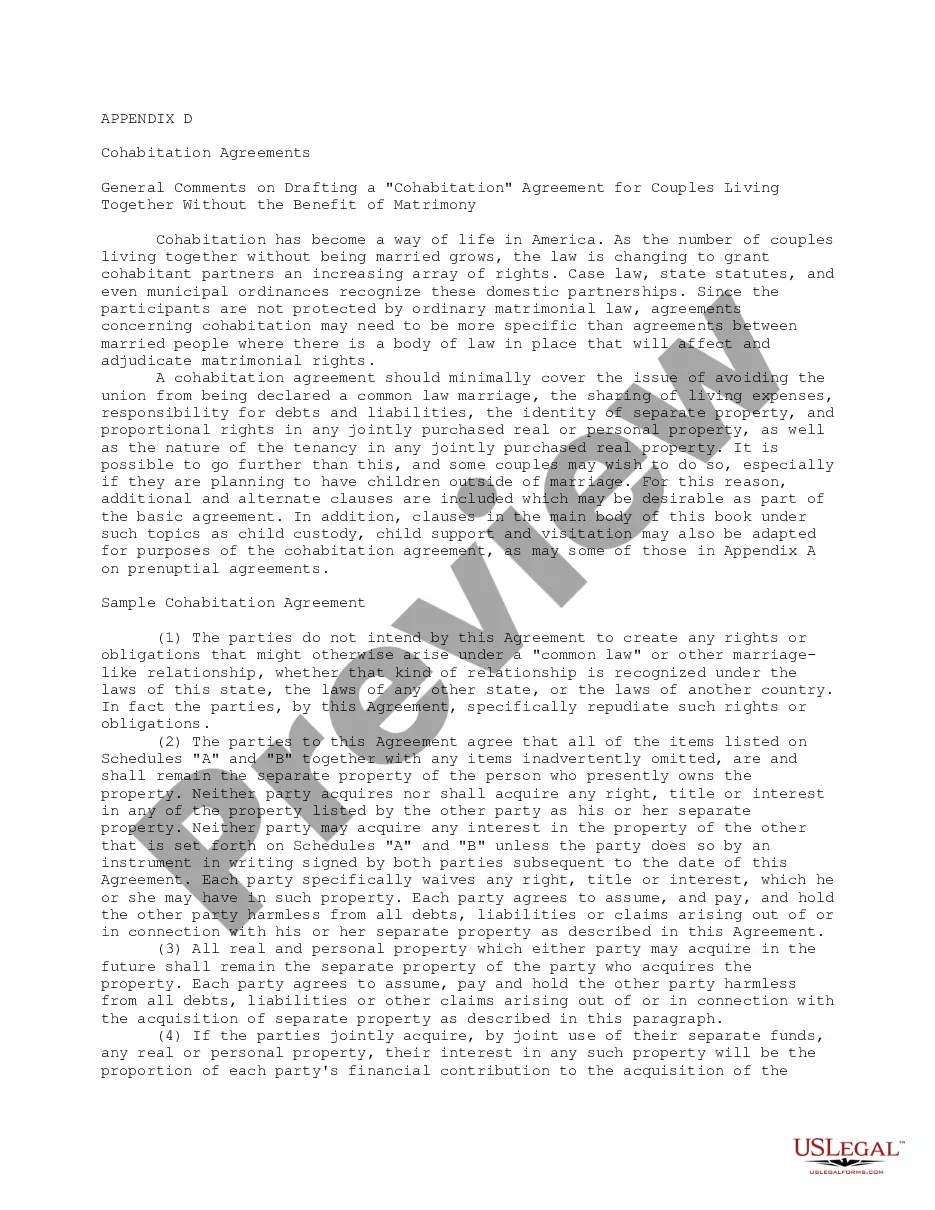
How to fill out Agreement Between Parties Living Together But Remaining Unmarried?
US Legal Forms - one of the largest collections of legal documents in the country - offers a variety of legal form templates available for purchase or printing.
Through the website, you can discover numerous forms for business and personal purposes, categorized by type, state, or keywords. You can access the latest versions of forms such as the Connecticut Agreement Between Parties Living Together but Remaining Unmarried in moments.
If you already have an account, Log In and download the Connecticut Agreement Between Parties Living Together but Remaining Unmarried from the US Legal Forms library. The Download button will appear on each form you view. You can access all previously saved forms from the My documents tab in your account.
Proceed with the transaction. Use your credit card or PayPal account to complete the purchase.
Select the format and download the form onto your device. Edit the form. Complete, modify, print, and sign the saved Connecticut Agreement Between Parties Living Together but Remaining Unmarried. Each design you add to your account has no expiration date and remains yours indefinitely. Therefore, if you wish to download or print another copy, just visit the My documents section and click on the form you need.
- First, ensure you have selected the appropriate form for your city/state.
- Click the Review button to check the form's content.
- Read the form description to ensure you have chosen the correct one.
- If the form does not meet your requirements, use the Search area at the top of the screen to find the one that does.
- If you are satisfied with the form, confirm your choice by clicking the Download now button.
- Next, choose your preferred pricing plan and provide your credentials to sign up for an account.
Form popularity
FAQ
While there is no common law marriage in Connecticut, and living together (or cohabitating) does not trigger any financial rights or obligations, the unmarried couples may enter into a cohabitation agreement.
Does Ct Recognize Domestic Partners? The term domestic partner does not appear in Connecticut or in federal law. It is illegal for individuals to commit domestic violence in Hawaii and Massachusetts, and both do not use the term.
Although there is no legal definition of living together, it generally means to live together as a couple without being married. Couples who live together are sometimes called common-law partners. This is just another way of saying a couple are living together.
Cohabitation agreements are legally binding contracts, provided that they are drafted and executed properly, and are signed as a deed. It is therefore essential to obtain legal advice before preparing an agreement.
Connecticut law does not recognize common-law marriages. But, a common-law marriage entered into in a state that recognizes such marriages will be recognized in Connecticut if it was valid under the other state's law.
(C) Not be married. (4) Domestic partnership means the relationship between 2 persons who become domestic partners by registering in accordance with § 32-702(a) or whose relationship is recognized under A§ 32-702(i). (4) Is in a committed relationship with the other person.
What Qualifies As A Domestic Partner? In general, we can define domestic partners as an unrelated and unmarried person who resides with or shares living accommodations with a work colleague and whom the state of origin defines differently than marriage.
What is domestic partnership? Although it is a term used in many contexts, domestic partnership most often means a status which recognizes an unmarried couple and their children as a family for certain limited purposes, most commonly employee benefits.
Where is common-law marriage allowed? Here are the places that recognize common-law marriage: Colorado, Iowa, Kansas, Montana, New Hampshire (for inheritance purposes only), Oklahoma, Rhode Island, South Carolina, Texas, Utah and the District of Columbia.
Does Common Law Marriage Exist in Connecticut? No matter how long people live together, there is no common law marriage in Connecticut. It is a common misconception that if unmarried couples reside together for a long enough period of time, they become married.