Connecticut Bylaws of a Cooperative Association of Consumers

State:
Multi-State
Control #:
US-02469BG
Format:
Word; 
PDF; 
Rich Text
Instant download

Description

A consumers' cooperative is a cooperative business owned by its customers for their mutual benefit. It is oriented toward service rather than profit. Consumers' cooperatives often take the form of retail outlets owned and operated by their consumers. The customers or consumers of the goods and/or services the cooperative provides are often also the individuals who have provided the capital required to launch or purchase that enterprise.

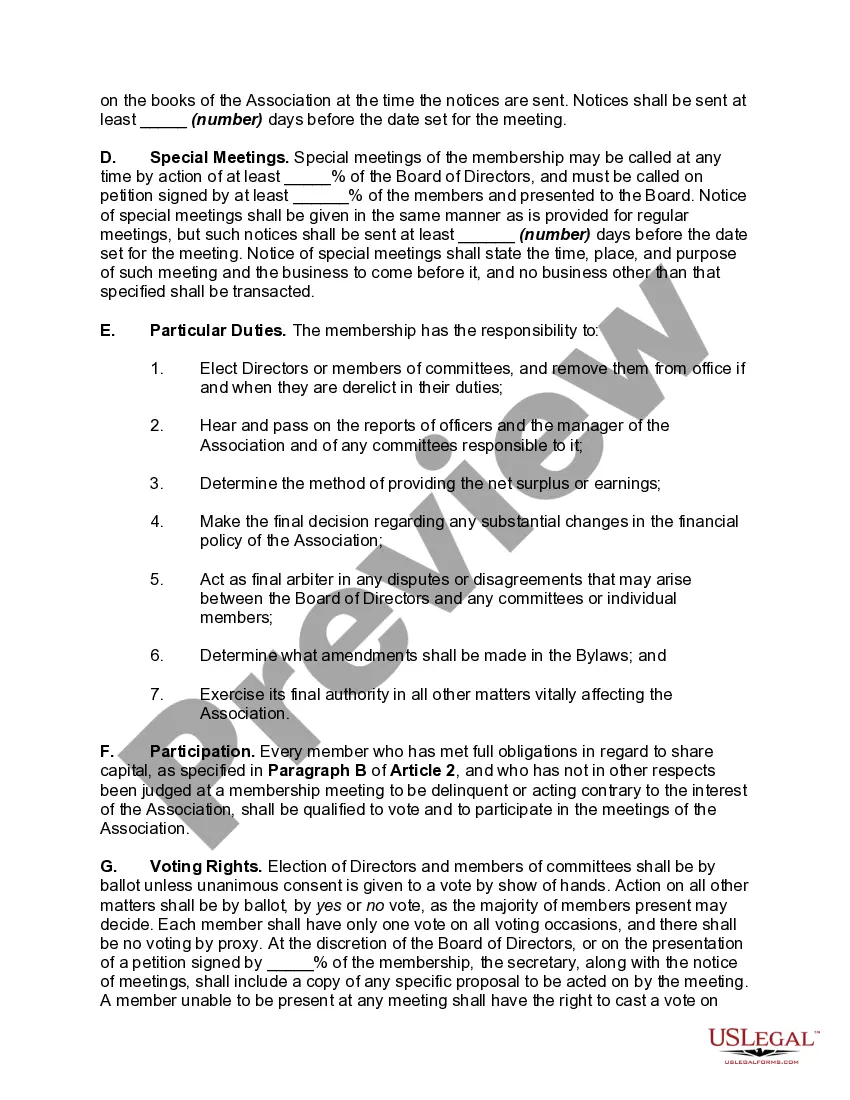
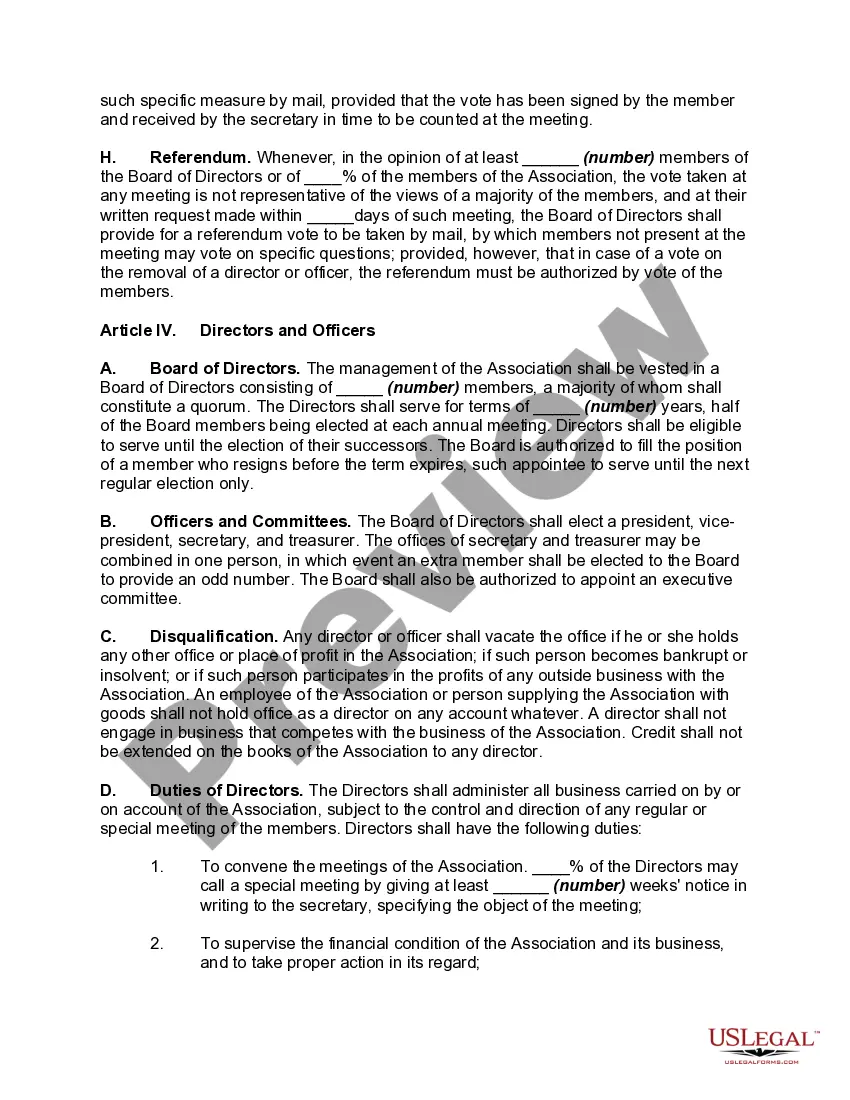
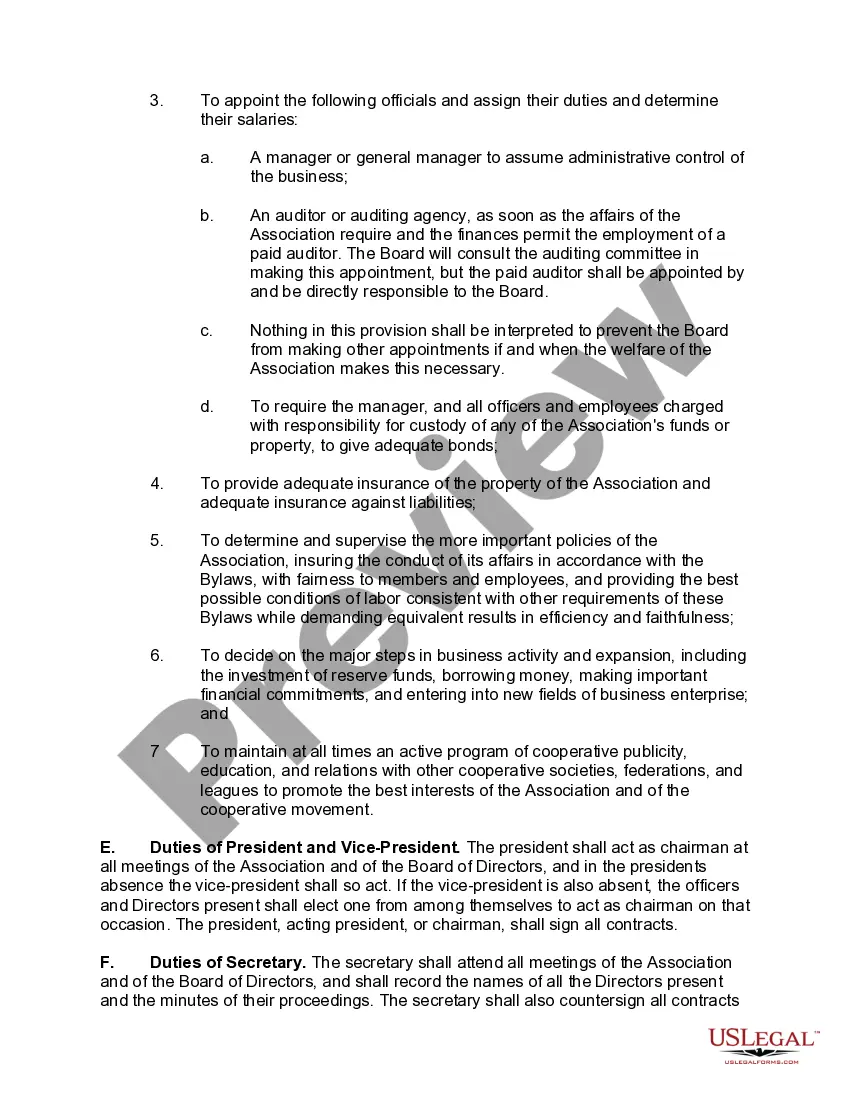
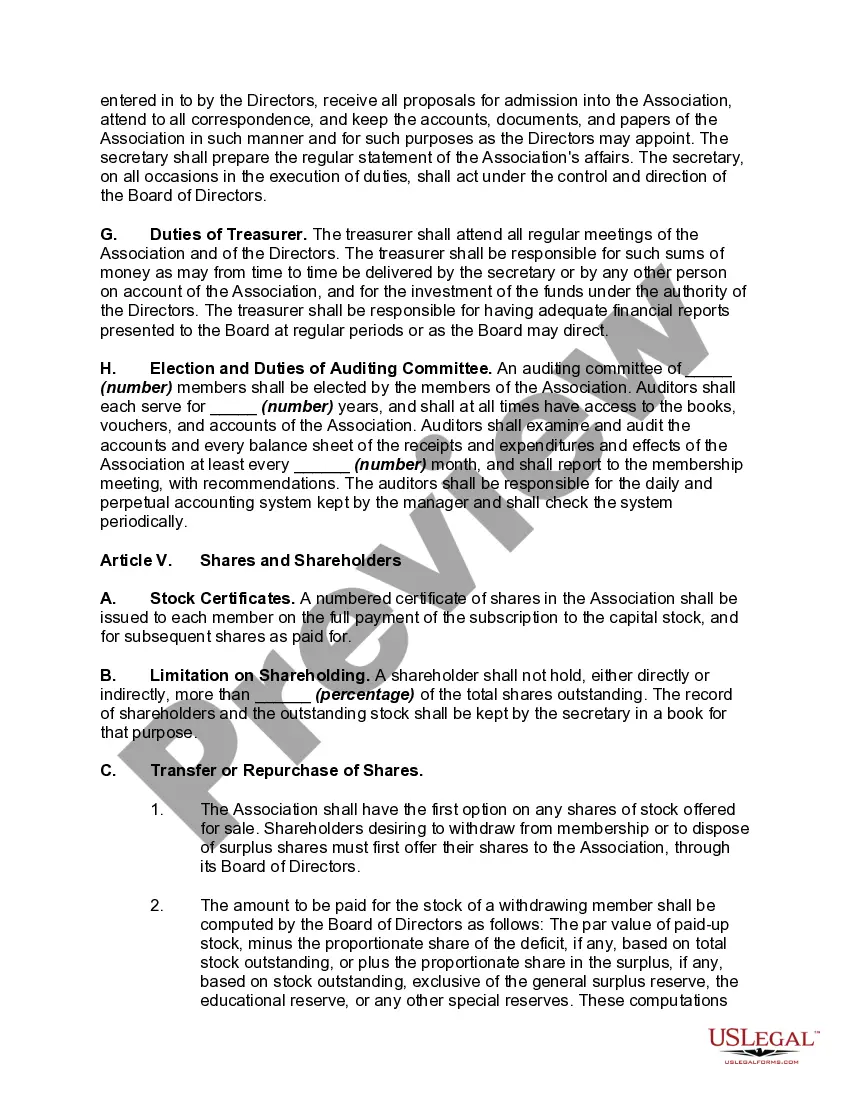
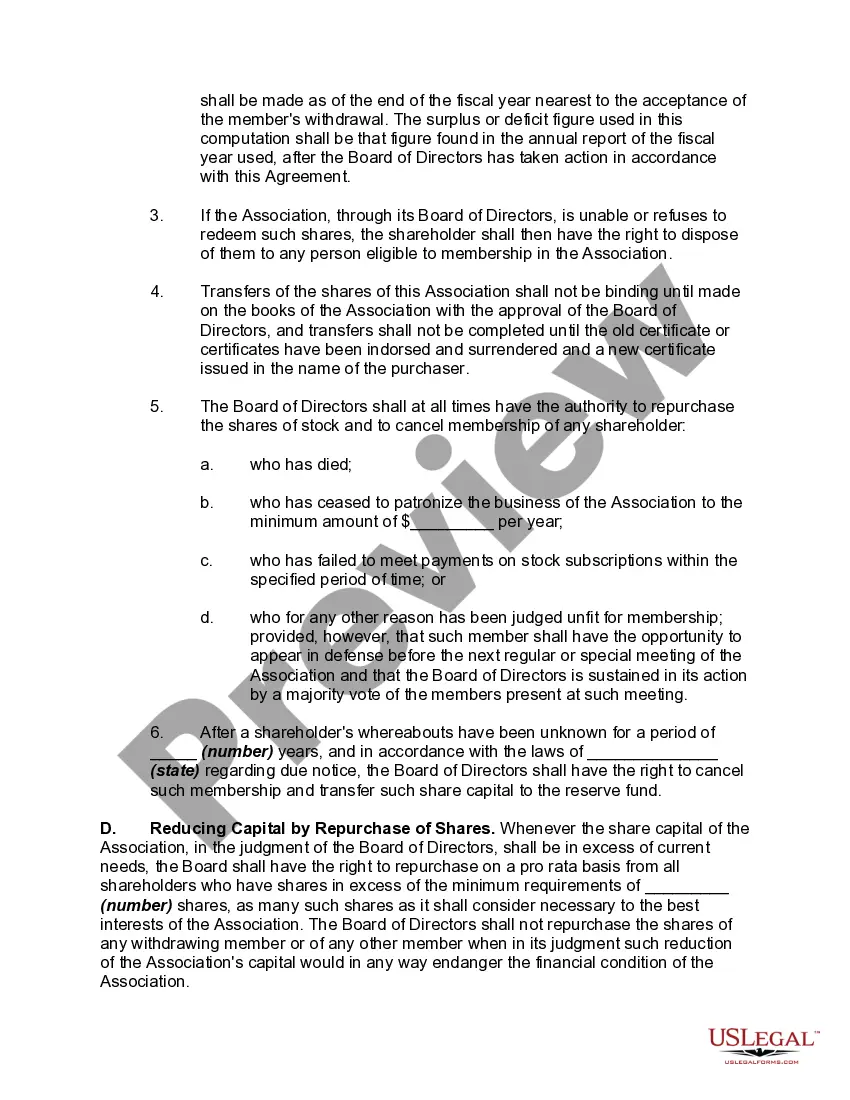
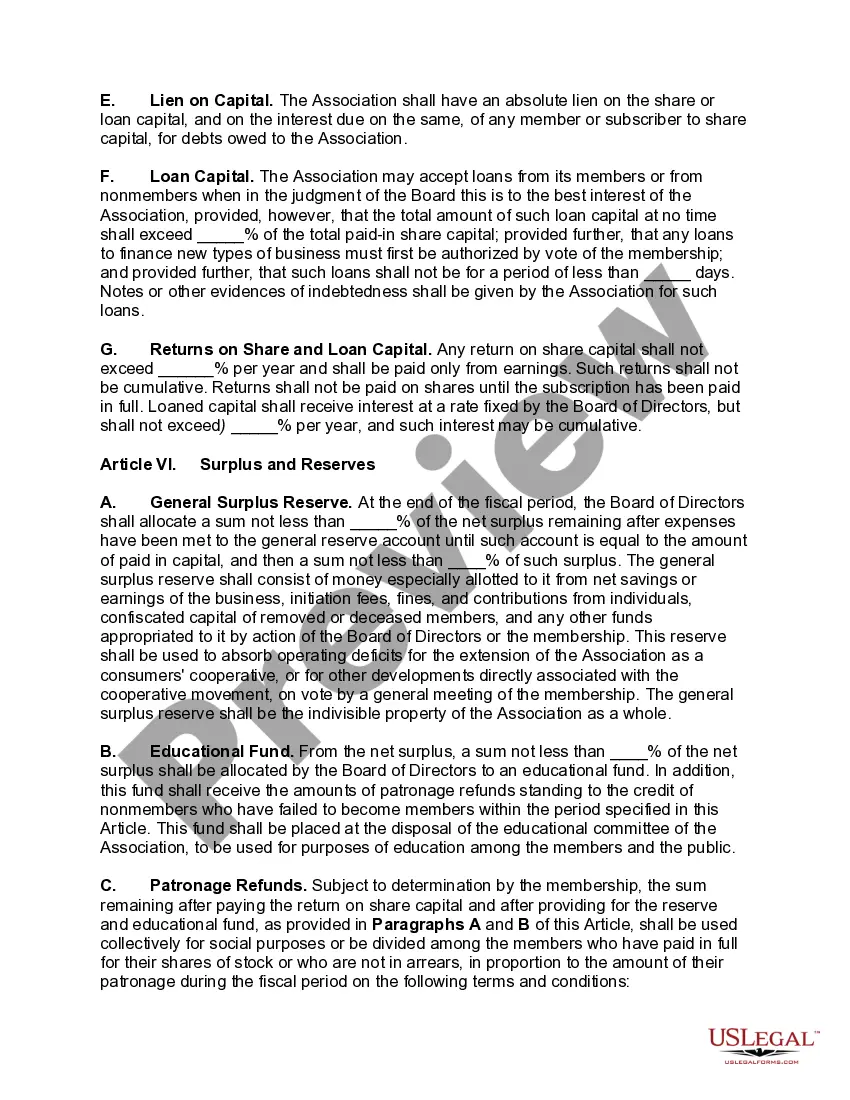
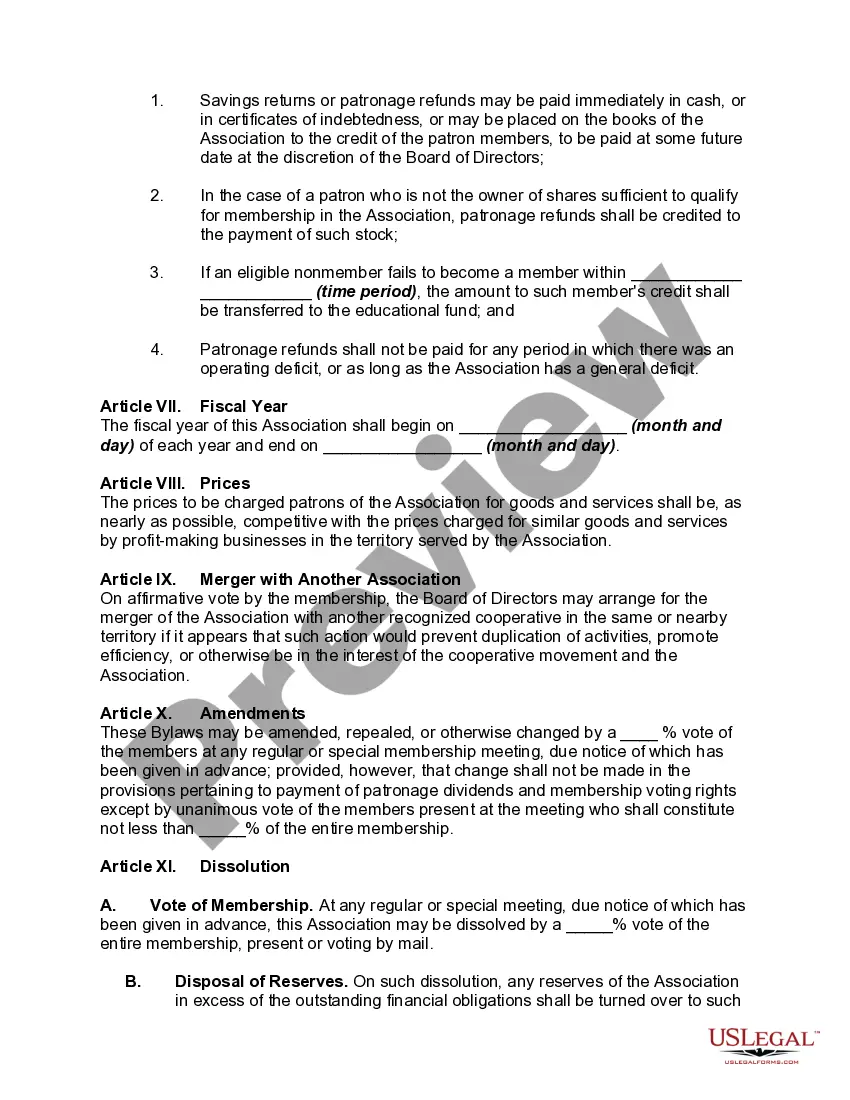
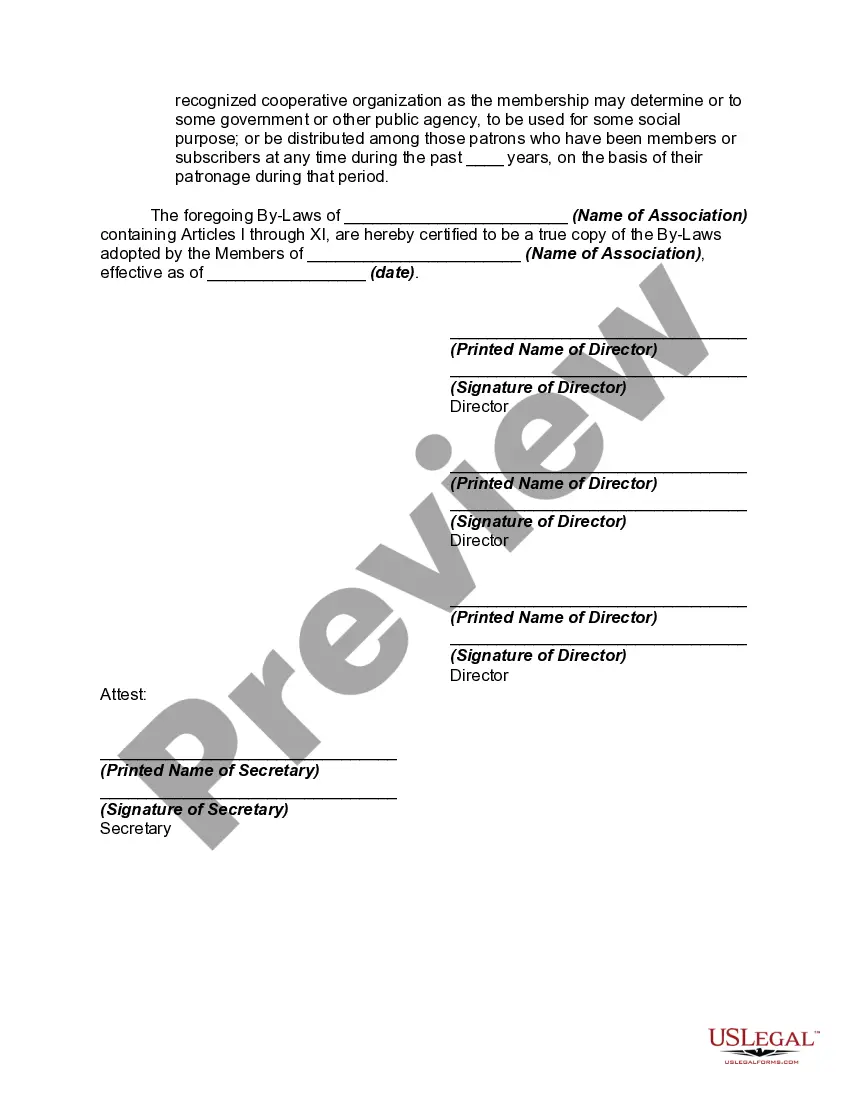
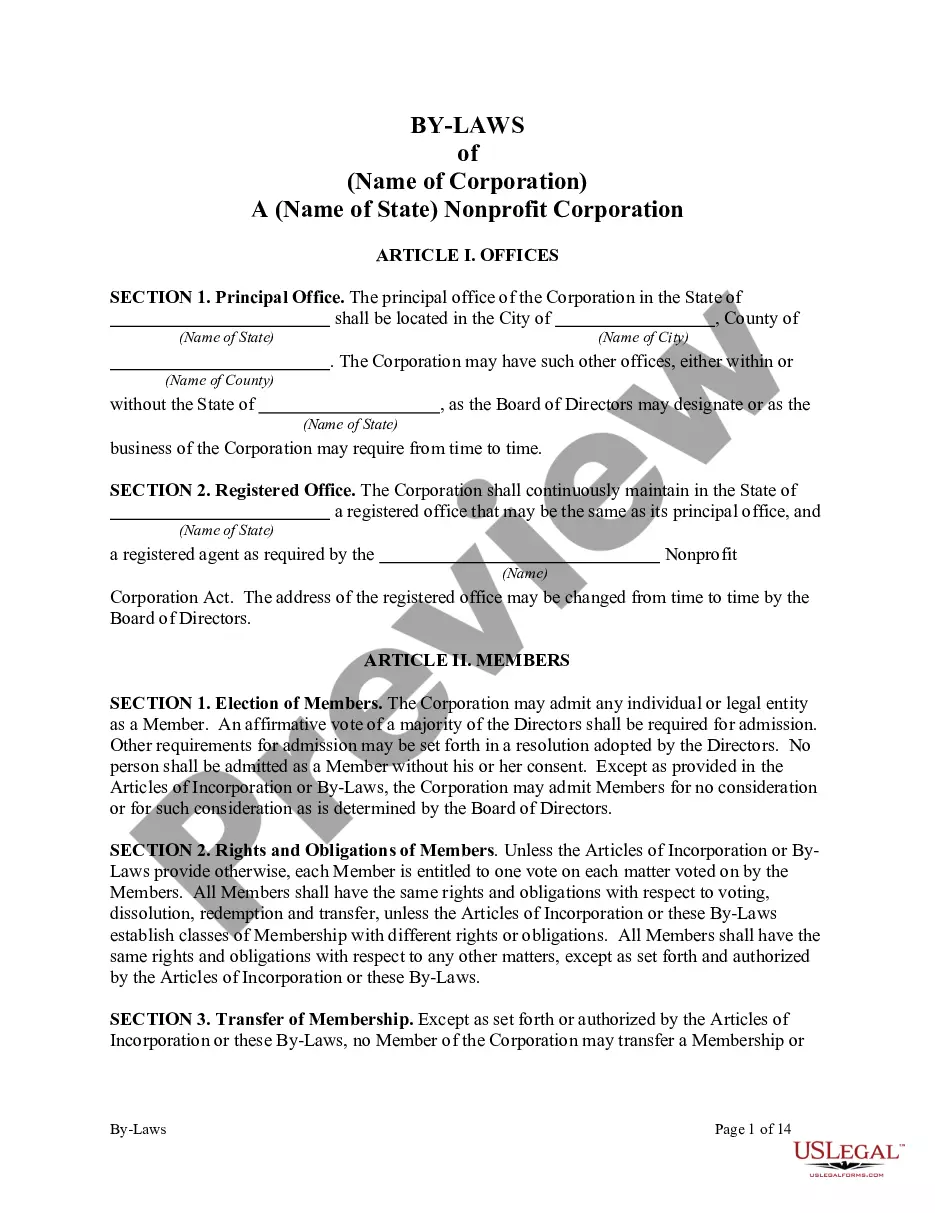
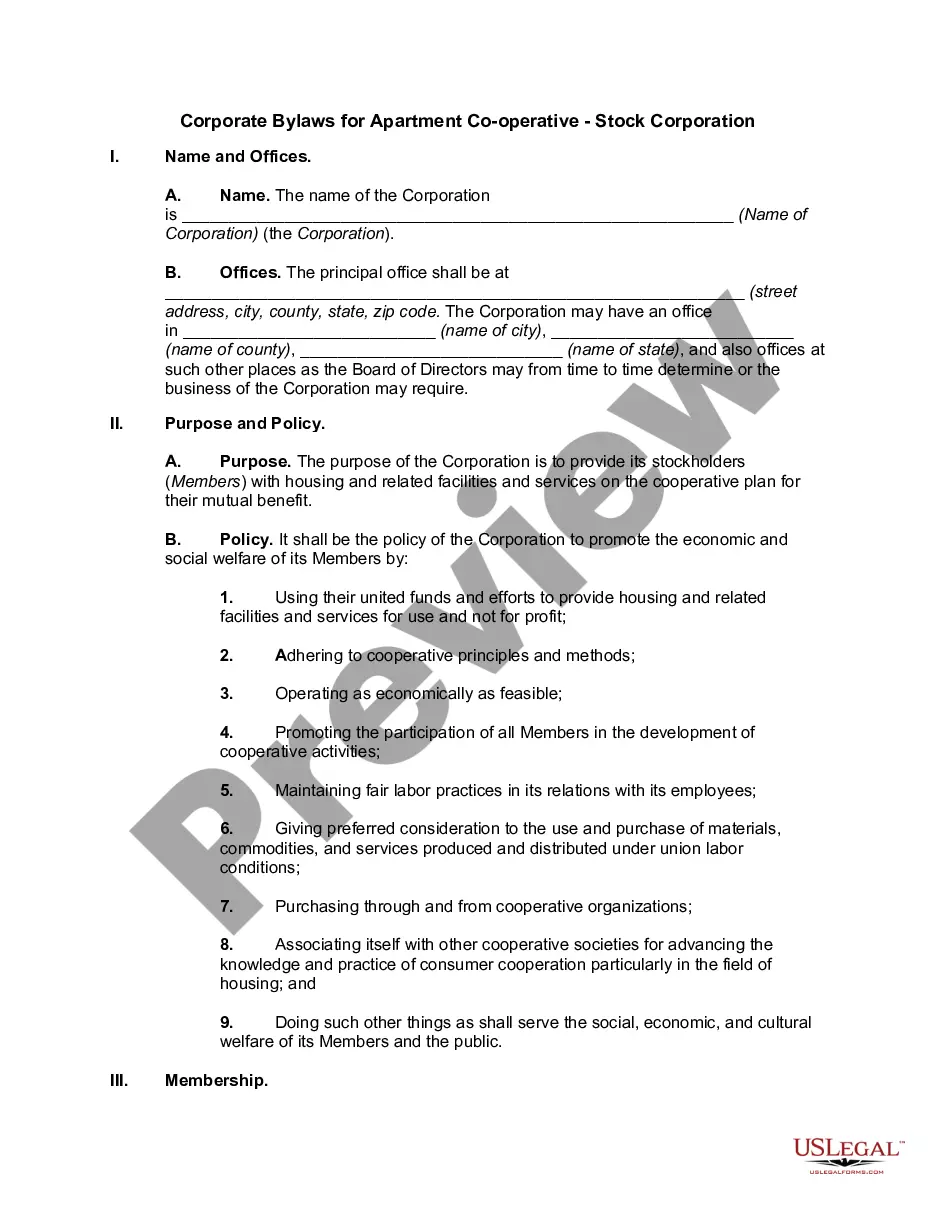
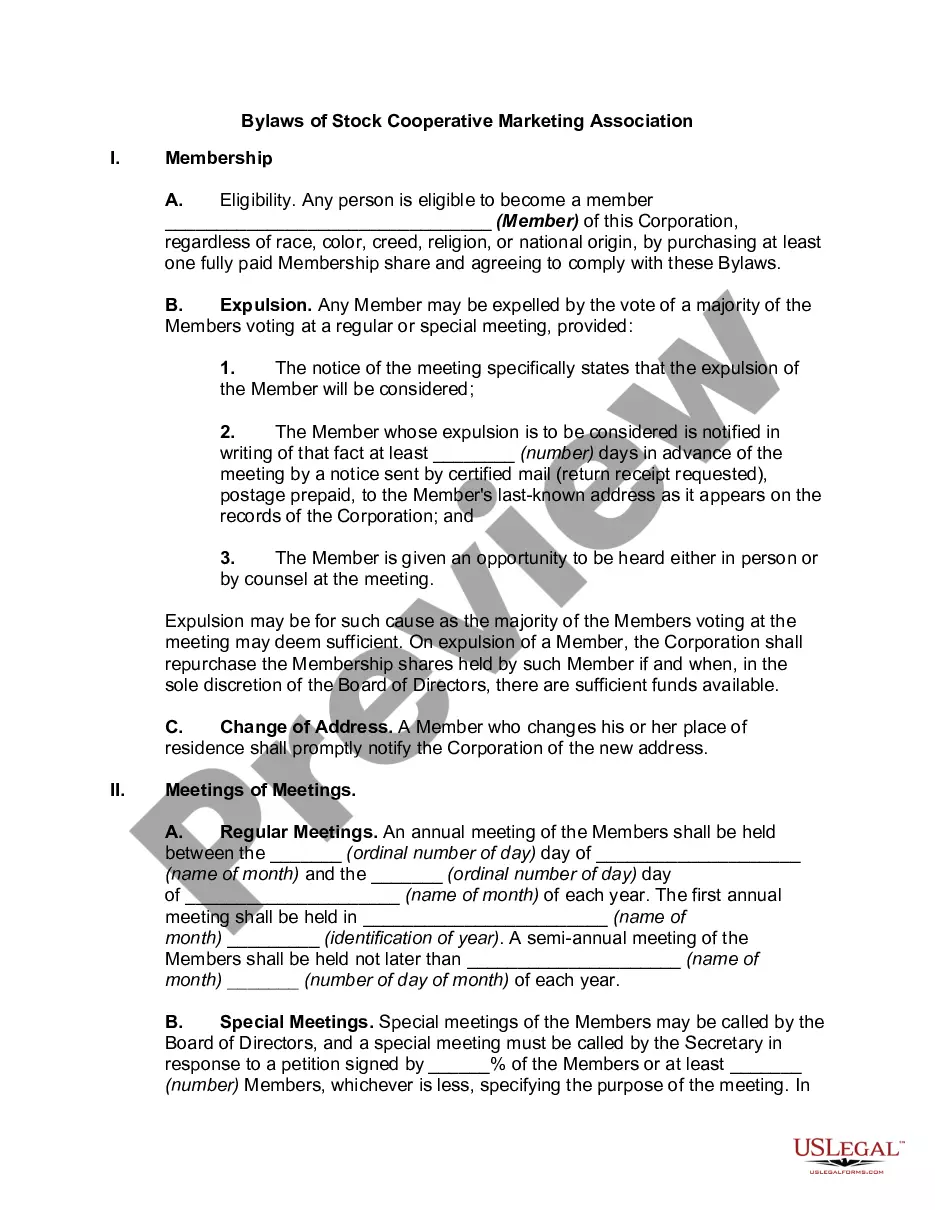
Bylaws are rules that lay down the internal rules of an organization like a cooperative or corporation. Bylaws typically state the rights, duties and liabilities of the members of the cooperative, as well as the rules relating to transferring and selling shares. Bylaws will also typically discuss the roles of the Board of Directors and corporate officers of a cooperative or corporation. Bylaws are usually enacted by the initial Board of Directors or the incorporators of the cooperative or and may be amended from time to time by the Board of Directors.
Free preview
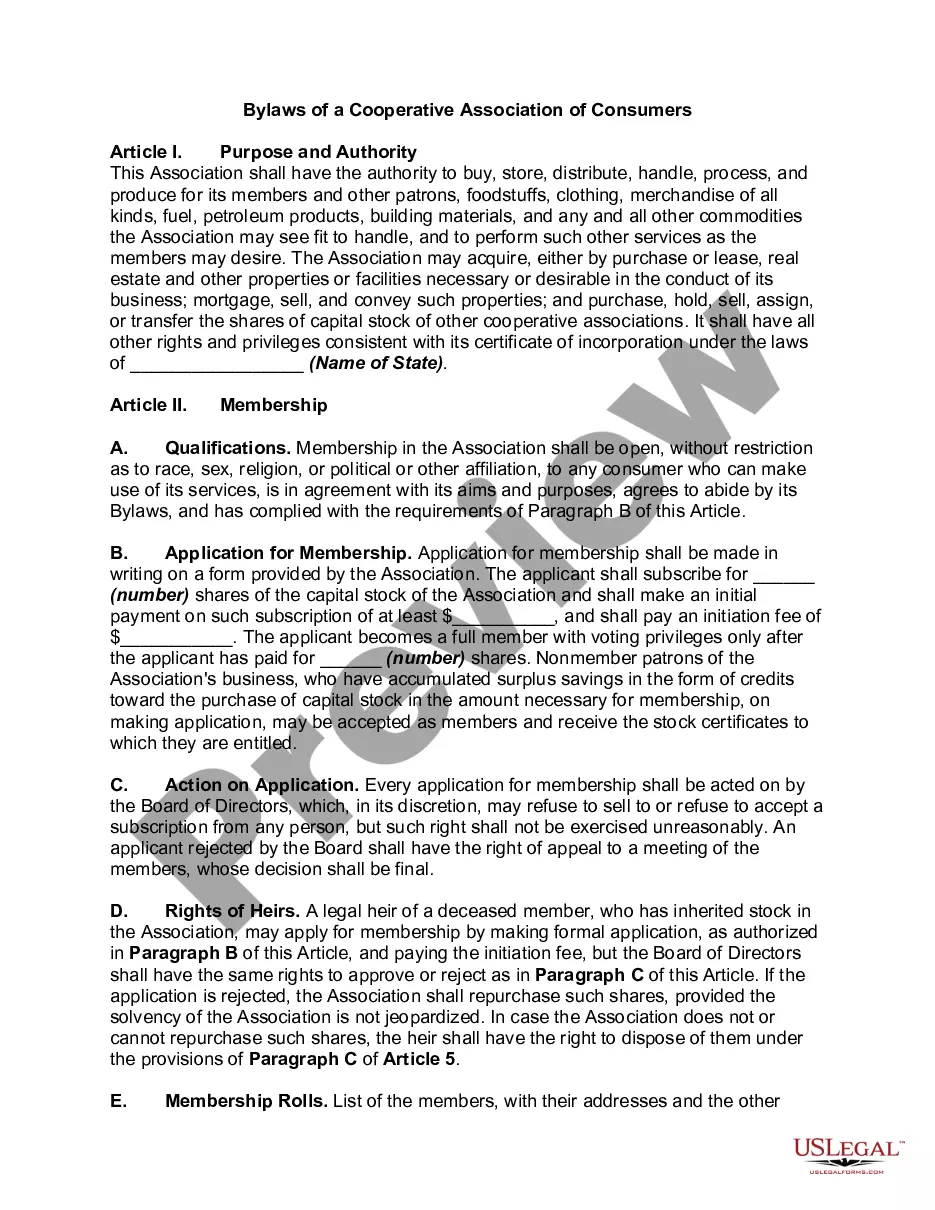
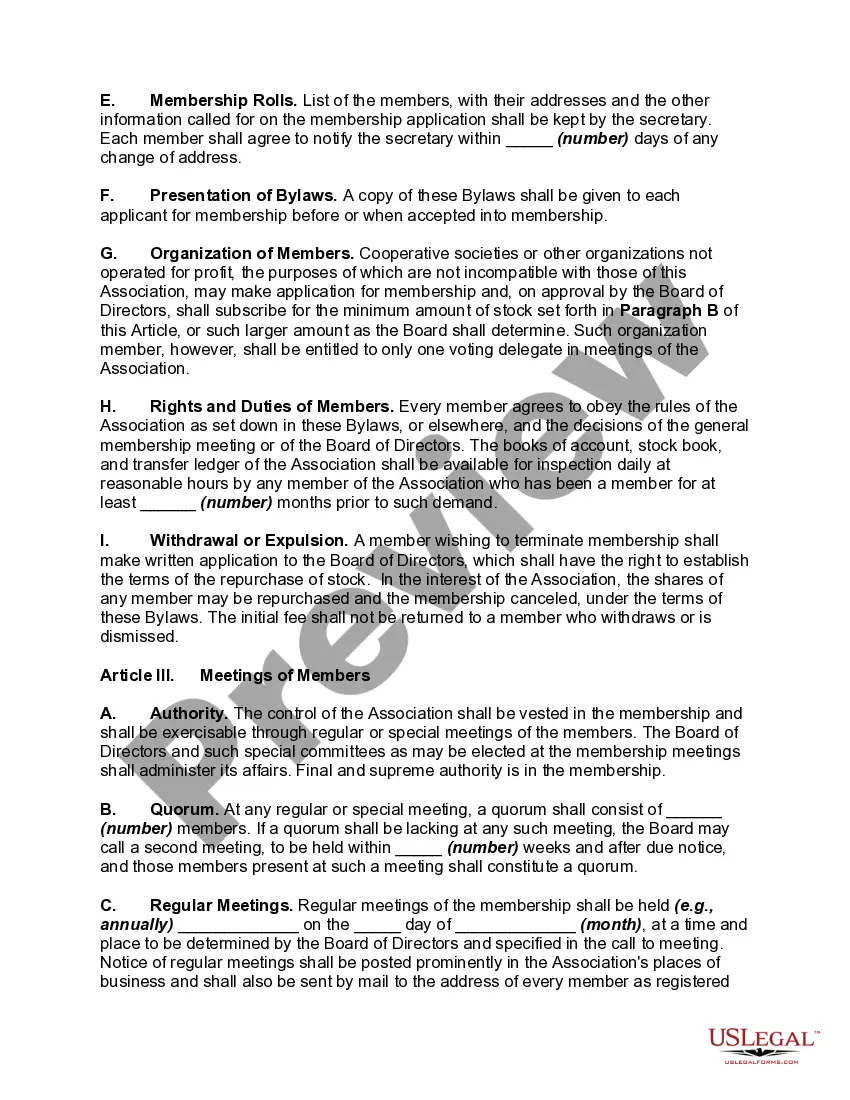
  • Preview Bylaws of a Cooperative Association of Consumers
  • Preview Bylaws of a Cooperative Association of Consumers
  • Preview Bylaws of a Cooperative Association of Consumers
  • Preview Bylaws of a Cooperative Association of Consumers
  • Preview Bylaws of a Cooperative Association of Consumers
  • Preview Bylaws of a Cooperative Association of Consumers
  • Preview Bylaws of a Cooperative Association of Consumers
  • Preview Bylaws of a Cooperative Association of Consumers
  • Preview Bylaws of a Cooperative Association of Consumers
  • Preview Bylaws of a Cooperative Association of Consumers

How to fill out Bylaws Of A Cooperative Association Of Consumers?

If you want to finish, obtain, or print approved document templates, utilize US Legal Forms, the largest collection of legal forms accessible online.

Take advantage of the website's user-friendly and practical search to locate the documents you require.

Various templates for business and personal use are organized by categories and claims, or keywords.

Step 4. Once you have found the form you need, click on the Get now button. Select the pricing plan you prefer and input your details to create an account.

Step 5. Complete the transaction. You can use your credit card or PayPal account to finalize the payment.

  1. Utilize US Legal Forms to retrieve the Connecticut Bylaws of a Cooperative Association of Consumers in just a few clicks.
  2. If you are currently a US Legal Forms user, Log In to your account and hit the Download button to acquire the Connecticut Bylaws of a Cooperative Association of Consumers.
  3. You can also find documents you previously obtained within the My documents section of your account.
  4. If you are using US Legal Forms for the first time, follow these guidelines.
  5. Step 1. Ensure you have chosen the form for the correct city/region.
  6. Step 2. Utilize the Preview feature to check the form's content. Don't forget to read the description.
  7. Step 3. If you are not satisfied with the form, use the Search box at the top of the screen to find alternative versions of the legal form template.

Form popularity

FAQ

If you need to sue a condo association, first attempt to resolve the issue directly, as outlined in the Connecticut Bylaws of a Cooperative Association of Consumers. Should direct communication fail, gather evidence of your claim and consult legal counsel to discuss your options. Filing a lawsuit can be complex, so it is beneficial to have a knowledgeable attorney guide you through the process and ensure that your rights are protected.

To prompt your Homeowners Association (HOA) to make necessary repairs, first review the Connecticut Bylaws of a Cooperative Association of Consumers. These bylaws often detail the procedures for addressing maintenance issues. Gather support from fellow homeowners and submit a formal request outlining the needed repairs, ideally with a timeline and any relevant documentation. This collective approach can encourage the HOA to act more promptly.

Yes, condo bylaws are legally binding. They form a contract among the members of the cooperative association, including the responsibilities and rights of homeowners. This means homeowners must adhere to the rules outlined in these bylaws to maintain their standing within the community. For more detailed information on Connecticut Bylaws of a Cooperative Association of Consumers, you can explore resources on platforms like UsLegalForms.

Yes, you may have grounds to sue your condo association for negligence if it fails to uphold its responsibilities as outlined in the Connecticut Bylaws of a Cooperative Association of Consumers. It is wise to consult with a legal professional to evaluate your situation and determine the best course of action.

Condo associations in Connecticut are overseen by their respective boards of directors and regulated by the Connecticut Department of Consumer Protection. This oversight ensures compliance with the Connecticut Bylaws of a Cooperative Association of Consumers, promoting a fair and balanced living environment for all residents.

When writing a formal complaint letter to a homeowners association (HOA), clearly state your concerns along with specific examples. Reference the standards outlined in the Connecticut Bylaws of a Cooperative Association of Consumers to support your claims and request a timely resolution to your concern.

Section 47-255 of the Connecticut General Statutes addresses the powers and duties of condominium associations. It clarifies how associations must adhere to the Connecticut Bylaws of a Cooperative Association of Consumers, emphasizing the need for proper governance and accountability.

The governing body of a condominium is typically its board of directors, which operates according to the rules and regulations established in the Connecticut Bylaws of a Cooperative Association of Consumers. The board makes decisions regarding the management of shared spaces, finances, and community rules, representing the interests of all residents.

Section 47-250 of the Connecticut General Statutes outlines the requirements for the governance of cooperative associations, including condo associations. This section embodies the Connecticut Bylaws of a Cooperative Association of Consumers, ensuring transparency and fairness in the management of these communities.

In Connecticut, homeowners associations, including condo associations, are regulated by the Connecticut Department of Consumer Protection. This department ensures that associations comply with the Connecticut Bylaws of a Cooperative Association of Consumers, protecting residents' rights and promoting fair practices.

Trusted and secure by over 3 million people of the world’s leading companies

Connecticut Bylaws of a Cooperative Association of Consumers