Connecticut Notice of Breach of Written Lease for Violating Specific Provisions of Lease with No Right to Cure for Nonresidential Property from Landlord to Tenant
Understanding this form
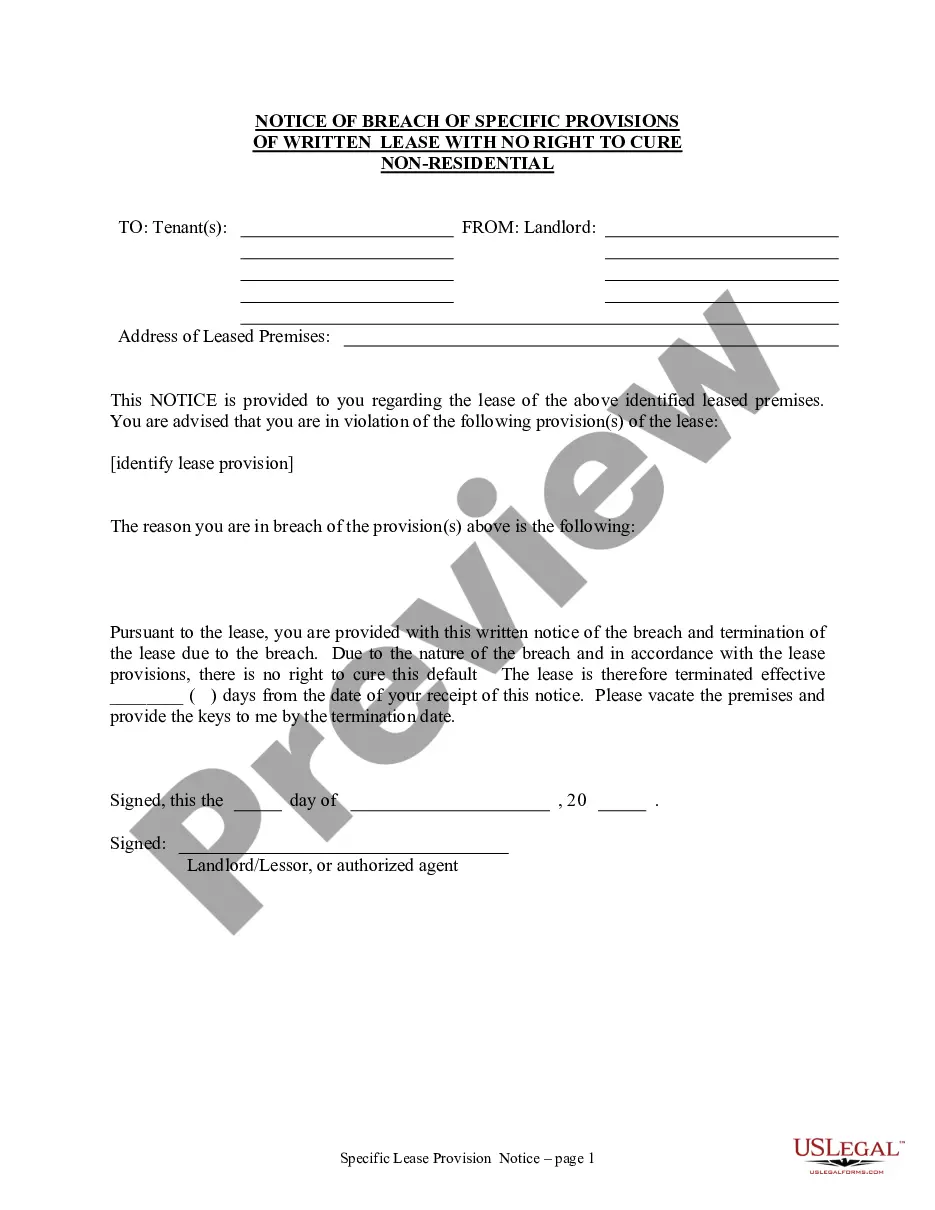
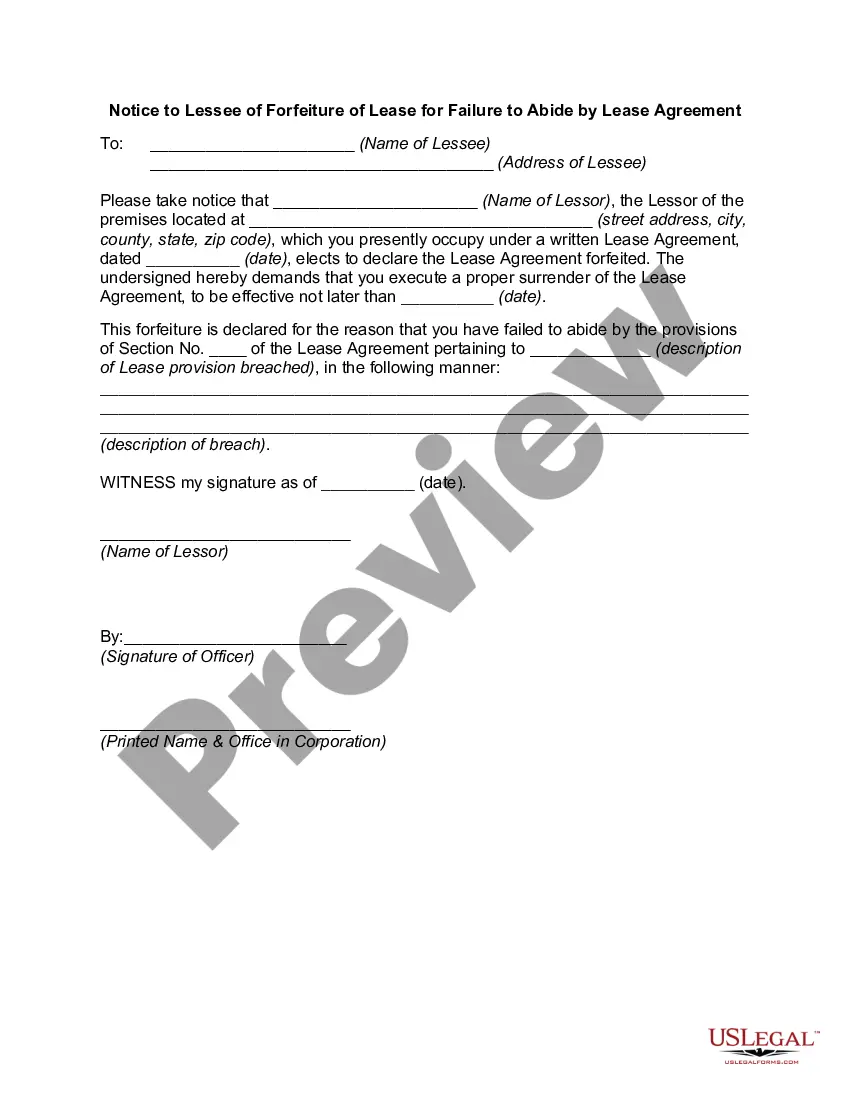
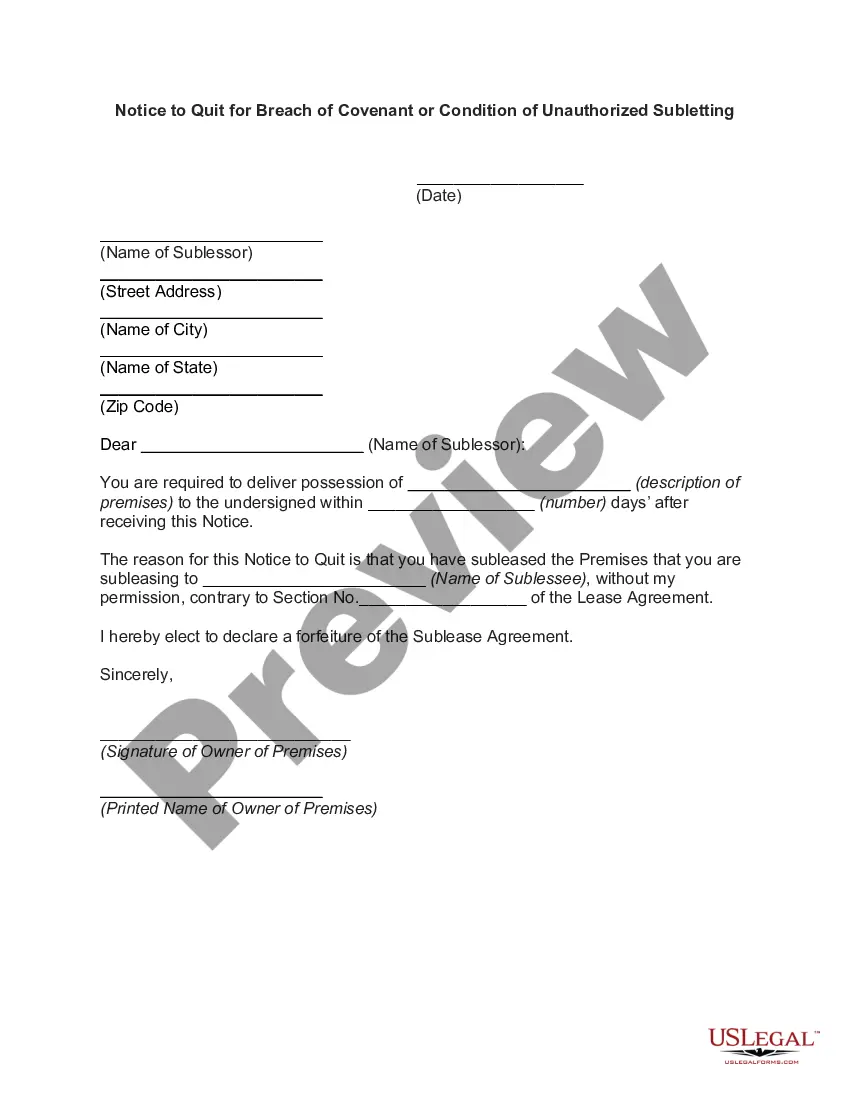
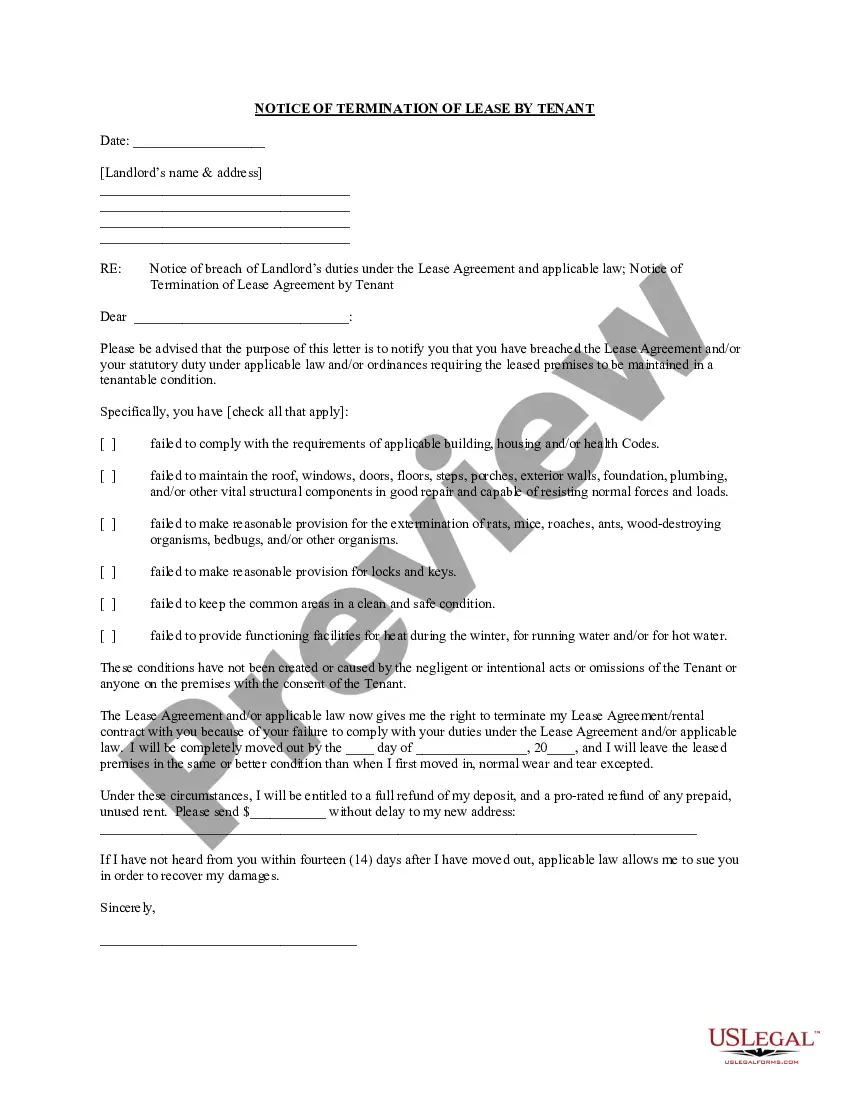
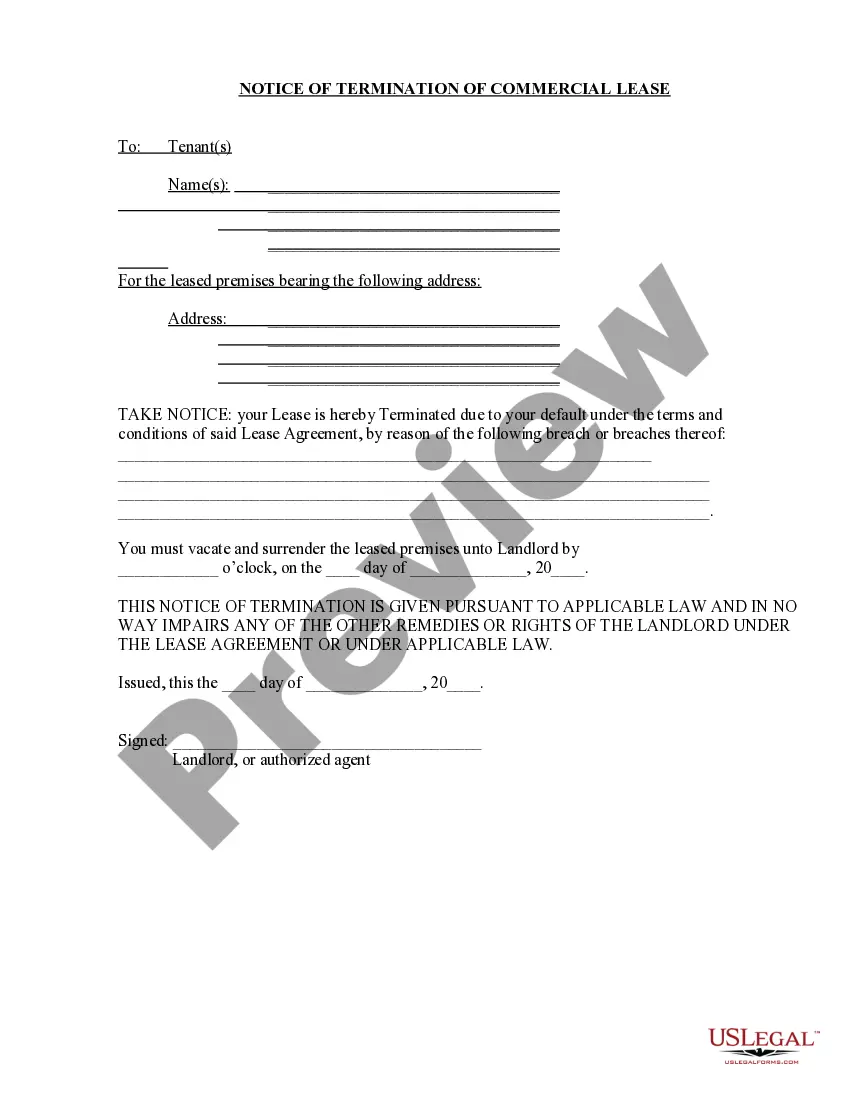
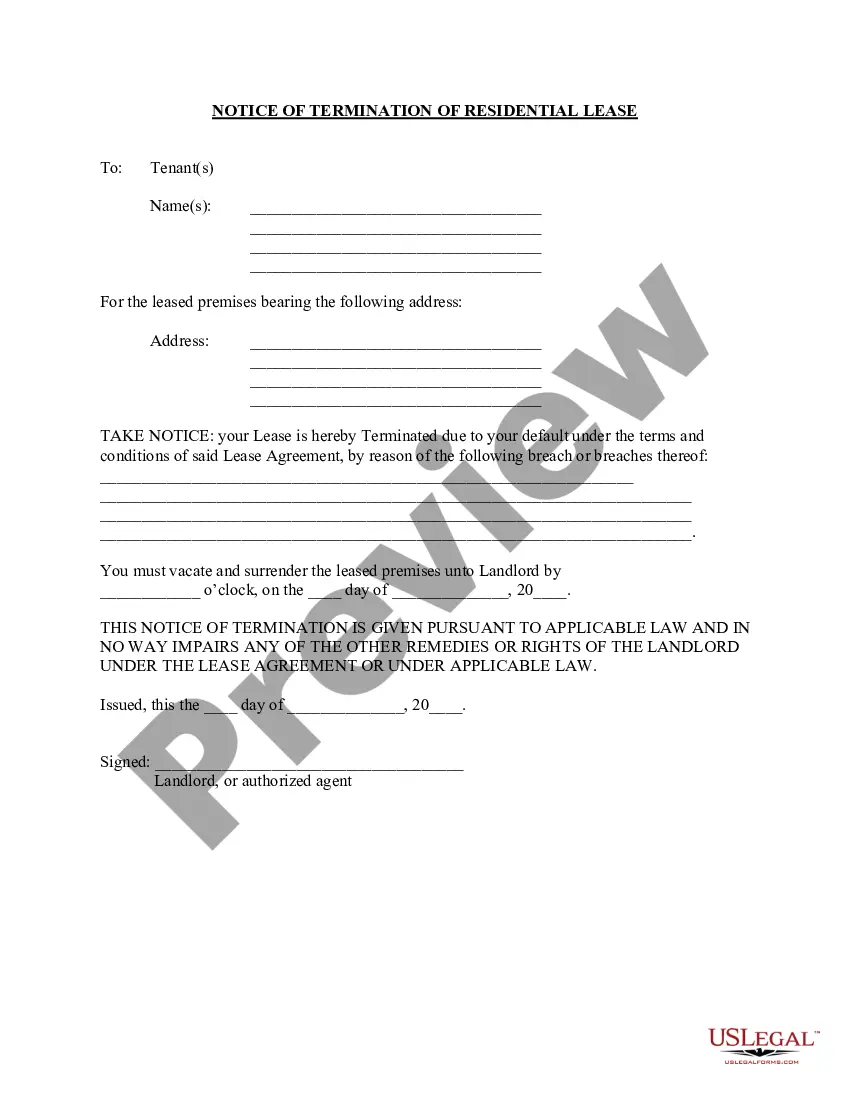
The Notice of Breach of Written Lease for Violating Specific Provisions of Lease with No Right to Cure for Nonresidential Property is a legal document used by a landlord to formally notify a tenant of a breach of lease terms that cannot be cured. This form specifically applies to non-residential leases, setting it apart from residential lease breach notices. The landlord must identify the lease provision that has been violated and indicate that under the terms of the lease, the tenant has no right to remedy the breach before lease termination.
Form components explained
- Identification of the landlord and tenant, along with the address of the leased premises.
- Specific breach of the lease provision, detailing the reasons for the violation.
- Declaration of the lease termination due to the non-curable breach.
- Instructions for the tenant to vacate the premises by a specified termination date.
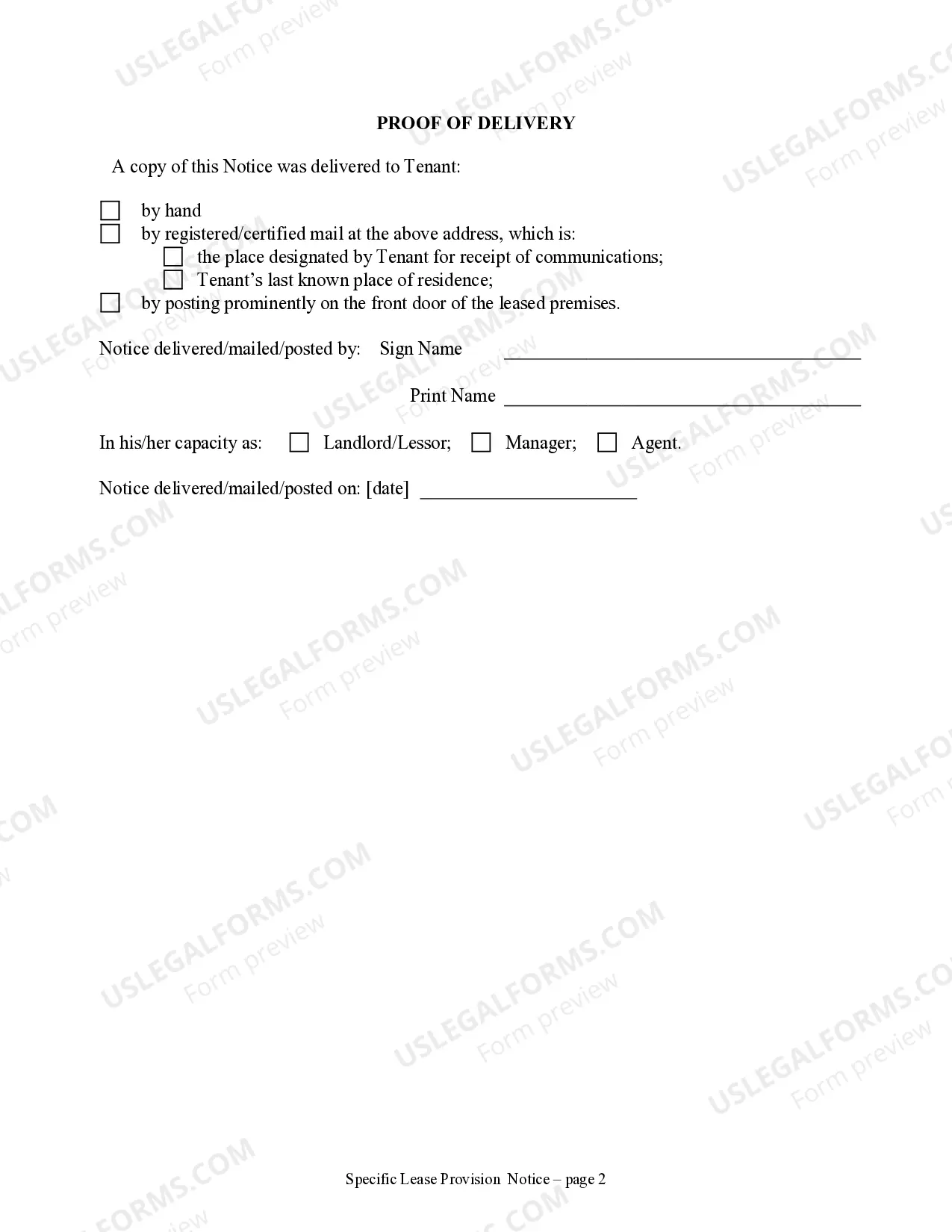
- Proof of delivery methods to ensure the tenant receives the notice.
Situations where this form applies
This form should be used when a landlord needs to notify a tenant of a significant violation of lease terms in a non-residential property, specifically when the lease states that the breach cannot be cured. This situation may arise when a tenant fails to adhere to critical lease obligations that affect the property's use or operation, leading the landlord to terminate the lease without offering a chance to remedy the situation.
Who needs this form
- Landlords of non-residential properties entering a lease agreement.
- Property managers responsible for overseeing non-residential leases.
- Real estate professionals assisting landlords with lease enforcement issues.
How to complete this form
- Identify all parties involved by entering the names and addresses of the landlord and tenant.
- Specify the address of the leased premises for clear identification.
- Detail the specific violation of the lease provision in clear language.
- Include the date of notice and the termination date based on the lease terms.
- Obtain signatures from the landlord or authorized agent and ensure proof of delivery is documented.
Notarization guidance
Notarization is generally not required for this form. However, certain states or situations might demand it. You can complete notarization online through US Legal Forms, powered by Notarize, using a verified video call available anytime.
Get your form ready online
Our built-in tools help you complete, sign, share, and store your documents in one place.
Make edits, fill in missing information, and update formatting in US Legal Forms—just like you would in MS Word.
Download a copy, print it, send it by email, or mail it via USPS—whatever works best for your next step.
Sign and collect signatures with our SignNow integration. Send to multiple recipients, set reminders, and more. Go Premium to unlock E-Sign.
If this form requires notarization, complete it online through a secure video call—no need to meet a notary in person or wait for an appointment.
We protect your documents and personal data by following strict security and privacy standards.

Make edits, fill in missing information, and update formatting in US Legal Forms—just like you would in MS Word.

Download a copy, print it, send it by email, or mail it via USPS—whatever works best for your next step.

Sign and collect signatures with our SignNow integration. Send to multiple recipients, set reminders, and more. Go Premium to unlock E-Sign.

If this form requires notarization, complete it online through a secure video call—no need to meet a notary in person or wait for an appointment.

We protect your documents and personal data by following strict security and privacy standards.
Typical mistakes to avoid
- Failing to clearly specify the lease provision that has been violated.
- Not providing the correct termination date as required by the lease.
- Neglecting to follow statutory delivery methods, which can invalidate the notice.
Why use this form online
- Convenience of completing the form from any location and at any time.
- Editable formats ensure that landlords can customize the notice to fit specific situations.
- Access to attorney-drafted forms that meet legal standards and reduce the risk of errors.
Looking for another form?
Form popularity
FAQ
When a landlord violates the lease, the consequences often depend on the nature of the violation and local laws. Tenants can report the issue or seek mediation to resolve it. They may also send a Connecticut Notice of Breach of Written Lease for Violating Specific Provisions of Lease with No Right to Cure for Nonresidential Property from Landlord to Tenant, signaling the severity of the situation. Utilizing resources like US Legal Forms can help tenants in this process, ensuring they follow the correct legal protocols.
If a landlord violates the lease, the tenant generally has the right to address the issue as specified in the lease agreement or state law. Such actions might include withholding rent or even seeking termination of the lease. It is important for tenants to document any violations and consider sending a Connecticut Notice of Breach of Written Lease for Violating Specific Provisions of Lease with No Right to Cure for Nonresidential Property from Landlord to Tenant as a formal step. This process helps protect tenants' rights.
To write a complaint letter to a leasing office, start with your contact information and the date. Clearly state the issue you are experiencing and provide any relevant details, including dates and specific occurrences. Be calm and factual in your tone, referencing any lease terms that relate to the complaint. You may find valuable templates on uslegalforms that guide you in drafting a formal complaint letter.
If your landlord violates the lease, your first step is to review the lease for specifics regarding disputes. You can send them a formal notice detailing the violation, referencing the Connecticut Notice of Breach of Written Lease for Violating Specific Provisions of Lease with No Right to Cure for Nonresidential Property from Landlord to Tenant. If the issue persists, document everything and consider seeking legal advice to explore your rights and remedies under the law.
To write a violation notice, begin by providing details about the tenant and the specific lease provisions they have violated. Clearly outline the nature of the violation and reference the Connecticut Notice of Breach of Written Lease for Violating Specific Provisions of Lease with No Right to Cure for Nonresidential Property from Landlord to Tenant. Be sure to state any actions required from the tenant and include a deadline by which these actions must be taken to rectify the situation.
When writing a formal letter to break a lease, start by including your contact information and the date. Next, clearly state your intention to terminate the lease and include a reference to the relevant lease provisions. Mention any specific terms you are adhering to and provide your new address for future communications. Utilizing a platform like uslegalforms can help you draft an appropriate and effective lease termination letter.
To evict someone for non-payment of rent in Connecticut, you need to provide a formal written notice first. This notice is known as a Connecticut Notice of Breach of Written Lease for Violating Specific Provisions of Lease with No Right to Cure for Nonresidential Property from Landlord to Tenant. After waiting for the required period, you may file an eviction suit in court. Be sure to document all communications and payments as this can support your case.
To sue your landlord for breach of contract, collect all relevant documentation, including your lease agreement and any correspondence regarding the breach. It's advisable to seek legal counsel to understand your rights and prepare your case effectively. Highlighting the specifics of a Connecticut Notice of Breach of Written Lease for Violating Specific Provisions of Lease with No Right to Cure for Nonresidential Property can support your claims in court.
The most common action taken by landlords against tenants in breach of contract is initiating eviction proceedings. Landlords often first issue a notice outlining the violations, informing the tenant of their breach. Utilizing a Connecticut Notice of Breach of Written Lease for Violating Specific Provisions of Lease with No Right to Cure for Nonresidential Property can solidify their position and clarify next steps.
In Connecticut, breaking an apartment lease without penalty is often possible under specific circumstances such as active military duty or habitability issues. It's crucial to document any problems and communicate them effectively with the landlord. If necessary, a tenant can reference the Connecticut Notice of Breach of Written Lease for Violating Specific Provisions of Lease with No Right to Cure for Nonresidential Property to support their case.