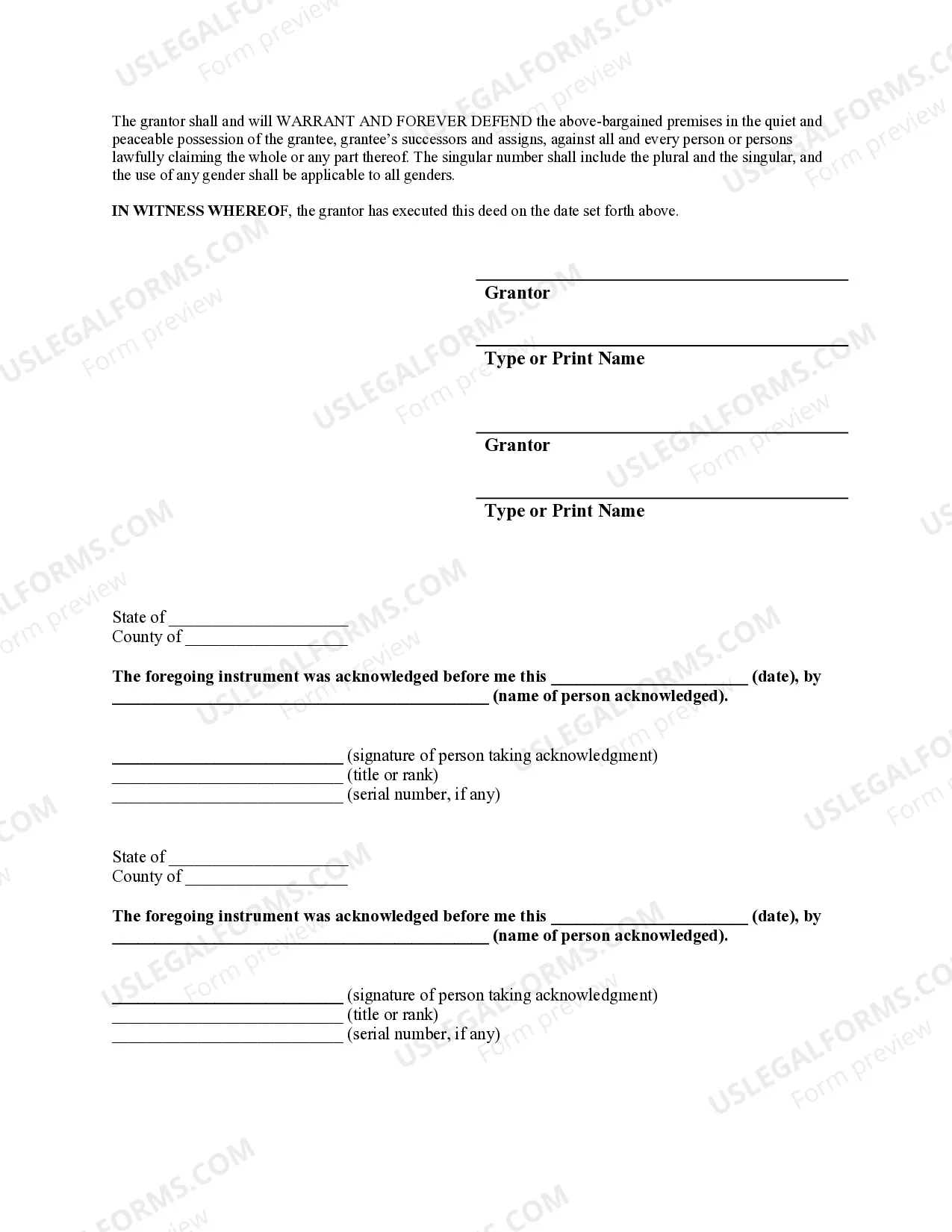
Colorado Warranty Deed for Husband and Wife to Trust

State:
Colorado
Control #:
CO-SDEED-8-11
Format:
Word; 
Rich Text
Instant download

Understanding this form

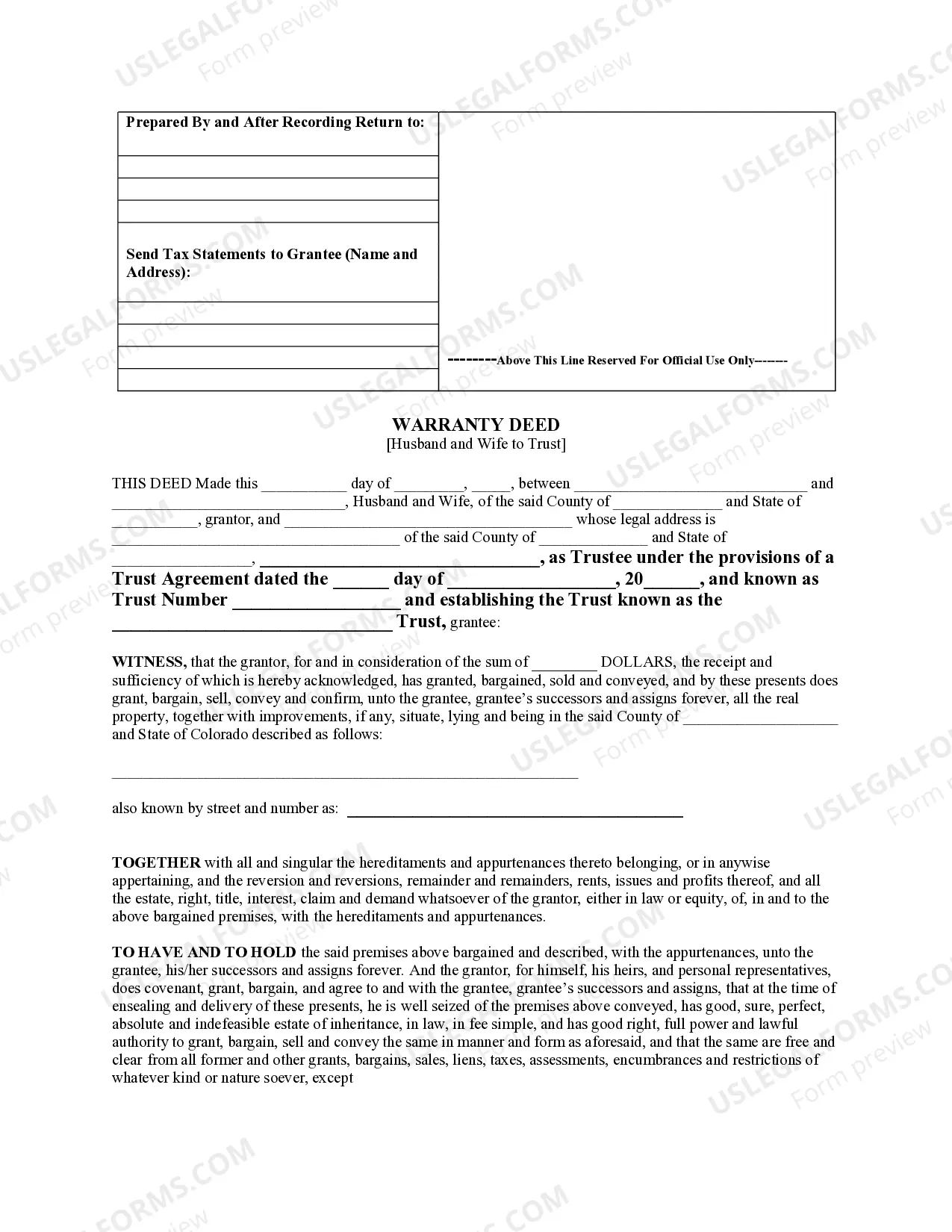
A Warranty Deed for Husband and Wife to Trust is a legal document used to transfer property ownership from a married couple (the grantors) to a trust (the grantee). This form is essential for ensuring that the property is securely held in trust for beneficiaries, distinguishing it from other deed types by specifically outlining the couple's intent to convey their property into a trust structure, which can provide benefits like estate planning and potential tax advantages.

Form components explained

  • The names and signatures of both grantors (husband and wife).
  • The name of the trust receiving the property.
  • A description of the property being transferred, including its physical address.
  • Details indicating the consideration (purchase price) for the property.
  • Grantors’ affirmations regarding their legal authority to convey the property.
Free preview
  • Preview Warranty Deed for Husband and Wife to Trust
  • Preview Warranty Deed for Husband and Wife to Trust
  • Preview Warranty Deed for Husband and Wife to Trust
  • Preview Warranty Deed for Husband and Wife to Trust
  • Preview Warranty Deed for Husband and Wife to Trust
  • Preview Warranty Deed for Husband and Wife to Trust

Situations where this form applies

This form is utilized when a married couple wishes to transfer their real estate property into a trust, often for estate planning purposes. It can be particularly useful when preparing for eventual property distribution to heirs or while managing assets for family members. The transfer can help ensure property is managed and protected within the trust framework, aligning with specific wishes for the property's future use.

Who needs this form

  • Married couples looking to manage their property through a trust.
  • Property owners needing to ensure their assets are handled according to their estate plan.
  • Individuals intending to simplify the transfer of property upon death to avoid probate.

Completing this form step by step

  • Identify the parties involved by entering the names of the husband and wife as grantors and the name of the trust as the grantee.
  • Specify the property's details, including a complete address and legal description.
  • Indicate the amount of consideration (price) for the property being transferred.
  • Each grantor must sign and date the document.
  • Ensure the document is notarized if required before submission or filing.

Does this document require notarization?

This form does not typically require notarization unless specified by local law. It is advisable to check with a legal professional or local regulations to ensure compliance.

Get your form ready online

Our built-in tools help you complete, sign, share, and store your documents in one place.

Built-in online Word editor

Make edits, fill in missing information, and update formatting in US Legal Forms—just like you would in MS Word.

Export easily

Download a copy, print it, send it by email, or mail it via USPS—whatever works best for your next step.

E-sign your document

Sign and collect signatures with our SignNow integration. Send to multiple recipients, set reminders, and more. Go Premium to unlock E-Sign.

Notarize online 24/7

If this form requires notarization, complete it online through a secure video call—no need to meet a notary in person or wait for an appointment.

Store your document securely

We protect your documents and personal data by following strict security and privacy standards.

Form selector

Make edits, fill in missing information, and update formatting in US Legal Forms—just like you would in MS Word.

Form selector

Download a copy, print it, send it by email, or mail it via USPS—whatever works best for your next step.

Form selector

Sign and collect signatures with our SignNow integration. Send to multiple recipients, set reminders, and more. Go Premium to unlock E-Sign.

Form selector

If this form requires notarization, complete it online through a secure video call—no need to meet a notary in person or wait for an appointment.

Form selector

We protect your documents and personal data by following strict security and privacy standards.

Avoid these common issues

  • Failing to include the correct legal description of the property.
  • Not notarizing the deed when required.
  • Leaving out the names or signatures of one or both grantors.
  • Including incorrect or outdated trust information.

Why complete this form online

  • Convenient access allows you to fill out the form at your own pace.
  • Editability provides flexibility to adjust details as necessary before finalizing.
  • Reliability ensured by using templates drafted by licensed attorneys, aligned with current legal standards.

Looking for another form?

This field is required
Virginia
Select state

Form popularity

FAQ

To fill out a Colorado Warranty Deed for Husband and Wife to Trust, begin by entering the names of both grantors and the trustee. Clearly describe the real property involved, including the legal description. Ensure you indicate the type of trust and provide any necessary details for the transfer. Lastly, both grantors should sign the document in front of a notary to ensure it is legally valid.

Transferring property into a trust in Colorado involves preparing a new warranty deed that conveys ownership of the property to the trust. You must specify the trust as the grantee in the deed. After filling out the proper documentation, you should record the deed with the county. Utilizing a Colorado Warranty Deed for Husband and Wife to Trust can streamline this transfer, providing clarity and security in your estate planning.

To add your wife to your warranty deed in Colorado, you will need to execute a new warranty deed that includes both of your names. This process typically requires filling out a form, ensuring it adheres to the state's requirements. It’s important to file the new deed with the county clerk and recorder to maintain a clear title. Using a Colorado Warranty Deed for Husband and Wife to Trust can simplify this process significantly.

In Colorado, the deed of trust is typically held by the lender or a designated trustee. When you create a Colorado Warranty Deed for Husband and Wife to Trust, it establishes the trust as the legal owner of the property. This means that the trustee manages the property on behalf of the beneficiaries, in accordance with the trust's terms. To ensure everything is set correctly, consider using the US Legal Forms platform, which offers resources to help you navigate the process smoothly.

To add your spouse to a deed in Colorado, you will need to execute a Colorado Warranty Deed for Husband and Wife to Trust. This legal document transfers ownership and allows both spouses to share the property rights. You should gather necessary information about the property, such as the legal description and current deed. For a smoother process, consider using platforms like USLegalForms, which provide templates and guidance for completing your deed correctly.

Fill out the "grantor" section of the warranty deed. The grantors are the givers, or current owners, of the property. Use the legal name of each grantor and insert current addresses after each grantor's name.

Typically, the lender will provide you with a copy of the deed of trust after the closing. The original warranty deeds are often mailed to the grantee after they are recorded. These are your original copies and should be kept in a safe place, such as a fireproof lockbox or a safe deposit box at a financial institution.

A special warranty deed to real estate offers protection to the buyer through the seller's guarantee that the title has been free and clear of encumbrances during their ownership of the property. It does not guarantee clear title beyond their ownership.

A warranty deed guarantees that: The grantor is the rightful owner of the property and has the legal right to transfer the title.The title would withstand third-party claims to ownership of the property. The grantor will do anything to ensure the grantee's title to the property.

A statutory warranty deed is different from a warranty deed because it is a shorter form made available through your state's statutes and it may not outright list the promise that the title is guaranteed to be clear. Instead, because it is a statutory form, this guarantee is implied and is still legally enforceable.

Trusted and secure by over 3 million people of the world’s leading companies

Colorado Warranty Deed for Husband and Wife to Trust