Special Power Attorney Sample
Description
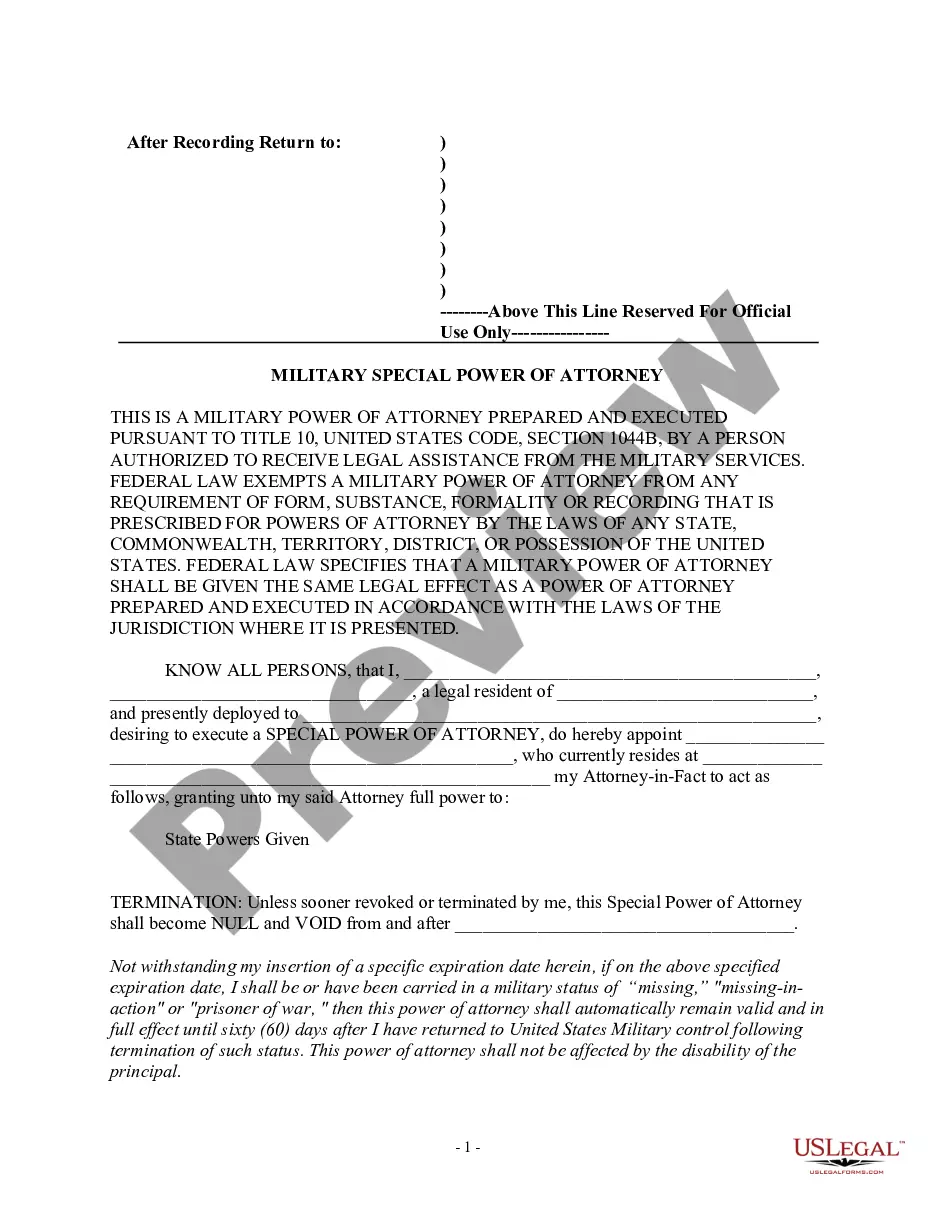
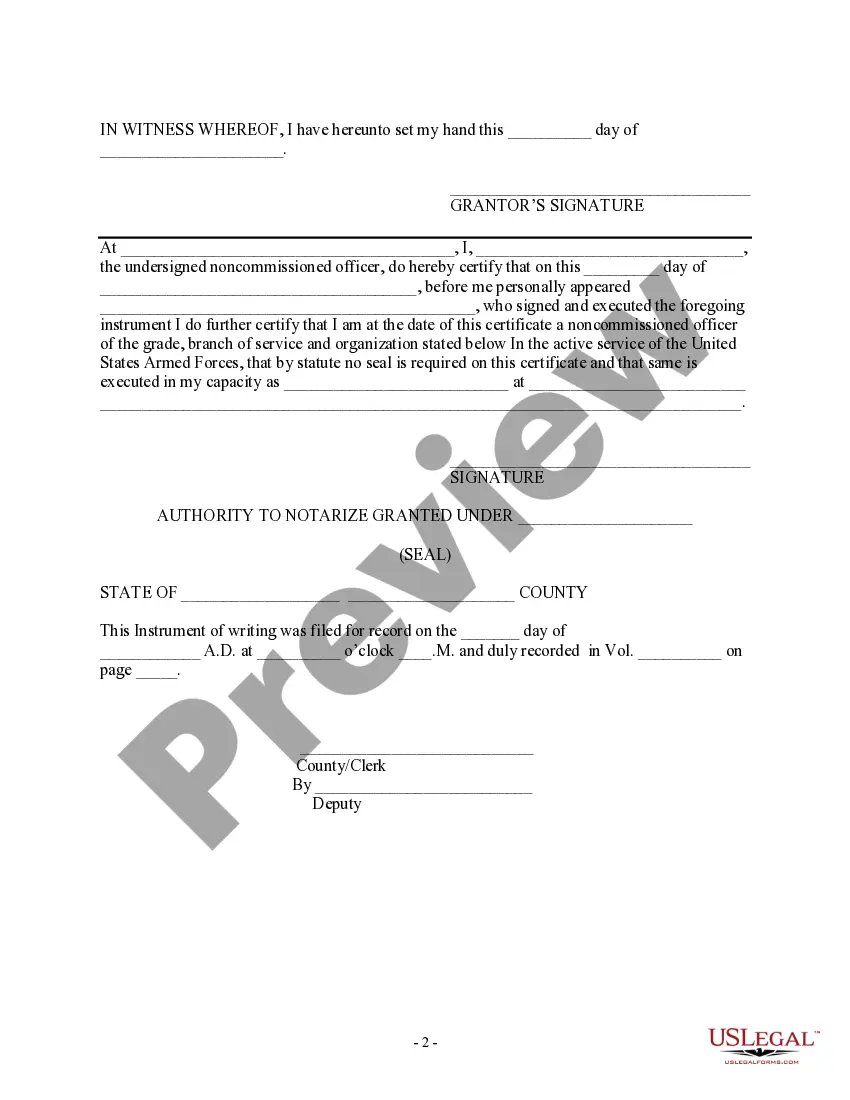
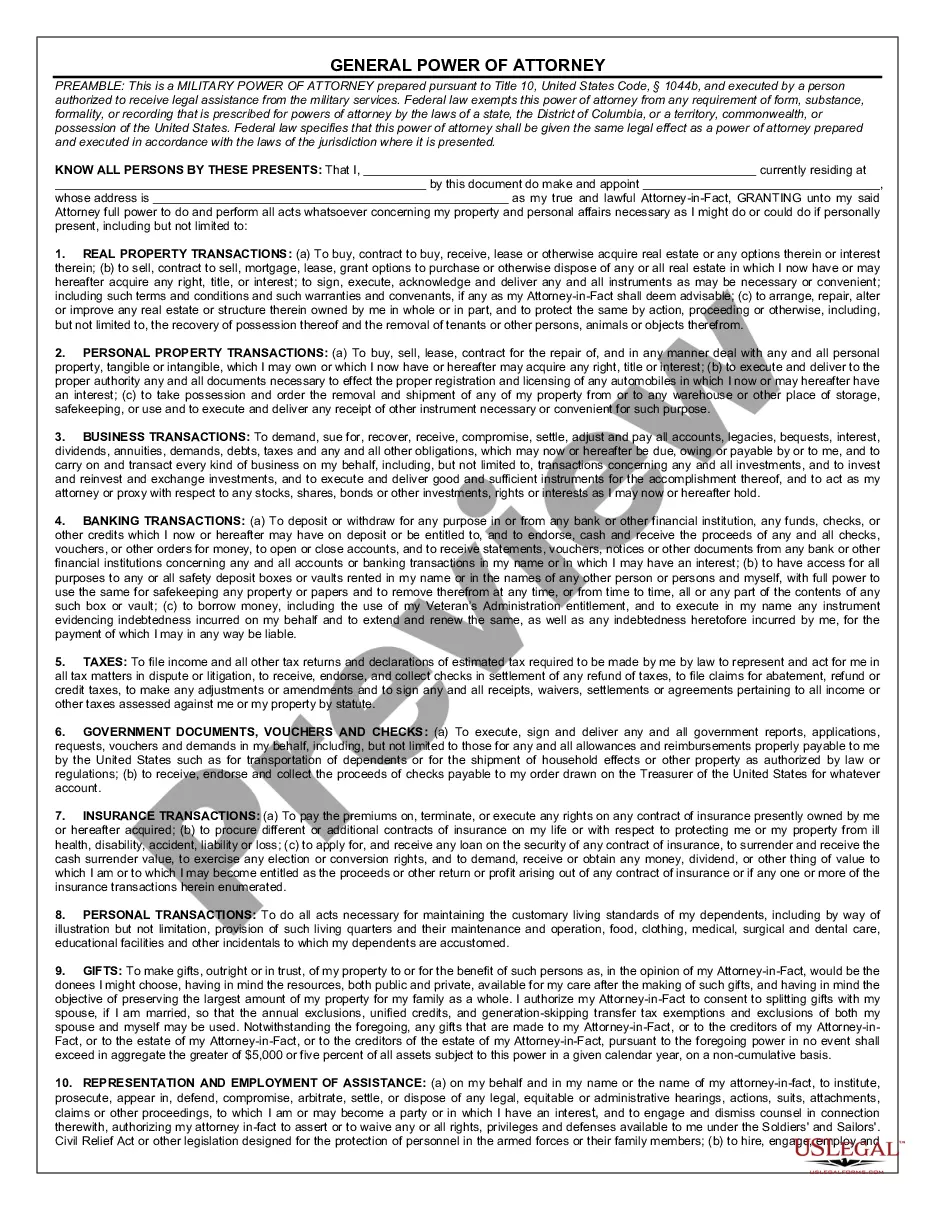
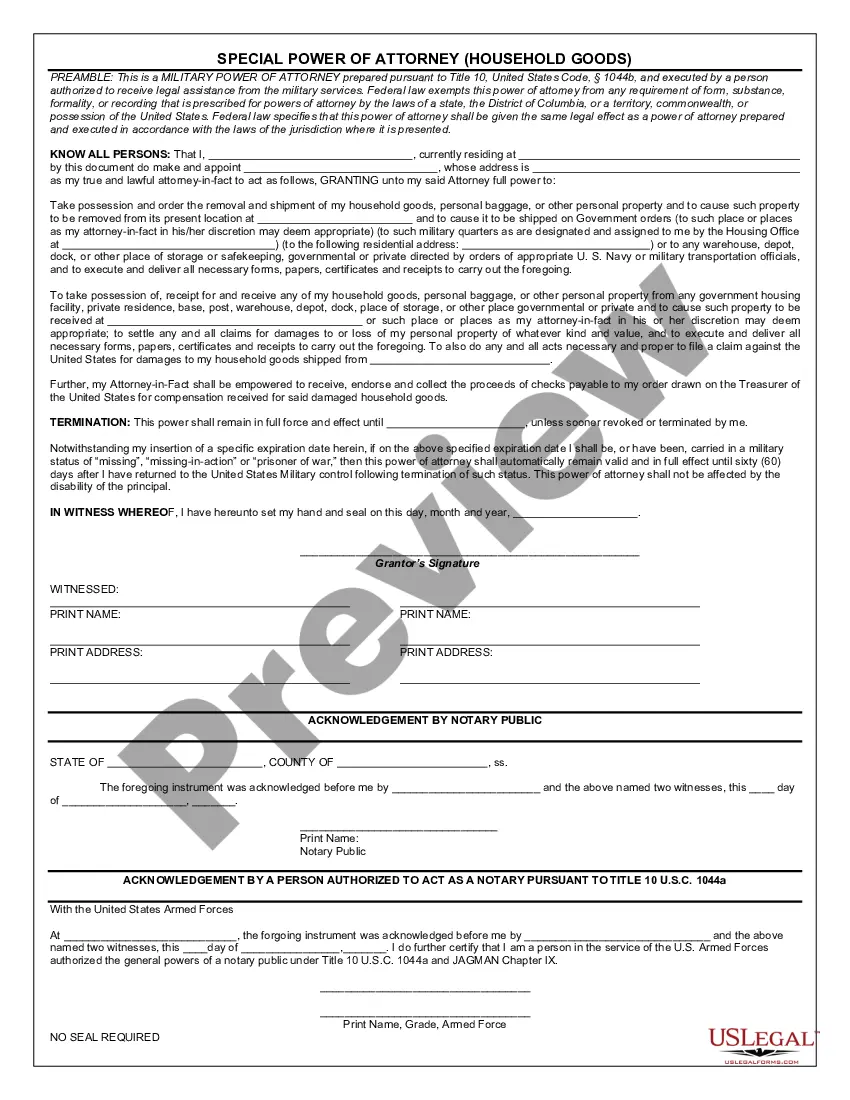
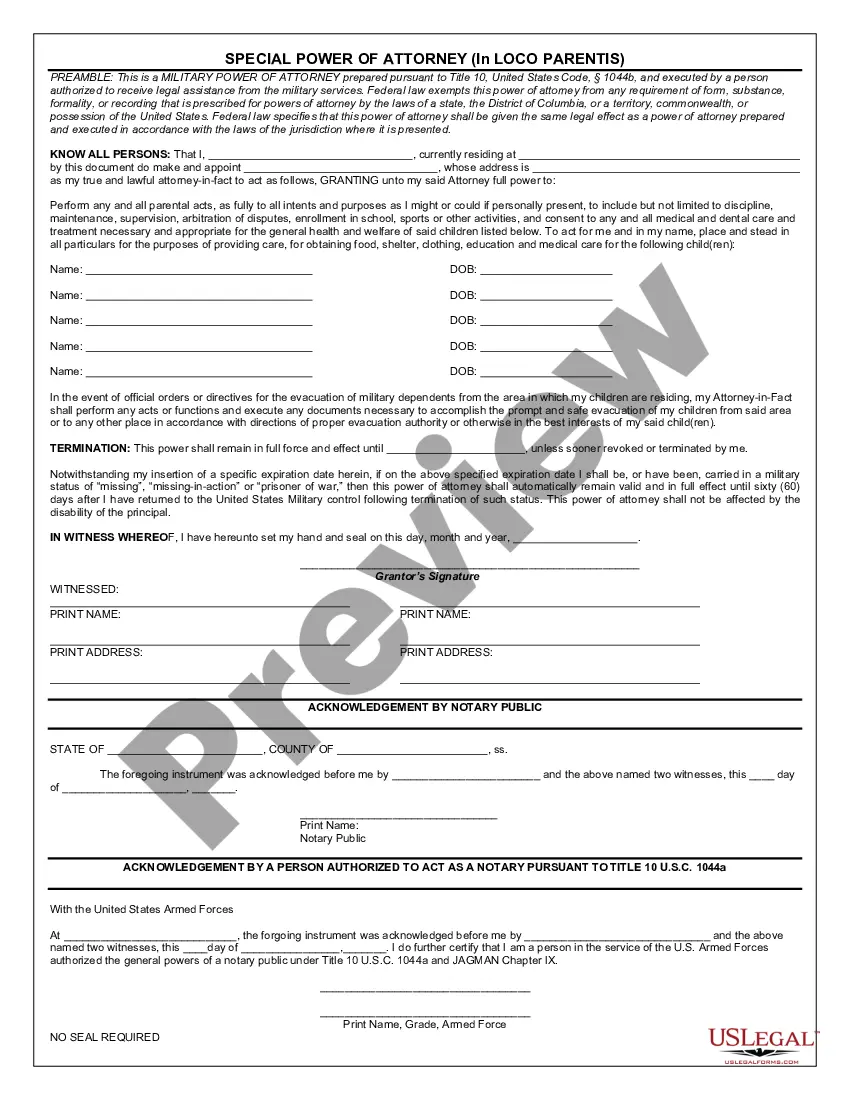
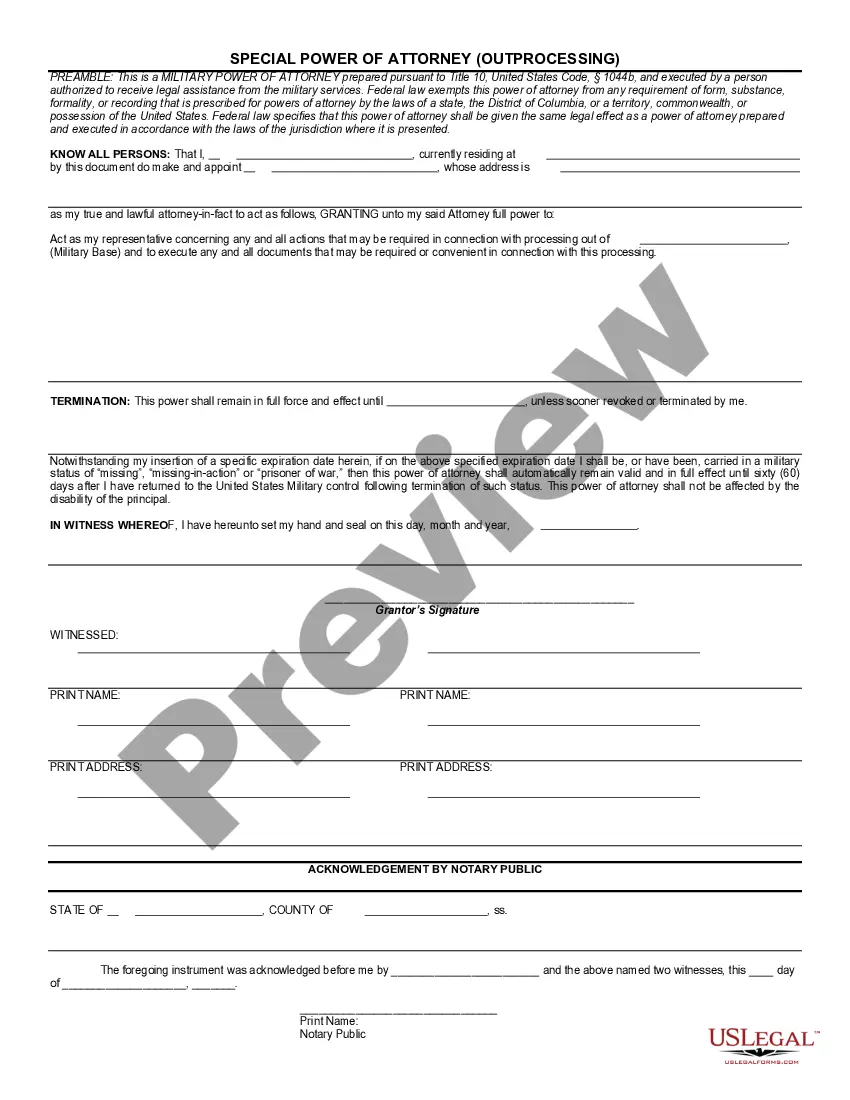
How to fill out Special Military Power Of Attorney?
- Log in to your US Legal Forms account to access your subscription and download the special power attorney sample.
- If you are a first-time user, browse the preview mode to confirm that the document aligns with your requirements and local jurisdiction.
- Utilize the search feature if you need to find another template that better suits your needs.
- Select the Buy Now option and choose your preferred subscription plan.
- Enter your payment information, either by credit card or PayPal, to complete your purchase.
- Download the special power attorney sample to your device for completion, and access it anytime under the 'My Forms' section.
By using US Legal Forms, you benefit from an extensive collection of legal templates that are straightforward and quick to access. With over 85,000 forms available, you'll find exactly what you need without hassle.
Get started today and empower yourself or your attorney with the right legal documents. Visit US Legal Forms to explore your options!
Form popularity
FAQ
In New Jersey, a power of attorney does not need to be recorded to be valid, but recording can provide an added layer of protection, especially for real estate transactions. If you are using a special power attorney sample, ensure it meets New Jersey’s requirements to avoid any complications. It is advisable to keep the document accessible to your agent and any institutions that may need to see it.
To write a power of attorney document, begin by clearly stating your name and the name of your agent. Outline the specific powers you wish to grant and include any limitations if necessary. It’s beneficial to refer to a special power attorney sample for formatting and legal phrasing. Finally, sign the document in accordance with your state’s requirements, including notary acknowledgment if required.
The three basic types of powers of attorney are general, durable, and limited power of attorney. A general power of attorney grants broad authority to act on your behalf, while a durable power of attorney remains effective even if you become incapacitated. A limited power of attorney specifies certain tasks or periods, offering flexibility. Using a special power attorney sample can help clarify these distinctions and assist you in choosing the right type.
The best way to set up a power of attorney is to start by gathering essential information about the individuals involved, including contact details and specific powers you wish to grant. Utilize a special power attorney sample to guide you through this process, ensuring all required legal terminology is included. Next, you can choose a trusted person to act on your behalf, sign the document in front of a notary, and keep copies for your records.
In the Philippines, creating a special power of attorney requires specific information, such as full names and addresses of both the principal and the agent. Including a clear description of the powers conferred is essential. Utilizing a special power attorney sample can guide you in drafting a compliant document, ensuring you don't miss crucial details. Consider consulting a legal professional for additional guidance.
To obtain a special power of attorney in the US, you typically need to draft the document using a reliable special power attorney sample. These samples often outline all necessary provisions and requirements relevant to your needs. You may also need to have it notarized and included any specific state guidelines. Many legal platforms, like uslegalforms, offer templates and support to help you create this document correctly.
To write a short power of attorney, begin with a special power attorney sample that provides an outline of essential components. Include your name, the name of the agent, and a clear description of the powers you are granting. Keep the language straightforward and the document concise. Finally, sign and date it, ensuring that you follow any state-specific rules to validate the document.
Yes, in Minnesota, a power of attorney typically needs to be notarized to be legally binding. This step adds an extra layer of validity and ensures that the document meets state requirements. Using a special power attorney sample can help you understand the notarization process and make it easier to follow. Always consult with a legal professional if you have any concerns.
The easiest way to create a power of attorney is to use a special power attorney sample. This sample provides a clear structure that guides you through the necessary sections. You can find templates online or through legal services that will simplify the process. Using a template ensures that you include all required elements for your specific situation.
The best person to act as your power of attorney is someone you trust completely, ideally a close family member or friend. Look for someone responsible, reliable, and capable of making important decisions on your behalf. Assess their understanding of your wishes and their ability to navigate financial or medical matters. For examples, you can refer to a special power attorney sample to see how others have designated their agents.