What Is An Example Of Common Law
Description
Get your form ready online
Our built-in tools help you complete, sign, share, and store your documents in one place.
Make edits, fill in missing information, and update formatting in US Legal Forms—just like you would in MS Word.
Download a copy, print it, send it by email, or mail it via USPS—whatever works best for your next step.
Sign and collect signatures with our SignNow integration. Send to multiple recipients, set reminders, and more. Go Premium to unlock E-Sign.
If this form requires notarization, complete it online through a secure video call—no need to meet a notary in person or wait for an appointment.
We protect your documents and personal data by following strict security and privacy standards.

Make edits, fill in missing information, and update formatting in US Legal Forms—just like you would in MS Word.

Download a copy, print it, send it by email, or mail it via USPS—whatever works best for your next step.

Sign and collect signatures with our SignNow integration. Send to multiple recipients, set reminders, and more. Go Premium to unlock E-Sign.

If this form requires notarization, complete it online through a secure video call—no need to meet a notary in person or wait for an appointment.

We protect your documents and personal data by following strict security and privacy standards.
Looking for another form?

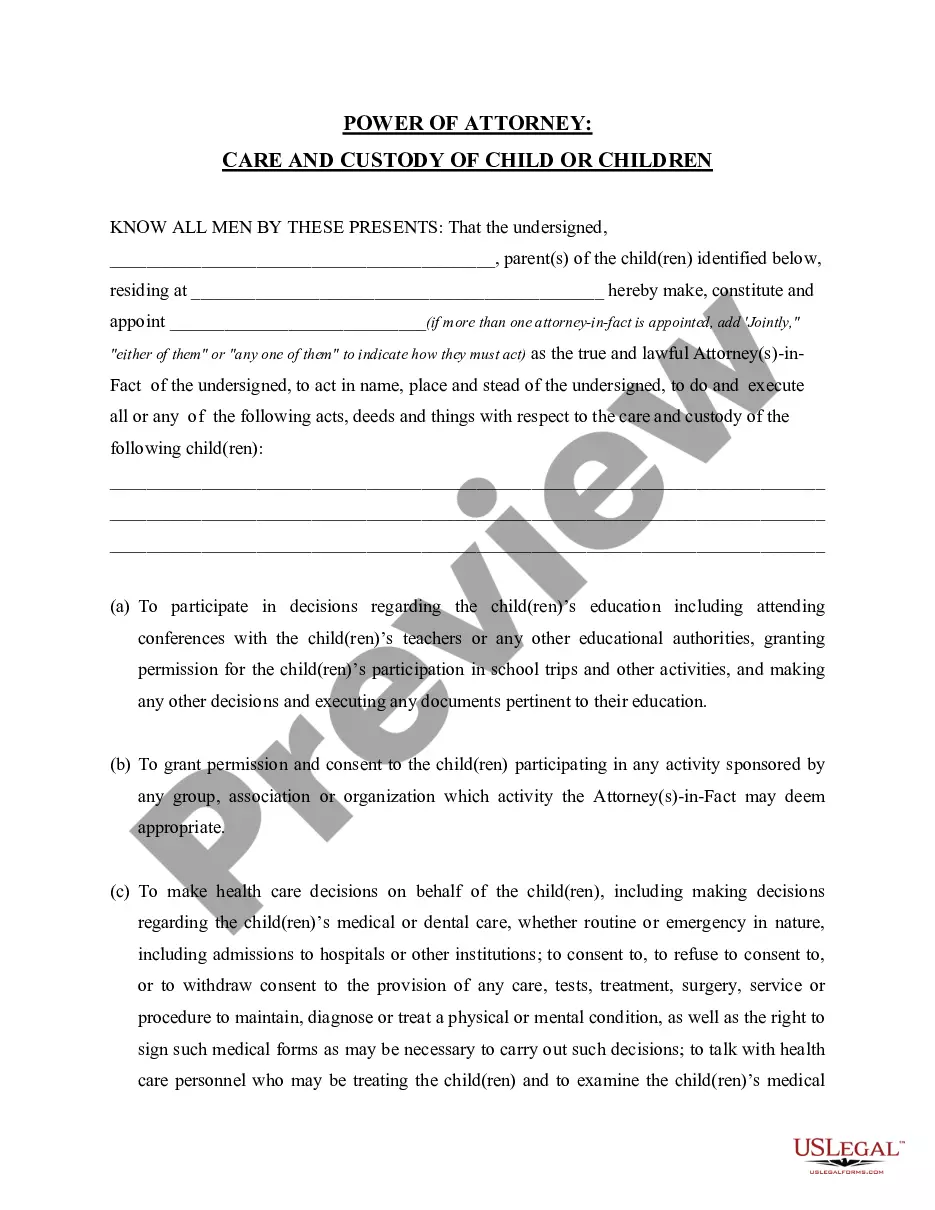
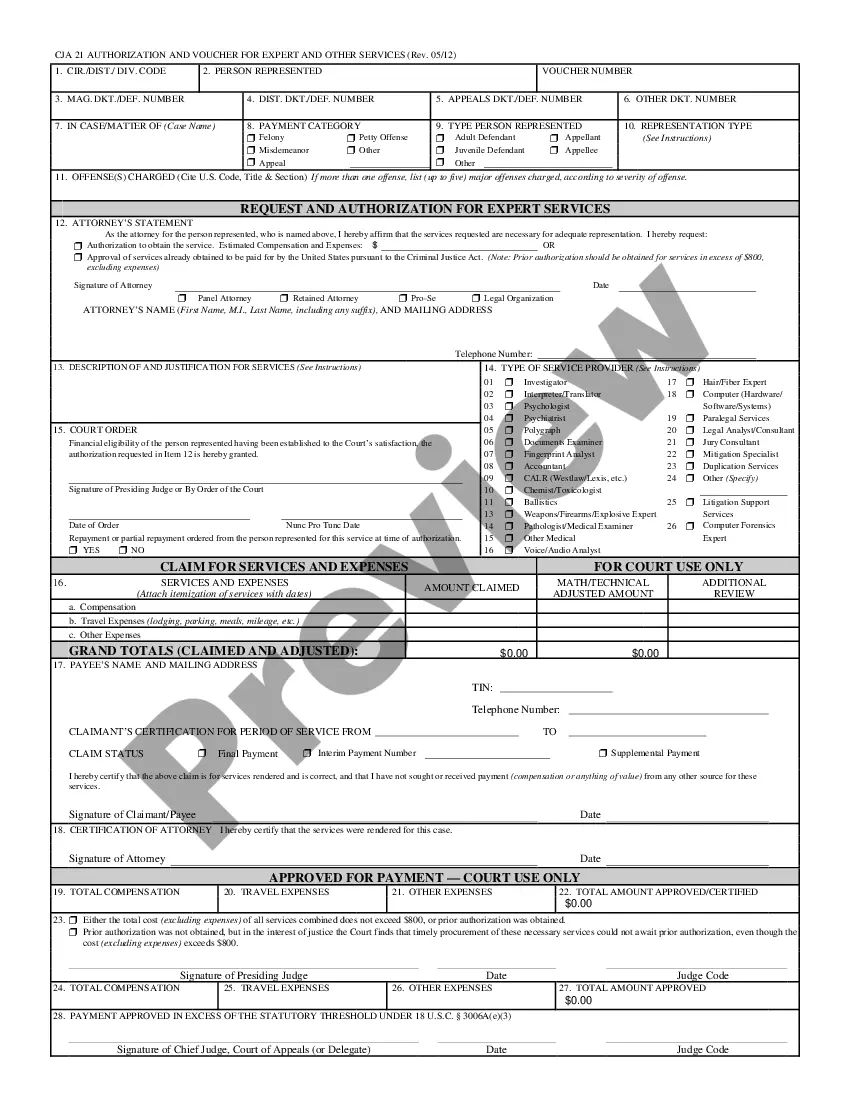



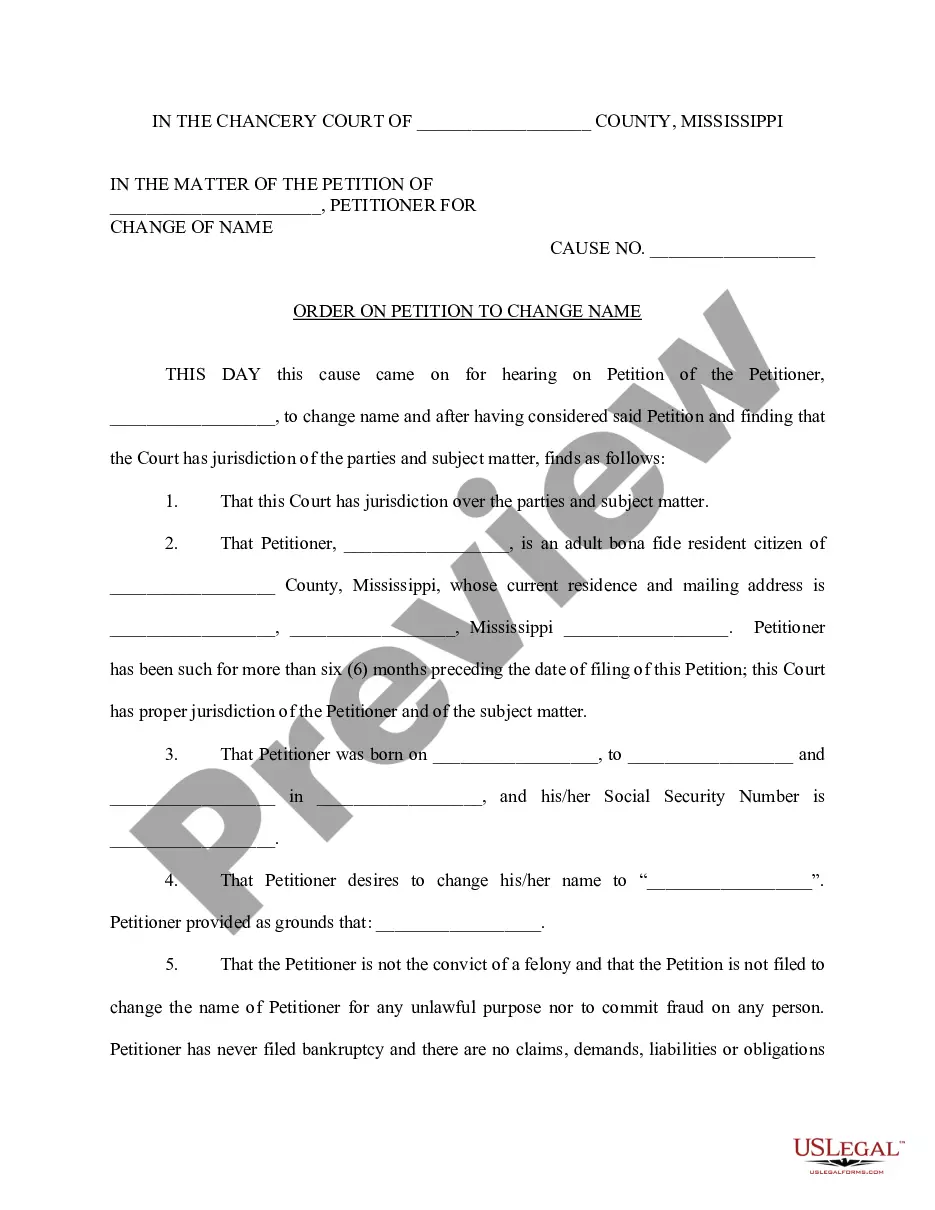


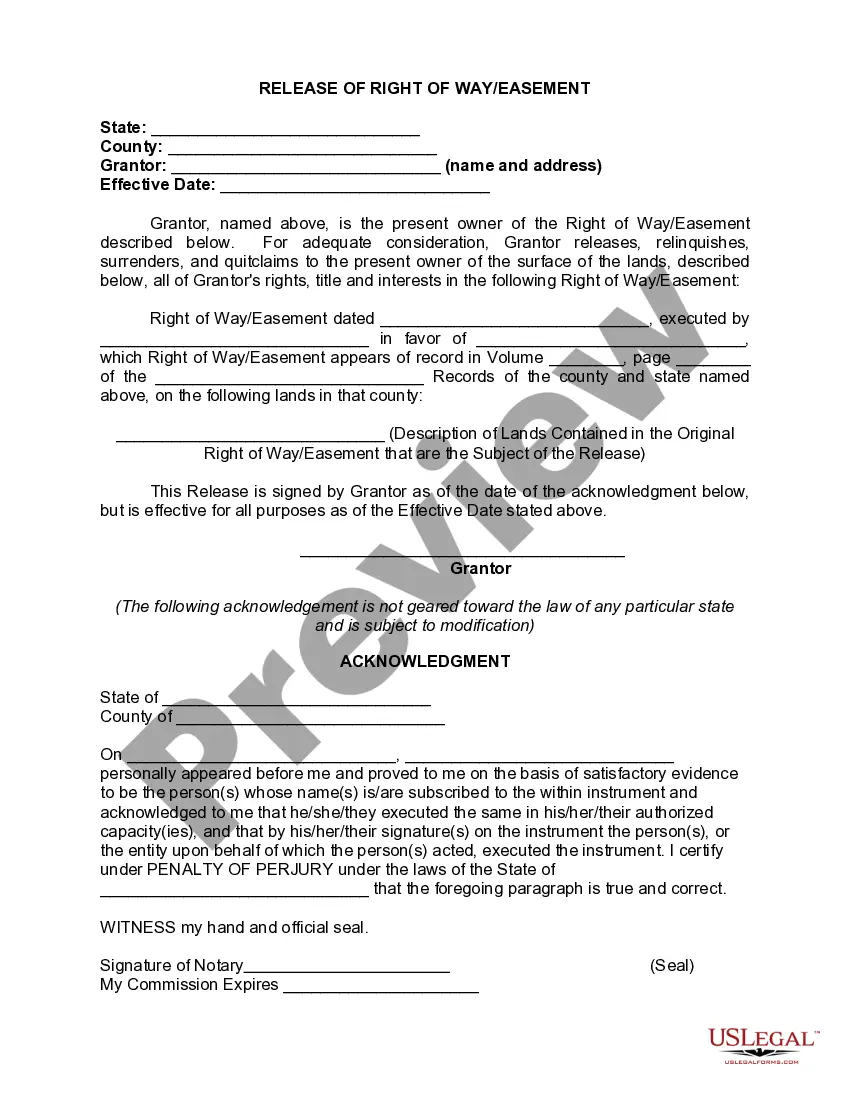
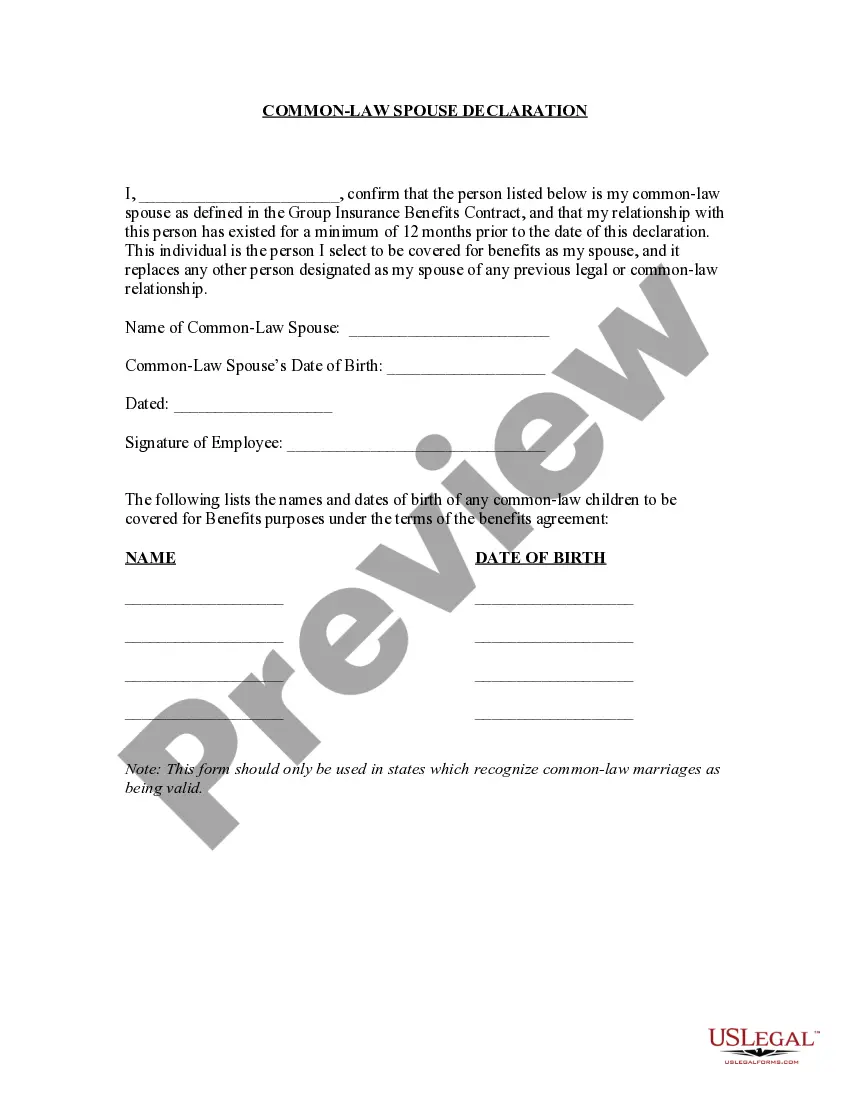
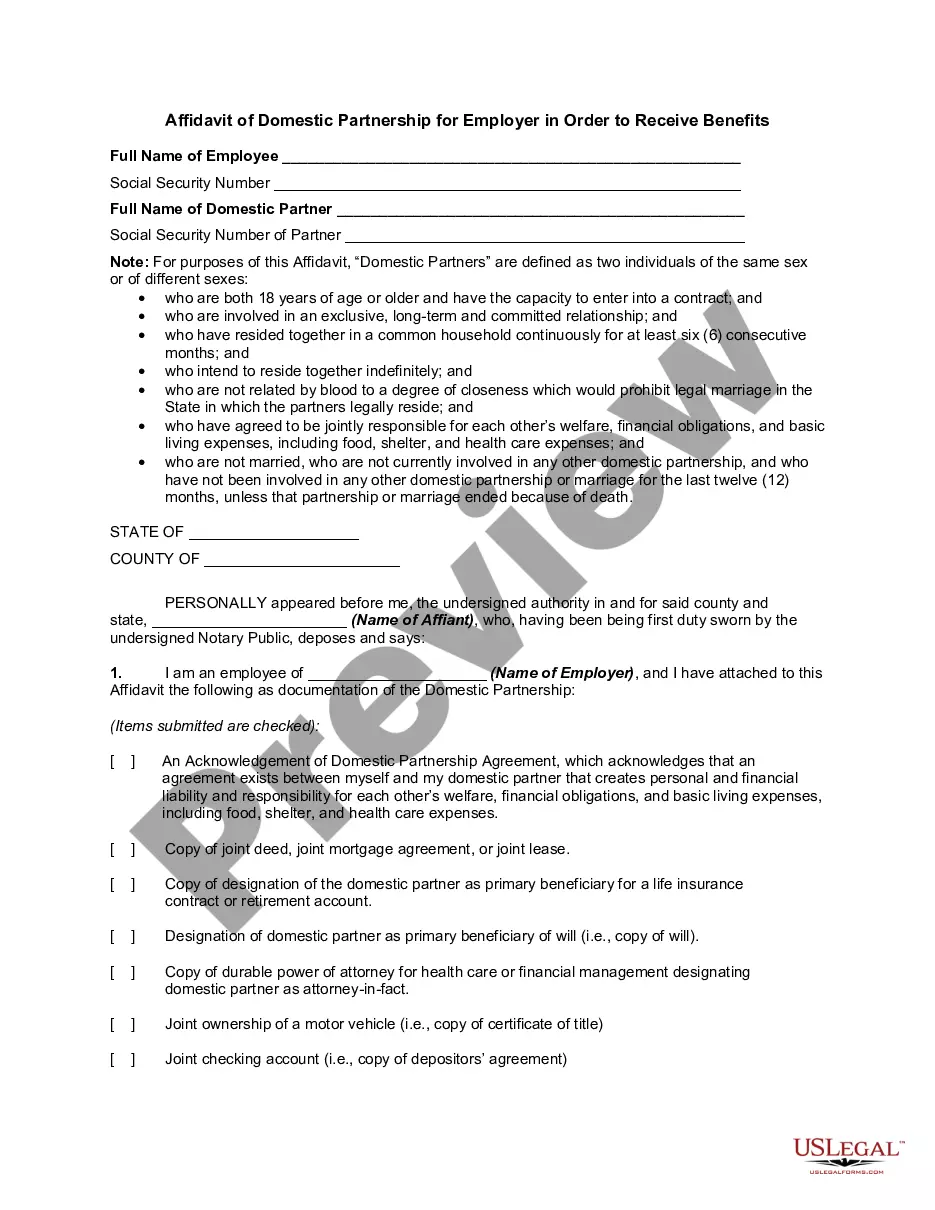
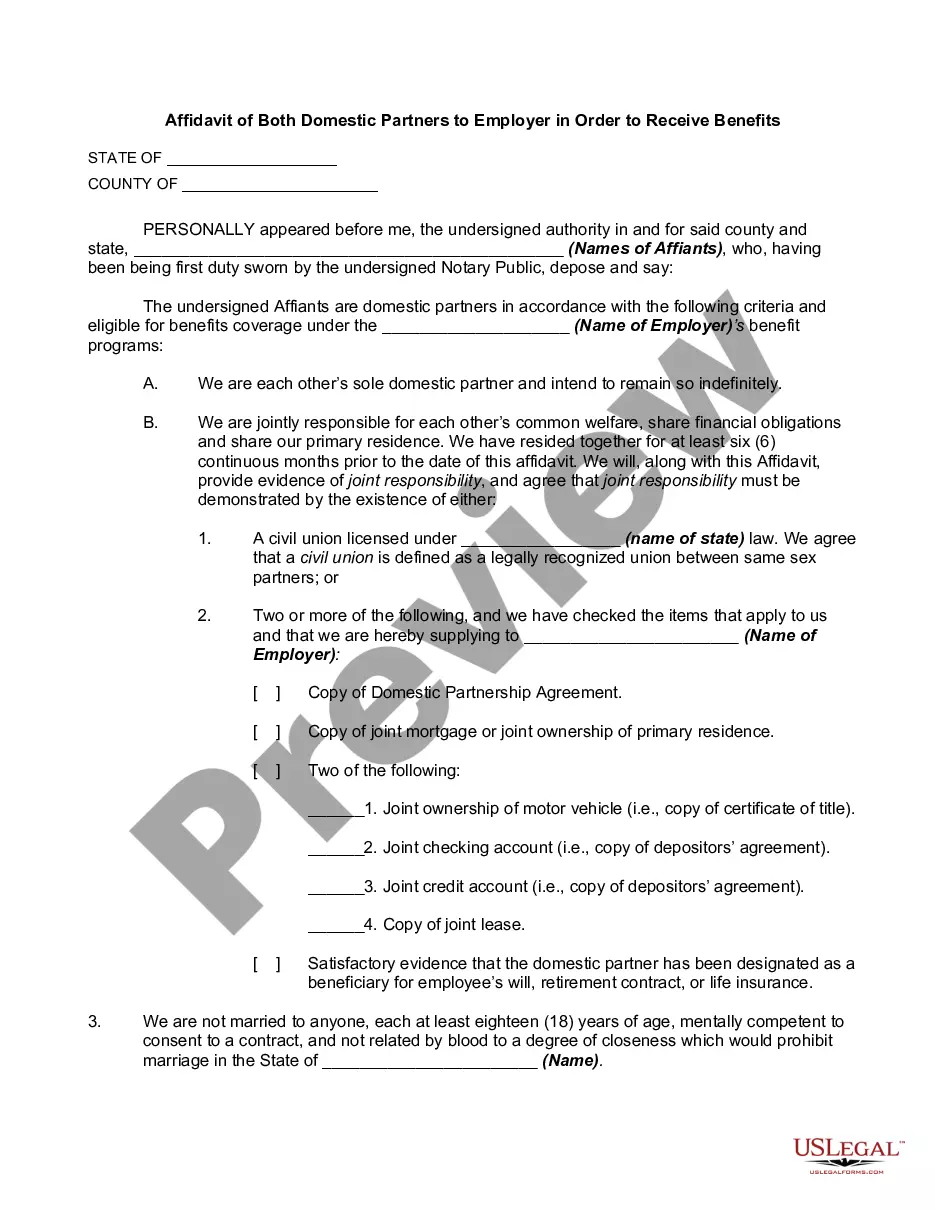
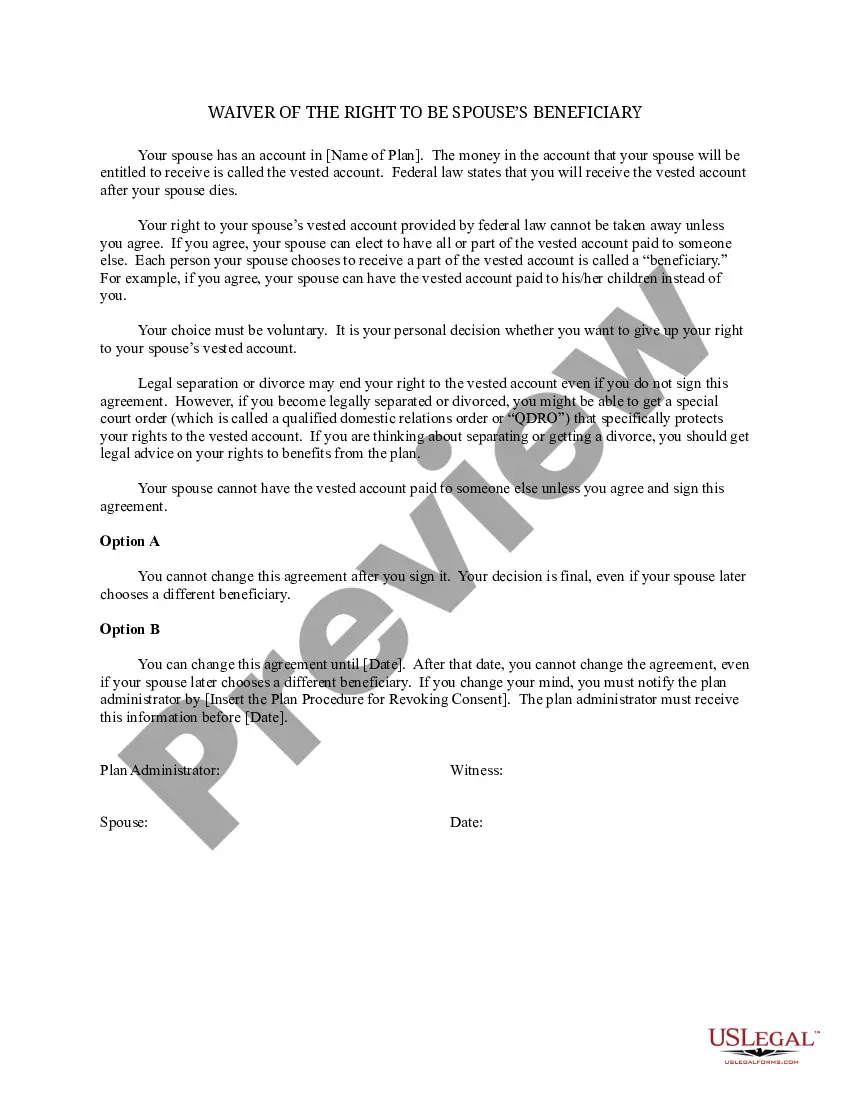
How to fill out Common Law Spouse Or Marriage Declaration Or Affidavit?
- Log in to your US Legal Forms account to access previously downloaded documents. Ensure your subscription is active or renew it if necessary.
- For first-time users, start by browsing the extensive library of forms. Use the Preview mode to verify that the form aligns with your requirements and local laws.
- If you require a different template, utilize the Search feature to find exactly what you need.
- Select the desired document and click 'Buy Now' to choose your subscription plan. New users will need to create an account.
- Complete your purchase using a credit card or PayPal, safeguarding your transaction.
- After purchasing, download the form to your device and access it anytime from the 'My Forms' section in your profile.
With US Legal Forms, you gain access to over 85,000 forms that are easily fillable and editable. This extensive collection ensures you can find templates that best fit your legal needs.
Take advantage of the expert assistance offered for form completion, ensuring you have precisely drafted documents. Start simplifying your legal document needs today!
Form popularity
FAQ
Common law, in its simplest form, is law that is developed through court decisions rather than through local statutes or regulations. It relies on precedents set by judges, which means that earlier rulings inform future cases. This system allows for legal interpretations to grow organically. When exploring what is an example of common law, consider how this foundational structure remains relevant in modern legal systems. For comprehensive resources, visit US Legal Forms.
Public law is a segment of law that governs relationships between individuals and the state, covering areas like constitutional and administrative law. In contrast, common law pertains to laws developed through court decisions. While public law often deals with regulations that affect society as a whole, common law is contextually adaptive, relying on past judicial outcomes. Thus, recognizing what is an example of common law helps distinguish these two important legal spheres.
An example of common law in government can be seen in principles established by judicial rulings that impact public policy. Courts may interpret existing laws and set new precedents that influence legislative decisions. These rulings can lead to significant changes in governance, and understanding what is an example of common law in this context is vital for grasping how laws evolve. Consider using US Legal Forms to access resources that explain these principles further.
The three most common types of law are criminal law, civil law, and administrative law. Criminal law deals with crimes and their punishments, while civil law addresses disputes between individuals. Administrative law governs the activities of governmental agencies. Exploring what is an example of common law helps illustrate how these types of law interconnect and overlap.
The most common definition of law is a system of rules created and enforced through social or governmental institutions. Laws are designed to regulate behavior and maintain order within a society. They can take various forms, including statutes, regulations, and legal precedents. A solid understanding of laws and what is an example of common law clarifies the importance of these rules in our daily lives.
Common law is a legal system that relies on court decisions and precedents rather than written statutes. At its core, common law develops through the rulings of judges who interpret laws based on previous cases. This allows for flexibility and adaptation in legal matters. Thus, recognizing what is an example of common law highlights its historical roots in tradition and case outcomes.
Common laws refer to legal principles that evolve through judicial decisions, rather than through legislative statutes. They arise from the interpretations of past court rulings and are applied to subsequent cases. Therefore, they play a crucial role in shaping legal precedents. Understanding what is an example of common law provides insight into how law adapts over time.
Some examples of common law include tort law, contract law, and property law. Tort law addresses civil wrongs and liabilities, while contract law governs agreements between parties. Additionally, common law rules about property rights help determine ownership. Understanding these examples enhances your knowledge of what is an example of common law and its implications.
Common law does not have a single, formal document like statutes do. Instead, it is built upon judicial decisions and precedents set by courts over time. These decisions collectively create a body of law that evolves with societal changes. For resources on common law principles, uslegalforms offers templates that explain how these laws apply.
An example of a common law employee is a traditional office worker who follows specific work hours and tasks set by their employer. These employees receive regular paychecks and often have tax withholdings applied. Understanding this classification supports better compliance with labor laws. This further underscores the relevance of identifying what is an example of common law.