Compensation For Remuneration
Description
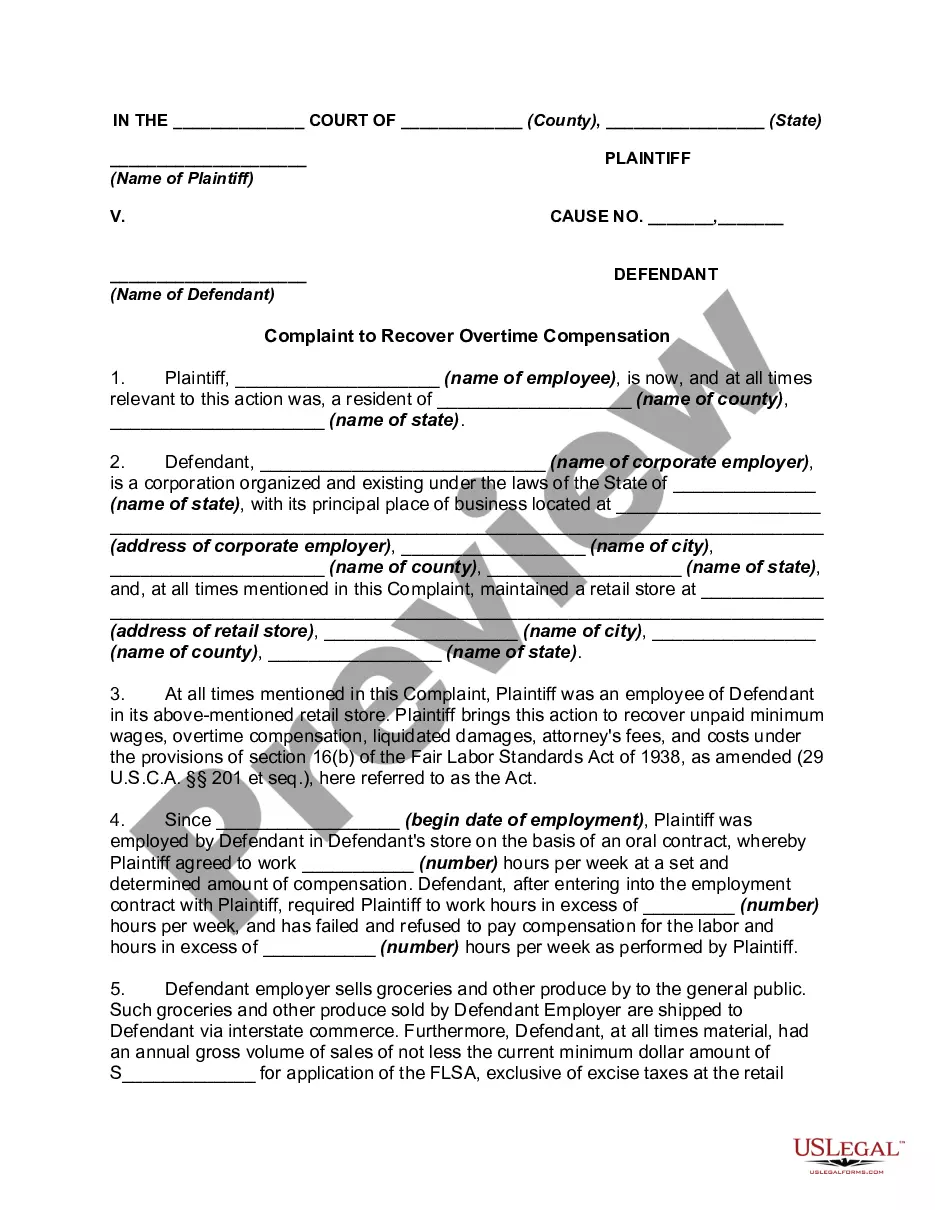
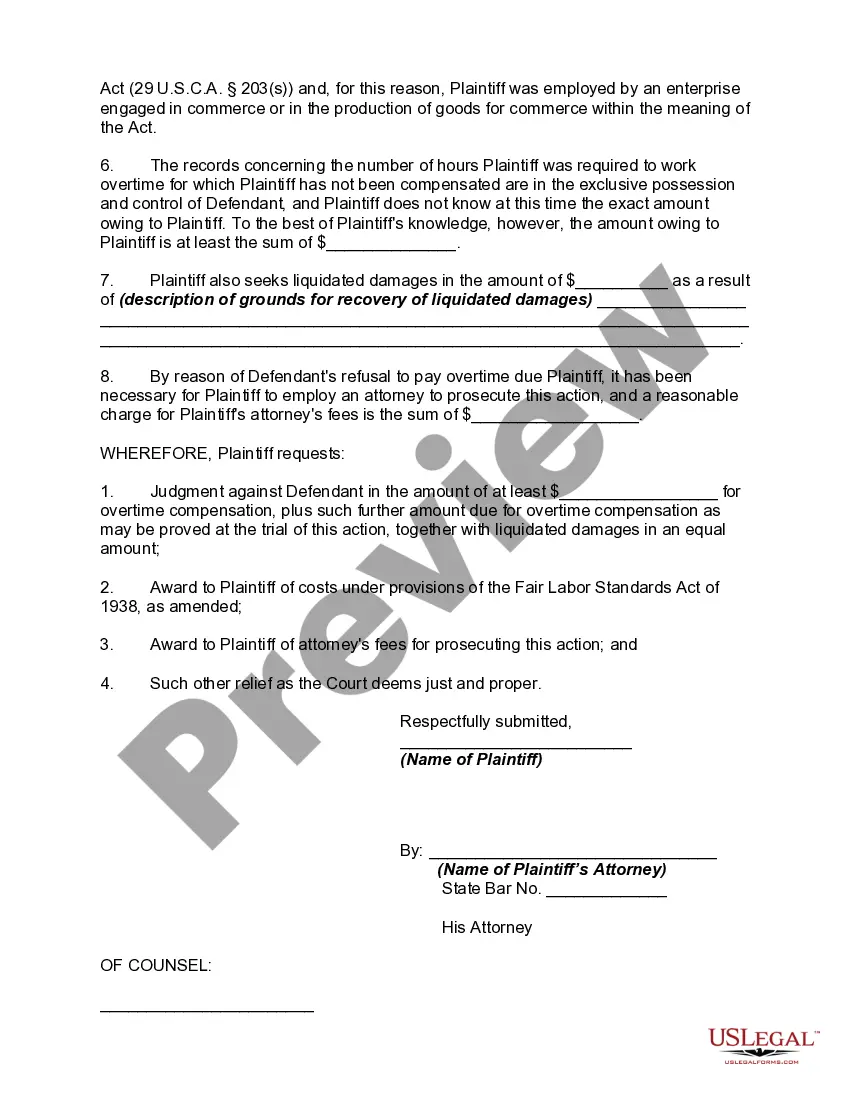

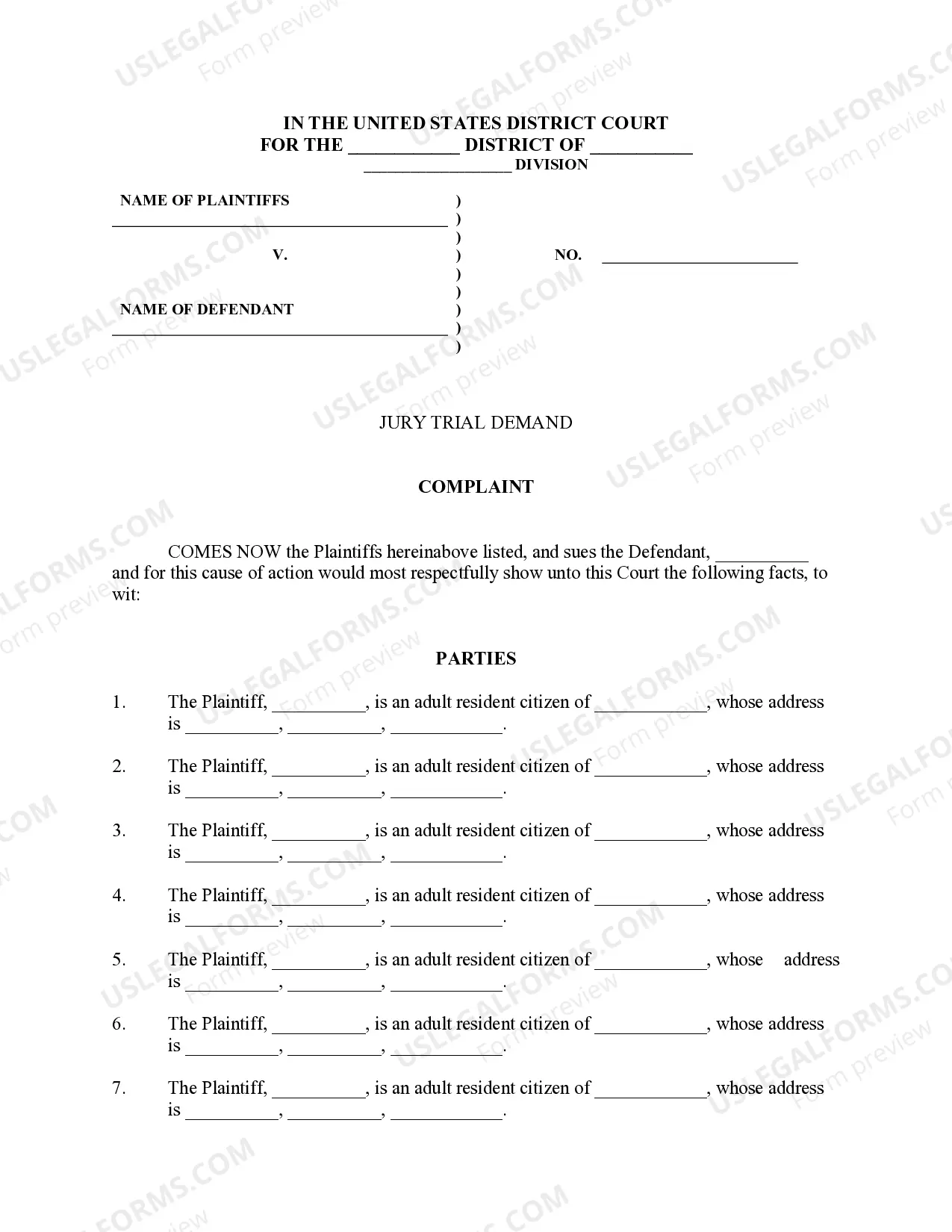
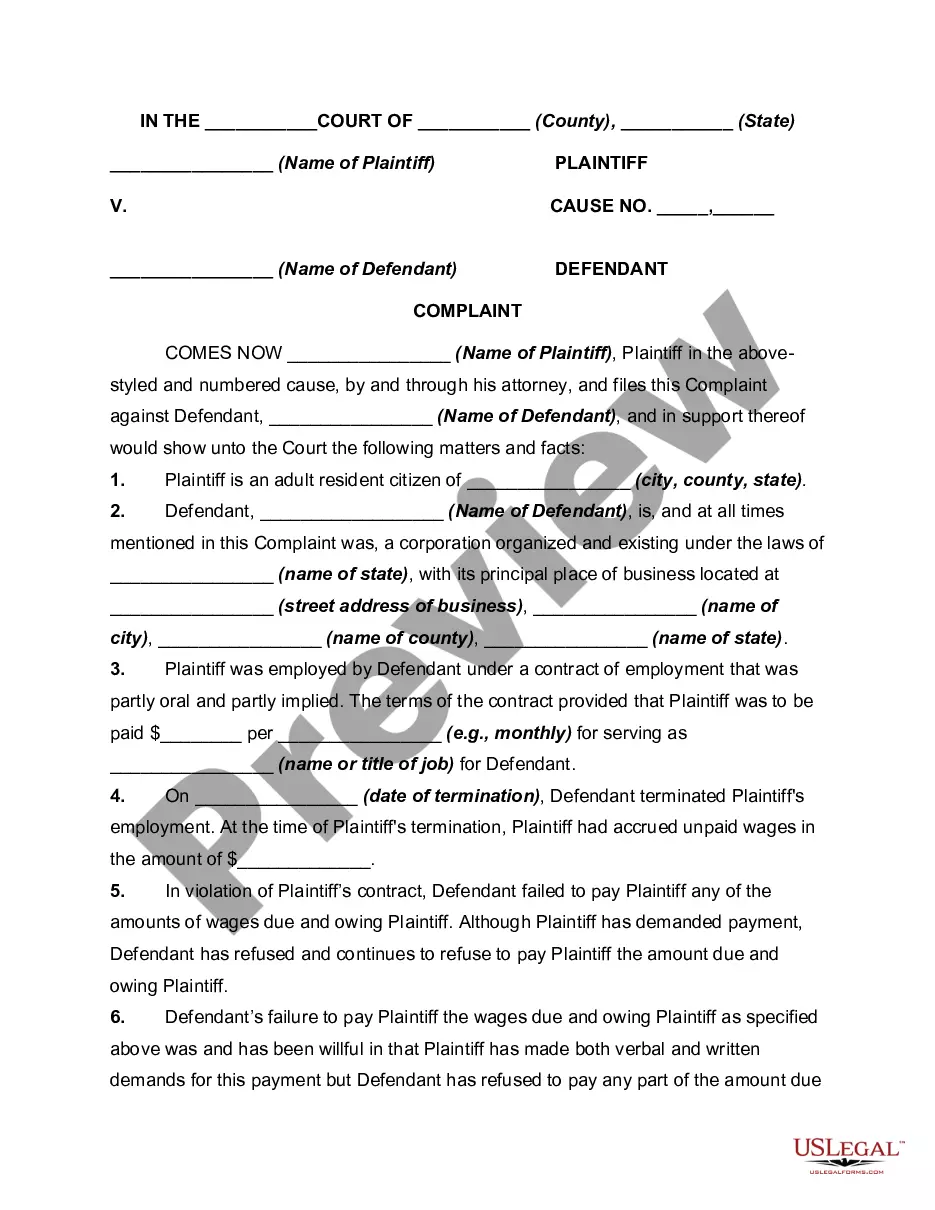
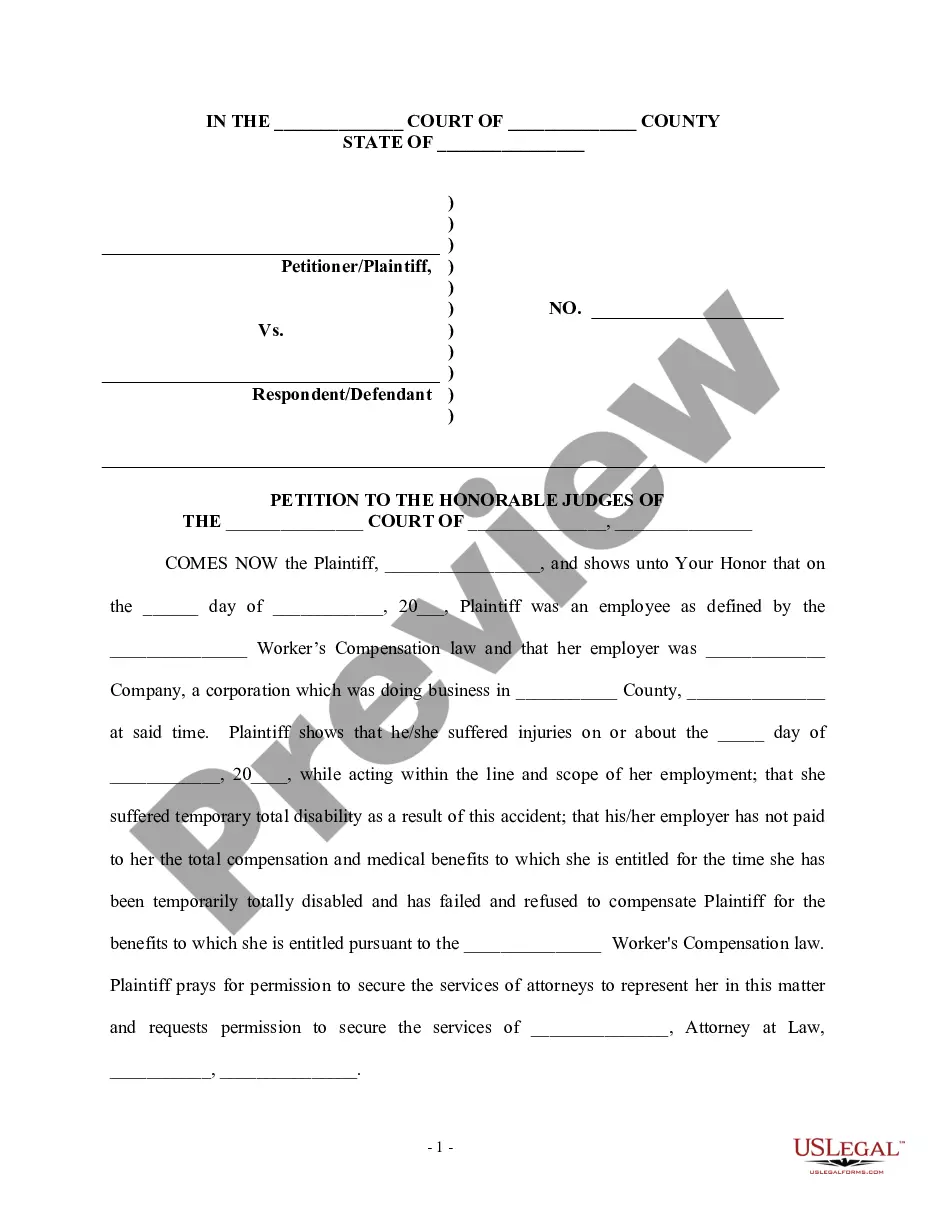

How to fill out Complaint To Recover Overtime Compensation Or Wages In State Court Under Section 16(b) Of Fair Labor Standards Act?
The Payment For Remuneration you observe on this page is a reusable legal template crafted by experienced lawyers in accordance with federal and state statutes and regulations.
For over 25 years, US Legal Forms has offered individuals, businesses, and lawyers more than 85,000 verified, state-specific forms for any business and personal event. It’s the quickest, most direct, and most reliable way to acquire the documents you require, as the service ensures the highest level of data security and anti-malware safeguards.
Choose the format you desire for your Payment For Remuneration (PDF, DOCX, RTF) and save the sample on your device. Complete and sign the document. Print the template to finish it by hand. Alternatively, employ an online multifunctional PDF editor to quickly and accurately fill out and sign your form with a valid signature. Download your documents again whenever necessary. Access the My documents tab in your profile to redownload any previously saved forms. Register with US Legal Forms to have verified legal templates for all of life’s situations at your fingertips.
- Search for the document you require and examine it.
- Review the sample you looked for and preview it or read the form description to verify it meets your needs. If it doesn’t, utilize the search function to locate the correct one. Click Buy Now when you have identified the template you need.
- Register and Log In.
- Select the pricing plan that best fits you and create an account. Use PayPal or a credit card to make a swift payment. If you already possess an account, Log In and verify your subscription to continue.
- Obtain the fillable template.
Form popularity
FAQ
To ask for remuneration politely, choose your words thoughtfully and maintain a respectful tone. Start by expressing appreciation for the opportunity and then gently introduce your request. For instance, you might say, 'I would like to discuss the remuneration for this role, as I believe it is important to understand the full compensation package.' This way, you create a positive dialogue around remuneration.
To request remuneration, clearly outline your expectations and be specific about what you are seeking. Consider preparing a written request that details your qualifications, contributions, and the remuneration you believe is fair. Present your request in a respectful manner, and be ready to discuss your reasoning in a follow-up conversation, ensuring you advocate for your worth.
When asking about remuneration, it's essential to approach the conversation with professionalism. Begin by expressing your enthusiasm for the role or project, then politely inquire about the remuneration package. You can frame your question by saying, 'Could you share more details about the remuneration structure for this position?' This approach opens the door for discussion while showing your interest.
To negotiate remuneration effectively, start by researching industry standards and gathering data on average compensation for your role. Prepare your case by highlighting your skills, experience, and achievements that justify a higher remuneration. Approach the negotiation confidently, and be open to discussing various compensation options, including bonuses, benefits, and flexible work arrangements.
When filling out desired compensation, start by researching industry standards for your position to set realistic expectations. Clearly state your salary range based on your experience and the market rate, while also considering other forms of compensation for remuneration, such as benefits and bonuses. Uslegalforms can provide resources and templates to ensure you present your desired compensation confidently and professionally.
Compensation refers to the total monetary and non-monetary benefits provided to an employee for their services, while remuneration specifically emphasizes the payment or salary aspect. In other words, all remuneration is considered compensation, but not all compensation is remuneration. Recognizing this distinction can help you better assess job offers and negotiate compensation for remuneration effectively.
A remuneration package typically includes a base salary, health insurance, retirement plans, and performance bonuses. For instance, a tech company might offer a yearly salary of $80,000, along with stock options, health benefits, and a flexible work schedule. Understanding the components of a remuneration package can help you negotiate better compensation for remuneration in your career.
A good answer for compensation defines it as the total payment received by an employee for their work. This includes not only salary but also bonuses, benefits, and any other financial perks. When discussing compensation for remuneration, it is essential to highlight the overall value provided to the employee, which can enhance job satisfaction and retention.