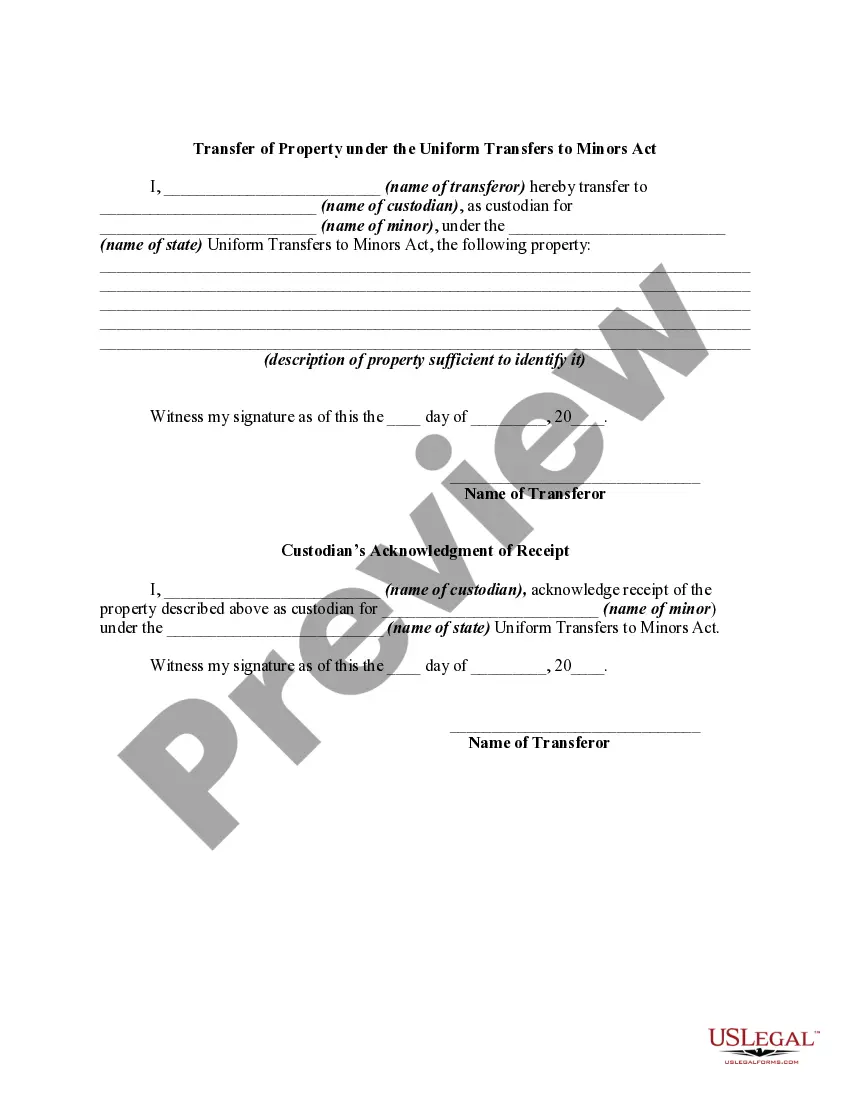
Transfer Property Under Act For Tax Purposes
Description
Get your form ready online
Our built-in tools help you complete, sign, share, and store your documents in one place.
Make edits, fill in missing information, and update formatting in US Legal Forms—just like you would in MS Word.
Download a copy, print it, send it by email, or mail it via USPS—whatever works best for your next step.
Sign and collect signatures with our SignNow integration. Send to multiple recipients, set reminders, and more. Go Premium to unlock E-Sign.
If this form requires notarization, complete it online through a secure video call—no need to meet a notary in person or wait for an appointment.
We protect your documents and personal data by following strict security and privacy standards.

Make edits, fill in missing information, and update formatting in US Legal Forms—just like you would in MS Word.

Download a copy, print it, send it by email, or mail it via USPS—whatever works best for your next step.

Sign and collect signatures with our SignNow integration. Send to multiple recipients, set reminders, and more. Go Premium to unlock E-Sign.

If this form requires notarization, complete it online through a secure video call—no need to meet a notary in person or wait for an appointment.

We protect your documents and personal data by following strict security and privacy standards.
Looking for another form?





How to fill out Transfer Of Property Under The Uniform Transfers To Minors Act?
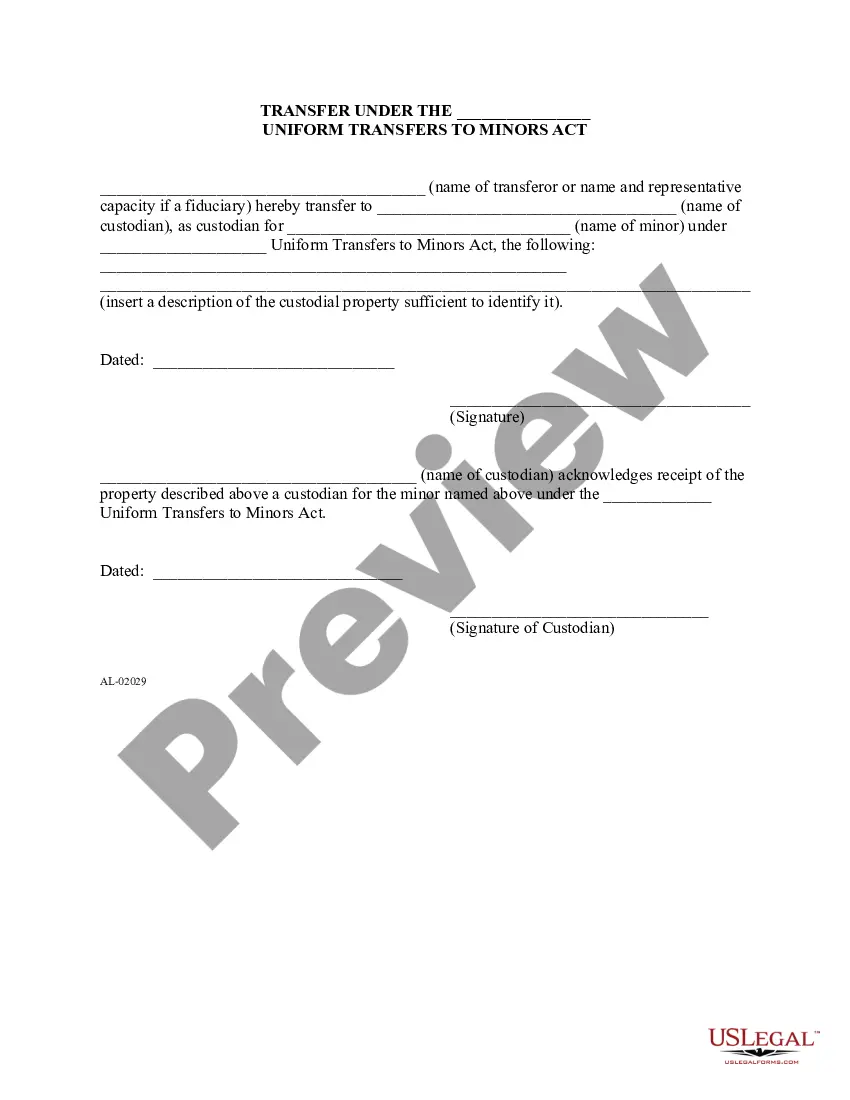
The Transfer Property Under Act For Tax Purposes displayed on this page is a reusable formal template created by professional attorneys in accordance with federal and local regulations.
For over 25 years, US Legal Forms has supplied individuals, enterprises, and legal experts with more than 85,000 verified, state-specific documents for any business and personal circumstance. It’s the quickest, simplest, and most reliable method to acquire the paperwork you require, as the service ensures bank-level data safety and anti-malware safeguards.
Register for US Legal Forms to access verified legal templates for all of life's situations at your fingertips.
- Search for the document you need and assess it.
- Browse through the file you searched and view it or check the form description to confirm it meets your needs. If it doesn't, use the search bar to find the correct one. Click Buy Now once you've located the template you require.
- Choose a subscription and Log In.
- Pick the pricing plan that works for you and create an account. Pay using PayPal or a credit card for a swift transaction. If you already have an account, Log In and review your subscription to continue.
- Obtain the editable template.
- Select the format you desire for your Transfer Property Under Act For Tax Purposes (PDF, DOCX, RTF) and download the example onto your device.
- Complete and sign the document.
- Print the template to fill it out manually. Alternatively, use an online versatile PDF editor to quickly and accurately complete and sign your form with a legally-binding electronic signature.
- Redownload your document once again.
- Utilize the same document as needed. Access the My documents tab in your profile to redownload any previously downloaded forms.
Form popularity
FAQ
The Transfer of Property Act covers a wide range of topics related to property transfer, including types of property, methods of transfer, and rights of the parties involved. It outlines the legal requirements and obligations necessary for a valid transfer. Familiarizing yourself with what the act covers can simplify your process to transfer property under act for tax purposes.
Transfer under the Income Tax Act refers to the change of ownership of property, which can have tax implications. When you transfer property, it may trigger capital gains tax or affect your tax liabilities. Knowing how to transfer property under act for tax purposes can help you navigate these tax implications effectively.
The primary purpose of the Transfer of Property Act is to regulate the transfer of property rights in a structured manner. This regulation ensures that all transactions are legally binding and protects the interests of both buyers and sellers. Understanding this primary goal can enhance your ability to transfer property under act for tax purposes.
The Transfer of Property Act aims to provide a legal framework for the transfer of property rights between parties. It establishes clear guidelines and procedures to ensure transparency and fairness in property transactions. Knowing the purpose of this act is vital if you want to successfully transfer property under act for tax purposes.
The transfer of property serves several essential functions, including enabling ownership changes and facilitating investments. It also plays a pivotal role in the real estate market, impacting economic growth. By understanding the transfer process, you can effectively transfer property under act for tax purposes and optimize your financial strategy.
Certain properties are exempt from transfer under the Transfer of Property Act. For instance, an individual cannot transfer property that is not owned, such as future property or property under a restriction. Recognizing these limitations helps in navigating the complexities of how to transfer property under act for tax purposes.
The Transfer Property Act (TPA) does not apply to certain situations, such as property transfers involving a lease for a period not exceeding one year, or transactions between co-owners. Additionally, TPA does not apply to property held by the government or public trusts. Understanding these exceptions is crucial when you seek to transfer property under act for tax purposes.
You typically cannot file your property taxes directly on your income tax return, as they are separate obligations. However, if you transfer property under act for tax purposes, you might qualify for specific deductions related to property taxes. It’s best to consult with a tax professional for personalized advice. Platforms like USLegalForms can assist you in navigating this process effectively.
To transfer ownership of a property in Illinois, you need to prepare a deed that clearly states the transfer details. After executing the deed, you must file it with the county recorder's office. It’s crucial to ensure all information is accurate to avoid delays. If you’re unsure about the specifics, USLegalForms provides resources that can help simplify the process.
Generally, you cannot write off property transfer tax on your federal income tax return. However, if you transfer property under act for tax purposes, there might be other tax benefits available to you. It’s advisable to consult a tax professional to explore all available options for deductions. USLegalForms can guide you through understanding these complexities.