Arkansas Deed Beneficiary With The Inheritance Payment
Description

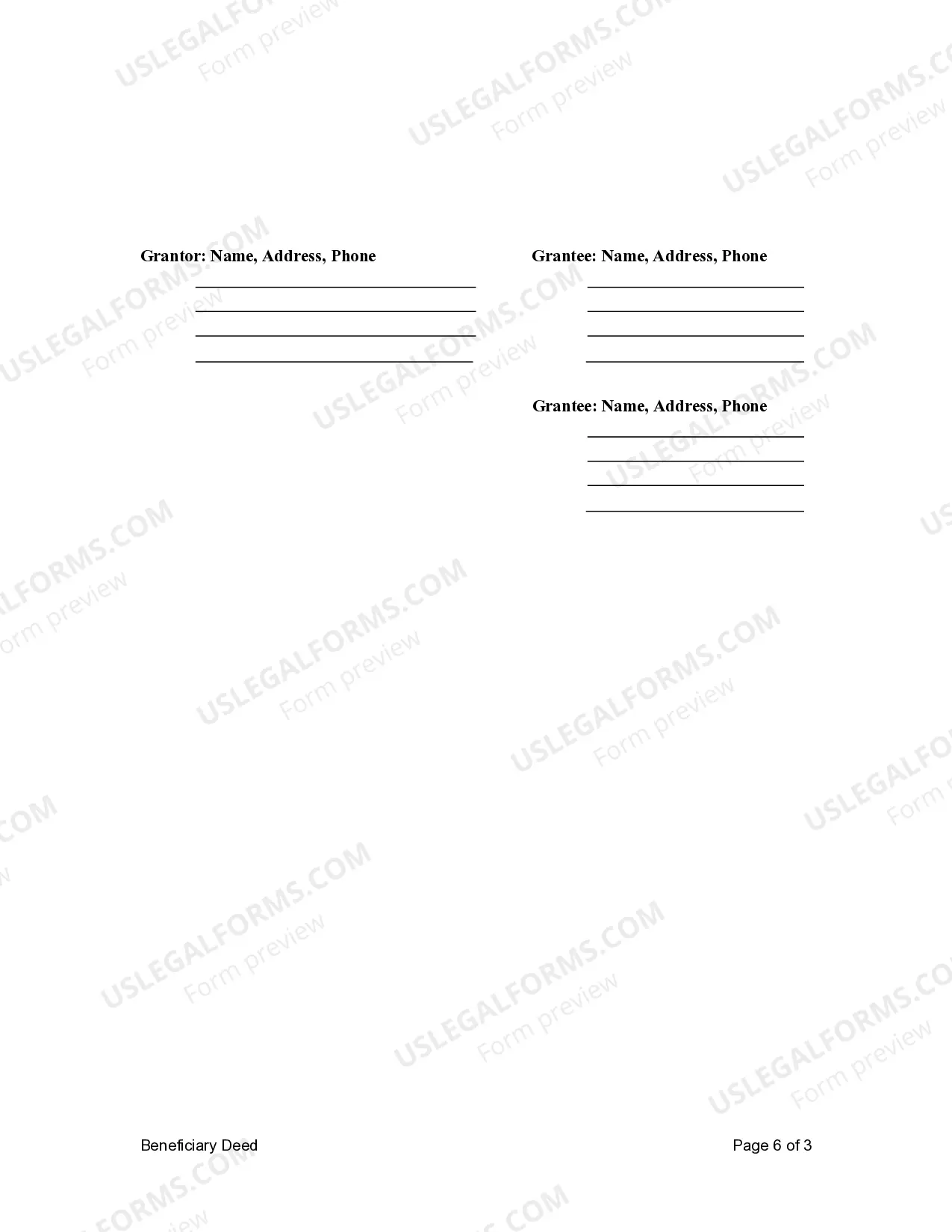

Get your form ready online
Our built-in tools help you complete, sign, share, and store your documents in one place.
Make edits, fill in missing information, and update formatting in US Legal Forms—just like you would in MS Word.
Download a copy, print it, send it by email, or mail it via USPS—whatever works best for your next step.
Sign and collect signatures with our SignNow integration. Send to multiple recipients, set reminders, and more. Go Premium to unlock E-Sign.
If this form requires notarization, complete it online through a secure video call—no need to meet a notary in person or wait for an appointment.
We protect your documents and personal data by following strict security and privacy standards.

Make edits, fill in missing information, and update formatting in US Legal Forms—just like you would in MS Word.

Download a copy, print it, send it by email, or mail it via USPS—whatever works best for your next step.

Sign and collect signatures with our SignNow integration. Send to multiple recipients, set reminders, and more. Go Premium to unlock E-Sign.

If this form requires notarization, complete it online through a secure video call—no need to meet a notary in person or wait for an appointment.

We protect your documents and personal data by following strict security and privacy standards.
Looking for another form?
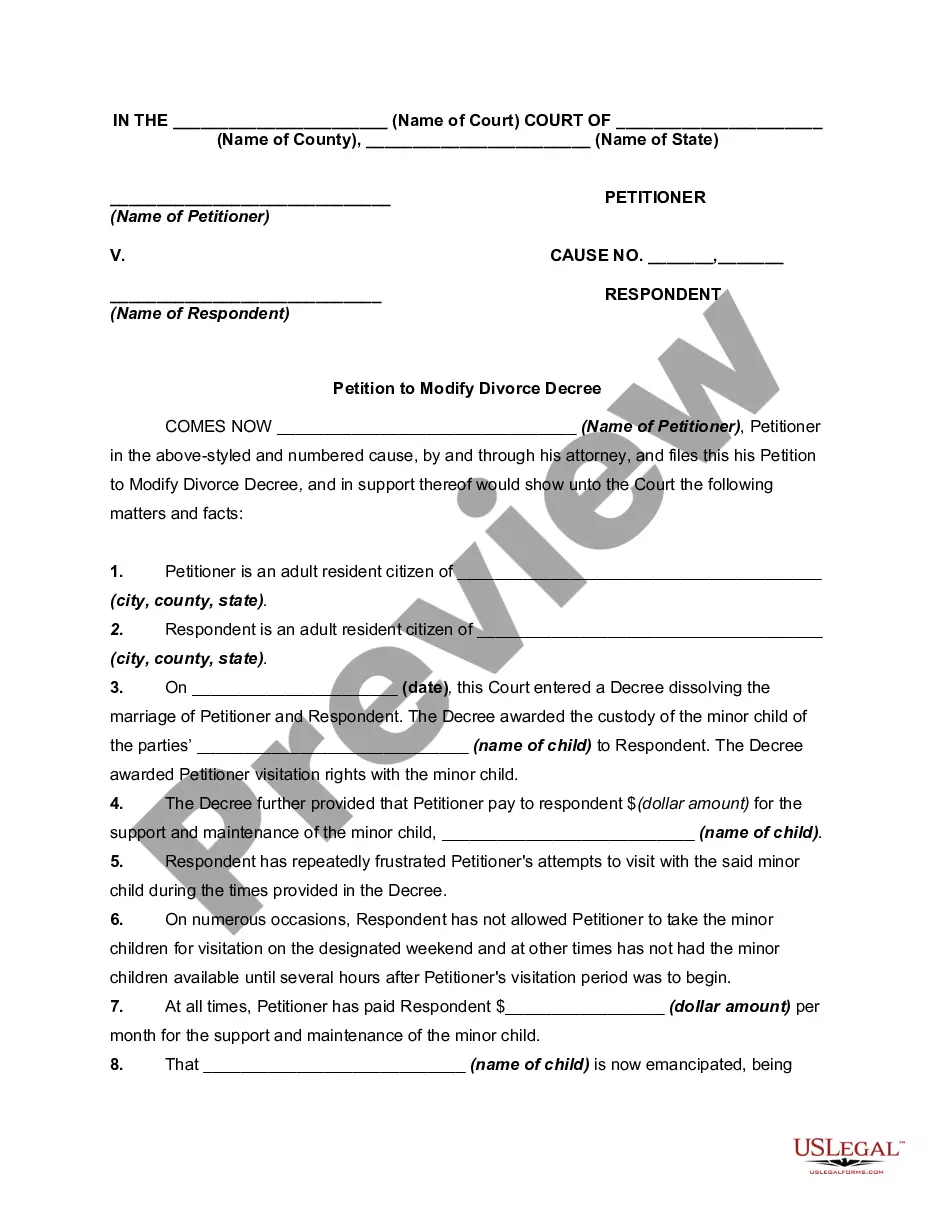






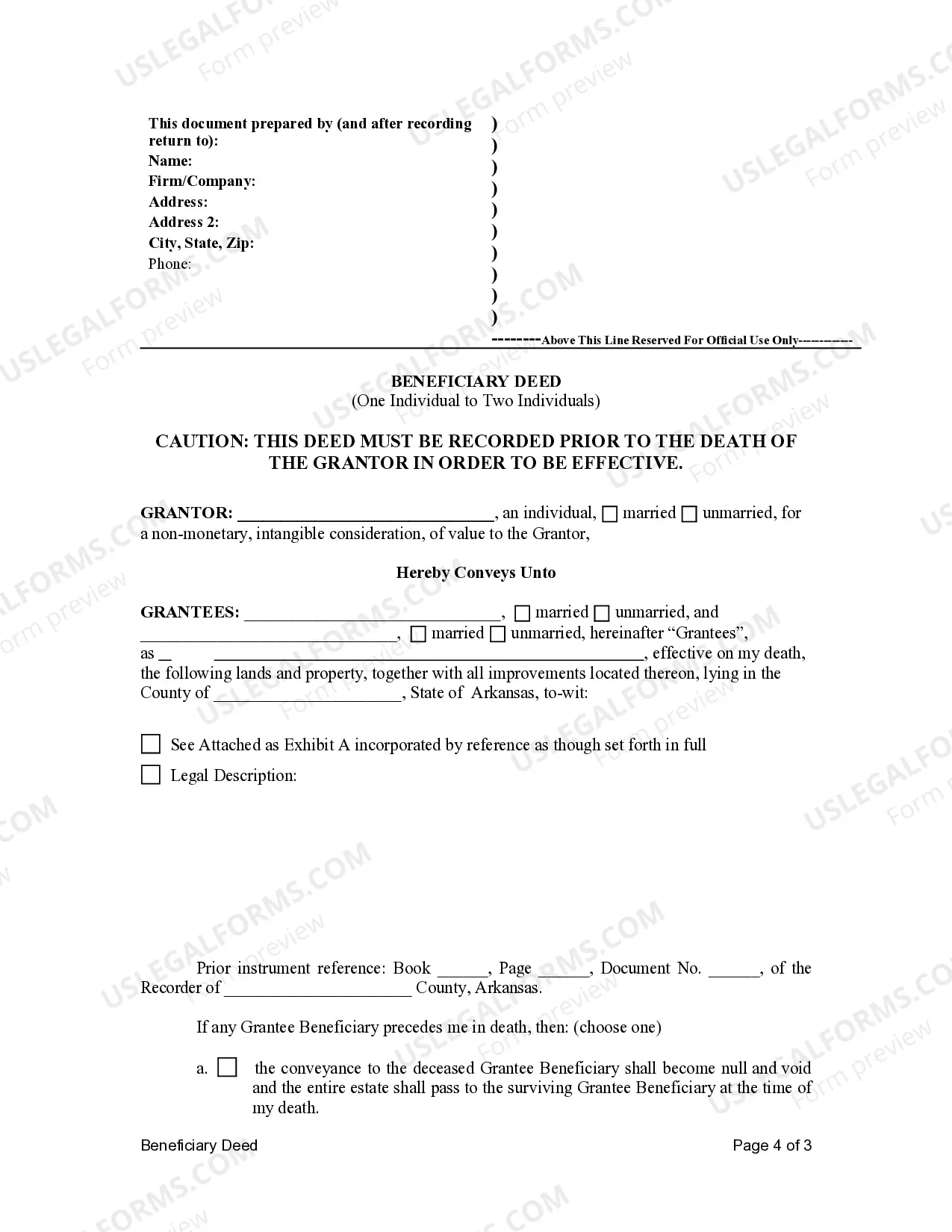
How to fill out Arkansas Transfer On Death Deed Or TOD - Beneficiary Deed For One Individual To Two Individuals?
Managing legal documents can be exasperating, even for the most adept professionals.
When seeking an Arkansas Deed Beneficiary With The Inheritance Payment and lacking the time to dedicate to finding the correct and current version, the procedures may become overwhelming.
US Legal Forms addresses all your requirements, ranging from personal to business documents, all in one location.
Utilize advanced tools to complete and manage your Arkansas Deed Beneficiary With The Inheritance Payment.
Here are the actions to follow after finding the form you need: Confirm that this is the correct document by previewing it and reviewing its details. Ensure that the template is accepted in your state or county. Click Buy Now when you are ready. Select a monthly subscription plan. Choose the format you prefer, and Download, complete, sign, print, and send your documents. Enjoy the US Legal Forms online library, backed by 25 years of expertise and reliability. Transform your routine document management into a seamless and user-friendly process today.
- Access a valuable repository of articles, guides, and manuals pertinent to your circumstances and needs.
- Save time and effort searching for the documents you require, and use US Legal Forms’ sophisticated search and Preview feature to locate Arkansas Deed Beneficiary With The Inheritance Payment and obtain it.
- If you have a monthly subscription, Log In to your US Legal Forms account, search for the document, and acquire it.
- Visit the My documents tab to review the documents you have saved and organize your folders as desired.
- If this is your first experience with US Legal Forms, create a free account for unlimited access to the library's benefits.
- A robust online form repository could revolutionize the way individuals tackle these scenarios effectively.
- US Legal Forms is a leading provider of digital legal documents, offering over 85,000 state-specific legal forms accessible at your convenience.
- With US Legal Forms, you can access forms tailored to your state or county.
Form popularity
FAQ
A beneficiary deed allows property owners to transfer ownership to a designated beneficiary after their death, ensuring that the property does not go through probate. This deed serves to clarify your intentions and provides a smooth transition of ownership. By employing a beneficiary deed, you enhance the efficiency of your estate planning, particularly concerning the Arkansas deed beneficiary with the inheritance payment. Explore the US Legal Forms platform for templates and guidance on how to create a beneficiary deed that suits your needs.
In Arkansas, a beneficiary deed is a legal document that allows property owners to designate a beneficiary to receive their property upon death. This deed simplifies the transfer process, avoiding probate and ensuring that the property passes directly to the beneficiary. By utilizing a beneficiary deed, you can effectively manage your estate and provide for your loved ones through an Arkansas deed beneficiary with the inheritance payment. US Legal Forms offers resources to help you create and file this important document.
A beneficiary deed does not automatically override a will. Instead, it works alongside the will to transfer property directly to a named beneficiary upon the owner's death. This means that if a property is included in both the will and the beneficiary deed, the beneficiary deed will take precedence. For clarity on managing your estate, consider using the US Legal Forms platform to navigate the intricacies of Arkansas deed beneficiary with the inheritance payment.
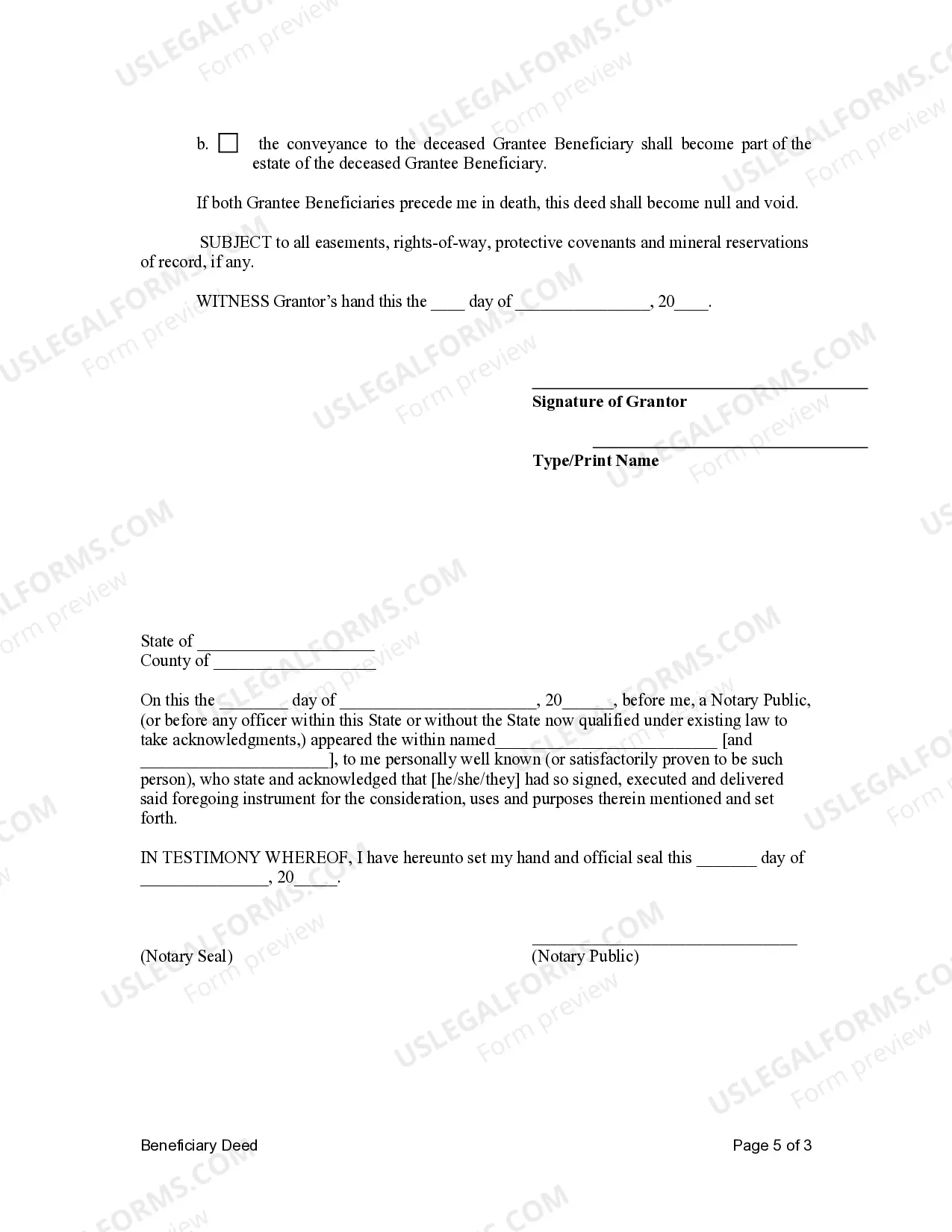
To file a beneficiary deed in Arkansas, you must first complete the beneficiary deed form, which you can find on legal document platforms like US Legal Forms. Next, you need to sign the deed in front of a notary public. After that, file the completed deed with the county clerk's office in the county where the property is located. By doing this, you ensure that the property passes directly to the designated beneficiary after your passing, making it an efficient option for managing inheritance payments.
Filling out a beneficiary deed involves several straightforward steps. First, you need to identify the property and the beneficiary clearly, including their full legal name. Next, you will complete the form by providing your information as the grantor and detailing how the inheritance payment will be distributed. For a smooth experience, consider utilizing the resources available on the US Legal Forms platform, which offers easy-to-follow templates and guidance.
Yes, you can complete a beneficiary deed without an attorney in Arkansas, but it is advisable to seek professional guidance. The process requires careful attention to detail, and any mistakes can lead to complications regarding the inheritance payment. Using resources like US Legal Forms can simplify this process, providing you with templates and instructions to ensure accuracy.
While a beneficiary deed offers advantages, it also has some disadvantages. For instance, the property may not be protected from creditors or lawsuits, which can affect the inheritance payment. Additionally, if the beneficiary predeceases the owner, the deed may need to be updated or revoked. Understanding these factors is important when choosing the right approach for your estate planning needs, and US Legal Forms can guide you through these considerations.
In Arkansas, heirs typically have three years to claim their inheritance after the death of the property owner. This timeframe begins from the date of death, and it's crucial for heirs to act within this period to ensure their rights to the inheritance payment. If you are considering a beneficiary deed, understanding this timeline can help you manage your inheritance effectively. For further assistance, you can explore resources on the US Legal Forms platform.