Wrongful Execution
Description

Get your form ready online
Our built-in tools help you complete, sign, share, and store your documents in one place.
Make edits, fill in missing information, and update formatting in US Legal Forms—just like you would in MS Word.
Download a copy, print it, send it by email, or mail it via USPS—whatever works best for your next step.
Sign and collect signatures with our SignNow integration. Send to multiple recipients, set reminders, and more. Go Premium to unlock E-Sign.
If this form requires notarization, complete it online through a secure video call—no need to meet a notary in person or wait for an appointment.
We protect your documents and personal data by following strict security and privacy standards.

Make edits, fill in missing information, and update formatting in US Legal Forms—just like you would in MS Word.

Download a copy, print it, send it by email, or mail it via USPS—whatever works best for your next step.

Sign and collect signatures with our SignNow integration. Send to multiple recipients, set reminders, and more. Go Premium to unlock E-Sign.

If this form requires notarization, complete it online through a secure video call—no need to meet a notary in person or wait for an appointment.

We protect your documents and personal data by following strict security and privacy standards.
Looking for another form?


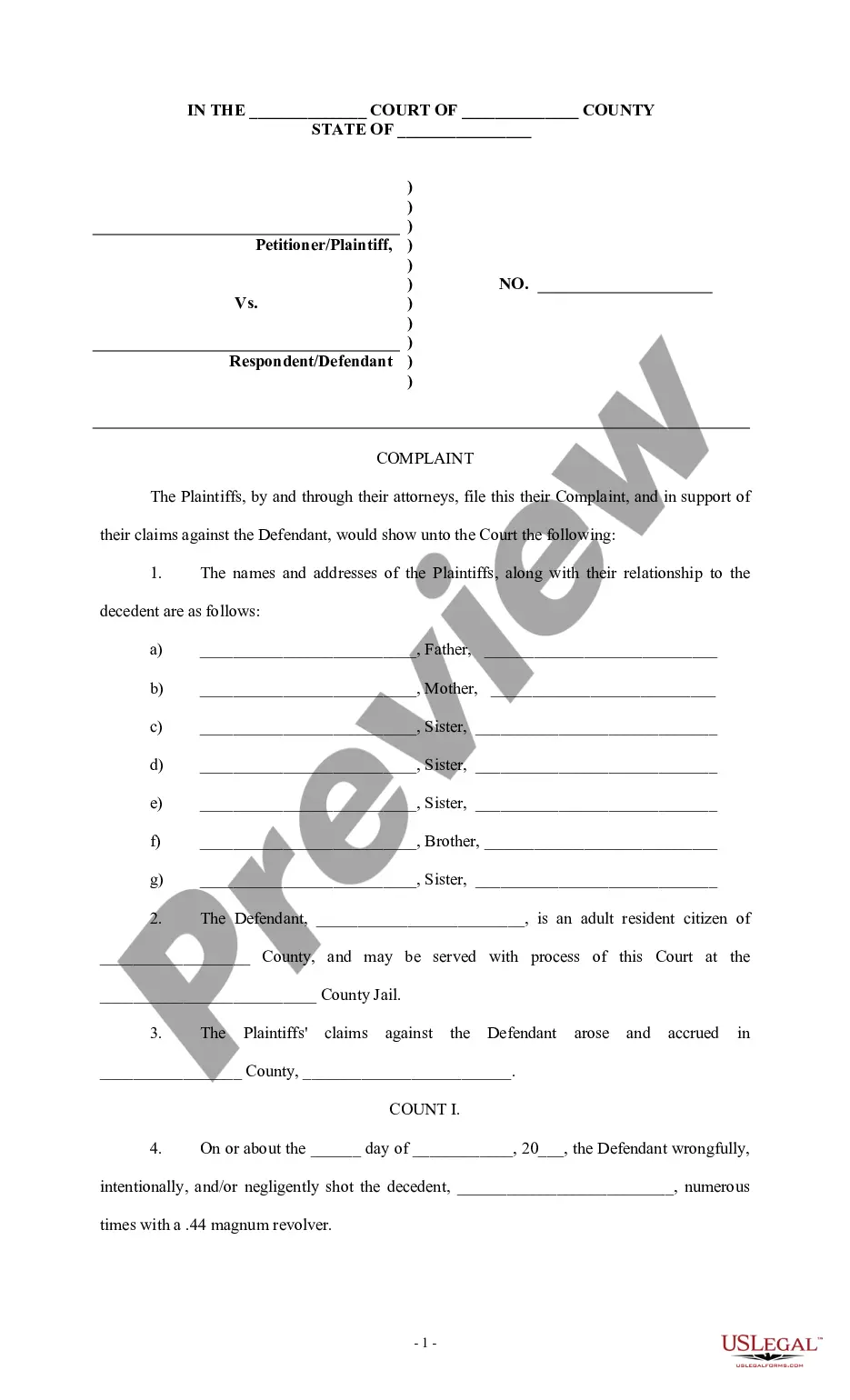
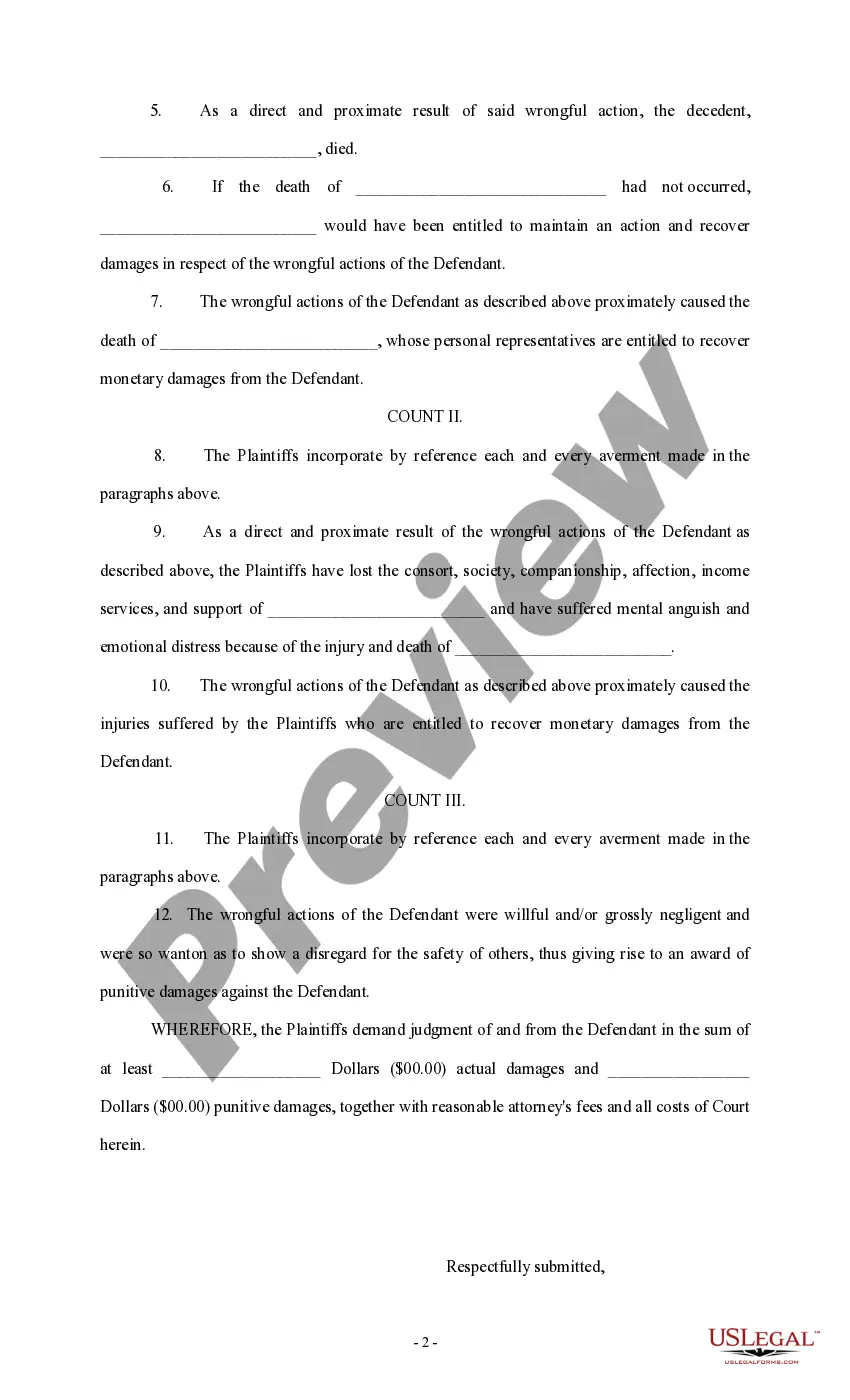
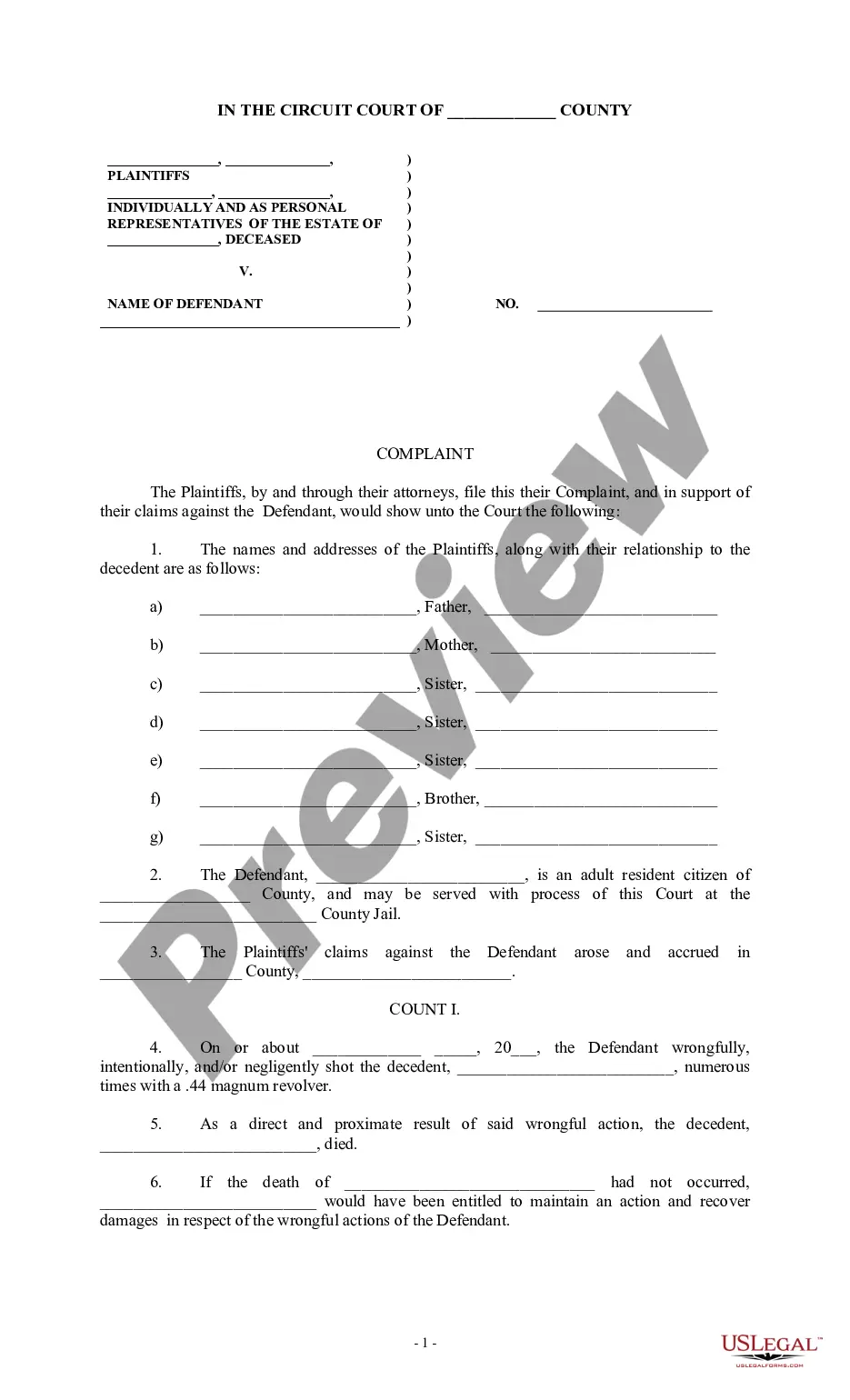
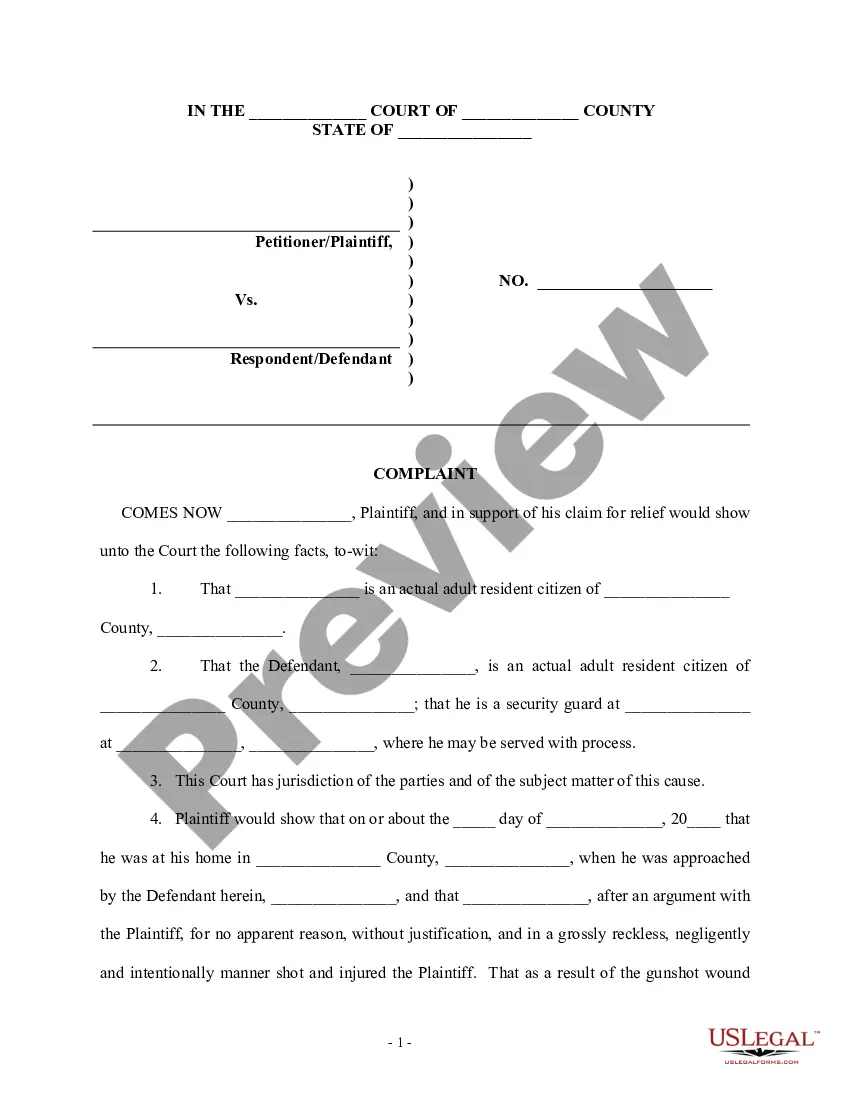
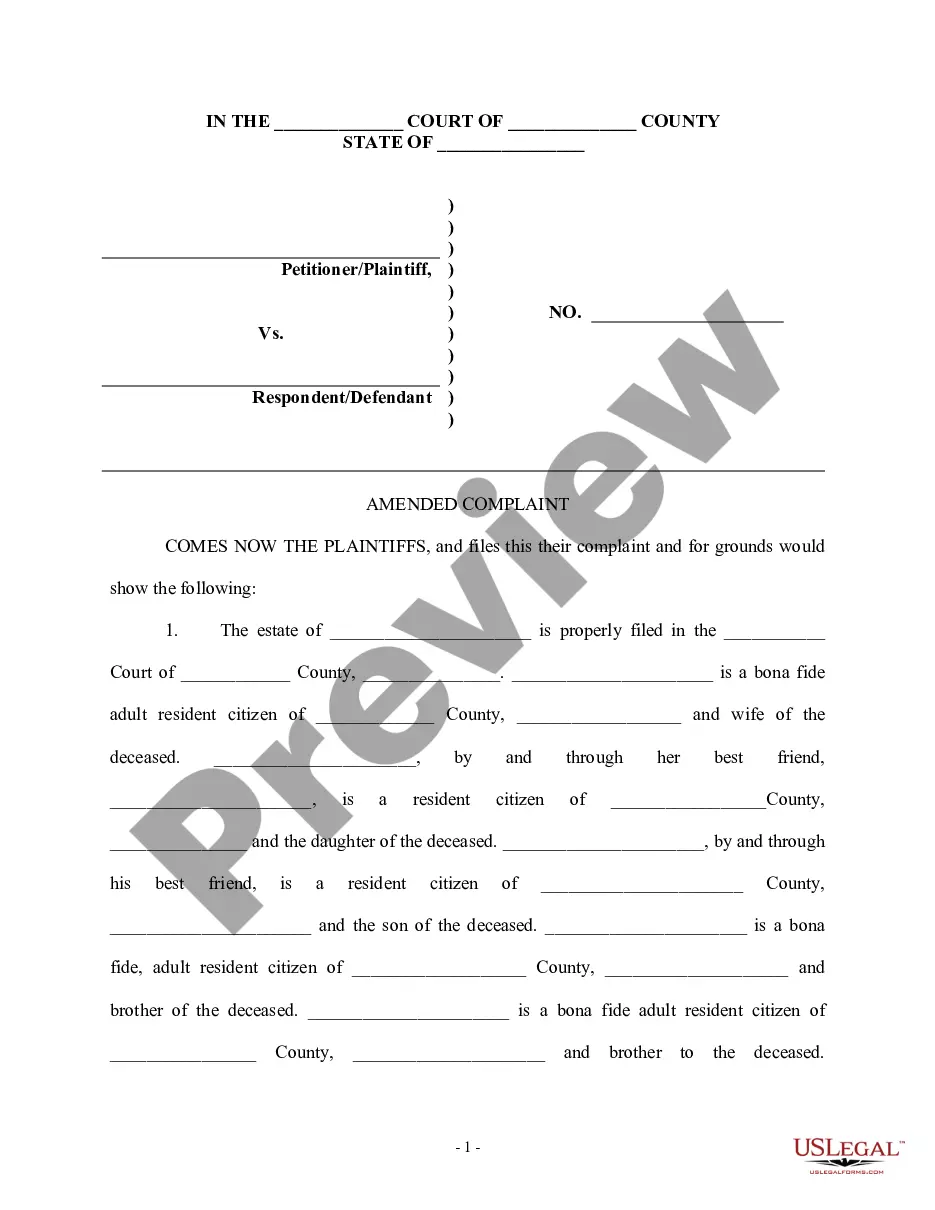
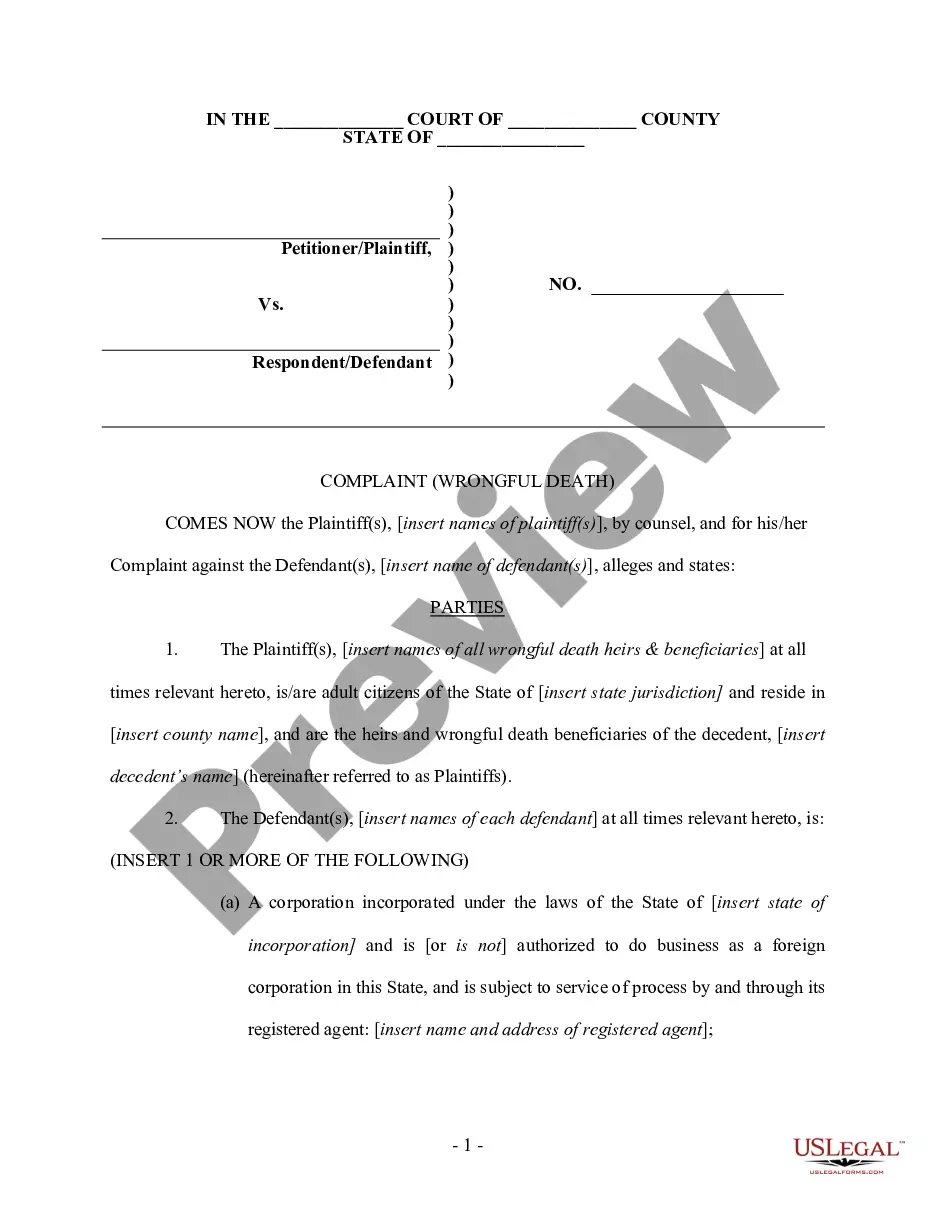
How to fill out Complaint For Personal Injury And Wrongful Death Due To Shooting / Violence?
- First, log in to your US Legal Forms account. If it’s your first time, create an account to begin the process.
- Next, search for the specific legal form related to wrongful execution using keywords that match your needs.
- Review the preview mode and form description, ensuring that the form is suitable for your case and meets jurisdiction requirements.
- Select the appropriate form. If you find that additional forms are needed, use the search tab to locate them.
- Choose a subscription plan that fits your needs by clicking the Buy Now button.
- Complete your purchase by entering your payment details or using PayPal for convenience.
- Finally, download the completed form to your device. You can also access it anytime through the My Forms section of your account.
In conclusion, US Legal Forms empowers individuals and attorneys to access a wide array of legal documents efficiently. With over 85,000 forms available, users can ensure their legal documentation is accurate and compliant with local laws.
Get started today by visiting US Legal Forms and empowering yourself with the legal resources you need!
Form popularity
FAQ
The five main forms of execution in the United States include lethal injection, electrocution, gas chamber, hanging, and firing squad. Lethal injection is the most commonly used method, though other forms raise ethical questions and concerns around wrongful execution. Each method carries its own implications for the death penalty debate. As society contemplates these methods, it is essential to ensure that wrongful execution does not occur.
In the United States, the crimes that can result in execution typically include murder, especially when it involves aggravating factors like premeditation or extreme brutality. Other serious offenses may include treason and certain acts of terrorism. However, it is vital to recognize that wrongful execution can occur, leading to innocent people being sentenced to death for crimes they did not commit. This reality underscores the importance of a thorough legal process to avoid wrongful execution.
Executions occur for a variety of reasons, primarily tied to justice for serious crimes. These reasons often include the belief that the death penalty serves as a deterrent against heinous acts, like murder. Sadly, wrongful execution cases highlight severe flaws in the legal system, where innocent individuals are executed due to mistakes or biases. It is crucial to examine these issues comprehensively to ensure justice is served without the risk of wrongful execution.
Execution typically occurs in cases of severe crimes, often involving murder or acts of terrorism. However, wrongful execution can stem from misinterpretations of evidence, coerced confessions, or inadequate legal representation. The judicial system must ensure that convictions are thorough and just to prevent irreversible mistakes. Platforms like US Legal Forms can guide individuals in understanding their rights and navigating the complexities of wrongful execution claims.
One notable case of wrongful execution is that of Cameron Todd Willingham, who was executed in Texas for arson and murder. Later investigations suggested he was innocent and that the fire that claimed his children's lives was accidental. This tragic example highlights the devastating impact of wrongful execution on lives and families. Recognizing these instances is crucial for advocating legal reforms and protecting individuals' rights.
A wrongful death suit arises when a person's death is caused by another's negligence or intentional act. For instance, if a person is wrongfully executed due to faulty evidence or a flawed trial, their family may file a lawsuit for wrongful death. Such suits seek compensation for the emotional and financial suffering endured by the family. Understanding wrongful execution can empower families to seek justice and accountability.
The death penalty has been ended in various states due to shifts in public opinion, rising concerns over wrongful execution, and the influence of advocacy groups. Legislative changes and court decisions have also played critical roles in abolishing capital punishment. Educational platforms like UsLegalForms facilitate legal resources, helping to navigate these crucial changes.
The case of the Central Park Five is among the most famous wrongful convictions, where five young men were wrongfully convicted of a crime they did not commit. Their wrongful execution through media frenzy and misapplied justice exemplifies the urgent need for reform. These stories resonate, prompting ongoing discussions about justice and accountability.
Many states have started to abolish the death penalty due to concerns over wrongful execution and its ineffectiveness as a deterrent. Public sentiment has shifted towards viewing capital punishment as a violation of human rights, prompting lawmakers to reconsider its validity. Debates on this issue continue to stress the need for a just and equitable legal system.
Abolishing the death penalty involves engaging with lawmakers, participating in advocacy, and raising public awareness about wrongful execution. Activists often utilize platforms to organize movements and share resources that educate the public on the impact of capital punishment. By fostering public discussions, we can collaboratively push for important legal changes.