Extra Wages For Overtime 59
Description

Get your form ready online
Our built-in tools help you complete, sign, share, and store your documents in one place.
Make edits, fill in missing information, and update formatting in US Legal Forms—just like you would in MS Word.
Download a copy, print it, send it by email, or mail it via USPS—whatever works best for your next step.
Sign and collect signatures with our SignNow integration. Send to multiple recipients, set reminders, and more. Go Premium to unlock E-Sign.
If this form requires notarization, complete it online through a secure video call—no need to meet a notary in person or wait for an appointment.
We protect your documents and personal data by following strict security and privacy standards.

Make edits, fill in missing information, and update formatting in US Legal Forms—just like you would in MS Word.

Download a copy, print it, send it by email, or mail it via USPS—whatever works best for your next step.

Sign and collect signatures with our SignNow integration. Send to multiple recipients, set reminders, and more. Go Premium to unlock E-Sign.

If this form requires notarization, complete it online through a secure video call—no need to meet a notary in person or wait for an appointment.

We protect your documents and personal data by following strict security and privacy standards.
Looking for another form?

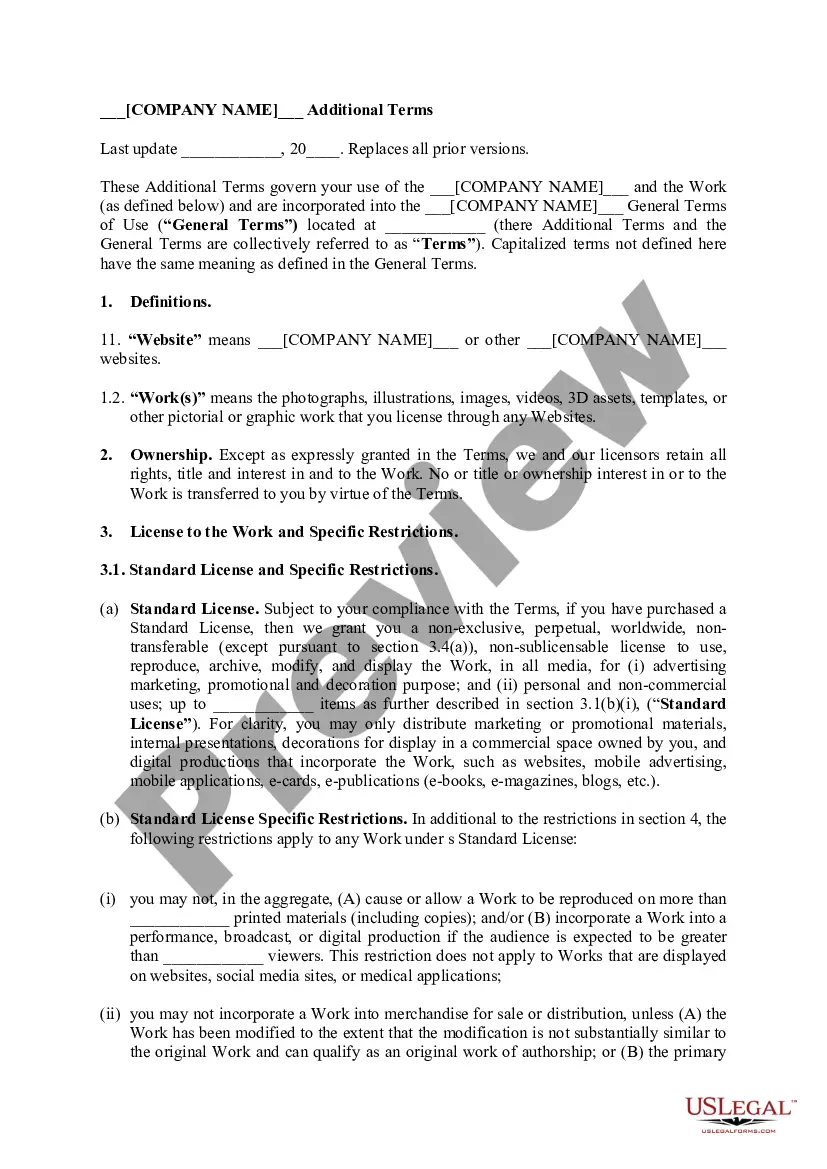
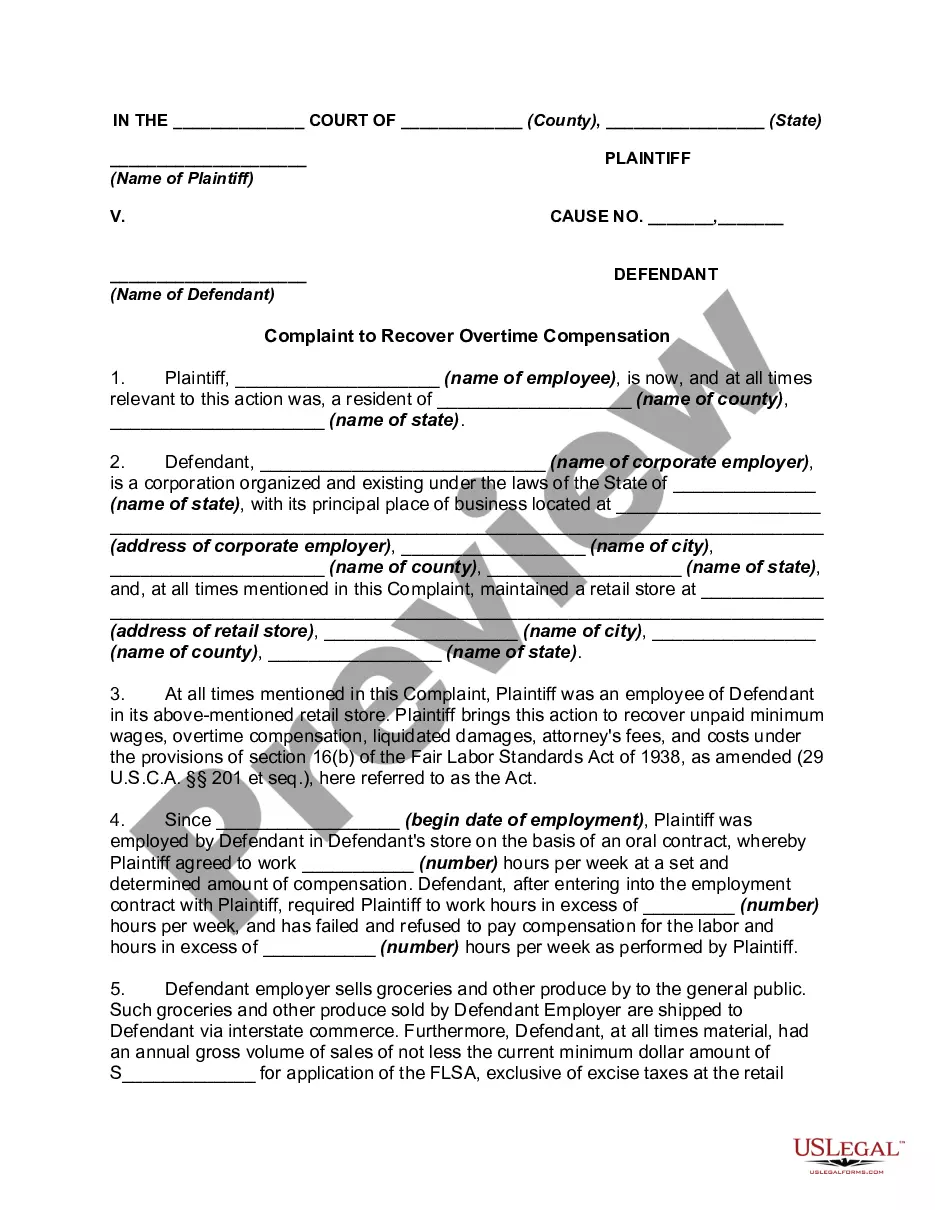
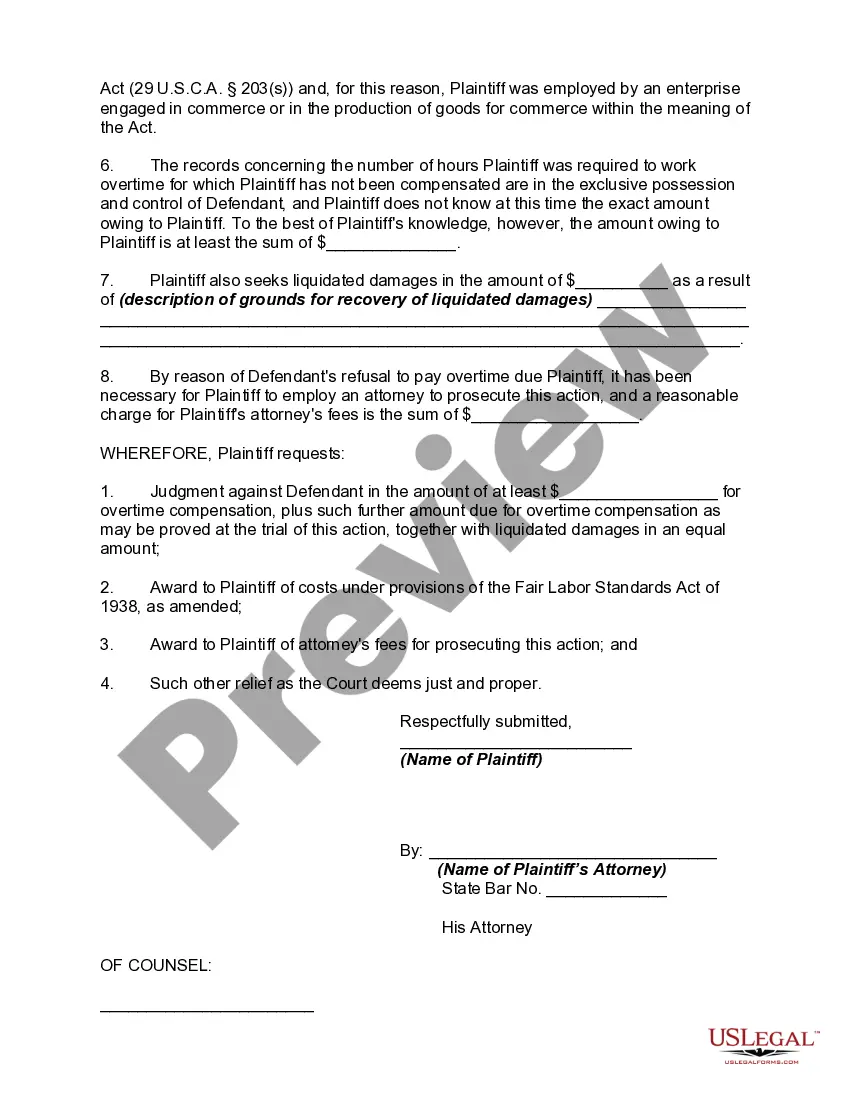
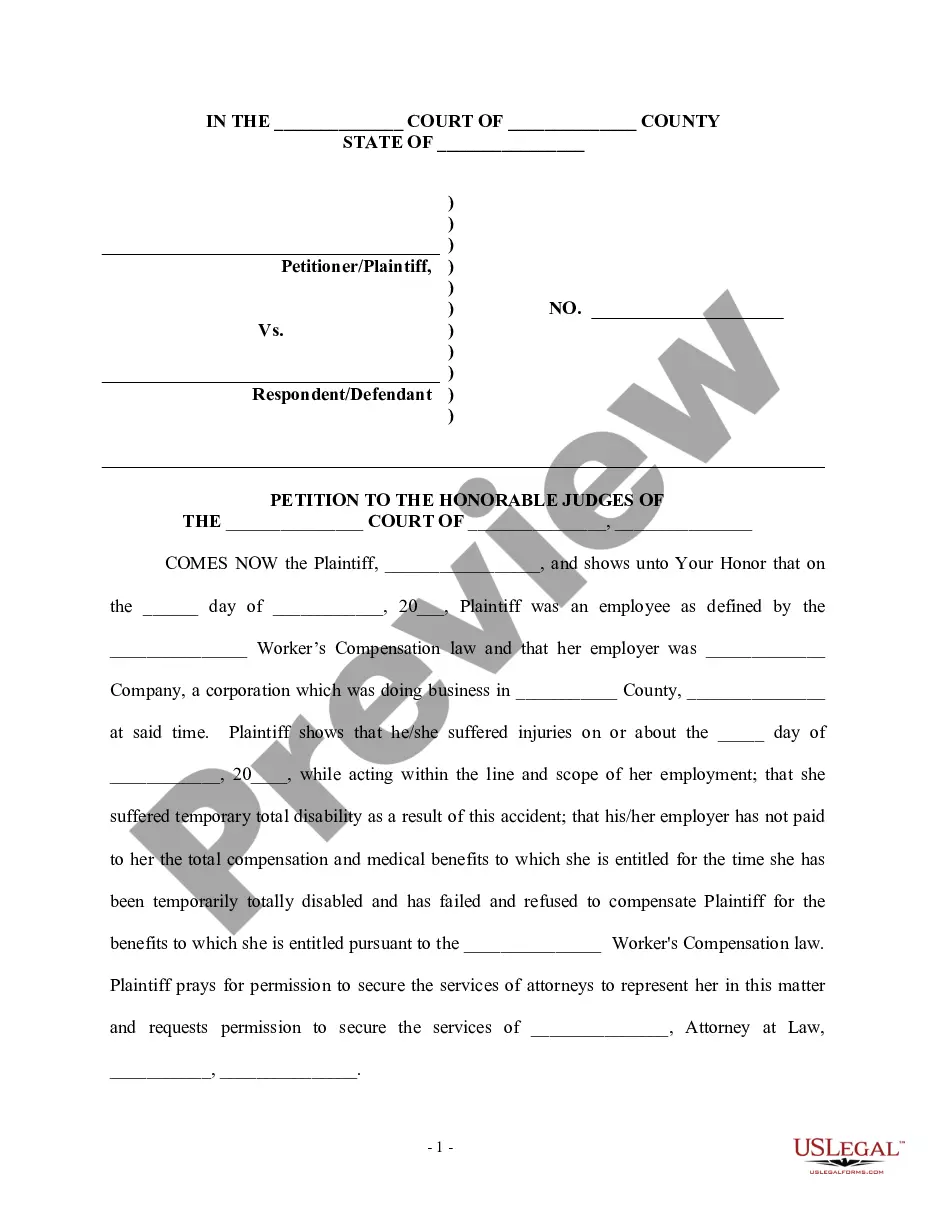
How to fill out Complaint To Recover Overtime Compensation Or Wages In State Court Under Section 16(b) Of Fair Labor Standards Act?
- If you're a returning user, simply log in to your account and select the required form template. Confirm that your subscription is valid before proceeding.
- For first-time users, start by reviewing the Preview mode and form details. Verify that the chosen form meets your jurisdiction's requirements and is suitable for your needs.
- Use the Search tab to find any alternative templates that may better fit your situation if needed. Once you've found the correct document, you can proceed.
- Purchase the desired document by clicking on the Buy Now button, and select the subscription plan that works for you. Register for an account to gain full access to the form library.
- Complete your transaction by entering your payment information, either through credit card or PayPal. Ensure the purchase is confirmed before moving on.
- Download the completed form to your device. You can also access it later from the My Forms section of your profile, making it easy to refer back to whenever necessary.
US Legal Forms empowers both individuals and attorneys with its extensive library, making legal documentation straightforward and efficient.
With over 85,000 editable forms and access to premium experts, you can ensure every document is accurate and legally sound. Start your journey to secure your extra wages for overtime 59 today by exploring the vast resources offered by US Legal Forms!
Form popularity
FAQ
Reporting an employer anonymously can be done through various channels, depending on your situation. You may contact your local labor board or a legal service such as USLegalForms, which can help you navigate the reporting process discreetly. Protecting your rights while ensuring you may still receive the extra wages for overtime 59 is crucial, and you deserve support in addressing any concerns.
Accounting for overtime involves tracking hours worked beyond the standard workweek. Ensure that your payroll system accurately records regular and overtime hours separately. By doing this, you can calculate the correct extra wages for overtime 59, maintaining compliance and ensuring fair compensation for your employees.
To report overtime, follow your organization's established protocol. This typically involves logging overtime hours into a timekeeping system or submitting a report to your supervisor. By documenting these hours accurately, you ensure that you receive the correct extra wages for overtime 59 and adhere to company policies.
Addressing unauthorized overtime starts with clear communication. Discuss the situation with the employee and remind them of the company's overtime policy. Implementing a formal process for requesting overtime can minimize unauthorized hours and ensure that all employees receive their due extra wages for overtime 59 while maintaining accountability.
Generally, there is no maximum limit to the number of overtime hours an employee can work under federal law. However, state laws may impose certain restrictions. It is essential to understand both federal and state guidelines to manage workloads appropriately, allowing employees to receive fair extra wages for overtime 59 without facing burnout.
Calculating FLSA overtime with a bonus requires you to understand your total earnings. First, add your regular wages and any bonuses to find your total compensation. Then, divide this total by the total hours worked to determine your regular rate. Finally, multiply your regular rate by 1.5 to calculate extra wages for overtime 59, ensuring you follow the Fair Labor Standards Act guidelines.
Overtime is typically calculated at 1.5 times your standard hourly rate. This means that for every hour you work over 40 in a week, you earn extra wages for overtime 59 at this rate. However, certain jobs may have different policies, so it's vital to check your company's guidelines. Always clarify your rights to ensure proper payment.
Calculating your overtime paycheck starts with knowing your regular hourly rate. To determine extra wages for overtime 59, you multiply your rate by 1.5 for hours worked beyond 40 in a week. For instance, if you earn $20 per hour, your overtime rate would be $30. It is essential to track your hours accurately to ensure you receive the right compensation.
The amount of overtime that might lead to 'too much' in taxes is unique to each individual. If your extra wages for overtime 59 cause your income to increase significantly, you could enter a higher tax bracket, resulting in a larger portion of your earnings going to taxes. This scenario makes careful planning and understanding your tax situation essential. It’s wise to consult a tax professional if you’re concerned about the implications of your overtime earnings.
Determining how much overtime is too much often depends on your personal limits and work-life balance. Generally, working beyond 10 to 15 hours of overtime each week can lead to burnout and reduced productivity. Monitoring your workload is key; extra wages for overtime 59 are beneficial only if they don't compromise your well-being. Assessing your physical and mental health is crucial when considering overtime.