Amend Judgement
Description
Get your form ready online
Our built-in tools help you complete, sign, share, and store your documents in one place.
Make edits, fill in missing information, and update formatting in US Legal Forms—just like you would in MS Word.
Download a copy, print it, send it by email, or mail it via USPS—whatever works best for your next step.
Sign and collect signatures with our SignNow integration. Send to multiple recipients, set reminders, and more. Go Premium to unlock E-Sign.
If this form requires notarization, complete it online through a secure video call—no need to meet a notary in person or wait for an appointment.
We protect your documents and personal data by following strict security and privacy standards.
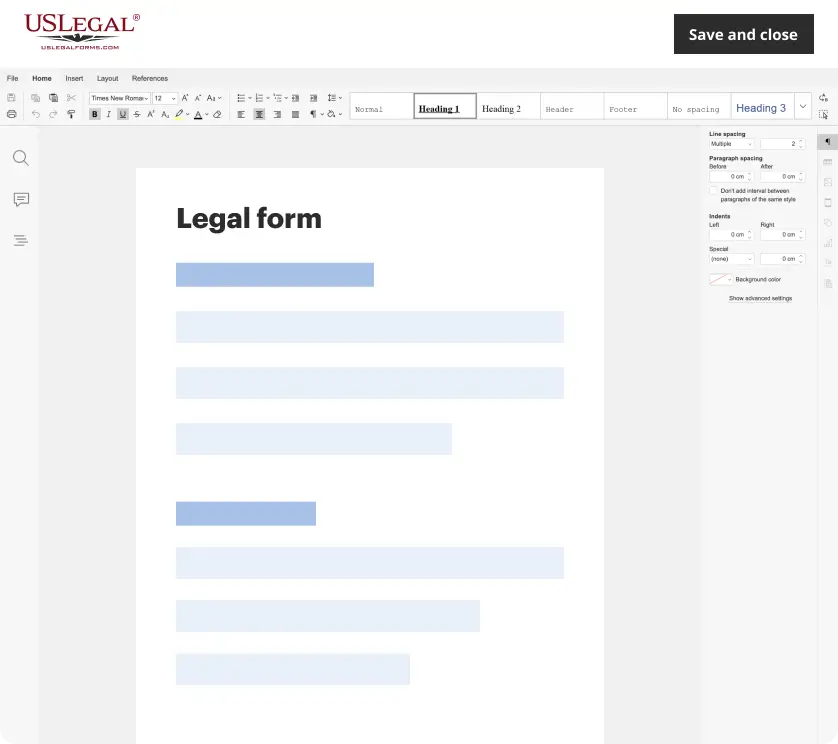
Make edits, fill in missing information, and update formatting in US Legal Forms—just like you would in MS Word.
Download a copy, print it, send it by email, or mail it via USPS—whatever works best for your next step.
Sign and collect signatures with our SignNow integration. Send to multiple recipients, set reminders, and more. Go Premium to unlock E-Sign.

If this form requires notarization, complete it online through a secure video call—no need to meet a notary in person or wait for an appointment.
We protect your documents and personal data by following strict security and privacy standards.
Looking for another form?
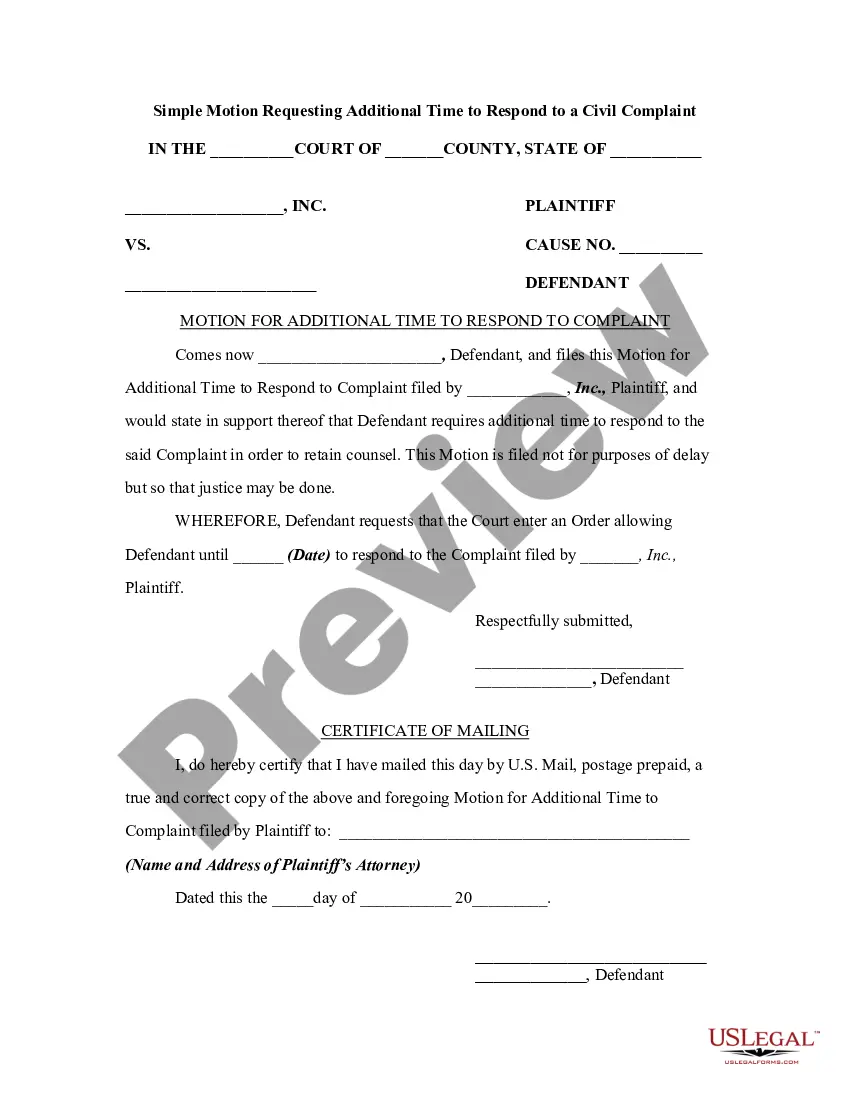
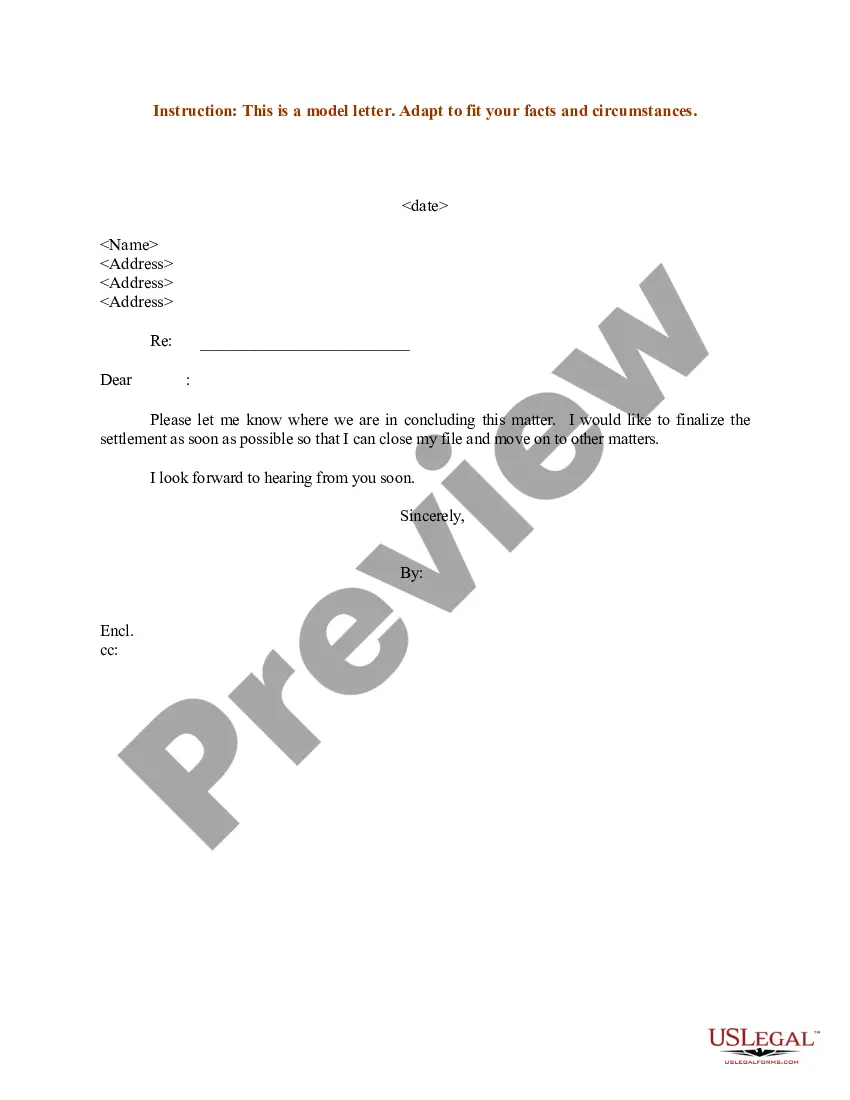

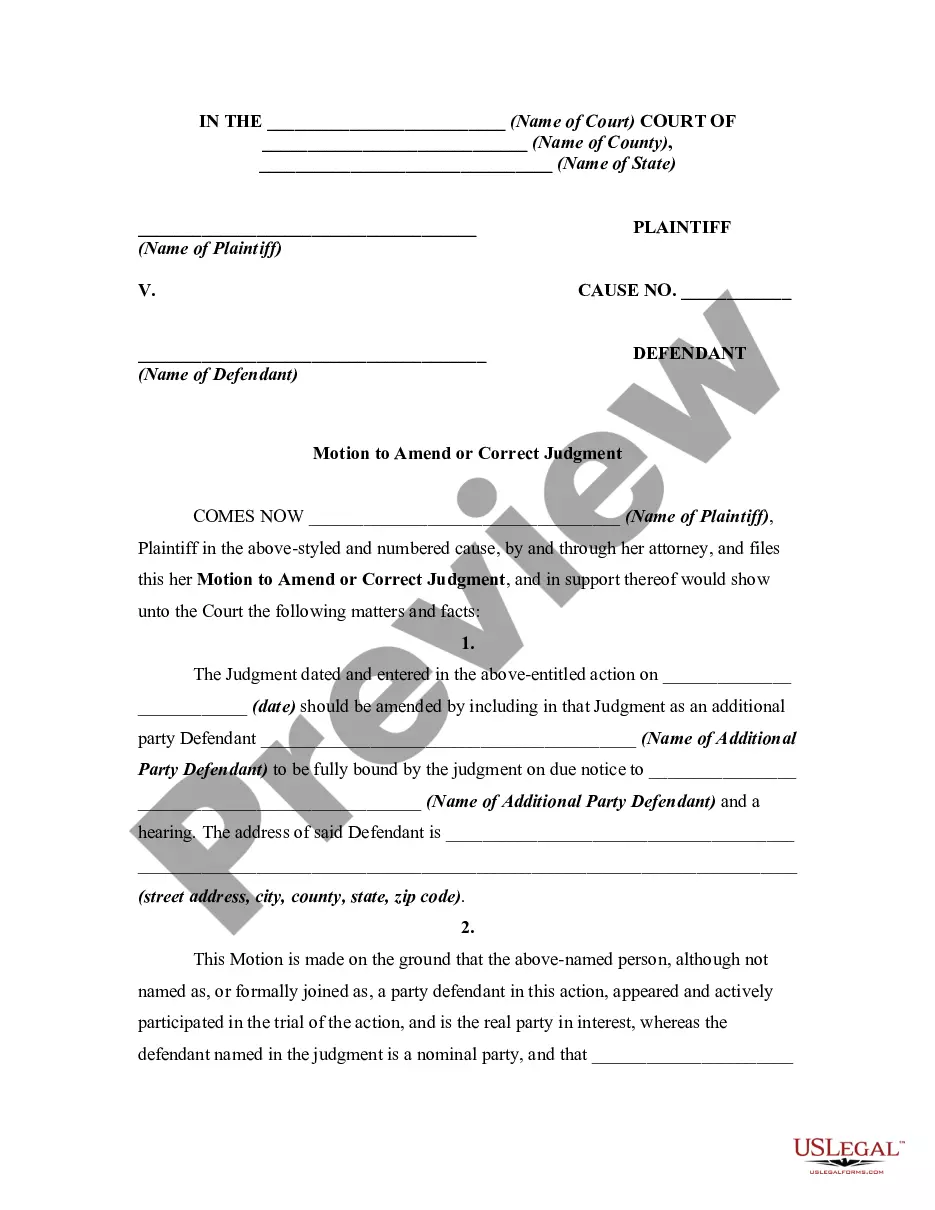
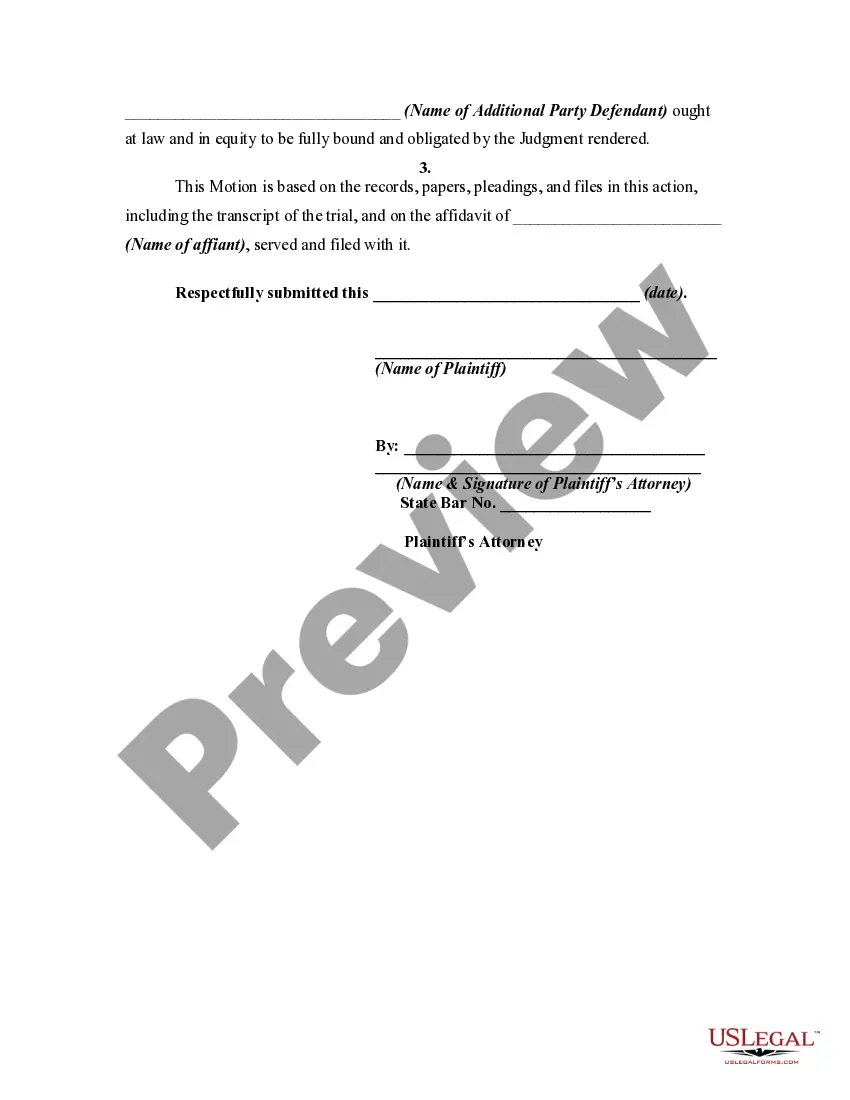
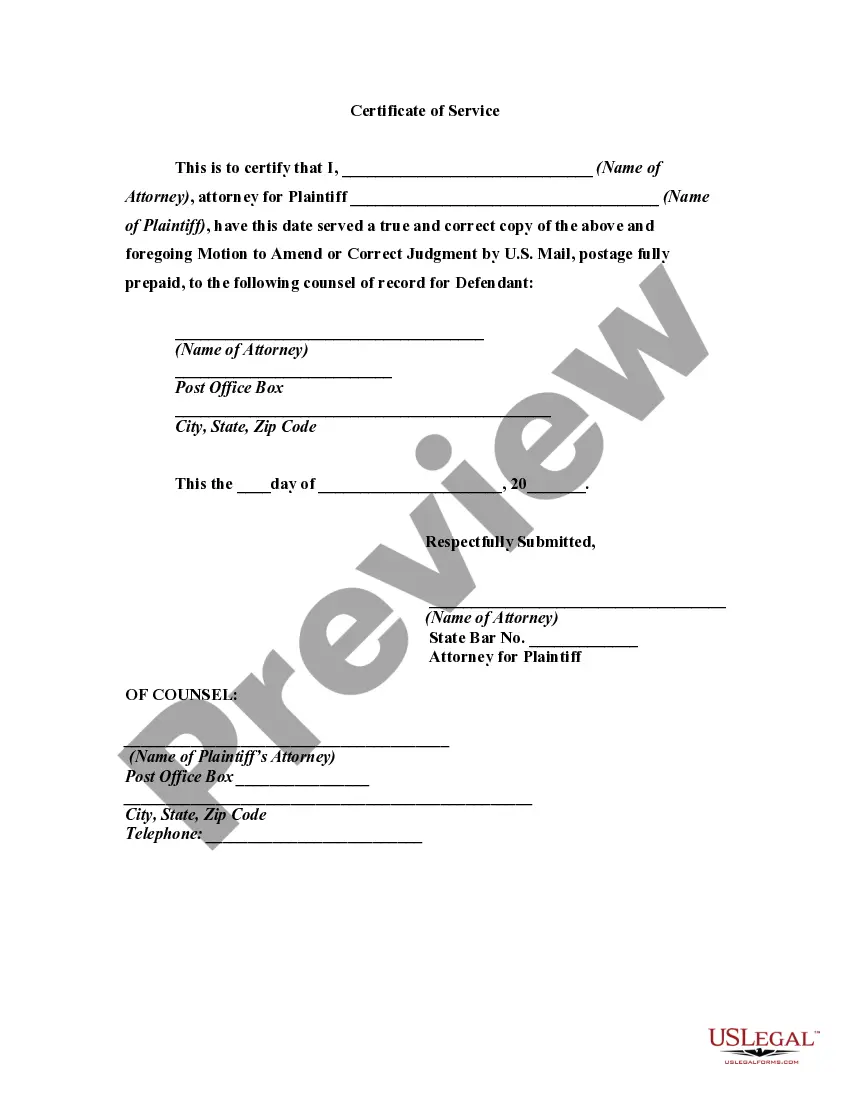
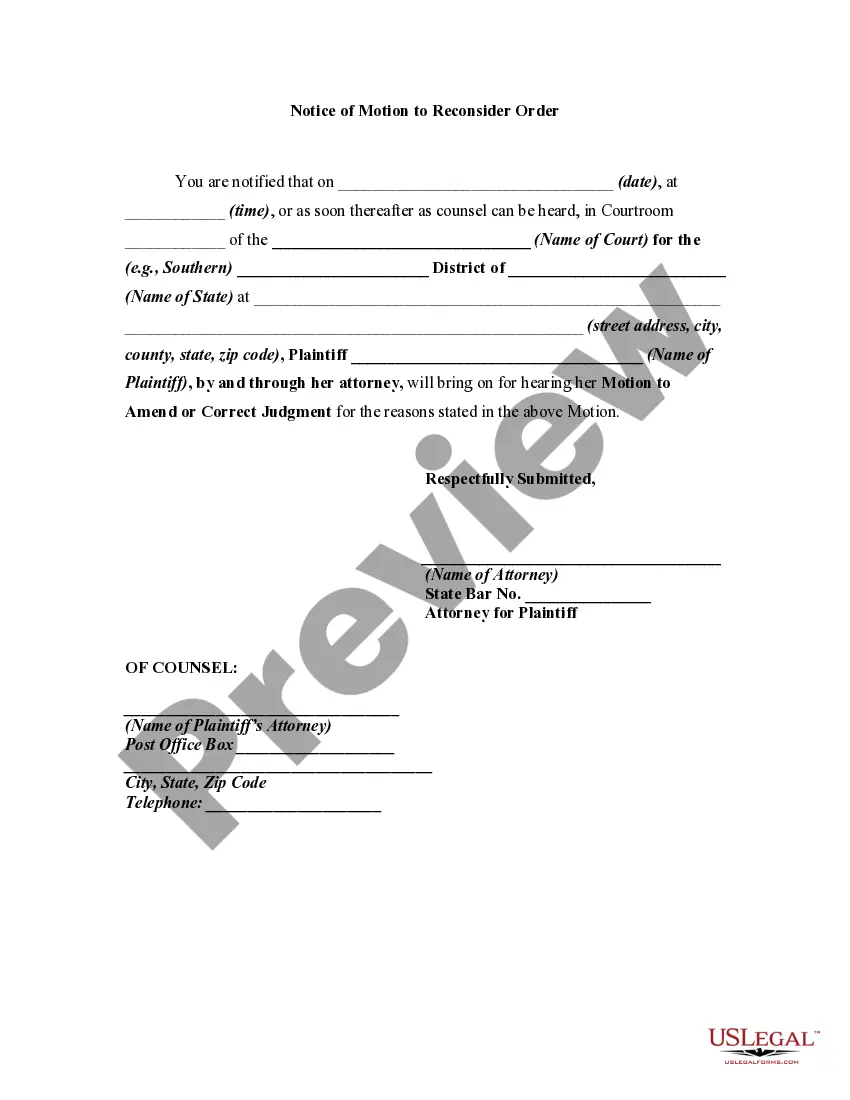
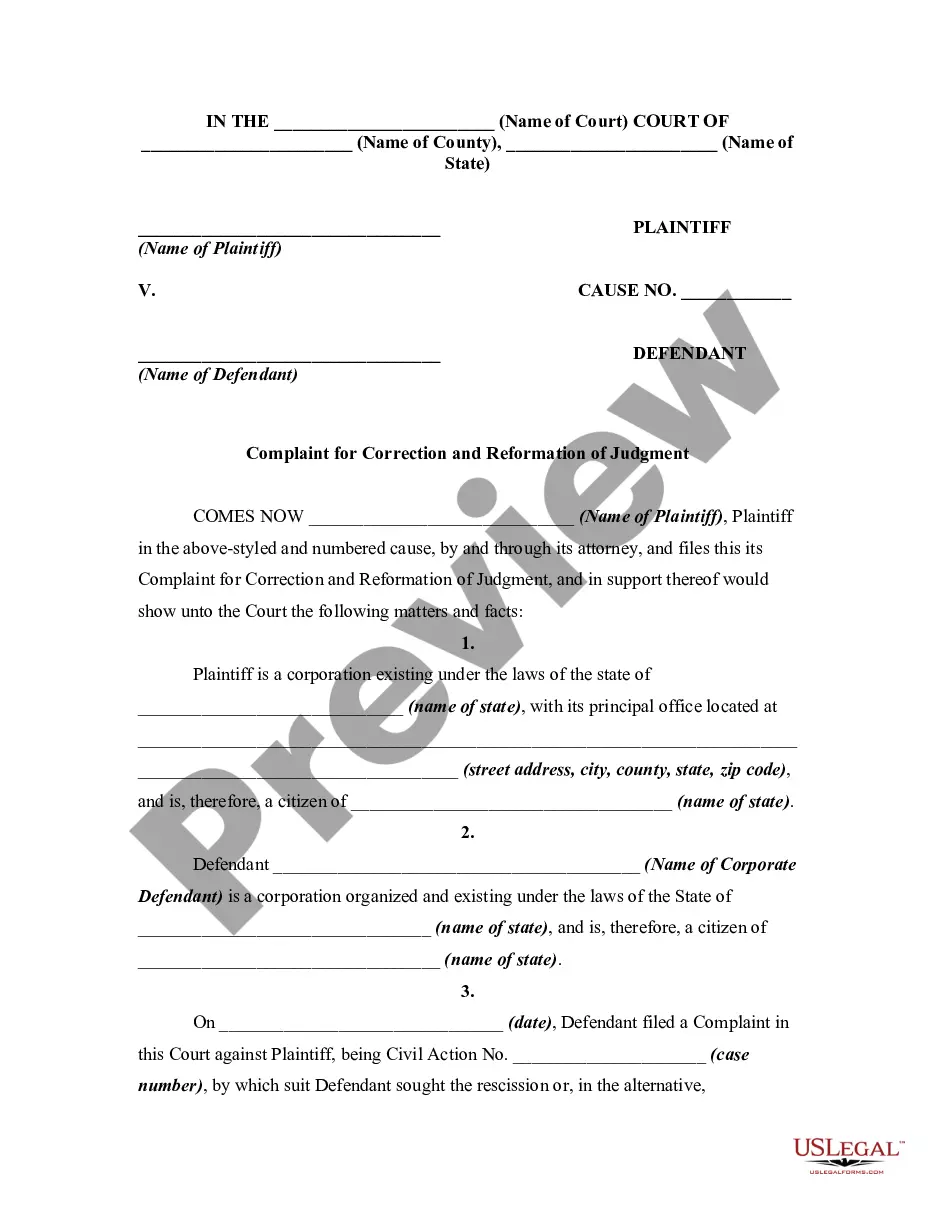
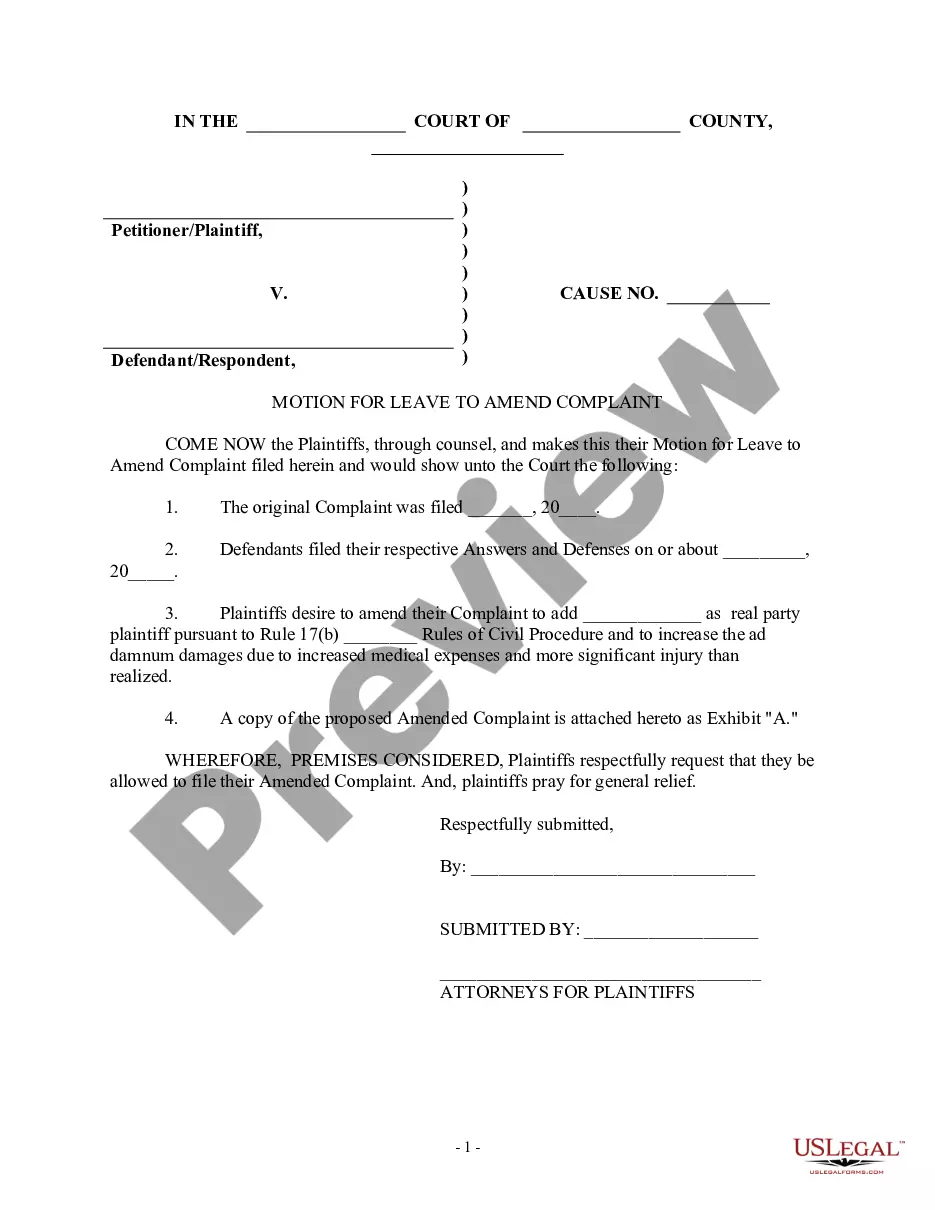
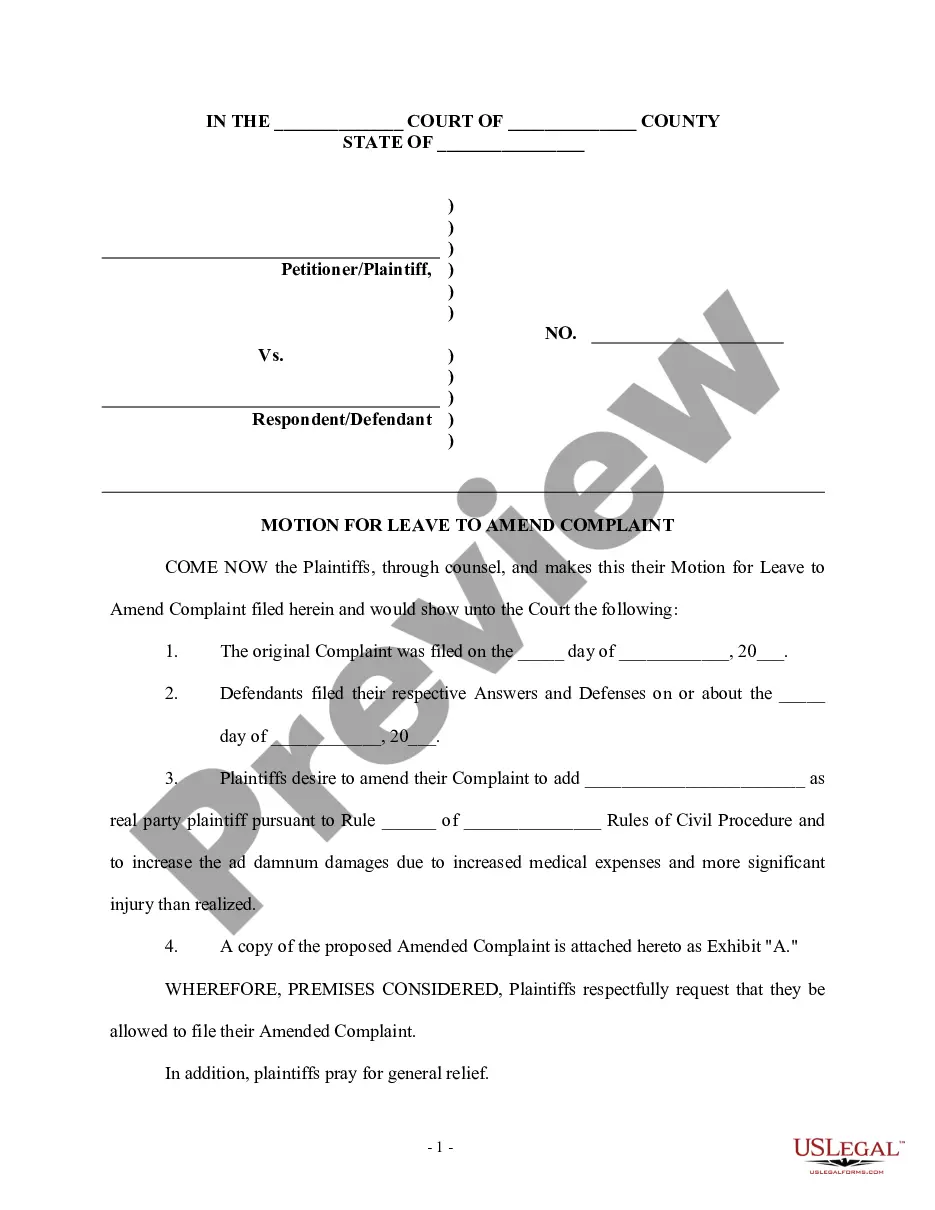
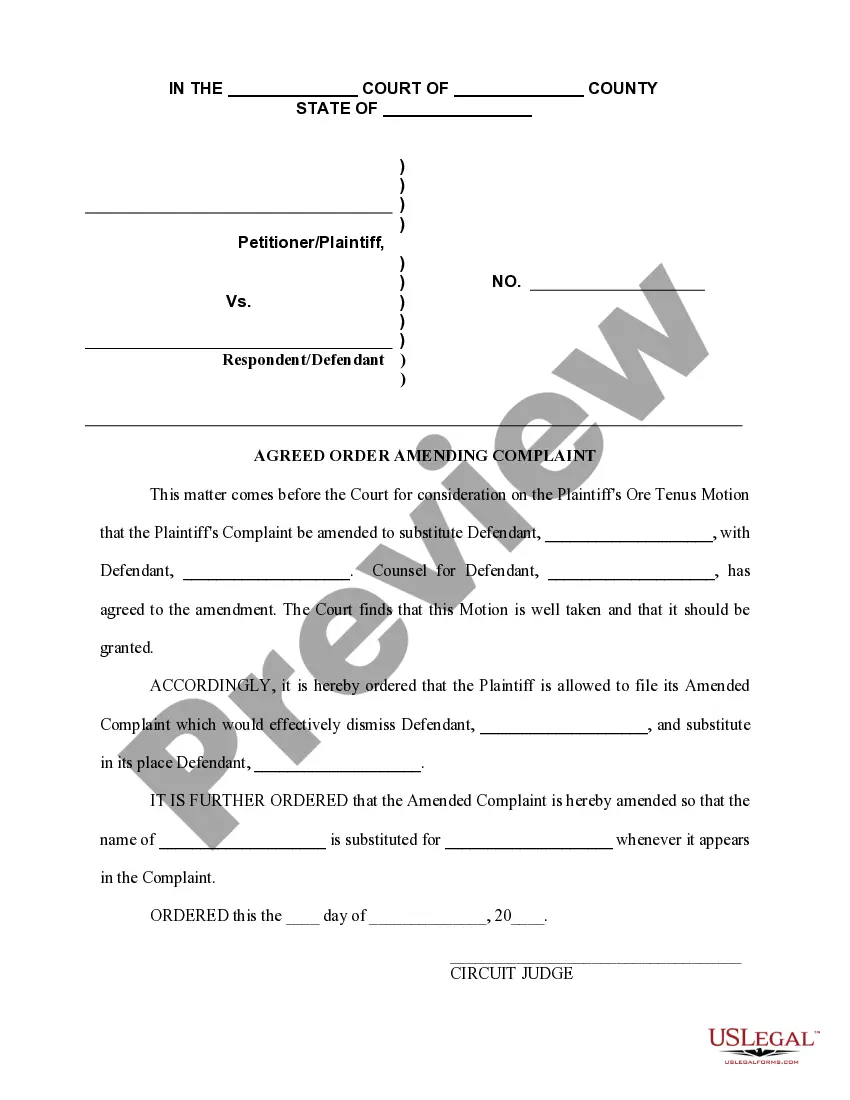
How to fill out Motion To Amend Or Correct Judgment To Include Additional Party Defendant As Real Party In Interest?
- If you are an existing user, log in to your account, and navigate to the templates section to download the required form. Make sure your subscription is active; if it's not, follow your payment plan to renew it.
- For new users, begin by checking the Preview mode and form description to select the correct amendment form that aligns with your local jurisdiction.
- If necessary, use the Search tab above to find an alternative template that fits your needs.
- Once the appropriate document is identified, click the Buy Now button and choose a subscription plan that suits your requirements, registering for an account to access the vast resources.
- Complete your purchase by entering your credit card information or utilizing your PayPal account.
- Download the amended judgement form to your device, ensuring you can access it anytime through the My Forms section of your profile.
In conclusion, US Legal Forms simplifies the process of amending judgements with its extensive library and user-friendly interface. By following these steps, you can efficiently obtain and manage your legal documents.
Start your legal document journey today with US Legal Forms for simplified, error-free paperwork.
Form popularity
FAQ
To file a motion against a default judgement, draft your motion explaining why the default judgement should be vacated. Include reasons such as lack of proper notice or mistake. File this motion with the court that issued the default decision and serve it on the opposing party. Consider using US Legal Forms to help with the required documents and procedures.
Filing a motion for judgement involves drafting your motion and including legal arguments that justify why the court should rule in your favor. You must submit this motion to the court and provide copies to all involved parties. Ensure compliance with local rules regarding formatting and deadlines. Services like US Legal Forms can simplify this process significantly.
You should file a motion for judgement as a matter of law when the evidence presented does not support a reasonable jury finding. This motion typically occurs at the close of evidence in a trial. If you believe the judgement should be amended based on clear evidence, this motion is appropriate. Always consider consulting with an attorney for guidance.
To amend a judgement, you typically need to file a motion to amend along with supporting documentation that justifies the change. Courts allow amendments for specific reasons, such as clerical errors or new evidence. Check the local rules for deadlines and procedures. Platforms like US Legal Forms can help you prepare the necessary documents.
When writing a motion letter to a judge, begin by addressing the judge respectfully and stating your case number. Clearly outline your request to amend judgement and provide relevant facts and legal reasons supporting your motion. Conclude with your contact information and a formal closing. This letter should be clear and concise.
Writing a motion for reconsideration involves clearly stating the reasons you believe the court should revisit a prior decision. You should include any new evidence or legal arguments that support your request. To streamline this process, consider using services like US Legal Forms, which provide templates to help you create an effective motion to amend judgement.
In a court case, 'amend' refers to the process of changing or modifying a prior legal document or order. This action can address errors, clarify terms, or adjust the judgment based on new facts. Understanding the implications of an amend judgement can empower you to navigate legal challenges with confidence.
A motion to amend is a formal request filed with the court, asking to change an existing court order or judgment. This motion outlines the specific aspects that you wish to alter and provides justification for those changes. Knowing how to effectively file this motion is critical when you seek to amend judgement.
Filing an amendment to a court order typically involves submitting a motion to the court that outlines your reasons for the amendment. You will need to provide the original order and any supporting documents that justify your request. Utilizing platforms like US Legal Forms can simplify this process, offering templates that guide you through the legal requirements to amend judgement.
When a court order is amended, it signifies that the court has made changes to the original judgment or order. This may involve correcting errors, clarifying points, or adjusting terms based on new information or circumstances. Understanding this process is crucial for anyone looking to amend judgement effectively.