Agreement Division Property With Real Estate In Maricopa
Description


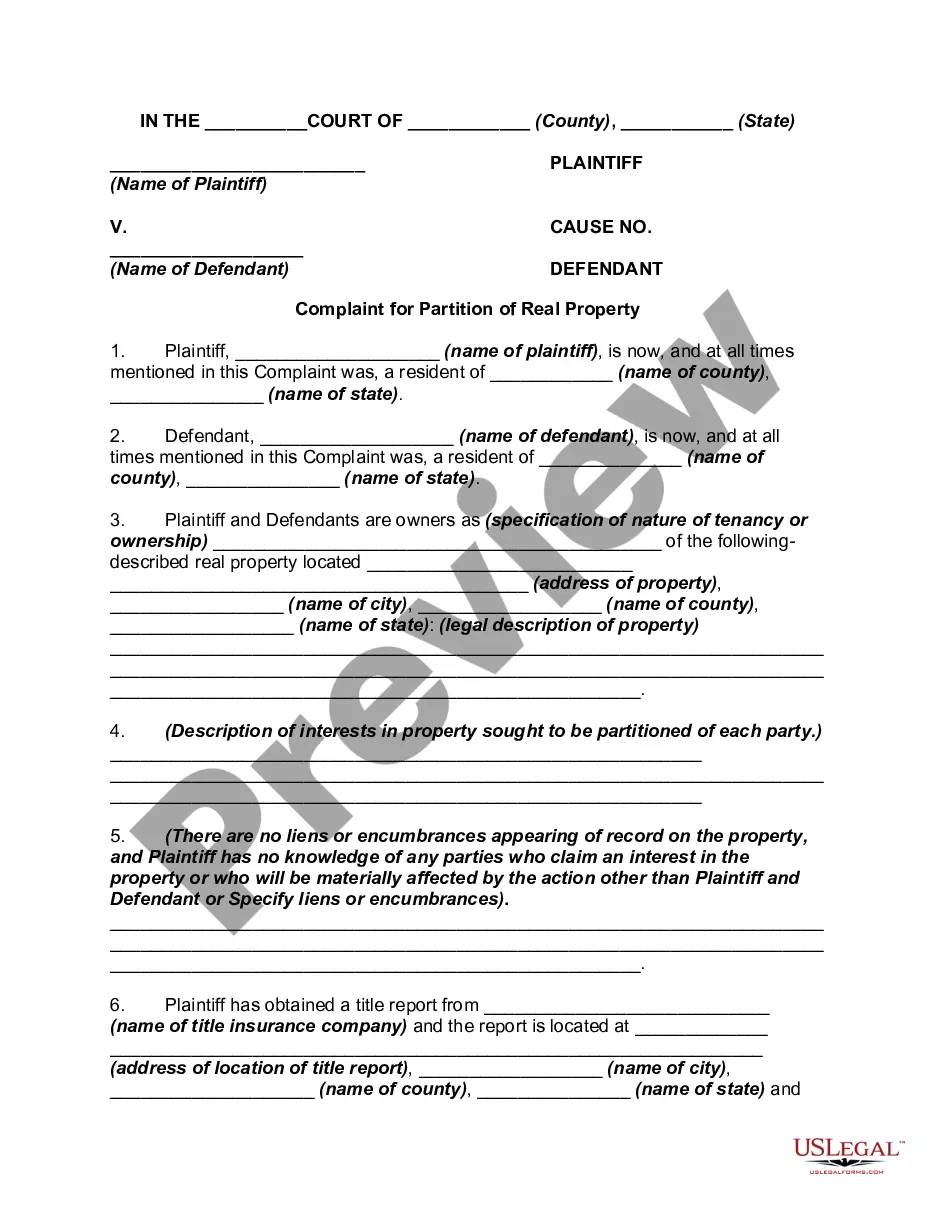
Get your form ready online
Our built-in tools help you complete, sign, share, and store your documents in one place.
Make edits, fill in missing information, and update formatting in US Legal Forms—just like you would in MS Word.
Download a copy, print it, send it by email, or mail it via USPS—whatever works best for your next step.
Sign and collect signatures with our SignNow integration. Send to multiple recipients, set reminders, and more. Go Premium to unlock E-Sign.
If this form requires notarization, complete it online through a secure video call—no need to meet a notary in person or wait for an appointment.
We protect your documents and personal data by following strict security and privacy standards.
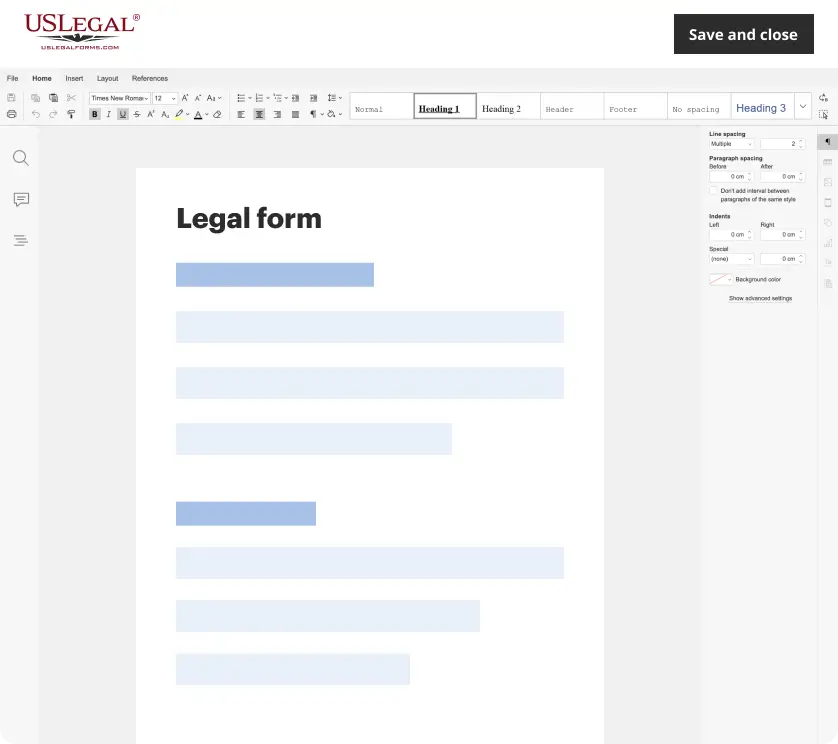
Make edits, fill in missing information, and update formatting in US Legal Forms—just like you would in MS Word.
Download a copy, print it, send it by email, or mail it via USPS—whatever works best for your next step.
Sign and collect signatures with our SignNow integration. Send to multiple recipients, set reminders, and more. Go Premium to unlock E-Sign.

If this form requires notarization, complete it online through a secure video call—no need to meet a notary in person or wait for an appointment.
We protect your documents and personal data by following strict security and privacy standards.
Looking for another form?






Form popularity
FAQ
Arizona, like several other states, operates under the community property principle. This means that any assets or debts acquired during the marriage belong equally to both spouses, regardless of whose name is on the title or deed.
The presumption of community property, can, in part, be overcome if the challenging party can prove by clear and convincing evidence that the property at issue was acquired as a gift.
All property acquired by either husband or wife during the marriage is the community property of the husband and wife except for property that is: 1. Acquired by gift, devise or descent.
If you're doing it on your own, however, you may contact your court clerk for information on how to do this. The motion has to state what your ex-spouse isn't doing, what areas he or she is in violation of. It must clarify why he or she ought to be held in contempt of the divorce decree. You must prove your case.
Under state law, Arizona courts will grant a divorce in a covenant marriage in eight specific circumstances: A spouse has committed adultery. A spouse has committed a felony and received a life sentence or the death penalty. A spouse has abandoned the marital home for at least one year and refuses to return.
Arizona is a 50/50 property law state when it comes to divorce. Community property division must be equitable, but seldom will shares be absolutely equal. In part, this is because the family law judge has considerable discretion over property awards.
How Do I Protect My Assets from Divorce in Arizona? ⑴ Establish a Postnuptial Agreement. If you did not sign a prenuptial agreement, a postnuptial agreement can be created during the marriage to outline ownership of assets, including inheritances. ⑵ Use a Trust. ⑶ Keep Detailed Financial Records. ⑷ Avoid Commingling Assets.
A subdivision means improved or unimproved land or lands divided or proposed to be divided for the purpose of sale, lease, or for cemetery purposes, whether immediate or future, into four or more parcels or fractional interests. Module Search.
"Subdivision" means improved or unimproved land or lands divided for the purpose of financing, sale or lease, whether immediate or future, into four or more lots, tracts or parcels of land, or, if a new street is involved, any such property which is divided into two or more lots, tracts or parcels of land, or, any such ...
What are the minimum requirements for a bulk sale of subdivided to be exempt from Arizona subdivision statutes? Six or more lots sold to a single buyer in one transaction.
