Agreement Accounts Receivable With Credit Card Processing In California
Description













Form popularity
FAQ
The 2/3/4 rule: ing to this rule, applicants are limited to two new cards in 30 days, three new cards in 12 months and four new cards in 24 months.
Yes, credit agreements are formal contracts and signing one legally obligates you to meet its terms.
You have the right to cancel a credit agreement if it's covered by the Consumer Credit Act 1974. You're allowed to cancel within 14 days - this is often called a 'cooling off' period.
A contract will not be binding for two main reasons: It does not comply with all the essential factors needed to be a binding contract. The agreement has been expressly designed to be non-binding, with the parties clearly stating that the terms are only for discussion or preliminary planning.
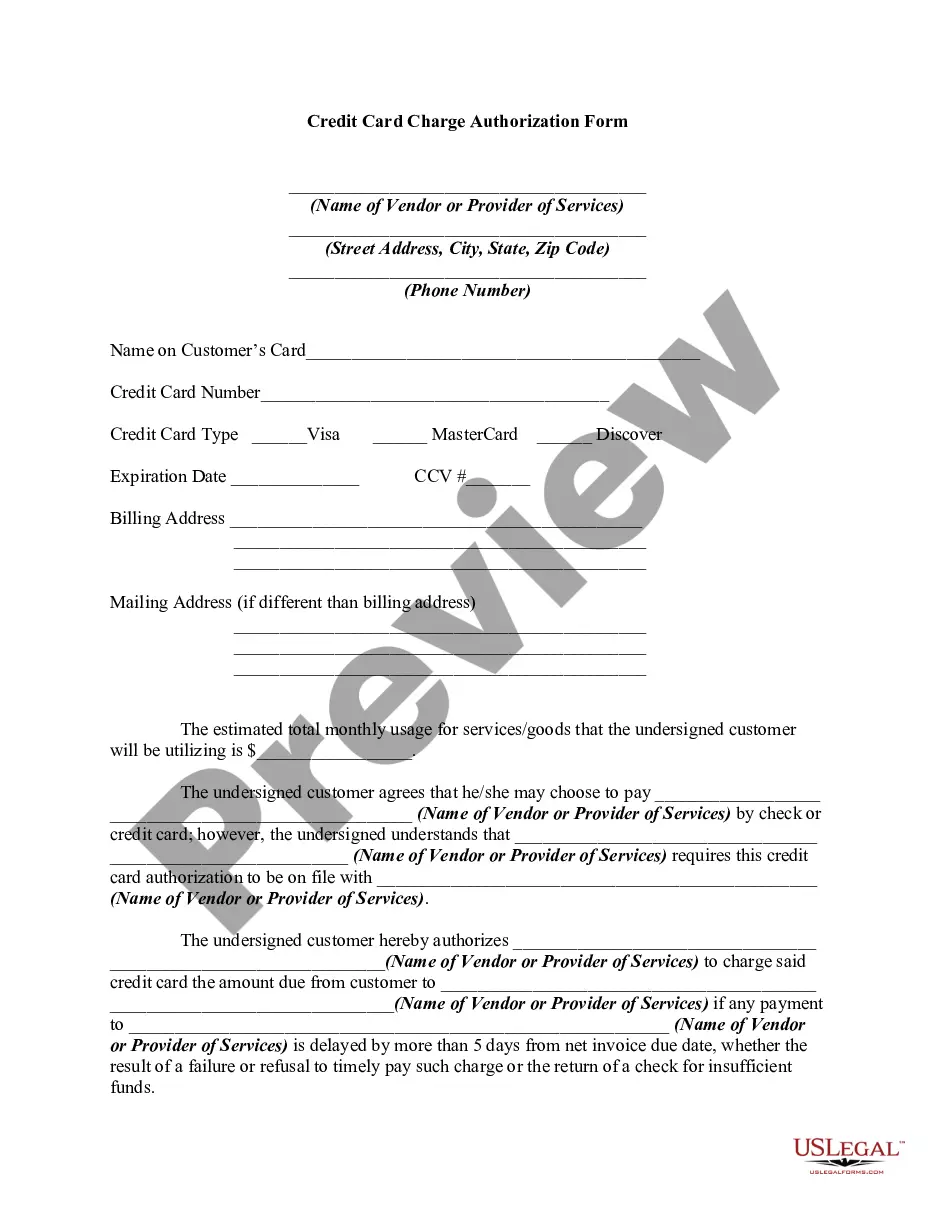
Visa, Mastercard, American Express, and Discover are the four main credit card networks in the United States.
How to Apply for a Credit Card? Visit the bank's official website. Click on 'Apply' in the 'Credit Cards' section. Enter personal details like your occupation, mobile number, monthly income, PIN code, etc. Select your preferred credit card and click on 'Check Eligibility'
But in a nutshell, you can think of it as a five step process: authorizing, authenticating, batching, clearing, and funding. Stage 1 | Authorization. Stage 2 | Authentication. Stage 3 | Batching. Stage 4 | Clearing & Settlement. Stage 5 | Funding.
A cardholder agreement is a legal document outlining the terms under which a credit card is offered to a customer. Among other provisions, the cardholder agreement states the annual percentage rate (APR) of the card, as well as how the card's minimum payments are calculated.
Here are the steps to becoming a successful credit card processing agent: Pick a niche. Learn as much as you can about credit card processing. Compare ISO/MSP programs for ones that align with your goals and style. Apply to your chosen program. Collect and prepare your business assets. Start selling.
